wayground logo

Free Printable Worksheets

Font size

S
M
L
XL
Worksheets

Science Benchmark Review

Total questions: 65

Worksheet time: 1hrs 9mins

Name
Class
Date
1.
What are the three states of matter?
a)
solid, liquid, and gas
b)
solid, water, and gas
c)
wood, liquid, and gas
d)
solid, liquid, and helium
2.
________________ is anything that has mass and takes up space.
a)
volume
b)
matter
c)
mass
d)
weight
3.
All matter is made up of .....
a)
Compounds
b)
Atoms
c)
Molecules
d)
Sunshine
4.
A combination that can be separated by physical processes is a .....
a)
Pure Substance
b)
Glucose
c)
Element
d)
Mixture
5.
A mixture that is NOT evenly distributed is called ....
a)
Compounded
b)
Homogenous
c)
Heterogenous
d)
Salty
6.
If you change a substance into a new substance...
a)
Partial Change
b)
Physical Change
c)
Chemical Change
d)
Freezing
7.
Which is NOT a chemical change?
a)
Leaves changing colors in the fall
b)
Iron rusting
c)
Digesting Lunch
d)
Ice Melting
8.
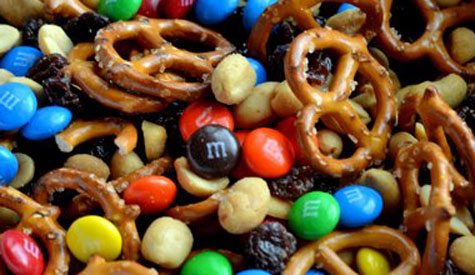
What type of mixture is this?
a)
homogenous mixture
b)
chemical
c)
heterogeneous mixture 
d)
solid mix
9.
Which of the following is not an element?
a)
water
b)
hydrogen
c)
carbon
d)
oxygen
10.
Which of the following IS a mixture?
a)
air
b)
hydrogen
c)
water
d)
sugar
11.
Oxygen gas is an example of a.....
a)
pure element
b)
pure compound
c)
heterogeneous mixture
d)
homogeneous mixture
12.
Table salt is an example of a.....
a)
pure element
b)
pure compound
c)
heterogeneous mixture
d)
homogeneous mixture
13.
A gold bar is an example of a.....
a)
pure element
b)
pure compound
c)
heterogeneous mixture
d)
homogeneous mixture
14.
Which of the following would you use to separate sand from iron?
a)
a bar magnet
b)
paper
c)
hot plate
15.

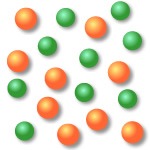
Classify the particle diagram.

a)

element

b)

compound

c)

mixture of elements

d)

mixture of compounds

e)

mixture of elements and compounds

16.

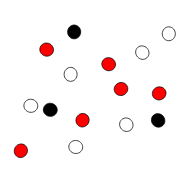
Classify the particle diagram.

a)

element

b)

compound

c)

mixture of elements

d)

mixture of compounds

e)

mixture of elements and compounds

17.

Classify the particle diagram.

a)

element

b)

compound

c)

mixture of elements

d)

mixture of compounds

e)

mixture of elements and compounds

18.

Classify the particle diagram.

a)

element

b)

compound

c)

mixture of elements

d)

mixture of compounds

e)

mixture of elements and compounds

19.

Classify the particle diagram.

a)

element

b)

compound

c)

mixture of elements

d)

mixture of compounds

e)

mixture of elements and compounds

20.

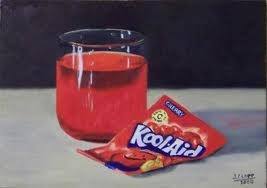
How would you classify this image?

a)

homogeneous mixture

b)

heterogeneous mixture

21.

How would you classify this image?

a)

homogeneous mixture

b)

heterogeneous mixture

22.

How would you classify this image?

a)

homogeneous mixture

b)

heterogeneous mixture

23.
This picture represents: 
a)
Element
b)
Compound
c)
Mixture of Elements
d)
Mixture of Compounds
24.
This picture represents which of the following?
a)
element
b)
compound
c)
mixture
25.
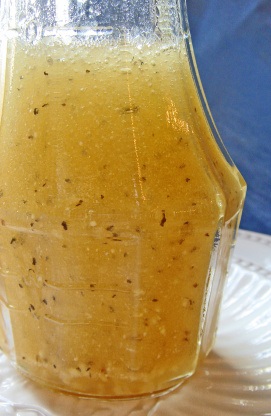
Italian Salad Dressing is a . . .
a)
heterogeneous mixture
b)
homogeneous mixture
c)
Pure Substance
d)
Compound
26.
This picture represents: 
a)
Element
b)
Compound
c)
Mixture of Elements
d)
Mixture of Compounds
27.
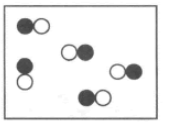
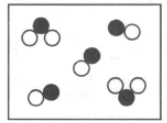
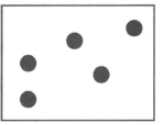
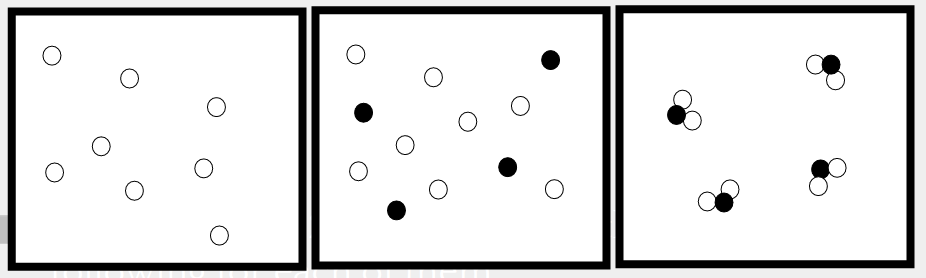
Which one of these pictures represents a mixture? 
a)
1
b)
2
c)
3
d)
1, 2 and 3
28.
Is burning wood a chemical or physical change?
a)
chemical
b)
physical
29.

A physical change...

a)

changes the physical properties of an object, but does not create a new substance.

b)

creates a new substance and cannot be undone.

30.

A chemical change

a)

changes the physical properties of an object, but does not create a new substance.

b)

creates a new substance and cannot be undone.

31.

Is this an example of a physical or chemical change?

a)

physical

b)

chemical

32.

Is this an example of a physical or chemical change?

a)

physical

b)

chemical

33.

Is this an example of a physical or chemical change?

a)

physical

b)

chemical

34.

Is this an example of a physical or chemical change?

a)

physical

b)

chemical

35.

Is this an example of a physical or chemical change?

a)

physical

b)

chemical

36.

Is this an example of a physical or chemical change?

a)

physical

b)

chemical

37.

Is this an example of a physical or chemical change?

a)

physical

b)

chemical

38.

Is this an example of a physical or chemical change?

a)

physical

b)

chemical

39.

Is this an example of a physical or chemical change?

a)

physical

b)

chemical

40.

Is this an example of a physical or chemical change?

a)

physical

b)

chemical

41.

Is this an example of a physical or chemical change?

a)

physical

b)

chemical

42.

Is this an example of a physical or chemical change?

a)

physical

b)

chemical

43.

Is this an example of a physical or chemical change?

a)

physical

b)

chemical

44.

Is this an example of a physical or chemical change?

a)

physical

b)

chemical

45.

Is this an example of a physical or chemical change?

a)

physical

b)

chemical

46.

Is this an example of a physical or chemical change?

a)

physical

b)

chemical

47.

Is this an example of a physical or chemical change?

a)

physical

b)

chemical

48.

Is this an example of a physical or chemical change?

a)

physical

b)

change

49.
Matter can not be created nor destroyed: it can only be
a)
Destroyed a little bit
b)
Invisible
c)
Transformed, changed
d)
None of the above
50.
The coefficient in  3H2O is
a)
6
b)
2
c)
3
d)
5
51.
If reaction starts with 20g of reactants it should produce 
a)
a total of 40g of products
b)
a total of 10g of products
c)
a total of 80 g of products
d)
a total of 20g of products
52.
In a reaction A + B ----> C,  reactant A has 5g and product  C has 9g. How many grams does reactant B should have? 
a)
4g
b)
5g
c)
9g
d)
14g
53.
What will weigh more when a chemical change is complete?  The reactants before the chemical reaction, or the product after the reaction is complete?
a)
They both will weigh the same
b)
The product always weighs more than the reactant
c)
The reactant will weigh more than the product
d)
They both will loose mass after the reaction
54.
Which are the reactants in the following reaction?
2Mg + O2 ---> 2MgO 
a)
Mg and O
b)
MgO
c)
Mg and MgO
d)
O and MgO
55.
How many oxygen atoms are in this chemical formula?
a)
6 oxygen atoms
b)
2 oxygen atoms
c)
3 oxygen atoms
d)
4 oxygen atoms
56.
If a reaction starts with a total 75g of reactants it should produce 
a)
a total of 40g of products
b)
a total of 75g of products
c)
a total of 180 g of products
d)
None of the above
57.
In the reaction AB-----> A + B reactant AB has 12g and product B has 5g. How many grams should product A have?
a)
17g
b)
2g
c)
7g
d)
None of the above
58.
How many nitrogen atoms does NH3 have?
a)
1
b)
2
c)
3
d)
4
59.
What is the law of conservation of mass?
a)
The amount of matter changes when reacted or changed.
b)
The mass of all reactants are changed during a physical or chemical change
c)
The mass of the reactants equals the mass of the products
d)
The mass of the products is different than the mass of the reactants.
60.
The number of atoms of  N (nitrogen) in 3N2O5 is
a)
2
b)
5
c)
6
d)
15
61.
Look at this image.  Which object has the LOWEST density in water? How
a)
The Ping Pong Ball because it floats to the top 
b)
The bolt because it has sunk to the bottom
c)
The soda cap because it is not just full of air like the Ping Pong ball
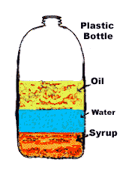
62.
Which liquid is the least dense?
a)
oil
b)
water
c)
syrup 
d)
plastic bottle
63.

Which box has a higher density?

a)

A

b)

B

c)

They are the same

64.
A granular substance is added to a liquid. Which of the following would provide evidence to suggest a chemical change has taken place?
a)
The liquid gives off heat.
b)
The granules dissolve completely.
c)
The volume of the liquid increases.
d)
The granules seem to get smaller.
65.

What leads you to know a chemical reaction has occured?

a)

gas given off

b)

light or heat given off

c)

color change

d)

solid precipitate formed

e)

water is formed