
 Worksheets
Ecology
Total questions: 62
Worksheet time: 35mins
Name
Class
Date
1.

Worker bees collecting food for the whole hive is an example of
a)
competition
b)
cooperation
c)
parasitism
d)
predator/prey
2.

Barnacles may live on shells in the ocean. The barnacle benefits but the bivalve is unaffected.
a)
mutualism
b)
parasitism
c)
commensalism
d)
predator/prey
3.
On a safari at night, a lion hunts and feeds on an antelope. In this relationship, the lion is the ____________________ and the antelope is the _________________.
a)
Parasite/host
b)
Predator/prey
c)
Prey/Predator
4.

All of the different species living in one area at one time make up the _____________
a)
population
b)
community
c)
ecosystem
d)
biome
5.

More resources will be available to humans if we practice ______________.
a)
adaptation
b)
competition
c)
conservation
d)
Frisbee golf
6.

When all the trees are cut down
a)
often leads to erosion of soil
b)
great threat to wildlife
c)
deforestation
d)
all of these
7.

What will most likely happen to the soil in this picture
a)
it will increase biodiversity
b)
it will erode
c)
it will turn into rock
8.

Which level has the most available energy in this energy pyramid
a)
the decomposers
b)
the producers
c)
the first level consumers
d)
the top level consumer
9.

What happens to the amount of available energy as we move up an energy pyramid?
a)
it gets lost
b)
it increases
c)
it stays the same
10.

What does this diagram illustrate about soil?
a)
it can erode
b)
it can be rainbow colored
c)
it makes mud
11.

Why are decomposers placed on the edge of the pyramid?
a)
they only eat the top consumers
b)
they are active at every level of the food web
c)
they are non-living
d)
they are not active in foodwebs
12.

Which is a primary consumer in this web?
a)
owl
b)
lion
c)
rabbit
d)
all of these are correct
13.

If another secondary consumer was added to this web we would expect _______________
a)
competition among 2nd level consumers to decrease
b)
competition amoung 2nd level consumers to increase
c)
primary consumers to increase in number
14.

According to this food web which organism is an omnivore?
a)
owl
b)
rabbit
c)
bird
d)
grains
15.

any factor that stops, or prohibits, population growth is called a ________________
a)
limiting factor
b)
population factor
c)
symbiotic relationship
d)
predator/prey
16.

The Egyptian plover bird eats parasites and scraps out of the crocodile's mouth which benefits them both.
a)
mutualism
b)
commensalism
c)
parasitism
17.
The main source of energy for the Earth is the
a)
Moon
b)
Sun
c)
Clouds
d)
Atmosphere
18.

The wasp laid its eggs on the caterpillar. When the wasp larvae hatch they feed on the caterpillar usually killing it.
a)
mutualism
b)
commensalism
c)
parasitism
19.

Energy enters the ecosystem through ______________.
a)
a ginormous battery
b)
photosynthesis
c)
cellular respiration
d)
the moon
20.

A plant grows toward the light
a)
gravitropism
b)
phototropism
c)
a magic trick
d)
an optical illusion
21.

One species in one area at one time
a)
organism
b)
population
c)
community
d)
ecosystem
22.

This graph best illustrates _____________
a)
rabbit numbers show more variation than fox numbers
b)
the population sizes do not stay constant
c)
there are usually more prey than predators
d)
all of these
23.

Which of these is true
a)
the hare is the prey
b)
the lynx is the predator
c)
the predator numbers follow the prey numbers
d)
all are true
24.

Energy sources that can be used again and again like solar, hydroelectric and wind
a)
renewable
b)
nonrenewable
25.

Invasive species are often a problem because ____
a)
the often have no predators in the new area
b)
they may outcompete native species
c)
they can upset or change the balance of nature
d)
all are true
26.

Over time a landscape may change
a)
succession
b)
election
c)
mutualism
d)
symbiosis
27.

What is step 3 and 4 here
a)
condensation and evaporation
b)
precipitation and evaporation
c)
evaporation and precipitation
28.
An environment that provides the things needed for an organism to live
a)
energy flow
b)
food chain
c)
habitat
d)
niche
29.
Which level of an energy pyramid has the most available energy?
a)
the top
b)
the middle
c)
the bottom
30.
A primary consumer is typically a(n):
a)
herbivore
b)
carnivore
c)
scavenger
d)
decomposer
31.
If the populations of 2nd and 3rd level consumers increases, then competition for food will _____________
a)
increase
b)
decrease
c)
stay the same
32.
Which is an example of a population
a)
all the cats and dogs in a park
b)
all of the redwood trees in a forest
c)
all of the species of fish in a pond
d)
all the creatures in a park
33.
Which is typically an omnivore
a)
shark
b)
owl
c)
human
d)
cow
34.
To avoid competition organisms usually don't occupy the same _________
a)
habitat
b)
niche
35.
What do plants do with CO2 in the carbon cycle?
a)
absorb it and turn it into oxygen
b)
release it when they breathe
c)
they increase CO2 levels in the air
36.
One reason birds sing and deer rub their antlers is to
a)
frighten prey
b)
find more food
c)
establish a territory
d)
improve their habitat
37.
Migration, hibernation and dormancy are all methods of ___________.
a)
producing energy
b)
producing food
c)
adapting to environmental changes
38.
After a species is forced to change its habitat it must ______________
a)
grow
b)
adapt
c)
overproduce offspring
d)
become extinct
39.
Probably the greatest threat to biodiversity today is ___________.
a)
methane poisoning
b)
desertification
c)
erosion
d)
deforestation
40.
Most of the ecological problems today have been caused by__________.
a)
earthquakes
b)
human activities
c)
hurricanes
d)
volcanoes
41.
An organism that is killed and eaten by another organism
a)
Predator
b)
Prey
c)
Competition
d)
Adaptation
42.
The struggle between organisms to survive as they attempt to use the same resource
a)
Predator
b)
Prey
c)
Competition
d)
Adaptation
43.
A relationship between two organisms in which one organism benefits and the other is unharmed...
a)
Mutualism
b)
Competition
c)
Parasitsm
d)
Commensalism
44.
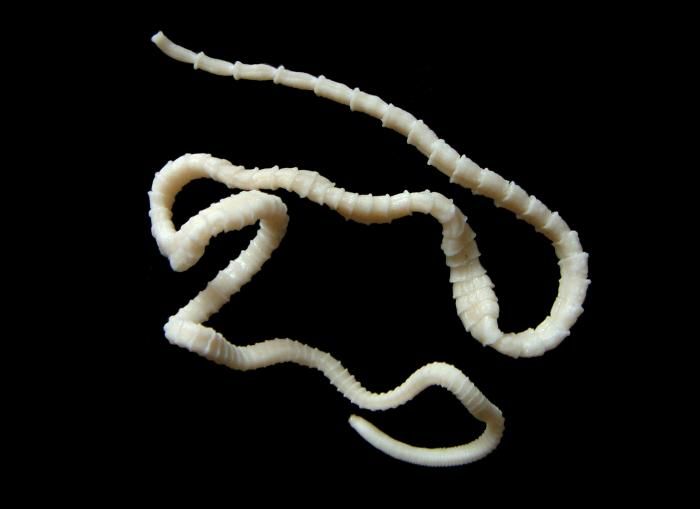
A tapeworm and a cat have this type of relationship.
a)
mutualism
b)
parasitism
c)
commensalism
d)
competition
45.

What type of symbiosis? Hummingbirds feed on nectar from flowers. The flowers are pollinated by hummingbirds as they move from flower to flower.
a)
commensalism
b)
mutualism
c)
parasitism
d)
predation
46.
Two organisms fighting over resources (food, territory, a mate etc.)
a)
Mutualism
b)
Competition
c)
Predator/Prey
d)
Commensalism
47.

The image provided is an example of a(n):
a)
Carnivore
b)
Herbivore
c)
Producer
d)
Autotroph
48.
plants that convert energy from the sun
a)
decomposer
b)
primary consumer
c)
secondary consumer
d)
producer
49.
As you move upward, from level to level, in an energy pyramid, energy _____.
a)
increases
b)
decreases
c)
stays the same
d)
increases exponentially
50.

The rabbit in this food web would be considered a:
a)
Decomposer
b)
Producer
c)
Secondary Consumer
d)
Primary Consumer
51.

The study of how living things interact with one another and with their environment.
a)
Biology
b)
Lithology
c)
Ecology
d)
Farmacology
52.
The pattern of overlapping feeding relationships or food chains among the various organisms in an ecosystem is called
a)
Food chain
b)
Food web
c)
Energy pyramid
d)
Carbon cycle
53.
What does a Secondary Consumer eat?
a)
Tertiary Consumers
b)
Primary Consumers
c)
Producers
d)
Secondary Consumers
54.

Decomposers are vital to ecosystems. They...
a)
convert sunlight into food
b)
return nutrients to the environment
c)
destroy dangerous pathogens
d)
purify air by filtering toxins
55.

What does a food web represent?
a)
All connections of energy flow throughout all organisms in a habitat.
b)
The specific ways that mutualism is carried out.
c)
A single pathway or energy flow between organisms.
d)
How carnivores get their food.
56.

A diagram that shows one path of energy through an ecosystem is called...
a)
food web
b)
food chain
c)
food net
d)
food bubble
57.

Members of different species living in an area
a)
organism
b)
population
c)
community
d)
ecosystem
58.

Members of the same species living in an area
a)
organism
b)
population
c)
community
d)
ecosystem
59.
What type of organism would you expect to find on the base of an energy pyramid?
a)
small fish
b)
jellyfish
c)
sharks
d)
phytoplankton
60.

In a food chain, the first link (where the energy begins) is always:
a)
a primary consumer
b)
a decomposer
c)
a producer
d)
an omnivore
61.

How many herbivores are in this web? (click on image to make it larger)
a)
1
b)
2
c)
3
d)
4
62.
What might happen if you remove a primary consumer from an ecosystem?
a)
There would be more food for secondary consumers.
b)
The number of primary consumers would increase.
c)
The number of producers would increase.
d)
The number of secondary consumers would increase.
100 %

