
 Worksheets
Science Final 7th Grade
Total questions: 61
Worksheet time: 18mins
Name
Class
Date
1.
The site of photosynthesis
a)
ribosome
b)
mitochondria
c)
chloroplast
d)
nucleus
2.
Which symbols best describe parasitism?
a)
+,+
b)
+,-
c)
+,0
d)
-,0
3.
Deer and Tick - Ticks feed on deer blood, causing irritation to the deer and potentially giving it various diseases such as lyme disease.
a)
Predation
b)
Mutualism
c)
Commensalism
d)
Parasitism
4.
Which symbols best describe commensalism?
a)
+,+
b)
+,-
c)
+,0
d)
0,0
5.
Hermit Crabs and Snails - Hermit crabs live in shells made and then abandoned by snails.
a)
Predation
b)
Mutualism
c)
Commensalism
d)
Parasitism
6.
Otters and Kelp - Otters float and sleep on the forests of kelp in the water. The kelp p rovides them a place to anchor in the moving water. The otters eat sea urchins, which normally feed on the kelp.
a)
Predation
b)
Mutualism
c)
Commensalism
d)
Parasitism
7.
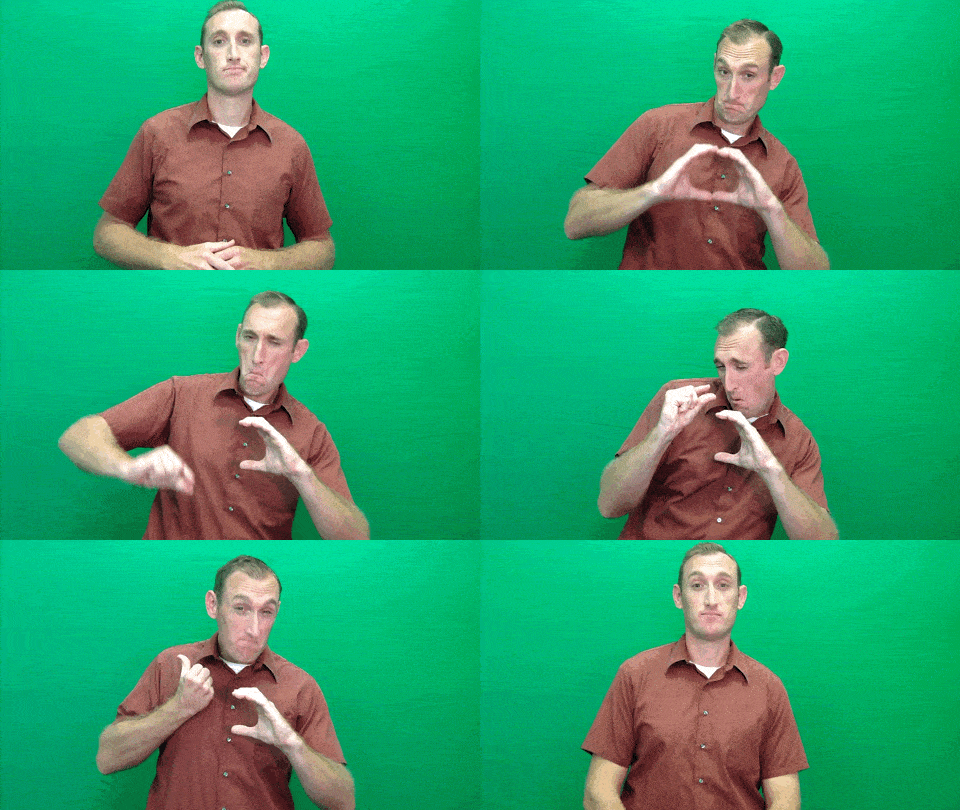
The ___________ is the basic unit of life
a)
organ
b)
cell
c)
atom
d)
tissue
8.
When many organ systems work together it can form...
a)
organ
b)
cells
c)
organ system
d)
organism
9.
Mistletoe and Oak Tree - Mistletoe extracts water and nutrients from the oak tree, causing harm to the oak tree.
a)
Predation
b)
Mutualism
c)
Commensalism
d)
Parasitism
10.

This is a example of........
a)
organ system
b)
cells
c)
organ
d)
tissue
11.
Which organelle is only found in a plant cell?
a)
nucleus
b)
chloroplast
c)
mitochondria
d)
cell membrane
12.

Directs all cell activities through the DNA located there.
a)
Lysosomes
b)
Nucleus
c)
ribosomes
d)
Mitochondria
13.
Which symbols best describe mutualism?
a)
+,+
b)
+,-
c)
+,0
d)
-,0
14.
Which of the following is directly involved in the transportation of materials inside/within the cell?
a)
Endoplasmic Reticulum
b)
Vacuole
c)
Lysosome
d)
Mitochondria
15.
Grasshopper and Leaf - A grasshopper lands on a plant and eats its leaves for food.
a)
Predation
b)
Mutualism
c)
Commensalism
d)
Parasitism
16.
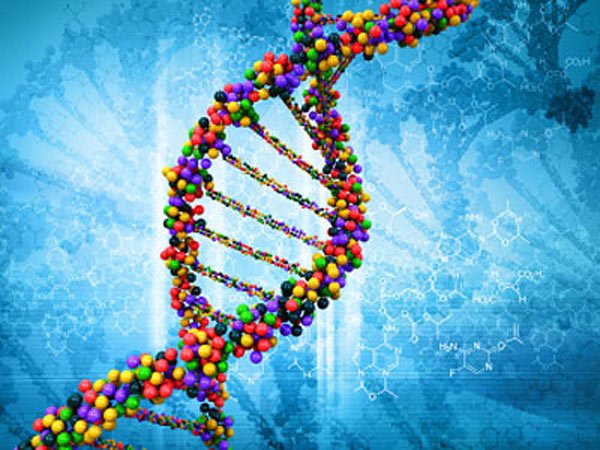
What is the name of the genetic material that is inside the nucleus?
a)
ER
b)
ATP
c)
YOLO
d)
DNA
17.
This organelle takes food and turns it into ENERGY for plant and animal cells.
a)
Chloroplast
b)
Mitochondria
c)
Lysosome
d)
Ribosome
18.

Which part of the cell is often called "the brain of the cell"?
a)
nuclear membrane
b)
endoplasmic reticulum
c)
nucleus
d)
mitochondria
19.
What is found in both plant and animal cells but is much larger in plant cells?
a)
Nucleus
b)
Mitochondria
c)
Chloroplast
d)
Vacuole
20.

What would happen to the plant cell without the chloroplasts?
a)
There wouldn't be an organelle that performs photosynthesis
b)
There wouldn't be an organelle that serves as the resevoir for water and waste
c)
There wouldn't be an organelle that regulates what comes in and out of the cell
d)
They wouldn't be an organelle that makes necesary proteins
21.
In which eukaryotic organelles does photosynthesis occur?
a)
mitochondria
b)
stomata
c)
xylem
d)
chloroplast
22.
Consistent:
a)
Can not be made up! Has to occur naturally.
b)
Scientists have to test their theories over and over to make sure they are getting consistent results.
c)
Scientists need to see consistent results to make comparisons.
d)
When scientists use consistent methods, than science becomes predictable, using patterns in data to make predictions.
23.
Natural:
a)
When scientists use consistent methods, than science becomes predictable, using patterns in data to make predictions.
b)
Can not be made up! Has to occur naturally.
c)
Science is always changes with new discoveries- it is not set in stone!
d)
Scientists need to see consistent results to make comparisons.
24.
Observable:
a)
Using all senses scientists need to take everything in when researching.
b)
When scientists use consistent methods, than science becomes predictable, using patterns in data to make predictions.
c)
Can not be made up! Has to occur naturally.
d)
Scientists have to test their theories over and over to make sure they are getting consistent results.
25.
Testable:
a)
Science is always changes with new discoveries- it is not set in stone!
b)
Can not be made up! Has to occur naturally.
c)
When scientists use consistent methods, than science becomes predictable, using patterns in data to make predictions.
d)
Scientists have to test their theories over and over to make sure they are getting consistent results.
26.
Tentative:
a)
Science is always changes with new discoveries- it is not set in stone!
b)
Using all senses scientists need to take everything in when researching.
c)
Scientists need to see consistent results to make comparisons.
d)
When scientists use consistent methods, than science becomes predictable, using patterns in data to make predictions.
27.
Predictable:
a)
Scientists need to see consistent results to make comparisons.
b)
Can not be made up! Has to occur naturally.
c)
When scientists use consistent methods, than science becomes predictable, using patterns in data to make predictions.
d)
Using all senses scientists need to take everything in when researching.
28.

Plant or animal cell
a)
Plant
b)
Animal
29.
A tadpole transforming into a frog is an example of....
a)
growth
b)
development
c)
reproduction
d)
homeostasis
30.
Regulation of an organism's internal environment to maintain conditions suitable for life is called...
a)
reproduction
b)
development
c)
growth
d)
homeostasis
31.
When a single organism produces offspring without the aid of another organism, this is ____________
a)
sexual reproduction
b)
growth
c)
development
d)
asexual reproduction
32.
Which of the following is uni-cellular
a)
bacteria
b)
dog
c)
tree
d)
crab
33.
Which of the following is abiotic
a)
bacteria
b)
cloud
c)
fungus
d)
dog
34.
Energy is needed by living things and cells to do what?
a)
Not get eaten by animals (Plants)
b)
Stay still
c)
Have response to events
d)
Get heated by sunlight
35.
How are scientific models helpful?
a)
Make observations, study patterns, conduct surveys, create models, analyze data
b)
see things too far away or too small for the naked eye, solve problems
c)
develop models, analyze data efficiently, communicate,
d)
pose hypothetical questions, devise creative solutions, share information
36.
Scientists don’t always do experiments to test their ideas. List 3 other methods do they use to study the world?
a)
Make observations, study patterns, conduct surveys, create models, analyze data
b)
Conduct experiments, use small models to test ideas, observe
c)
Eat, Sleep, Repeat
d)
I have absolutely no idea
37.
Hypothesis's use...
a)
Then, There Here
b)
Is the best, because
c)
When, Where, What
d)
If,then,because
38.
Conclusion has...
a)
If then because
b)
Data suggests
c)
I am right
d)
Hypothesis was right
39.
How are Eukaryotic Cells and Prokaryotic Cells different
a)
One is a real cell and one isn't
b)
Prokaryotic has a nucleus but Eukaryotic doesn't
c)
Eukaryotic has a nucleus but Prokaryotic doesn't
d)
Prokaryotic cells are made up
40.

Plant or Animal Cell
a)
Plant
b)
Animal
41.
What is the formula for photosynthesis?
a)
Glucose (food or sugar ) + Oxygen ---> Carbon Dioxide + Water + Energy
b)
Carbon Dioxide + Water --sunlight→ Food (glucose or sugar) + Oxygen + water
42.
Plant or Animal Cell
a)
Plant
b)
Animal
43.
Female gametes in humans
a)
Egg
b)
Sperm
c)
Nucleus
d)
Anther
44.
Energy is needed by living things and cells to do what?
a)
Not get eaten by animals (Plants)
b)
Stay still
c)
Have response to events
d)
Get heated by sunlight
45.
Where do most living things get their energy directly or indirectly
a)
Plants
b)
The color yellow
c)
Their food source
d)
The sun
46.
What happens when fertilization occurs?
a)
Zygote forms
b)
Human is the product immediately
c)
Person falls asleep
d)
Person dies
47.
What is the formula for cellular respiration? (raw materials and end products)
a)
Glucose (food or sugar ) + Oxygen ---> Carbon Dioxide + Water + Energy
b)
Carbon Dioxide + Water --sunlight→ Food (glucose or sugar) + Oxygen + water
48.
What is Diffusion?
a)
Diffusion of water from an area of high concentration to an area of low concentration.
b)
To allow materials into and out of the cells (raw materials and waste products).
c)
Movement of a substance from an area of high concentration to an area of low concentration.
49.
What is Osmosis?
a)
Diffusion of water from an area of high concentration to an area of low concentration.
b)
To allow materials into and out of the cells (raw materials and waste products).
c)
Movement of a substance from an area of high concentration to an area of low concentration.
50.
Most humans have __ chromosomes in every body cell and __ in every sex cell
a)
23,46
b)
22,49
c)
48,23
d)
46,23
51.
Male gametes in humans
a)
Egg
b)
Sperm
c)
Nucleus
d)
Anther
52.
Constant
a)
Is sometimes the same
b)
Is always changing
c)
Stays the same
d)
Is always different
53.
What happens when fertilization occurs?
a)
Zygote forms
b)
Human is the product immediately
c)
Person falls asleep
d)
Person dies
54.
What happens when flowers fertilize
a)
Create fruit
b)
They grow stems
c)
Create more Anthers
d)
Create 1000 more specks of pollen per hour
55.
How old is earth____ How long has life been around_____
a)
4.5 Billion, 3.5 Billion
b)
3.5 Billion, 4.6 billion
c)
4.6 billion, 3.5 million
d)
4.5 Billion, 3.5 Billion
56.
What is biologically fit?
a)
it means to match your habitat
b)
To be biggest and strongest
57.
What is interdependent
a)
Be silent
b)
Rely on themselves
c)
Rely on each other
d)
Be loud
58.
What % energy goes to the next level in an energy pyramid?
a)
90%
b)
10%
c)
20%
d)
9%
59.
How can you tell what animal is prey
a)
Large population
b)
Small population
c)
Same population as predator
d)
Population is always on the decrease
60.
Independent Variable
a)
Relys on others
b)
Does not rely on others
61.
Dependent variable...
a)
Depends on another
b)
Does not depend on another
100 %

