
 Worksheets
Science Unit 3 Test
Total questions: 30
Worksheet time: 31mins
___ is the transfer of energy from one object to another through direct contact (touching)
radiation
conduction
convection
convection current
_____ is the the transfer of energy due to the movement of matter.
radiation
conduction
convection
convection current
__________ is the transfer of energy as electromagnetic waves.
conduction
convection
radiation
convection current
_______ is the energy that is transferred between objects that are at different temperatures.
thermal energy
thermal expansion
heat
temperature
__________ is the measure of the average kinetic energy of particles.
temperature
thermal energy
thermal expansion
density

The picture shows all three methods of energy transfer. Which of these correctly identifies the three methods of energy transfer?
1.convection 2. radiation 3. conduction
1.radiation 2.conduction 3. convection
1.conduction 2.convection 3. radiation
1.radiation 2.convection 3.conduction
A plastic spoon that has a temperature of 78 degrees F is placed into a bowl of soup that has a temperature of 84 degrees F. Which of these correctly describes what will happen?
Energy as heat moves from the spoon to the soup.
Energy as heat does not move, because the spoon is plastic.
Energy as heat moves from the soup to the spoon.
Energy as heat does not move, because the temperature difference is too small.
The transfer of energy due to a current in a fluid is
conduction
convection
radiation


What is the second most abundant gas in the atmosphere at 21%?
oxygen
nitrogen
argon
carbon dioxide
What is the order of the layers of the atmosphere, starting with the layer closest to Earth's surface?
Stratosphere, Troposphere, Exosphere, Mesosphere, Thermosphere
Troposphere, Stratosphere, Mesosphere, Thermosphere, Exosphere
Troposphere, Stratosphere, Mesosphere, Exosphere, Thermosphere
Troposphere, Stratosphere, Thermosphere, Exosphere, Mesosphere
What is the main cause of air pollution?
plowing fields and releasing dust
using solar power
burning fossil fuels
using water power

What causes differences in air pressure?
even heating of the Earth
Even cooling of the earth
uneven heating of the earth
global warming
In the Northern Hemisphere, winds traveling north appear to curve east because of the:
trade winds
convection currents
Coriolis effect
polar easterlies
What type of winds blow constantly, predictably, and over long distances?
land breezes
local winds
global winds
sea breezes

Winds occur because hot air rises and cool air sinks in a process called...
conduction
convection
radiation
magnetism

Winds that blow from 300 latitude to the equator are called...
westerlies
easterlies
trade winds
hurricanes
Air circulates in Earth’s atmosphere. Which of the following is the fundamental cause of air circulation in Earth’s atmosphere?
ocean currents
Earth's gravity
Earth's magnetic field
energy from the sun
The air helps regulate Earth’s atmosphere so that it is not too cold or too hot for life on Earth. The air also protects organisms from the sun’s harmful radiation. These are reasons air is an important resource. Which of these statements provides a major reason that air is considered an important natural resource?
Birds use air to allow them to fly
Clouds are moved from place to place by air
Animals need air to breathe and survive
Water is evaporated into the air causing precipitation
Which of the following is a common cause of acid rain?
oil spilled into tropical ocean waters
gases released when plants make food
emissions produced by burning fossil fuels
warm water released from nuclear power plants
There are four main layers in the atmosphere. Which layer is responsible for shielding Earth from ultraviolet radiation?
Trophosphere
Stratosphere
Thermosphere
Mesosphere
Smog is a pollutant that can cause serious health problems. Smog is most often seen over large cities. Which of these substances is a main ingredient of smog?
volcanic ash
vehicle exhaust
carbon dioxide
acidic precipitation
Air quality is a measure of how clean or polluted the air is. Which of the following is a common way to determine air quality?
measuring the temperature of the air
measuring the amount of oxygen in the air
measuring the amount of ground-level ozone
measuring the number of air-related health issues people have
The ozone hole is actually an area of depleted ozone in Earth's atmosphere. Which of the following human activities has been the greatest contributor to the development of the ozone hole?
the increase in factory emissions
the use of oil in automobile engines
the use of airplanes in the atmosphere
the use of chlorofluorocarbon in refrigeration

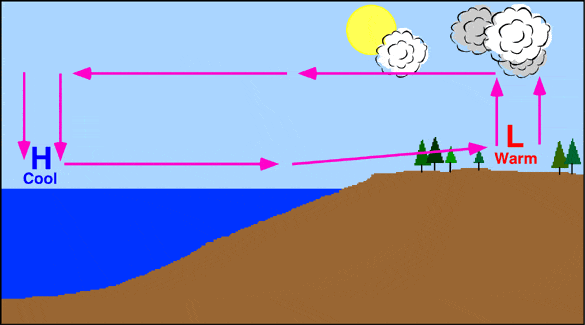
Which type of breeze is illustrated in this image?
valley breeze
mountain breeze
land breeze
sea breeze

