
Font size
 Worksheets
evolution
Total questions: 24
Worksheet time: 19mins

The hypothesis that evolution of a species occurs in periods of rapid change separated by periods of little chang
Gradualism
Divergence
Speciation
Punctuated Equilibrium

The graphs below show the changes in crab color at one beach.
Which of the following is most likely to have caused the change in the distribution?
A new predator arrived that preferred dark-tan crabs.
A new predator arrived that preferred light-tan crabs.
A change in beach color made medium-tan crabs the least visible to predators.
A change in beach color made medium-tan crabs the most visible to predators.
An inherited trait that helps those organisms that have it to survive.

Which statement is correct about the evidence in this picture?
similar bones indicate a similar diet
similar bones indicate a similar habitat
similar bones indicate a common ancestor
similar bones indicate evolution happened quick
The name of Darwin's ship?
The HMS Beagle
The HMS Beetles
The Titanic
The Mayflower

Which of the following statements best reflects the evolutionary importance of the figures below?
New genetic instructions have been disregarded in the evolution of vertebrates.
Early in development, vertebrate embryos show no evidence of common ancestry.
All adult vertebrates retain pharyngeal pouches (gills).
The evolutionary history of organisms is seen in the way embryos develop.

Structures that are similar in structure but have different functions.
Vestigial Structures
Homologous Structures
Analogous Structures
Gradualism

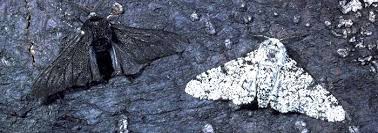
Which process is shown below?
Artificial Selection
Natural Selection
Mimicry
Speciation

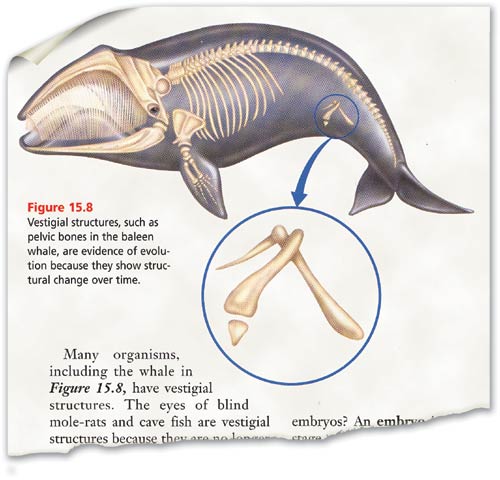
What do we call structures that no longer perform their original function?
Natural Selection
Analogous Structure
Vestigial Structure
Homologous Structure
The ABILITY of an organism to survive and reproduce in its environment
Adaptation
fitness
Mutation
Natural Selection
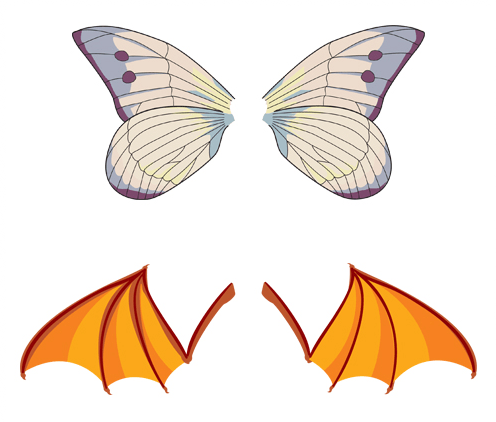
What is this an example of?
Homologous structure
Analogous structure
Vestigial organs
Functional adaption
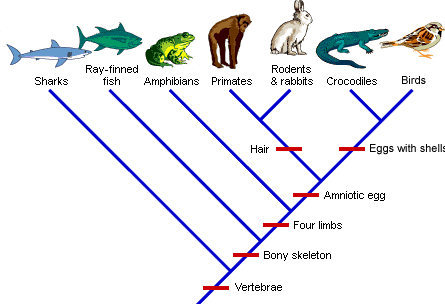

The process where the better adapted organisms survive to pass traits along to offspring.

The process by which a new species form
Speciation
Subspecies
Gradualism
Punctuated Equilibrium

Structures that no longer function/serve a purpose
homologous structures
vestigial structures
analogous structures
Gradualism
Which scientist proposed the theory of evolution?
Alfred Russell Wallace
Charles Darwin
Alfred Russell Wallace and Charles Darwin both independently came up with the theory of evolution. However, Darwin had been developing his ideas for longer and his work was more comprehensive.
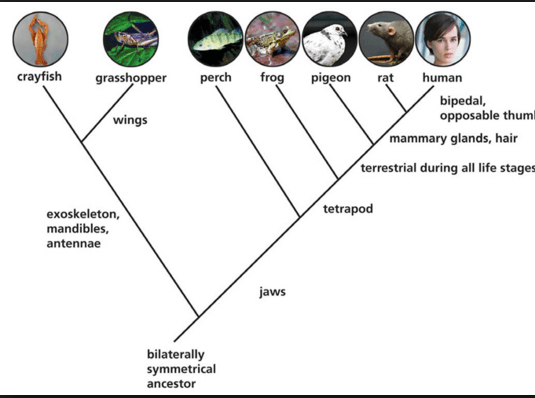

Members of the same species that differ genetically because they have adapted to different living conditions.
Subspecies
Gradualism
Speciation
Punctuated Equilibrium
The process by which a new species form
Speciation
Subspecies
Gradualism
Punctuated Equilibrium
Which of the following statements gives the MOST LIKELY explanation for the presence of two very similar species of squirrels living on opposite sides of the Grand Canyon?
One squirrel traveled across the canyon and started a new population on the other side.
One squirrel traveled across the canyon and interbred with a different population on the other side.
Members of one single squirrel species were geographically separated by the formation of the canyon.
Members of two different squirrel species migrated from two different places to opposite sides of the canyon.

