
 Worksheets
WCII Unit 3 Review
Total questions: 58
Worksheet time: 43mins
Why were students protesting in Tiananmen Square in 1989?
They wanted more democratic freedoms
They wanted to rid China of all foreign influence
They were disappointed in the results of the Great Leap Forward
They wanted to rid China of the "Four Olds" during the Cultural Revolution
Historically, a major problem for Japan's economy and development has been the lack of....
natural resources
skilled labor
experienced government
unity among the people
When did Japan surrender during World War II?
After the US dropped an atomic bomb on Hiroshima and Nagasaki
Before hostilities ended between Germany and the Allies
After American troops invaded Tokyo
Immediately following Germany's surrender to the Soviets
Which of the following was an outcome of the Meiji Restoration?
Japan rejected the attempts of Western nations to trade
Japan focused on returning to a traditional economy
Japan modernized its economy and established a national army
The Japanese military shrunk in size
How did the Cultural Revolution impact China?
Many were killed, imprisoned, or moved into prison camps
People were reorganized into People's Communes
Chinese culture became popular worldwide
The economy thrived due to new reforms
Historically, the Chinese explained rebellions, natural disasters, and civil wars as....
the loss of the current dynasty's Mandate of Heaven
The failure of the people to respect the emperor
The wrath of the Heavens
A new family gaining the Mandate of Heaven
Japan's invasion of (a) led to the beginning of World War II in Asia
The Treaty of Kanagawa, Treaty of Nanking, and the Treaty of Tianjin are all examples of....
Unequal treaties with imperial nations
Justifications for Japanese imperialism
Treaties that modernized East Asian nations
Treaties that ended wars
This program attempted to improve the economy by arranging people into communes to increase industrial and agricultural output
Great Leap Forward
Cultural Revolution
Four Modernizations
Long March
This policy led to the creation of the Red Guards, teenagers charged with violently preserving the "communist spirit"
Cultural Revolution
Great Leap Forward
Four Modernizations
Long March
This policy was created to modernize China by improve agriculture, industry, defense, and technology
Four Modernizations
Great Leap Forward
Cultural Revolution
Sino-Japanese Pact
Why was the Nationalist Party less popular than the Communist Party in China?
They ignored the needs of the majority peasant population
The Nationalist Party's democratic ideals were not popular
The Nationalist Party believed in equality and equal distribution of land
The Nationalist Party was supported by the Japanese government
Match the following:
Chiang kai-Shek
Military leader of the Nationalist Party who supported capitalism
Mao Zedong
Led a successful revolution and established a Communist government in China
Deng Xiaoping
Leader who made extensive economic reforms in China while still upholding communist ideals
Sun Yat-sen
Revolutionary leader who believed China should get rid of the Qing dynasty and become a democracy
In an attempt to modernize Japan during the late 1800s, the Meiji government decided to....
Study Western institutions and technology
Establish close relations with China
Maintain a policy of isolationism
Ban the influence of religious institutions in government
Why were reforms implemented during the Meiji Restoration?
Japan's defeat in WWII
The glorification of the military
The desire to avoid domination by the Western powers
Efficient production methods in factories
Who became the leader of Communist China after Mao Zedong died?
Deng Xiaoping
Xi Jinping
Chiang kai-Shek
Zheng He
One consequence of the Cultural Revolution was....
Many were killed, imprisoned, or sent to prison camps
People were reorganized into communes
Japan's economy thrived due to new reforms
Chinese culture became popular around the world
Mao Zedong believed the Communist Party should seek support from the:
Peasant population
Soviet Union
Capitalist business investors
Urban working class
One result of the Opium Wars was....
Britain gained control over Hong Kong
Britain was forced to end the opium trade
China became increasingly isolated from the rest of the world
China banned British ships from its ports
The Treaty of (a) was formed after the first Opium War.
Which was NOT a result of the first Opium War?
China had to open more ports to foreign trade
Britain received compensation for the destroyed opium
Britain took control of the island of Hong Kong
China became a British colony
Why were the Opium Wars significant?
It forced China to change to a democratic government
It forced Great Britain to recognise the importance of Confucian values
It forced China to open its doors to trade with the western world
It forced Great Britain to open its doors to trade with the Qing dynasty.

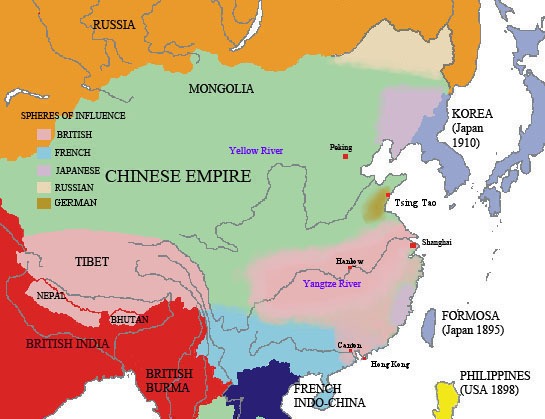
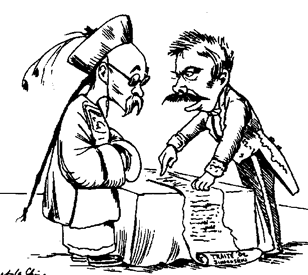
Which of these is(are) represented at the largest predator(s), ready to carve up China?
Britain and Japan
the United States
France
Russia and Britain
The Treaty of Tianjin set the stage for what rebellion?
Sepoy Rebellion
Taiping Rebellion
Opium Rebellion
Boxer Rebellion
What effect did the Opium Wars have on Japan?
Led to isolationism.
Led to Meiji Restoration.
Led to imperialistic tendencies.
Led to the takeover of India.

Imperialism would benefit the economies of imperial countries.
What program was designed to stop opposition to the Chinese Communist Party?
The Great Leap Forward
The Cultural Revolution
The Chinese Civil War
The Ping Dynasty
What was one result of the Great Leap Forward that Mao promoted in China?
Millions of people died of starvation
More farm machinery was purchased to elevate production
Fewer people moved to the countryside for agricultural work
More people moved into cities to work in larger factories
What was the role of the Red Guard during the Cultural Revolution?
Attack and punish those who disagreed with Mao's vision of communism
Reward those who spoke out against corruption in China
Fight against the Soviet Union in China
Fight against the United States in North Korea.
After the emperor was overthrown, what two political parties emerged in China?
Republican & Democrats
Nationalist & Communist
Fascists & Socialsts
The People for Republic of China & The Japanese Communist Party

Which statement best describes the author’s point of view in this 1992 cartoon?
China's government opposes free-trade agreements with Western nations.
Deng Xiaoping personally opposed the introduction of capitalism to China.
The Chinese Government is more interested in improving trade than in respecting human rights.
China's economic system is meeting the needs of its people.
Why did poor peasants support the Chinese Communist Party?
They wanted to work in communes
It promised them food and a better quality of life
They had no other option
Mao Zedong said he would give them money
What did Japan's industrialization create a need for?
anime
war economy
more industrialization
raw materials
What country did Japan defeat in 1905, earning Japan recognition as a world power?
Italy
Germany
Russia
England
What ideology best describes Japanese culture between 1920 and 1945?
militarism
pacifist
democracy
communist

Japan occupied all of the following territories EXCEPT
Korea
Parts of China
Philippines
India

Which of the following explains why Japan bombed Pearl Harbor?
The United States were trying to take over Japan
The United States wanted to drag Japan into WWII
The United States was blocking Japan from expanding its empire in the Pacific
The United States questioned the divinity of their Emperor

Who did Japan have an alliance with for WWII
US and Great Britian
Germany and Italy
Germany and Great Britain
Italy and US

What two cities were hit by the atomic bomb?
Tokyo and Kyoto
Hiroshima and Kyoto
Sapporo and Nagasaki
Hiroshima and Nagasaki
Which is true of Japan?
It lacked the natural resources it needed for industrialization
It's population was not large enough for industrialization
It had all the fuel, food, and resources it needed for industrialization
It took longer for Japan to industrialize than it did Europe
A primary reason for Japan's involvement in the Sino-Japanese War and the Russo-Japanese WAr was to
Acquire natural resources in Manchuria and China
Control trade and markets in Southeast Asia
End Japan's policy of isolationism
Remove foreign invaders from Japanese Soil
- Sino-Japanese War 1894-1895
- Russo-Japanese War 1904-1905
- Annexation of Korea 1910
These events in the history of Japan reflect its
Resistance to Trade
Abundance of Natural Resources
Vulnerability to attack by neighbors
emergence as an Imperialistic country

Based on the information provided by this map, how did the growth of the Japanese Empire affect China?
China acquired Japanese military technology
China invaded French Indochina
China was forced to adopt Korean Culture
China lost control of many of its Easter Seaports
Sort the following events in chronological order (earliest --> latest)
Opium Wars
Boxer Rebellion
Communist China
Great Leap Forward
Cultural Revolution
Sort the following events in chronological order (earliest --> latest)
Tokugawa Shogunate
Treaty of Kanagawa
Meiji Restoration
Russo-Japanese War
Japanese Invasion of Manchuria
The outcomes of the protests at Tiananmen Square in 1989 included all of the following.... (check all that apply)
Harsh suppression of the movement for democracy
Execution of protest leaders and the death of hundreds of citizens
The call for reform making China into a democratic country
Denying citizens the freedom of speech

The main purpose of this 1961 political cartoon was to….
Criticize Chinese government policy
Praise chinese government leaders
Reinforce Chinese government propaganda
Question Chinese government spending

What is the main idea of this cartoon?
The majority of people in China do not support the recent changes
China is improving its record on human rights
Economic freedom in China has not led to political reforms and freedom
China's system of criminal justice is based on Western traditions and laws

