
 Worksheets
Children's Lit MIDTERMS
Total questions: 160
Worksheet time: 1hrs 25mins

ENGLISH LITERATURE QUIZ
1. What is English Literature?
It is the speaking of written materials
It is the reading and analysis of different written materials
It is the reading of songs and poems
It is the creation of stories in English

What is to "read critically"?
To read stories in English
To answer questions about stories in English
To read , understand and analyze what the author of a story is saying
To creat characters for stories
What is ONE importance of Literature?
Literature improves your physical activity
Literature improves your knowdledge of Spanish
Literature improves your command of language
Literature improves your health

When you read a book you can ......?
Get a better grade
Fall asleep
Learn about cooking and recipes
Learn about the life , cultures and experiences of people in others parts of the world
Which are the kinds of English Literature?
Imaginary Literature and Real Literature
Real stories and Fake stories
Fictional Literature and Non - fictional Literature
Fictional Literature and Real Literature

Choose the correct answers according to the images
This book is ........?
Fictional Literature
Non - Fictional Literarure

Fictional Literature
Non - Fictional Literature

What kind of Literature is this?
Newspapers
Diaries
Magazines
Biographies

Fictional Literature
Non Fictional Literature

Fictional Literature
Non - Fictional Literature

What kind of Literature is this book?
Diary
Journal
Biography
Essay
What are the correct Elements of Fiction?
Author - Place - Story - Themes - Characters - Style - Language
Author - Setting - Plot - Themes - Characters - Style - Language
Writer - Setting - Plot - Themes - Characters - Style - English
Author - Setting - Plot - Topics - Characteristics - Style - Language

The Author is ......?
The place in the story
A character of the story
The writer of the story
The cover of the book

The setting is .....?
The real events of the story
The imaginary characters of the story
The places of the story
The author's real house
It talks about the general structure of the literary piece.
Characterization
Form
Style
Theme
It holds all of its other elements in place.
Form
Theme
Characterization
Style
It is the products of the writer’s imagination, or they could be the very compelling point-of-view that the writer thinks in.
Theme
Style
Form
Characterization
A/An (a) is the biography of a person written by that person.
Which of the following are the two main types of literature?
Fiction
Non-Fiction
Folktale
Epics
This type of literature can also be called “informational” material.
Fiction
Non-Fiction
Poetry
Drama
In this type of literature, authors can also choose to include factual information in a made-up story.
Fiction
Non-Fiction
Drama
Poetry
It is a created literature to be performed and witnessed by an audience.
Poetry
Novel
Epic
Drama
Drama is divided into "_____" and "_____", forming a text filled with dialogues and stage directions for the actors’ movements.
chapters
acts
scenes
volumes
A novel could present various themes organized in “_____”, and, sometimes, “______.”
scenes
acts
volumes
chapters
A _________ is more creatively crafted than novels, but lack specific and minute details.
Short Story
Essay
Epic
Folktale
It is deemed as the most relatable and tangible among the other literary forms.
Poetry
Essay
Epic
Novel
Is on literary form that is slowly becoming extinct, if not, rare.
Drama
Folktale
Novel
Epic
An epic combines both styles of a _______ and ______ story.
romantic
drama
humorous
narrative

What form of literature is shown based on the text?
Essay
Short Story
Poetry
Epic
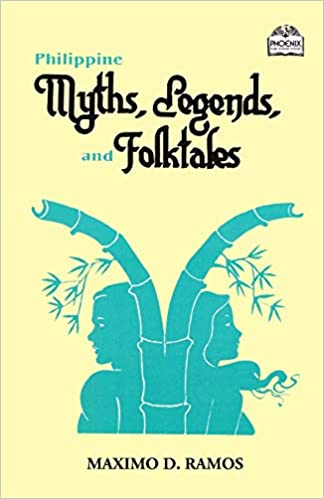
The Philippines had literature such as legends, folktales, folksongs, and the like.
Pre-colonial Period
Nationalistic/Propaganda & Revolutionary Period
Spanish Colonization
American Colonial Period
What hair colour Goldilocks have?
Brown
Golden
Black
Red
How many bowls were on the table?
3
1
4
2
What did happen to the chair?
It got smaller
It got bigger
It broke
Nothing
Who is sleeping in the small bed?
Mummy Bear
Daddy Bear
Baby Bear
Goldilocks
What's the name of the tale?
Goldilocks and the four Bears
Goldilocks and the six Bears
Goldilocks and the three Bears
Goldilocks and the five Bears
What's does Goldilocks say?
This is just right!
This is just good!
This is just great!
This is just fine!
What is the setting of the tale?
The jungle
The house
The school
The zoo
Who did live in the house?
The three bears
The three pigs
The three cats
The three lions
Which one is not a character in the tale?
Goldilocks
Baby bear
Daddy lion
Mummy bear
What did Goldilocks do when she saw the three bears?
She ran into the forest.
She ate more porridge.
She danced with the bears.
She kept sleeping
The Hare and the Tortoise are best ....................
enemies
families
friends
relatives
The ...................... was very proud of his swiftness.
tiger
hare
tortoise
lion
The tortoise will be ..................... and felt insulted every time.
sad
happy
suprised
angry
The ............ asked the ............. to run a race.
tortoise, hare
hare, tortoise
lion, rabbit
rabbit, lion
The next day the ……….. started from a particular place.
goal
competition
race
The hare took a few ……………… and was much ahead.
leaps
steps
run
jumps
The hare decided to take a ………….
sleep
rest
nap
The tortoise had reached the ……………..
end
goal
race
win
The hare ran very fast but the tortoise had already ………………
reach
reached
reaches
The hare realize that slow and steady ………. the race.
wins
win
won
winning
What is a folktale?
a hero or heroine's quest
a chase
an expository text
something informational
What is a pursuit?
a chase
before or earlier
a consequence
to notice something
Stories in the oral tradition, or tales that people tell each other out loud, rather than stories in written form.
Folktales
Epic
Myth
Characters in folktales are usually animals or people.
False
True
All folktales doesn't have a moral lesson.
True
False


Which of the following best defines a myth?
a story that is made up and not to be believed at all.
a traditional story, especially one concerning the early history of a people or explaining some natural phenomenon, and typically involving supernatural beings or events.
a movie that involves the retelling of true events.
a story that has some supernatural elements, but does not explain a natural phenomenon.
What is one of the purposes of a myth?
to make people laugh
to make people cry
to explain a natural occurrence or phenomenon
to sell lots of copies and make money.
True or false, a myth is nothing more than a made up story that is not to be believed.
true
false
Is the following an example of a myth?
A goddess loses her magical powers and cries tears of sadness down onto the Earth. This is where rain comes from.
myth
not myth
Is the following an example of a myth?
A god wakes up early and is very angry. He stomps on the ground, but his supernatural strength causes the earth to shake. This is where earthquakes come from.
myth
not myth
Is the following an example of a myth?
A princess falls asleep in the woods. She wakes up and realizes she has missed her family ball.
myth
not myth
The stories are usually very old with little or no evidence to support them. They are very similar to myths because they seek to explain how things came to be.
Tales
Drama
Folktales
Legends
Legends, like myths, are passed on by word of mouth.
True
False
These stories or tales are regarded as
fiction although it is often said that they are
told only for amusement, they serve other
functions in the society.
Drama
Legends
Folktales
Myths
Folktales are considered as history because the events really happened in real life.
True
False
Why is the story The Turtle and the Lizard considered a folktale?
The story is entertaining.
The story is about local animals in the Philippines.
The story teaches morals and virtues.
All of the above.
--
"Fee-fi-fo-fum,
I smell the blood of an Englishman,
Be he alive, or be he dead
I'll have his bones to grind my bread"


What is a common feature of alphabet books, number books, and nursery rhymes?
They are all written in prose.
They are typically aimed at older children.
They often use repetition and rhyme to teach basic concepts.
They contain complex plotlines.
Which of the following is NOT typically found in alphabet books?
A focus on teaching letters and letter sounds
Illustrations related to each letter.
Moral lessons for children.
Simple, rhyming text.
What is a common theme in fairy tales?
Realistic portrayals of everyday life.
Magical elements and enchantments.
Detailed historical accounts.
Political commentaries.
What distinguishes legends from other types of stories?
They are based on historical events or real people.
Legends are always fictional and never rooted in reality.
They are very short stories.
Legends are only found in modern literature.
What is a primary purpose of legends?
To teach moral lessons.
To entertain children with magical adventures.
To provide historical information.
To promote a specific religious belief.
Which type of children's literature often combines elements of both prose and poetry?
Alphabet books.
Number books.
Nursery rhymes.
Fairy tales.
Which of the following is a common thread in both fairy tales and legends?
Magical elements.
Historical accuracy.
Rhyming text.
Lack of moral lessons.
Which of these types of children's literature is primarily focused on teaching language and early literacy skills?
Fables.
Number books.
Fairy tales.
Legends
Alphabet books are often used to help children learn:
Basic math concepts.
Letter sounds and recognition.
Nursery rhymes.
History and geography.
What is a key characteristic of nursery rhymes that distinguishes them from other children's literature?
They are written in a formal, academic style.
They typically have no rhyme or rhythm.
They are designed to be sung or recited.
They are exclusively for older children.
Which type of children's literature is more likely to have a repetitive structure to aid in learning?
Fairy tales.
Number books.
Legends.
Fables
While both fairy tales and legends can feature supernatural elements, what is a key distinction between them?
Fairy tales often have multiple authors, while legends have single, known authors.
Legends are always rooted in real historical events, while fairy tales are entirely fictional.
Fairy tales typically have happy endings, while legends may have a range of outcomes.
Legends are exclusively passed down through oral tradition, while fairy tales are primarily written.
How do myths differ from legends in terms of their cultural significance?
Myths are often more widely recognized and revered within a culture.
Legends are universally accepted across cultures, while myths are not.
Myths are always written, while legends are primarily oral traditions.
Legends are specific to religious beliefs, while myths are secular.
In both "The Lion and the Mouse" and "The Tortoise and the Hare" fables, the stories revolve around the concept of unexpected outcomes. However, they differ in their approach to this theme. Which of the following statements accurately reflects this difference?
"The Lion and the Mouse" illustrates how even the weakest can be of help in times of need, while "The Tortoise and the Hare" emphasizes the importance of determination and perseverance.
"The Lion and the Mouse" underscores the value of intelligence and cleverness, whereas "The Tortoise and the Hare" highlights the significance of physical strength and agility.
"The Lion and the Mouse" teaches that acts of kindness can have far-reaching consequences, whereas "The Tortoise and the Hare" suggests that talent alone can guarantee success.
"The Lion and the Mouse" demonstrates that friendship can overcome all obstacles, while "The Tortoise and the Hare" stresses the significance of competition and rivalry.
In the classic fairy tale "Cinderella," the magical transformation of Cinderella's attire for the royal ball involves several intricate details. Which of the following elements is NOT part of her enchanting transformation?
A pumpkin transformed into a carriage
A pair of glass slippers
A beautiful ball gown
A talking mouse companion named Gus
Nursery rhymes often exhibit distinctive characteristics that make them appealing to young children. Which of the following features is NOT commonly associated with nursery rhymes?
Elaborate character development and complex plotlines.
Simple and repetitive rhythms.
Rhyming patterns that aid in phonemic awareness.
The use of whimsical or nonsensical elements.
For 3 points.
"Why is it important for English teachers to have a deep understanding of various literary genres suitable for children's literature, and how does this knowledge benefit their students?"
Alphabet books are a diverse genre in child and adolescent literature. Which of the following statements best captures a characteristic commonly found in alphabet books?
Alphabet books primarily target teenage readers to enhance their vocabulary.
Alphabet books often feature complex plotlines and character development.
Alphabet books use each letter of the alphabet to introduce words, concepts, or themes.
Alphabet books typically include lengthy, unrhymed prose to challenge young readers.

Name the famous children's book
The witches
Room on the Broom
Tabby McTat
Charlie and the chocolate Factory

Name this famous children's book
A crazy tale of aliens
Pants on Aliens
Space idiots
Aliens love Underpants

Name this famous children's book
Green eggs and Ham
The Cat in the Hat
Fox in Socks
Dr Seuss

Name this famous children's book
Animal Farm
The Pig's Tale
Charlotte's Web
Farmyard Fun

Name this famous children's book
George's Marvellous Medicine
The Witches
Esio Trot
Danny Champion of the World

Name this famous children's book
Billionairre Boy
Gangsta Granny
Thieving Granny
The Burglars

Name this famous children's book
The Gruffalo
Where the Wild things are
The Mouse's adventure
The Ogre of the Woods

Name this famous children's book
Peter Rabbit
Flopsy and Baby Hare
Guess How Much I Love You?
Can I reach it?

Name this famous children's book
James and the giant Peach
Fred and the Massive Apple
Steve and the Floating Apricot
Bob and the Bobbing Banana

Name this famous children's book
Super mole
The Lorax
What are you looking at?
The Death-Defying Hamster

Name this famous children's book
The Tail of Peter Rabbit
The Tale of Peter Rabbit
Peter Rabbit's Tale
Adventure's of Peter Rabbit

The Ravenous Insect
The Greedy Caterpllar
Caterpillar gets a Tummy Ache
The Very Hungry Caterpillar

Name this famous children's book
The Very Hungry Tiger
The Tiger who Came For Tea
Guess Who Came to Tea?
Tiger eats all the Food!

Name this famous children's book
What the Ladybird Heard
Who lives on the Farm?
Piggy Saves the Day
Duck goes Quackers

Name this famous children's book
The Gruffalo
Where the Wild Things Are
Sail off to Dreamland
The Night Time Land

Name this famous children's book
Spot goes missing
Spot in the box
Spot plays Hide and Seek
Where's spot?

Name this famous children's book
Find the missing person
Jobs and occupations
Where's Wally?
It's a big mix up!

Name this famous children's book
The 101 Storey Treehouse
Horrid Henry
Diary of a Wimpy Kid
Nasty Robert

Name this famous children's book
Christopher Robin
Eeyore's adventure
Jungle Book
Winnie the Pooh

Name this famous children's book
A family adventure
We're going on a bear hunt
Dad goes wild
Three go on an adventure


During the Classical World period (850 BCE – 476 CE), what contributed to keeping ancient stories alive for both children and adults?
Printing press
Television shows
Oral storytelling
Social media platforms
Which of the following was a significant feature of literature during the Middle Ages (476 CE – 1450)?
Rise of modern fantasy
Development of digital books
Religious tales and biblical stories
Popularity of picture storybooks
The Renaissance period (1450 – 1700) saw the emergence of educational books. What was the title of the first children’s picture book published during this time?
Alice’s Adventures in Wonderland
Tales of Mother Goose
Winnie-the-Pooh
Orbis Sensualism Pictus
Who advocated the idea that a child's mind at birth was like a blank slate and everyone was born with equal abilities to learn?
John Locke
Jean-Jacques Rousseau
Lewis Carroll
A. A. Milne
The Victorians' Golden Age (1830 – 1900) marked the rise of modern fantasy literature. Which of the following works is considered the first children’s masterpiece of modern fantasy?
Little Women
The Tale of Peter Rabbit
Alice’s Adventures in Wonderland
The Lion, the Witch and the Wardrobe
In the 20th century, what technological advances have significantly influenced the trends in children’s literature?
Television shows
Video games
Digital resources and interactive formats
Radio broadcasts
What cultural movement of the late 20th century had an impact on changes in contemporary children’s books?
Romanticism
Modernism
Postmodernism
Classicism
According to the postmodern understanding, why is interpretation important in constructing reality?
To impose objective truths on different cultures
To establish a universal reality
To create a consistent narrative across societies
To acknowledge individual perspectives and relative truths
Which work by John Comenius is considered the first children’s picture book?
Tales of Mother Goose
Alice’s Adventures in Wonderland
Orbis Sensualism Pictus
Winnie-the-Pooh
Which book is an example of a modern fantasy work from the Golden Age of Children’s Literature (1830 – 1900)?
Charlotte's Web
The Tale of Peter Rabbit
Treasure Island
Little Women
What ancient collection of fables, known for its moral lessons, contributed to the Classical World's children's literature?
The Odyssey
The Iliad
Beowulf
Aesop's fables
Which influential work by Jean-Jacques Rousseau emphasized the importance of allowing a child's natural development and learning through experience?
Alice's Adventures in Wonderland
Emile
Tales of Mother Goose
The Lion, the Witch and the Wardrobe
During the Middle Ages, what type of stories set examples for children and had a didactic purpose?
Romantic tales
Mystery novels
Fantasy epics
Comedy plays
What technological advancement during the Renaissance allowed for the production of multiple copies of books, leading to the rise of educational books for children?
The radio
The printing press
The television
The telephone
Which famous children's author created the character Winnie-the-Pooh during the 20th century?
Lewis Carroll
A. A. Milne
J.K. Rowling
Roald Dahl
What work by C. S. Lewis is a classic example of a fantasy story and the first book in a popular series?
Charlotte's Web
The Lion, the Witch and the Wardrobe
Little Women
The Tale of Peter Rabbit
Which movement, a reaction to scientific explanations of reality, focuses on individual interpretations and relative truths?
Modernism
Romanticism
Postmodernism
Classicism
Which term describes individuals who are flexible and skilled in engaging with various types of texts in a diverse world?
Monolingual
Multicultural
Multiliterate
Monolithic
What classic work of children's literature, published in 1868, tells the story of the four March sisters?
Alice's Adventures in Wonderland
Little Women
The Tale of Peter Rabbit
Charlotte's Web
What influential book, published in 1926, introduced the character Winnie-the-Pooh to the world?
The Wonderful Wizard of Oz
Winnie-the-Pooh
Alice's Adventures in Wonderland
The Lion, the Witch and the Wardrobe

