
 Worksheets
Unit 6: Ecosystems Review
Total questions: 40
Worksheet time: 3hrs 20mins

Which of the following are the major categories of ecosystems? Select ALL
Terrestrial
Marine
Freshwater
Biome

The two abiotic factors used to classify earth’s terrestrial biomes are
plant and animal species present.
trophic levels and average temperature.
average yearly precipitation and temperature.
length of growing season and amount of rainfall.

Is this aquatic ecosystem marine or freshwater?
(a)

Which type of ecosystem is the most abundant on Earth covering approximately 75% of the planet.
Marine
Freshwater
Terrestrial
Artic

Soil contains both abiotic and biotic materials. Which is a biotic factor within soil?
gravel
dead decomposing leaves
grains of sand
minerals

Which of the following describes one or more living organism depending on another living organism to survive?
Wolves breathing in oxygen
Salmon laying eggs in the river
Bacteria living in a bears mouth
Glaciers melting in the sunlight
Which of the following correctly lists the levels of organization from most complex to least complex?
organism, population, community, ecosystem, biosphere
community, population, organism, biosphere, ecosystem
biosphere, ecosystem, community, population, organism
population, organism, community, ecosystem, biosphere

The biotic and abiotic factors that work together in an area
Community
Ecosystem
Organism
Population
All the organisms that are the same species in a certain area
Population
Organism
Community
Ecosystem
All the different types of organisms living in a certain area
Community
Ecosystem
Organism
Population
Jacob is going out to his grandparents farm. On the farm is a stream that he likes to fish at. When he is fishing he sees many differernt speacies of fish as well as maple and oak trees and dragonflies. What Jacob is seeing is an example of what level of organization?
organism
population
community
ecosystem
A community ecologist is most likely studying which of the following?
How a white-tailed deer digests grass
How the white-tailed deers impact erosion and river flooding
How the population of white-tailed deer impacts the population of
wolves
The changes in the total count of white-tailed deer that live in a forest
A population is a group of communities.
True
False
A habitat is ___________________.
the place or kind of place in which an animal or plant naturally lives.
is how plants produce their own food.
is an animal that only eats meat.
the place where only one animal lives.
A niche ________________.
is the function that an organism performs in the food web of that community.
includes everything else the organism does and needs in its environment.
is specific to each individual animal and plant.
All of the above.
An organism’s habitat provides _____________________.
food, water, shelter, and space.
food, water, and clothes.
only food.
video games, ninjas, and baked beans.
A squirrels niche would be _________________.
hunting prey and providing meat for other squirrels.
searching for fish to eat in the ocean.
staying busy storing nuts and seeds for winter.
help decompose other animals and plants.
A squirrels habitat would be _____________.
Ocean
Arctic
Forest
Dessert
A whale's niche would be which of the following?
eating plankton and krill.
eating sharks and dolphins.
eating hamburgers and fries.
eating other whales.
The Black-tailed prairie dog digs underground tunnels for shelter. The
prairie dogs rely on acres of flat grasslands with short grass.
This description most likely describes which of the following?
community
population
niche
habitat


Which of the following statements correctly apply to the populations of
organisms living in a community? Select ALL the correct answers
Organisms are not impacted by limited resources.
Organisms compete for limited resources.
Organisms are abiotic factors.
Organisms are biotic factors.
Match the term with its correct definition.
Predators
Organisms that get their energy by consuming other organisms.
Prey
Organisms that are consumed by other organisms.
Carrying Capacity
The maximum population size an environment can support.
Limiting factor
A biotic or abiotic factor that limits the population of an organism in an ecosystem from growing
The Canada Lynx relies heavily on the Snowshoe Hare as prey. As the population of lynx begins to increase, what happens to the population of hare?
The population of hare will increase.
The population of hare will stay the same.
The population of hare will decrease
The population of hare will move to another region.
Match the term with its correct definition.
Limiting factor
A biotic or abiotic factor that limits the size of a population.
Density-independent factor
A factor that does not depend on the population of organisms.
Density-dependent factor
A factor that depends on the population of organisms.
Ecosystem
All the living and nonliving factors that interact together in an environment.
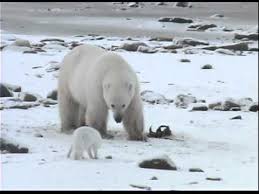
Two arctic fox are fighting with a polar bear for a sea lion carcass. One fox distracts the bear while the other eats. What type of limiting factor is the polar bear?
Predator-Prey Relationships
Competition (density dependent)
Herbivory Effect
Weather (density independent)

A duck population normally begin migrating south right after the last rain of the late summer season. Suddenly, they’re migrating much earlier. The climate has been changing far too often which is altering the effects of their magnetite.
Predator-Prey Relationships
Weather (density independent)
Herbivory Effect
Competition (density dependent)
___ is when living things of the same species work together to survive. (like a pack of wolves)
competition
cooperation
predation
symbiosis
___ is when living things struggle against one another to get resources – like food, water, space, mates, etc.
competition
cooperation
predation
symbiosis

If there are 10 sharks in one area, but only 1 fish. What behavior will occur between the sharks?
commensalism
competition
parasitism

A bee and a flower have a _________ relationship where both organisms benefit (+, +)
mutualism
commensalism
parasitism

Remoras hitch a ride & feed on scraps of food left by sharks; this is an example of a _________ relationship were one organism is helped, the other is unaffected.
mutualism
commensalism
parastism

Bees have a society in which different members have different
responsibilities. This interaction among bees is an example of what type
of behavior?
Cooperation
Competition
Consumerism
Commensalism

