wayground logo

Free Printable Worksheets

Font size

S
M
L
XL
Worksheets

Heat and its effects

Total questions: 25

Worksheet time: 29mins

Name
Class
Date
1.
  1. The temperature scale that has lower fixed point 0 degree celsius and the upper fixed point at 100 degree celsius is called
a)

Kelvin scale

b)

Celsius scale

c)

Absolute scale

d)

Fahrenheit scale

2.

In which of the following modes of heat transfer, do the molecules travel from the hotter part of the body to the colder part?

a)

Conduction

b)

Convection

c)

Radiation

d)

All of the three

3.

Ventilation in rooms is due to

a)

Conduction

b)

Convection

c)

Radiation

d)

All of the three

4.
what is the meaning of conduction
a)
when heat transfers from objects that are not touching
b)
heat rise 
c)
cold fall
d)
when heat transfers from objects that are touching
5.
what kind of heat is happening when the sun heats your body
a)
conduction
b)
convection
c)
density
d)
radiation
6.
heat energy traveling through space is an example of _____
a)
convection
b)
density
c)
radiation
d)
conduction
7.
A group of friends gather around a fire to stay warm.
a)
conduction
b)
convection
c)
radiation
8.
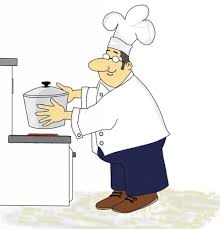
The man goes to take the hot pot off the stove with his bare hands.
a)
conduction
b)
convection
c)
radiation
9.
Warm air rises and the cool air sinks.
a)
conduction
b)
convection
c)
radiation
10.
What is the transfer of heat by movement of liquids or gases?
a)
conduction
b)
convection
c)
radiation
11.
You are doing your homework at a desk that is underneath a lamp. You start to feel hotter because of _?_ from the lamp.
a)
conduction
b)
convection
c)
radiation
12.

In heat transfer, heat always flows from the _?_ substance to the _?_ substance.

a)

hotter to colder

b)

colder to hotter

c)

hotter to hotter

d)

colder to colder

13.
Which of the following is the best example of conduction?
a)
A light bulb warming a lampshade
b)
An egg cooking in a frying pan
c)
Water boiling in a pot
d)
Gases circulating in the atmosphere
14.

The candle will slowly heat the metal and transfer the heat directly to the mans hand. This is an example of _?_.

a)

conduction

b)

convection

c)

radiation

15.

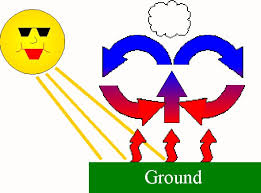
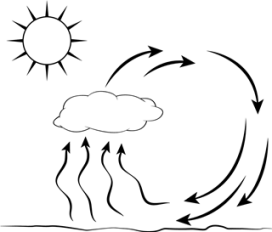
The moving of air in the image is an example of _?_.

a)

radiation

b)

convection

c)

conduction

16.

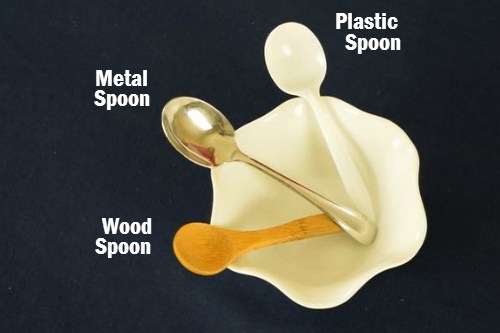
Which material will heat travel through the fastest?

a)

Plastic

b)

Wood

c)

Metal

17.

How do molecules react when heat energy is added to them?

a)

They feel warmer but stay in place

b)

They feel warmer and move slower.

c)

They feel warmer and move faster

d)

Molecules do not react with heat energy only solar energy
18.

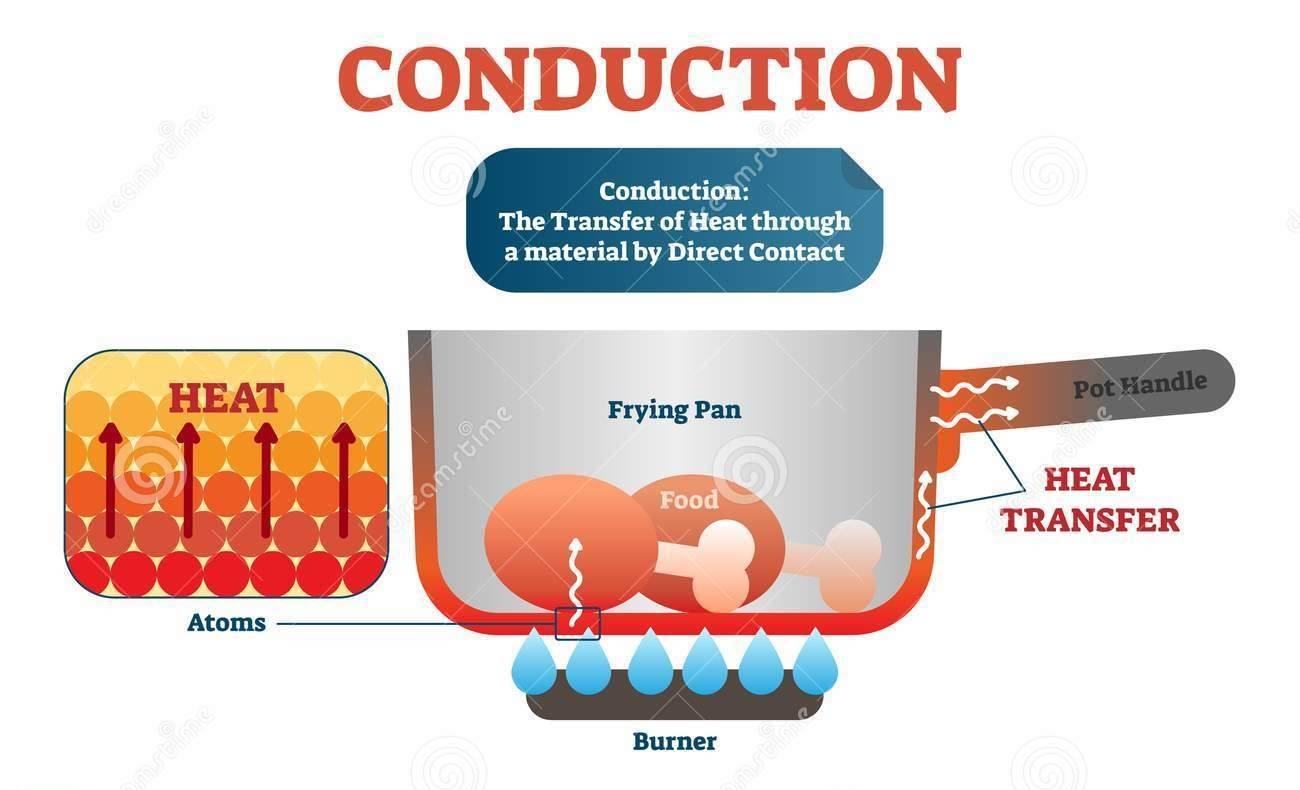
Which of the following is an example of heat transfer by Conduction?

a)

Burning your fingers on a hot iron.

b)

Heat from a heater warming up your whole house

c)

Standing by a campfire and feeling the heat.

d)

All of the above.

19.

Which of the following is an example of heat transfer by Convection?

a)

Burning your fingers on a hot iron.

b)

Heat from a heater warming up your whole house

c)

Standing by a campfire and feeling the heat.

d)

All of the above.

20.
What is the measurement of the average kinetic energy of a substance?
a)
Kinetic energy
b)
Temperature
c)
Thermal energy
d)
Potential energy
21.
What is a substance that does NOT conduct heat well?
a)
Conductor
b)
Insulator
c)
Convector
d)
Radiator
22.
What is the total amount of kinetic energy in a substance?
a)
Potential energy
b)
Kinetic energy
c)
Thermal energy
d)
Temperature
23.
The temperature of a substance increases as___.
a)
the substance expands
b)
the average kinetic energy of its particles increases
c)
the substance's volume increases
d)
the substance's mass increases
24.
The Law of Conservation of Energy states:
a)
Energy can created or destroyed but not transformed 
b)
Energy cannot be created or destroyed, it can only transformed
c)
Energy can't be created, destroyed or transformed
25.

If two objects have different temperatures, heat will flow from the warmer object to the cooler one UNTIL ____________

a)

one reaches a temperature of zero

b)

they both have an equal temperature

c)

one runs out of energy