
 Worksheets
LS - 2b - Organism systems made of subsystems
Total questions: 42
Worksheet time: 1hrs 24mins
In multicellular organisms, the body is a system of multiple interacting subsystems.
Correct
Incorrect
Cells form tissues.
Correct
Incorrect
Tissues form cells.
Correct
Incorrect
Organs are specialized for particular body functions.
Correct
Incorrect
All organs have the same function.
Correct
Incorrect
Structure determines (a)
Select all of the body systems
** Pick 3
Circulatory
Digestive
Respiratory
Mitochondria
Nucleus
Select all of the body systems
** Pick 3
Circulatory
Muscular
Nervous
Mitochondria
Nucleus
What something does
System
Subsystem
Function
Organ
Match body systems & functions
Respiratory
exchanges oxygen and carbon dioxide
Nervous
sends messages back and forth between the brain and the body
Circulatory
carries blood to and from the heart
Excretory
filters your blood to remove wastes
Match body systems & functions
Muscle
pulls on bones, produces movement
Nervous
sends messages back and forth between the brain and the body
Circulatory
carries blood to and from the heart
Excretory
filters your blood to remove wastes
Match body systems and organs
nervous
brain
circulatory
heart
muscle
biceps brachii
excretory
kidney
Match body systems and organs
nervous
spinal cord
circulatory
artery
muscle
quadriceps
excretory
urinary bladder
Match body systems and organs
nervous
brain
circulatory
vein
muscle
trapezius
excretory
urethra

Genes are small sections of _____.
DNA of chromosomes
mitochondria of cell
tissue of organ
atom of compound
Which of the following shows the levels of organization in order from simple to complex?
1. Cell
2. Tissue
3. Organ
4. Organ System
5. Organism
1. Cell
2. Tissue
3. Organelle
4. Organ
5. Organ System
1. Tissue
2. Organelle
3. Cell
4. Organ
5. Organism
1. Organ
2. Tissue
3. Cell
4. Organism
5. Organ System
Cells combine to form...
tissue
organs
organ systems
organisms
Which level of organization is the smallest and simplest?
Cell
Tissue
Organ
Organ System
Organisms
Reorder the following in ascending order
Cell
Tissue
Organ
Organ System
You
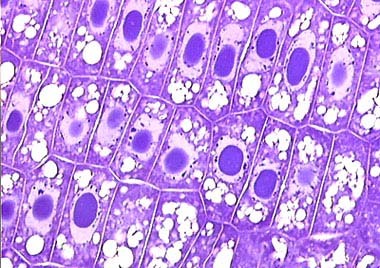
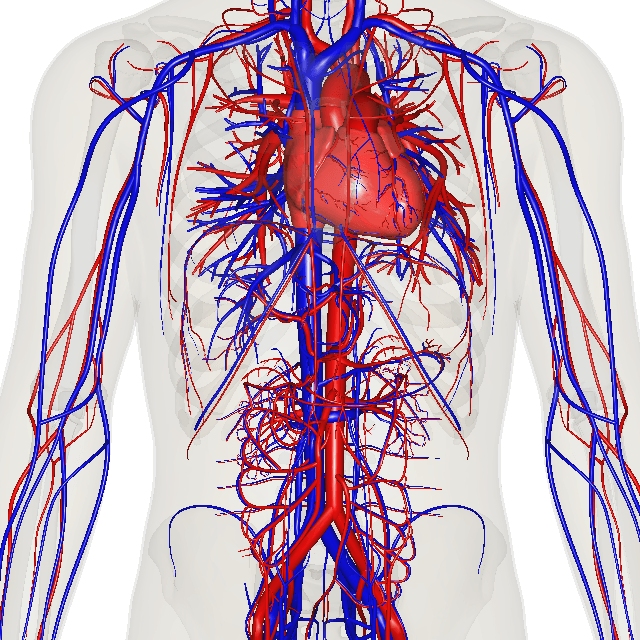

Atom → molecule → organelle → cell→ tissue → organ
→ system → organism
→ population → community
→ ecosystem → biosphere.
Taxonomic System
Classification system
Levels of Organization
Periodic Table

The smallest unit that makes up the known elements.
Molecule
Organelle
Cell
Atom

The smallest unit
of a compound consisting of two or more atoms
bonded together.
Organelle
Cell
Molecule
Atom

Group of tissues with similar functions.
Organelles
Cells
Tissues
Organs
cell ----> ? ---->organ
tissue
organ system
atom
proton
DNA is found in the
Cell Membrane
Vacuoles
Ribosomes
Golgi Apparatus
Nucleus
Which organs are included in the digestive system?
**Select 4
esophagus
stomach
intestines
colon
spinal cord
Which organs are included in the excretory (urinary) system?
*Select 4
kidney
urinary bladder
urethra
stomach
ureter
Which organs are included in the respiratory system?
*Select 4
trachea (windpipe)
lungs
larynx (voice box)
bronchi (airway)
kidney
Which organs are included in the circulatory system?
*Select 4
artery
vein
heart
aorta
triceps
organelle --> ? --> tissue
cell
organ
molecule
organ system
gene --> ? --> nucleus
cell
chromosome
tissue
organ system
DNA --> ? --> cell
atom
nucleus
tissue
organ system
atoms --> ? --> cell
DNA
proton
tissue
organ system
Identify images of DNA, nucleus, tissue, chloroplast, mitochondria

DNA

nucleus

mitochondria

chloroplast

tissue
Identify images of tissue, organelle, molecule, atom, cell membrane
molecule

cell membrane
organelle

atom

tissue
Identify images of body systems: nervous, respiratory, muscle, circulatory, excretory

excretory system

muscle system

nervous system

respiratory system

circulatory system
Identify images of body systems: nervous, respiratory, muscle, circulatory, excretory

excretory system

muscle system

nervous system

respiratory system

circulatory system

