
Font size
 Worksheets
Unit 2: Lithosphere Review
Total questions: 35
Worksheet time: 18mins
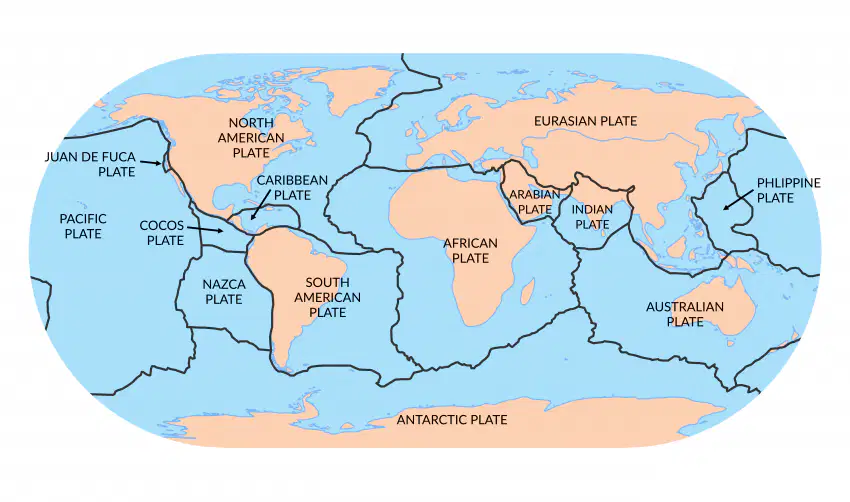
The Theory of Plate Tectonics suggests that...
the lithosphere is divided into plates
the asthenosphere is divided into plates

The Theory of Plate Tectonics help us understand...
how dinosaurs went extinct
how earthquakes and volcanoes occur
how our Universe began from a single point
how plates are better than bowls for food
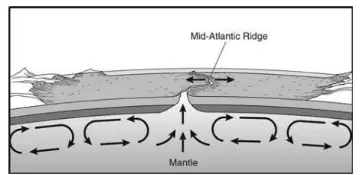
The arrows in this image represent what process occurring in the mantle?
radiation
conduction
convection
rotation
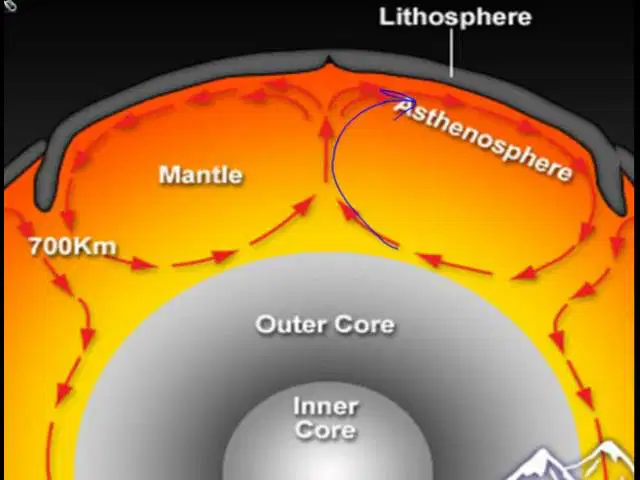
What action causes Earth's tectonic plates to move?
magnetic fields
microwave radiation
television waves
convection currents

Convection Currents occur in the ________________.
Crust
Mantle
Outer Core
Inner Core

In order to form mountains, which TWO areas of Earth must interact?
lithosphere
ionosphere
biosphere
asthenosphere
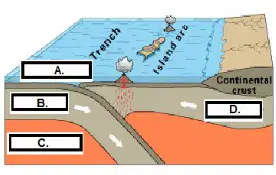
Which TWO letters represents the LITHOSPHERE?
Hint: This is the upper mantle and rigid crust.
A
B
C
D
Which letter represents the ASTHENOSPHERE?
Hint: This is the portion of the mantle where convection occurs.
A
B
C
D
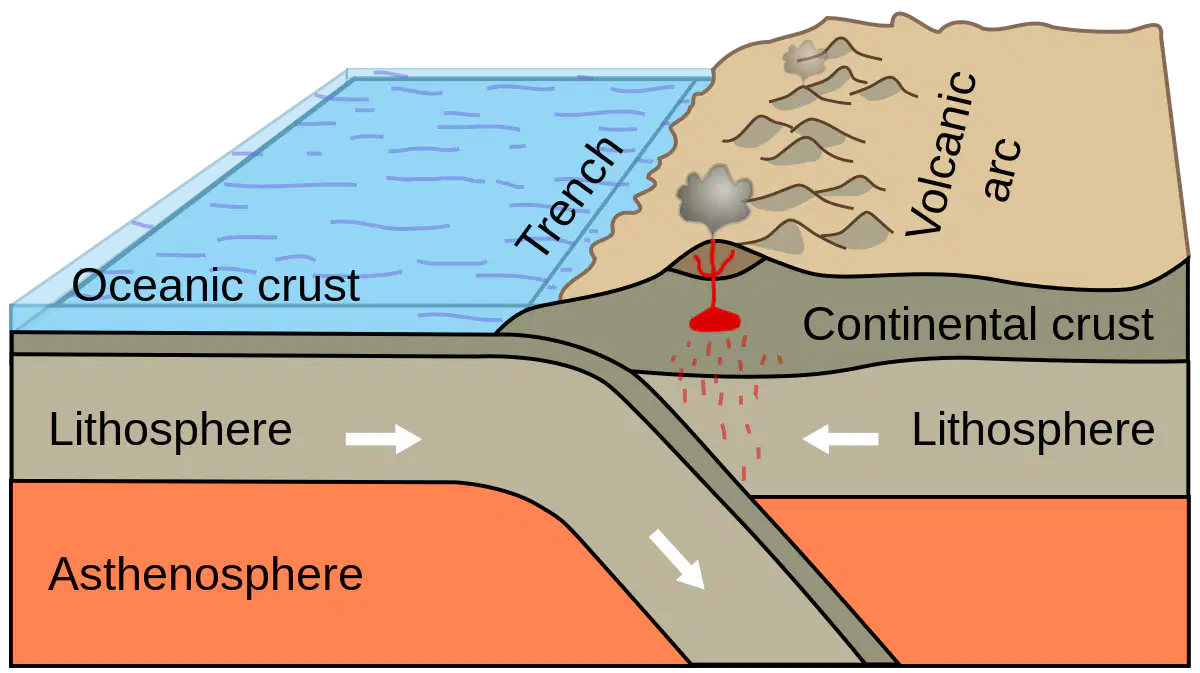
What kind of boundary is shown in this image?
Hint: Two plates come together to form a volcanic island arc.
Divergent Boundary
Convergent Boundary
Transform Boundary
Relationship Boundary
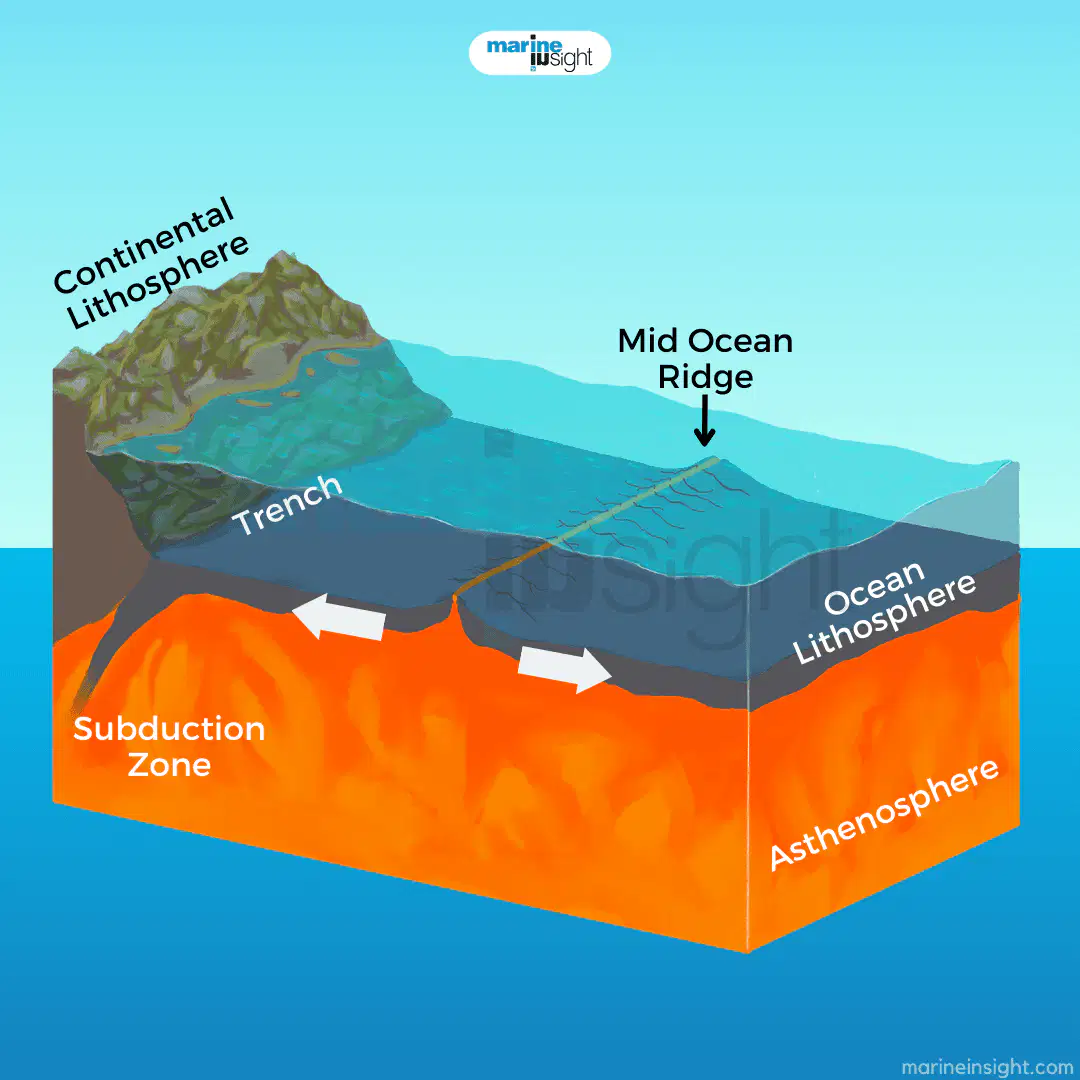
What kind of boundary is shown in this image?
Hint: Two plates divide apart to form a mid-ocean ridge.
Divergent Boundary
Convergent Boundary
Transform Boundary
Relationship Boundary

What type of plate interaction MOST likely formed these non-volcanic mountains?
Hint: Look at the movement (arrows) of the crust.
oceanic plates CONVERGING
oceanic plates DIVERGING
continental plates CONVERGING
continental plates DIVERGING

This diagram shows the movement of two tectonic plates at a boundary.
What is created at this boundary when one plate SINKS BELOW the other?
stressing
seafloor spreading
subduction
shearing
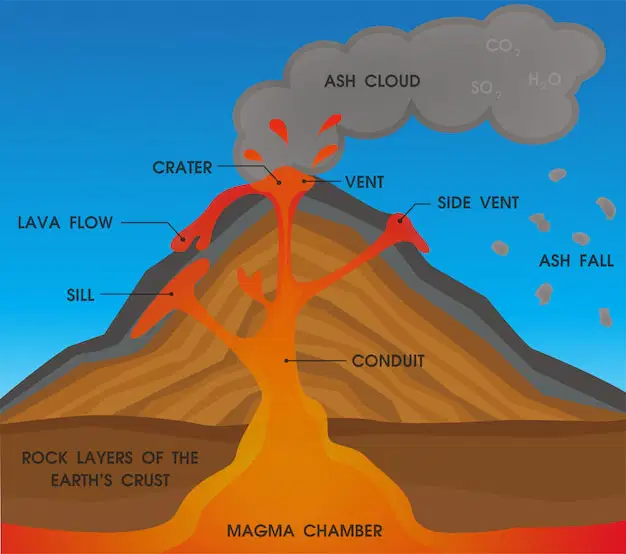
How do volcanoes erupt?
magma rises through the cracks and lava flows CREATES new crust
lava rises through the cracks and magma DESTROYS new crust

Which TWO factors can affect magma's viscosity (thickness)?
size of the volcano
temperature
dissolved gas
shape of the volcano

Which of the following statement is TRUE?
MAGMA is molten rock that reaches Earth's surface
LAVA is molten rock that reaches Earth's surface

______________ form the NEWEST rocks on Earth from cooled lava.
tsunamis
earthquakes
mudslides
volcanoes
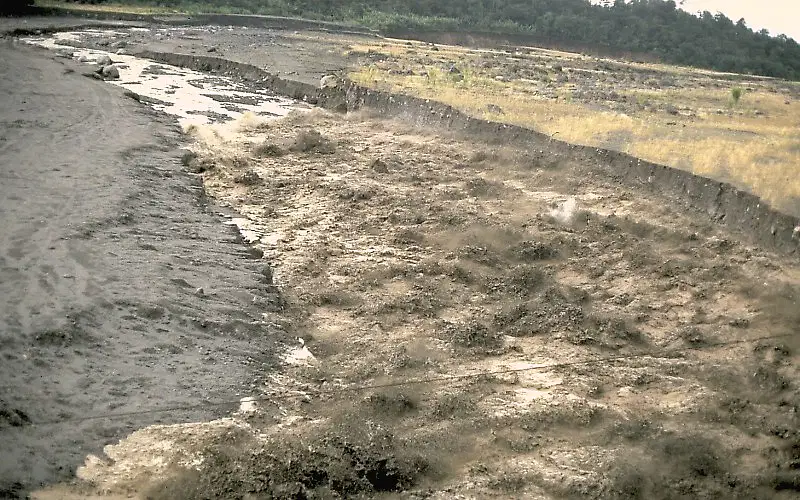
This image shows a Lahar Flow.
What option BEST describes a Lahar Flow?
sprinkles of rain
a mix of water, mud, and rock that slides from a volcano.
an ash cloud
Which diagram represents a volcano made of many LAYERS of ash and lava?
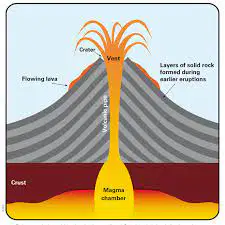
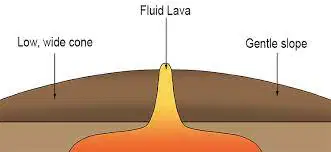
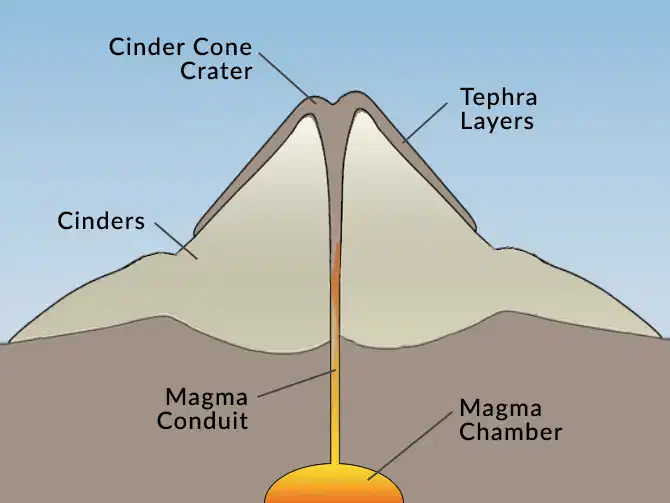
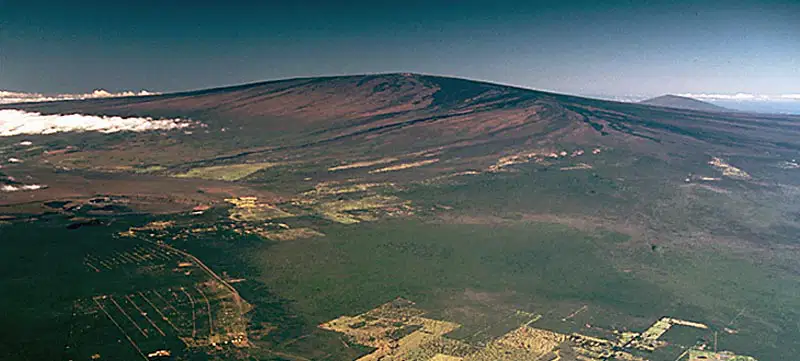
Which volcano is being described?
Ms. V went to Hawaii and saw a volcano with a GENTLE SLOPE and FLUID/LOW VISCOSITY (THIN) LAVA.
Composite Volcano
Cinder Cone Volcano
Shield Volcano
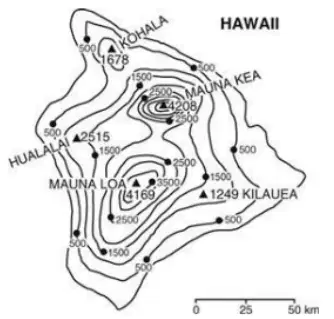
Based on this diagram, which volcano has the HIGHEST ELEVATION?
HINT: Look for the BIGGEST number!
Mauna Loa
Kilauea
Mauna Kea
Hulalai
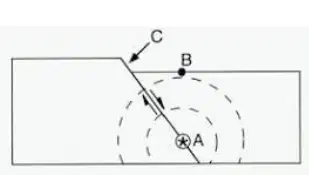
What is letter A in the diagram shown?
Epicenter
Fault
Focus
What is letter B in the diagram shown?
Epicenter
Fault
Focus
What is letter C in the diagram shown?
Epicenter
Fault
Focus
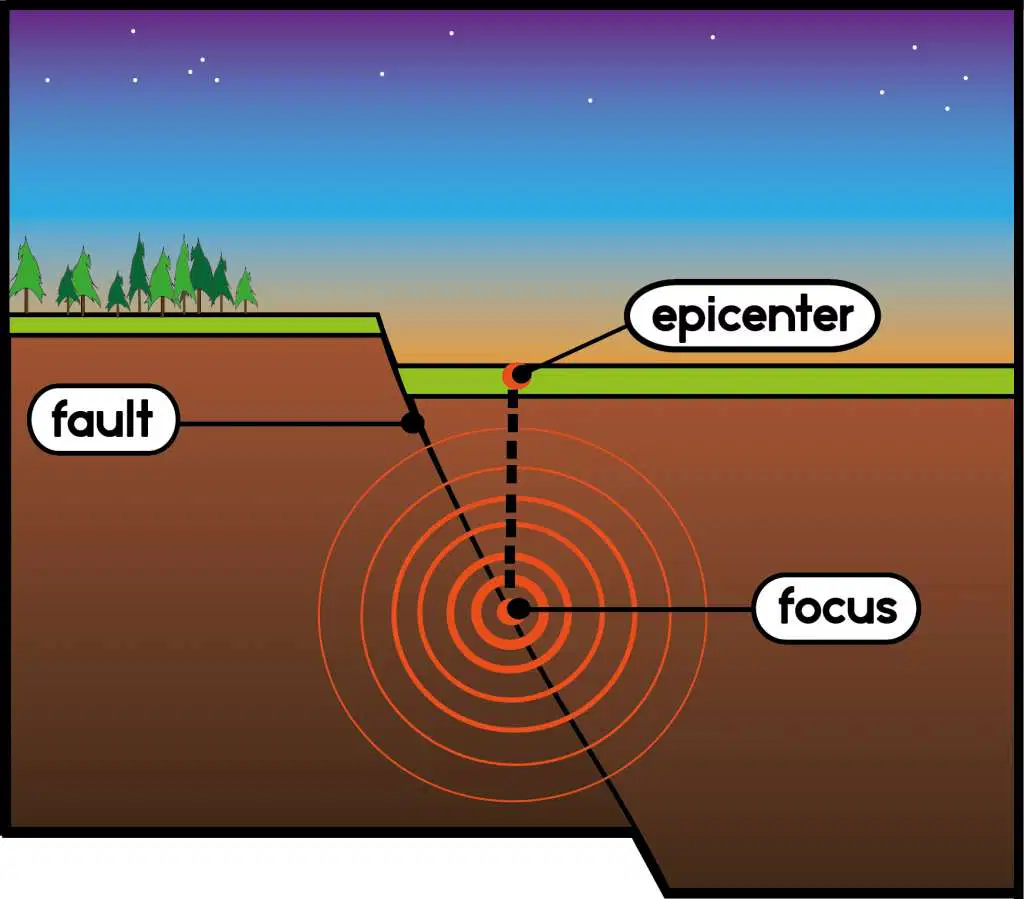
Earthquake start below the ground at the ___________ point.
Focus
Epicenter
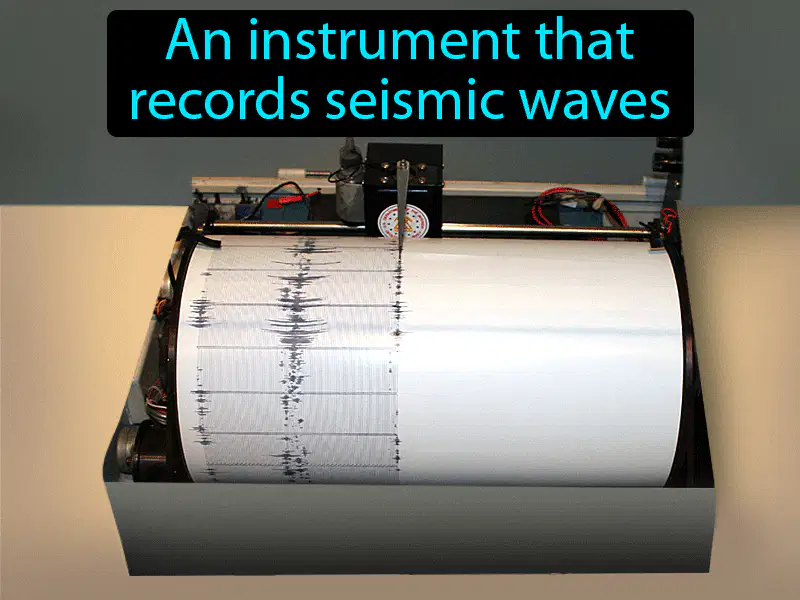
A _____________ helps detect, measure, and record earthquake vibrations.
balance
ruler
seismograph
tape measure

This is a CONVERGENT boundary.
What type of fault is occurring here?
HINT: Think about climbing UP a slide.
Normal Fault
Reverse Fault
Strike-Slip Fault

This seismic wave is the FASTEST!
P-wave
S-wave
Surface Wave

This seismic wave is the MOST DESTRUCTIVE!
P-wave
S-wave
Surface Wave
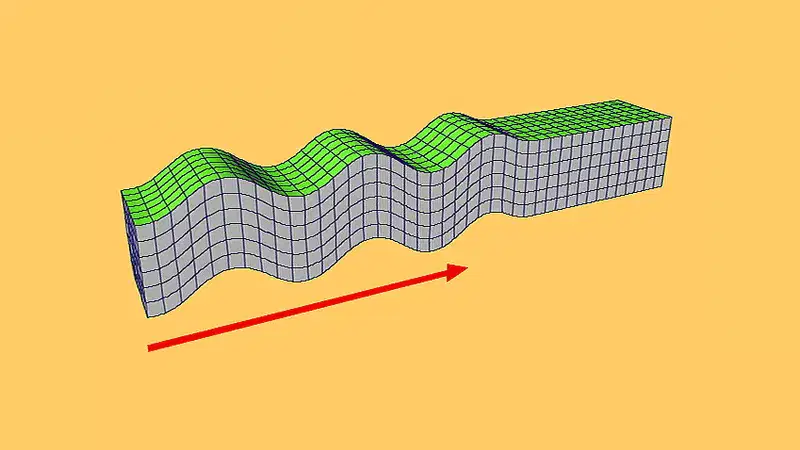
The seismic wave shown in this image is a ____________.
P-wave
S-wave
Surface Wave

The seismic wave shown in this image is a ____________.
P-wave
S-wave
Surface Wave
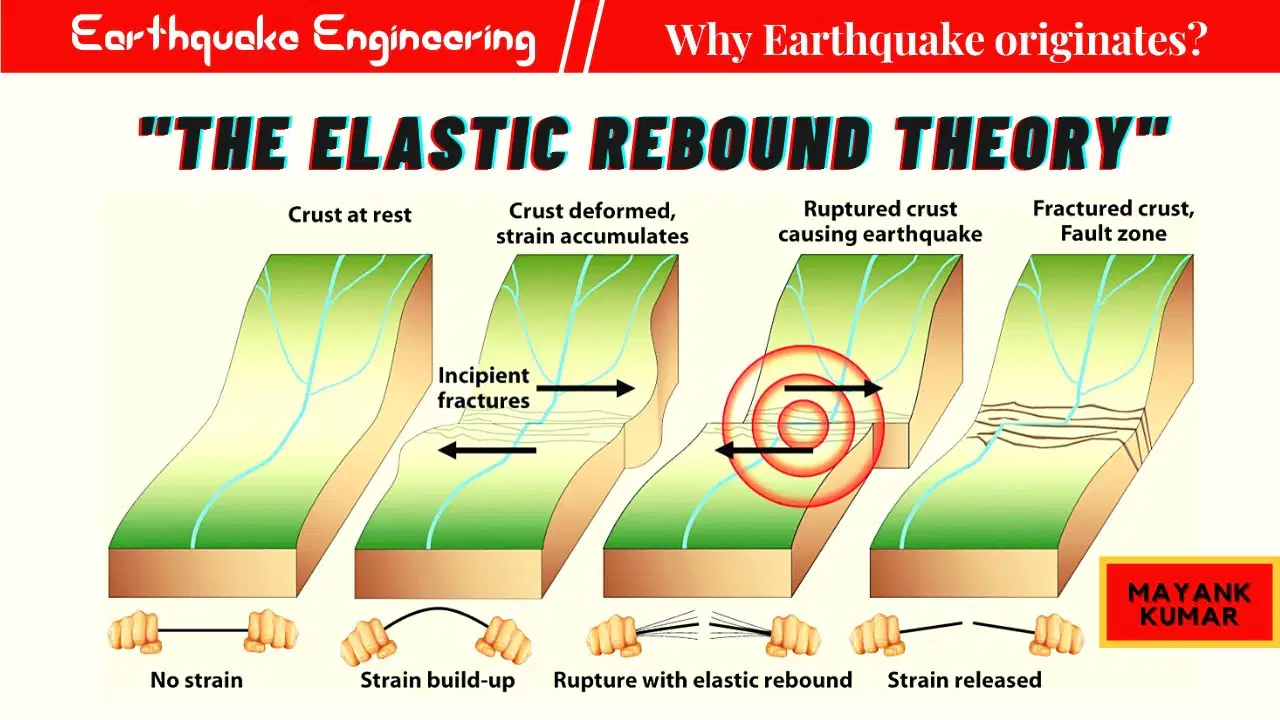
The ___________________ explains the cause of earthquakes.
Big Bang Theory
Nebular Hypothesis
Elastic Rebound Theory
Alvarez Hypothesis
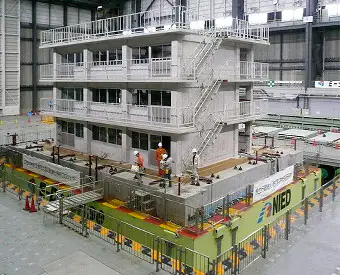
How should a city BEST prepare for an Earthquake?
recycle more paper products
build strong structures that protect against ground vibrations
run outside to scream and shout
sleep through the earthquake like a baby
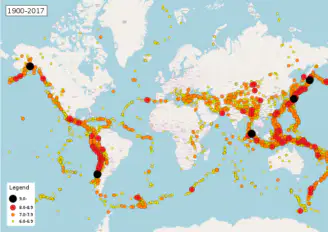
Earthquakes are a natural disasters that are extremely __________.
sustainable
unpredictable
safe
healthy
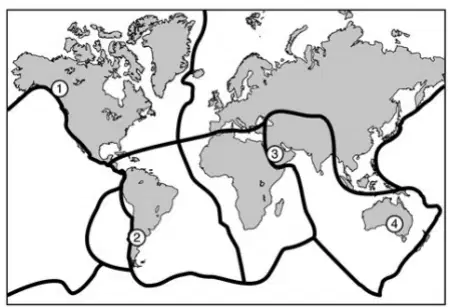
Earthquakes typically occur on a break within Earth's crust = a fault line (where two plates meet).
Where would someone want to live if they wanted to likely AVOID earthquakes?
HINT: Look at the plate boundaries.
1
2
3
4

Are you ready for the Unit 2 Test on Thursday?
yes
no

