
 Worksheets
Saving and Spending
Total questions: 89
Worksheet time: 1hrs 6mins
Which is TRUE about Certificates of Deposit (CDs)? (hint: choose 2 correct answers)
You agree to keep $ in a CD for an undetermined period of time
You pay the bank some interest to keep $ in the CD
The bank can loan out the $ in your CD
The bank pays you interest in return
A type of account in which deposited money earns money while being protected from loss is a(n) (a)
What is an individuals biggest wealth building tool?
Income
Investment
Debt
Inheritance
Something unnecessary but you desire.
Need
Want
Expect
Tap into your savings on a regular basis
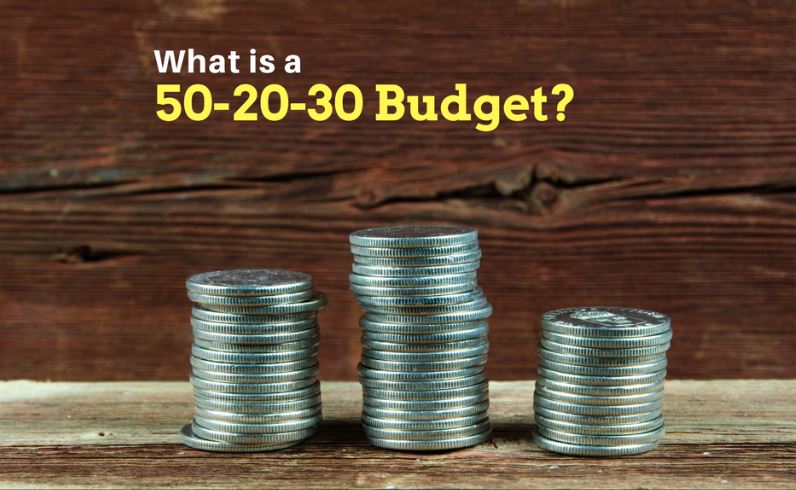
You should build an emergency savings fund that can cover expenses for how long?
3-6 Weeks
6-9 Weeks
6-9 Months
1 Year
Creating a budget is important.
Yes
No
Undecided
What is the rule that says you should always set aside a portion of your income to save?
Pay yourself first.
Pay your bills first.
Spend what you want first.
What are goals called that take less than a year to accomplish?
Short-term goals
Long-term goals
Expenses
Basic needs that a household must pay for such as housing, groceries, healthcare, utilities, etc.
Spending
Saving
Expenses
Budget
Something thought to be an essential item required for life (food, water etc.).
Need
Want
Desire
What is an example of a monthly variable cost?
groceries
car payment
gym membership
student loan payment
What are the Four Walls?
Utilities, college fund, restaurants, and car insurance
Cell phone, car insurance, Shelter, and money for entertainment
Food, Utilities, Shelter, and Transportation
Food, Utilities, Transportation, and college fund
What is it called when you have money left over at the end of the month after expenses?
Shortage
Surplus
Balance
A(n) is an investment account that offers tax breaks as an incentive to save for retirement.
(a)
Personal finance is about ________% behavior and ________% head knowledge.
30, 70
20, 80
70, 30
80, 20

Checking Account
Wallet
Savings Account
Your monthly rent or house payment is an example of a ________ expense.
Fixed
Variable
Intermittent
Discretionary
All of the decisions and activities of an individual or family regarding their money, including spending, saving and budgeting, etc.
real money
budgeting
finance
personal finance
Which of the following is FALSE about saving and investing? (hint: choose 2 correct answers)
Saving doesn't outpace inflation; investing usually does
Both saving and investing generally have low returns
Saving is for short-term; investing is for the long-term
Saving has more risk; investing has less risk
What do you call the plan for saving and spending money?
Budget
Income
Expense
True or False: Be sure that your WANTS are met first before you set aside money for your NEEDS.
True
False
What is unplanned, compulsive spending called?
Impulse buying
Planned buying
Budgeted buying
What is a budget?
A group that helps the community.
A safe place where people keep money.
A center where you can donate things.
A plan for spending and saving money

Money added into a bank account.
withdraw
deposit
cash
cheque
an organization that provides services related to money
commercial bank
charter
financial institution
an independent agency created by the federal government to protect bank customers by insuring their deposits
Federal Deposit Insurance Corporation
Financial Depository Insurance Company
Financial Department of Insurance Corporation
service offered by most banks and credit unions that requires a Personal Identification Number (PIN) to check account balances, make cash withdrawals and deposits, and move money from one account to another.
electronic funds tranfer
electronic financial transitioning
automated teller machine
a check written for an amount greater than the balance of the account
overdraft
overspend
fraud
a card issued by a bank that allows the holder to check account balances, withdraw and deposit cash, and transfer money from one account to another using an ATM
ATM card
debit card
credit card
Examples of this is CashApp and Paypal
peer-to payment
debit card
travelerś check
a written order for the bank to pay a specific amount to a person whom the item is written
check
money order
deposit slip
Which of the following is NOT a service a bank provides
It makes loans to other customers.
It provides credit cards for its customers
Customers can deposit and withdraw money from their accounts
Helps you loan money to your friends
Which of the following is NOT a good reason to use a financial insitution
Borrowing money for college
Placing your birthday money in an account
Letting your friend borrow $10
Taking out a loan to purchase a home

Lucy wants to deposit her weekly allowance into a savings account. What is one good reason to to put her money in a savings account?
it is hard to withdraw and deposit money into it
it pays interest
the money can be lost or stolen
you must have a lot of money to open a savings account


When you pay back a loan, you not only pay the amount you borrowed, you also pay it back with _____________
Interest
Deposit
Withdrawal
Checking

What is interest?
Something you do not have in economics
The money corporations pay to their stockholders
To set aside income for a period of time so that it can be used later
The payment people receive when they lend their money or allow someone else to use their money
Financial services offered by providers that are not banks.
credit unions
schools
alternative financial services
commercial lenders
The value of all assets minus the value of all liabilities.
Financial obligations
Assets
Net Worth
Property
Property owned by an individual
Liability
Asset
Property
Net Worth
Debts and financial obligations (owe).
Liabilities
Assets
Negative Net Worth
Property
Examples of Liabilities include which of the following:
Loans, credit cards, and real property
Loans, mortgage, and credit cards
Loans, Art collection, and savings account
Mortgage, credit card, and real property
Examples of assets include:
Real Property, Car, and credit cards
Car, Jewelry, and Checking account
Art collection, Jewelry, and unpaid taxes
Real Property, Car loan, Jewelry

The table below shows Claude's assets and liabilities. What is the total value of his liabilities?
$24,950
-$24,520
$25,420
$50,320
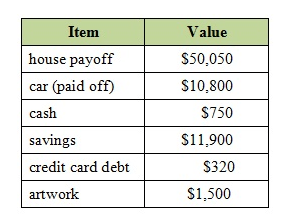
The table below shows Claude's assets and liabilities. What is his net worth?
$24,950
$-25,420
-$24,950
$25,420
A depository institution account that is designated to hold money not spent on current consumption.
Certificate of Deposit
Checking Account
Money Market Deposit Account
Savings Account
Which two are reasons savings tools ideal for storing emergency savings? (Check all that apply)
Secure
Insecure
Not Liquid
Liquid
Which type of savings tool typically earns the HIGHEST Interest?
Savings
Checking
Certificate of Deposit
Money Market Account
Due to the change that comes with various life stages, spending plans must be...
strict
disorganized
complex
flexible
Not using a spending plan can leave you unprepared for...
children
college
emergencies
retirement
Which of the following is the main difference between debit and credit cards?
Debit cards require a credit check
Credit cards have lower interest changes and fees
Only debit cards offer consumer protections
Credit cards help establish and build a credit history
Which of the following is a benefit of cryptocurrencies?
They are universal currencies accepted all over the world
Their value is more predictable than traditional currencies
They are well regulated by the US government
Their value always increases
Which of the following would be the most appropriate time to use mobile wallet-to-wallet services?
Making a purchase at a brick-and-mortar store like Wal-Mart or Target
Paying a friend back for borrowing money from them
Making a mortgage payment on your house
Making a student loan payment
Which of the following is not a way of preventing identity theft?
Shredding financial documents prior to disposing
Keeping your social security card in your wallet at all times
Making purchases on websites that have a url that starts with “https”
Utilizing multiple passwords for various accounts
a card used for making purchases with funds you borrow and payback later.
debit card
credit card
expenses
loan
coins, bills, checks or any other form of money
currency
change
investment
debit card
the money you spend regularly for items or services
expenses
investment
currency
loans
money that you borrow and pay back with interest over time
loans
interest
investment
savings account
a payment card that you pre-load with your own money
prepaid card
debit card
credit card
loan
Nedra uses her debit card on a daily basis. The last time she used it was the evening before at a restaurant. This morning, she noticed that the card is missing. How long does she have to report the card as lost to have 100% protection against fraudulent use?
She has 2 days from the date of the last authorized use
She has 2 day from the date she determined the card was lost
She has 30 days from the date of the last authorized use
She must report the card immediately before any unauthorized withdrawals are made
To open a checking account you will be required to have...
At least $1000 saved to deposit
A form of indentification (ID) and proof of address
Recommendations from two of your teachers.
Instead of using a physical card at the store, you use this method which stores your card information.
prepaid card
gift card
peer-to-peer app
mobile wallet
If you don't want to carry cash with you and you don't have a bank account, getting this is a good option.
prepaid card
gift card
peer-to-peer app
mobile wallet
The three big ideas for comparison shopping are....
Plan
Compare Products
Compare Cost
close your eyes and pick
After you get the discounted amount from the percentage off, you must...
add that amount to the original price
subtract that amount from the original price
mulitpy that amount from the original price
divide the two amounts.
When finding the sale price of an item you first have to...
find the discounted amount that is being taken off
nothing, subtract the percent off the price
nothing, add the percent to the price
why buy on sale
All of these are "NEEDS" EXCEPT:
BUS FARE
MOVIE TICKETS
RENT
GROCERIES
Rent and car insurance payments are both which type of expenses?
fixed costs that are needs
fixed costs that are wants
variable costs that are needs
variable costs that are wants
What is the main purpose of a budget?
to keep track of cash flow
to find new sources of income
to differentiate between needs and wants
to determine the amount of taxes to be paid
The goal of a budget is _________________.
to spend more than you make
to spend less than you make
The income of an adult is the money they get for working. The income of a child could be ____________. Check all that apply.
an allowance (money your parents give you weekly or for chores)
the money your friends or family give you as gifts
fake monopoly money (toy)
There are two types of expenses. They are ____________ and _______________. Choose two.
Essential Expenses (things that you need)
iReady expenses
Non-Essential Expenses (things you don't need but spend money on anyways)
An account at a depository institution that provides an easy method for withdrawing and depositing money.
Certificate of Deposit
Checking Account
Money Market Deposit Account
Savings Account

