
 Worksheets
Enzyme Substrate Quiz
Total questions: 30
Worksheet time: 23mins
What are some of the impacts you would expect to observe to the internal health of the cells of someone with a lysosomal disorder?
inability to destroy engulfed bacteria
inability to digest food supply
inability to digest cellular waste
inability to construct glycogen
What can affect enzyme ability? (select all that apply)
temperature
inhibitors
pH
enzyme potential


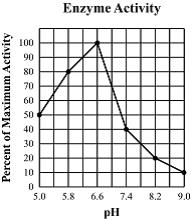
The optimal pH for Trypsin is:
1.5
5
7.3
8.2

Which letter represents the enzyme?
A
B
C
D


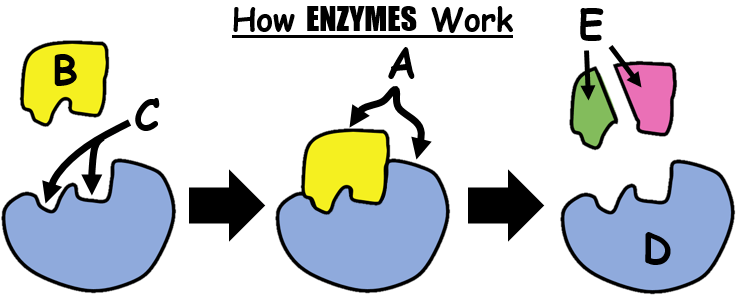


What is indicated by letter C?
enzyme
product
substrate
active site
What is letter C pointing to?
active site
enzyme
substrate
products

A ________ blocks the substrate so it can't attach/catalyze.
Competitive inhibitor
Carbohydrate
Active site
Activation energy

A ___________ changes the shape of the enzyme so the substrate can't attach/atalyze
Product
Non-competitive inhibitor
Hypotonic
Competitive inhibitor
What are vitamins and minerals?
Part of our food, give us energy
activators
inhibitors
enzymes

What is the significance of nucleic acids for cells?
They generate energy for the cell.
They provide all instructions for cellular activities.
They restrict what enters and leaves the cell.
They support and maintain the shape of the cell.
Which of the following macromolecules is correctly paired with its function?
Protein - short-term energy storage
Nucleic acids - genetic information (DNA/RNA)
Lipids - speed up chemical reactions
Lipids - short-term energy storage
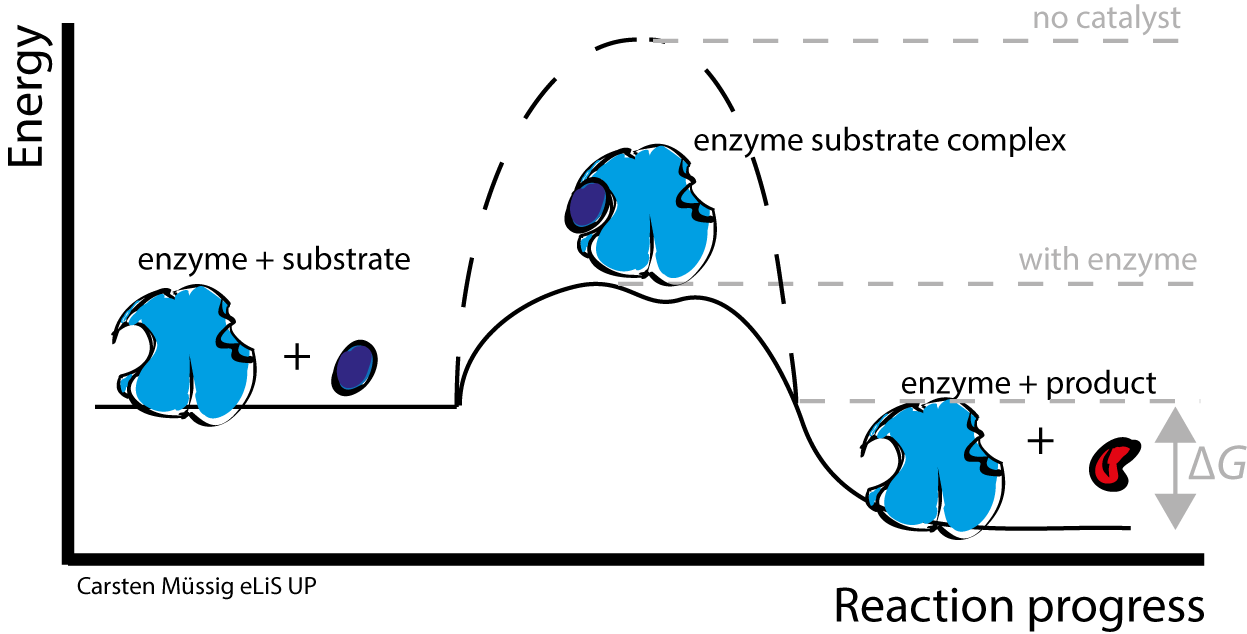
What are two factors that can affect an enzymes ability to function?
No changing
temperature and pH
night and day
hot and cold
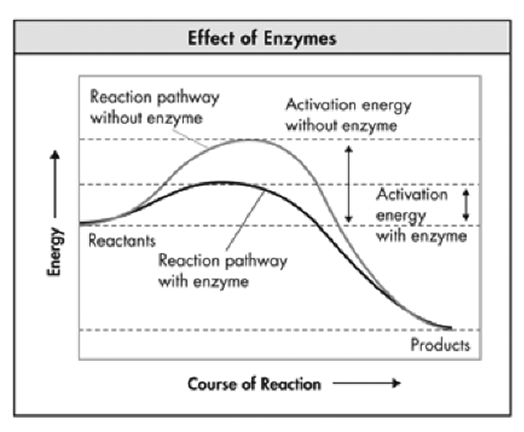
What is an inhibitor?
the region of an enzyme that attaches to a substrate
a change in the shape of a protein
substance that can bind to an enzyme and prevent the substrate from binding
macromolecules that contain carbon, hydrogen, oxygen, and nitrogen
The optimal pH for Pepsin is:
1.5
5
7.3
8.2
An enzyme works optimally at a pH between 1 and 3.
Which best explains what will happen to this enzyme at a pH of 10?
It will work on the same substrate as it did at a pH range of 2–4, but it will not work as well.
It will work on a different substrate than at a pH range of 1–3.
It will lose its original shape and work on new substrates.
It will lose its original shape and not work on any substrate at all.

What is the monomer for protein?
Polymer
Nucleic Acids
Amino Acids
Fatty Acids
Allosteric inhibitors block the active site
true
false
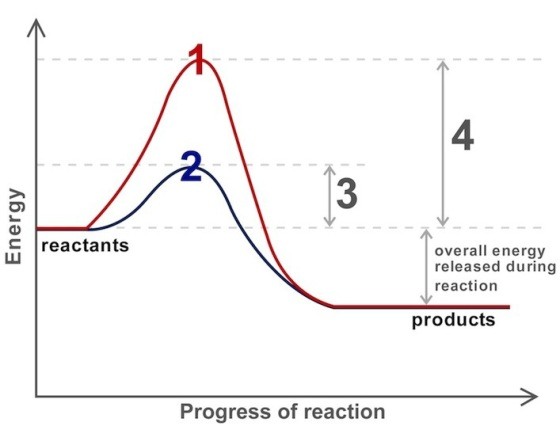
Which color line represent a reaction with an enzyme present?
Blue
Red
Both
Neither

Most human enzymes operate under an optimal pH near neutral. Which pH range would best represent this environment?
1-3 pH
4-5 pH
6-8 pH
10-14 pH

