
 Worksheets
Plants Ch. 8&9
Total questions: 110
Worksheet time: 1hrs 10mins
Different rates of growth of xylem results in which of the following?
vascular bundles
cork cambium
annual rings
cork

Stems have
negative phototropism
positive gravitropism
Positive Phototropism
no answer

The xylem and phloem together are know as
vascular bundles.
the mesophyll.
stomata.
guard cells.


This is an example of
Gravitropism
Thigmotropism
Phototropism
no answer correct
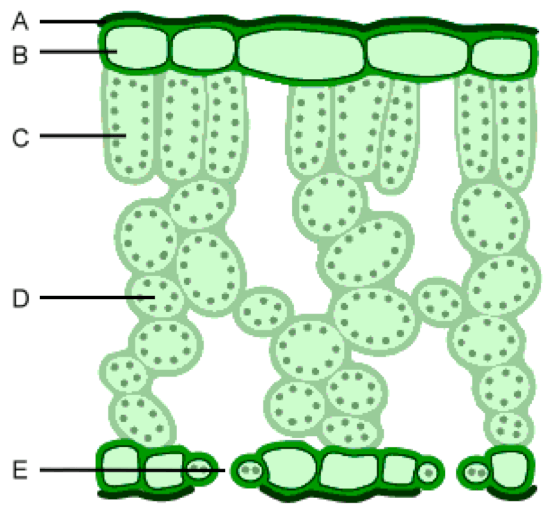
Which picture shows the spongy layer?


What is tropism?
A plant's growth response to a stimulus
A plant reproducing
An animal's response to a stimulus
A prokaryote's response to a stimulus

What does the letter "c" point to?
filament
anther
style
stigma
What organelle circulates in the cells in the upper part of the leaf?
mitochondria
xylem
vacuoles
chloroplasts
Vascular seed plants that contain seeds in fruits are:
angiosperms
gymnosperms
deciduous
moss

This picture shows a plant that is
Monocot
Dicot
The vascular bundle is made up of what two structures?
Xylem
Root Cap
Stomata
Phloem

This is an example of what type of root?
Taproot
Fibrous Root
Adventitious Root
vascular
nonvascular
Which vascular tissue moves water?
xylem
phloem
cuticle
stomata
Which part of the leaf consists of a vascular bundle?
vein
bundle sheath
palisade layer
spongy layer
Non-vascular plants absorb water and minerals through
roots
their leaves
rhizoids
xylem
The type of seed plant that doesn't produce fruit and has fan shaped leaves is the:
conifer
ginkgo
gnetophyte
cycad

What type of plant is this?
nonvascular seedless plant
vascular seedless plant
vascular seed plant
nonvascular seed plant

Vascular, seeded plants that contain seeds mostly in cones are:
angiosperms
gymnosperms
deciduous
moss
Plants are multi-celled organisms.
True
False
Nonvascular plants are usually small to make it easier to get nutrients to every cell.
True
False
All trees are vascular plants.
True
False
Bryophytes are...
non-vascular
vascular
Bryophtes need dry and sunny areas to grow
True
False
Palm-like vascular, seed plants are known as:
cycads
conifers
gnetophytes
ginkgo


Which generation of non-vascular plants is at the top?
gametophyte
sporophyte
bryophyte
These are hair-like filaments that attach the bryophyte to the ground.
rhizoids
roots
sporangia

The main function of stomata is to
capture sunlight
protect leaves from insects
allow gases to move rapidly in/out of leaves
release sugars into the atmosphere
Where in the plant does photosynthesis occur?
Flower
Leaves
Stem
Roots
What is thigmotropism?
The movement of plants in response to touch
The movement of plants toward the sun
A prokaryote's movement inside the bloodstream
The movement of plants in response to gravity
What are openings in the leaves that allow gas exchange?
root tips
vacuoles
flowers
stomata
Which vascular tissue moves food (glucose)?
Phloem
xylem
cuticle
spongy mesophyll
What are the root's job in a plant?
absorb water and sunlight
anchor the plant to the ground and grow leaves
make sugar and absorb nutrients
absorb water and anchor the plant to the ground

What is the structure letter "J" points to?
pistil
stem
style
stamen

This is an example of what type of root?
Taproot
Adventitious Root
Fibrous Root
True or False? Woody stems contain phloem and xylem.
True
False
If a tree has 15 light rings and 15 dark rings, how old is the tree?
30
15
225
Stomata open and closes in response to
availability of water
availability of glucose
availability of oxygen

Stem type?
monocot
dicot
What are the chemical messages in a plant called
Hormones
Oxygen
Parenchyma cells

What does the letter "D" point at?
Stamen
Filament
Anther
Style
Which picture shows the palisade layer?


Identify the leaf part.
Guard cells
Stomates
Cuticle
Spongy Layer
Which picture shows the epidermis?


The guards cells are located in the
lower epidermis.
upper epidermis.
cuticle.
palisades layer.
Stomata control the passing of these products into and out of the plant.
water vapor
carbon dioxide
oxygen
all of these

This is a(n) ________________________ stem.
green
woody
herby
herbaceous
In woody stem, vascular tissue is arranged in...
... tube-like bundles.
... rings.
... separate rows.
... branching pattern.

What is the structure the letter "B" points to?
pistil
anther
stamen
style
What do we call the layer of woody stem that produces cork?
cambium
summer wood
epidermis
cuticle
Annual rings are formed from spring and summer layers of _________________.
phloem
xylem
support cells
heartwood
What most helps a herbaceous plant to stand?
fibers and cellulose cell walls
cellulose cell walls and chloroplasts
turgor pressure and cell walls
fibers and mitocondria
True or False: Auxins slow the growth of a stem on the side of the light to cause it to bend toward the light.
True
False

What does the letter "G"point at?
Stigma
style
pistil
filament
This part of a flower turns into fruit around a fertilized seed.
ovule
ovary
stamen
Auxins are responsible for _____________ of a plant
reproduction
watering
cell division
cell growth
The function of the petal is to
attract pollintors
Egg production
Pollen production
Trace the path that pollen takes:
Anther --> Stigma --> Style --> Ovary
Ovary --> Stigma --> Anther --> Stamen
Anther --> Ovary --> Stamen --> Stigma
What is gravitropism/geotropism?
The movement of a plant in response to gravity
The movement of a plant in response to earthquakes
The movement of bacteria in response to changes in temperature
The movement of plants towards water
What is phototropism?
The movement of plants towards light
The movement of plants away from light
The movement of plants in response to infrared light
The movement of plants towards water
Stimulates cell division
abscisic acid
auxin
cytokinins
gibberellin
ethylene
True or False: A stimulus can be anything that causes a reaction
True
False

The roots have negative
phtotropism
Thigmotropism
Gravitropism
Hormones

What does the letter "f" point to?
anther
filament
stigma
style
Which statement about plant stems is correct?
They are positively phototropic and positively geotropic
They are negatively phototropic but positively geotropic
They are positively phototropic but negatively geotropic
What part of the plant responds positively to gravity?
roots
xylem
leaves
What part of the plant turns into the fruit?
ovary
seeds
leaves
roots

The circled area and the area above the line are called NODES. What is the purpose of the node?
Extra stability
Be the point where leaves and stems grow out of
Be the point where roots grow out of
Site of photosynthesis
What do we call the process of alternating between asexual and sexual reproduction?
Alternation of gametophytes
Alternation of sporophytes
Alternation of generations
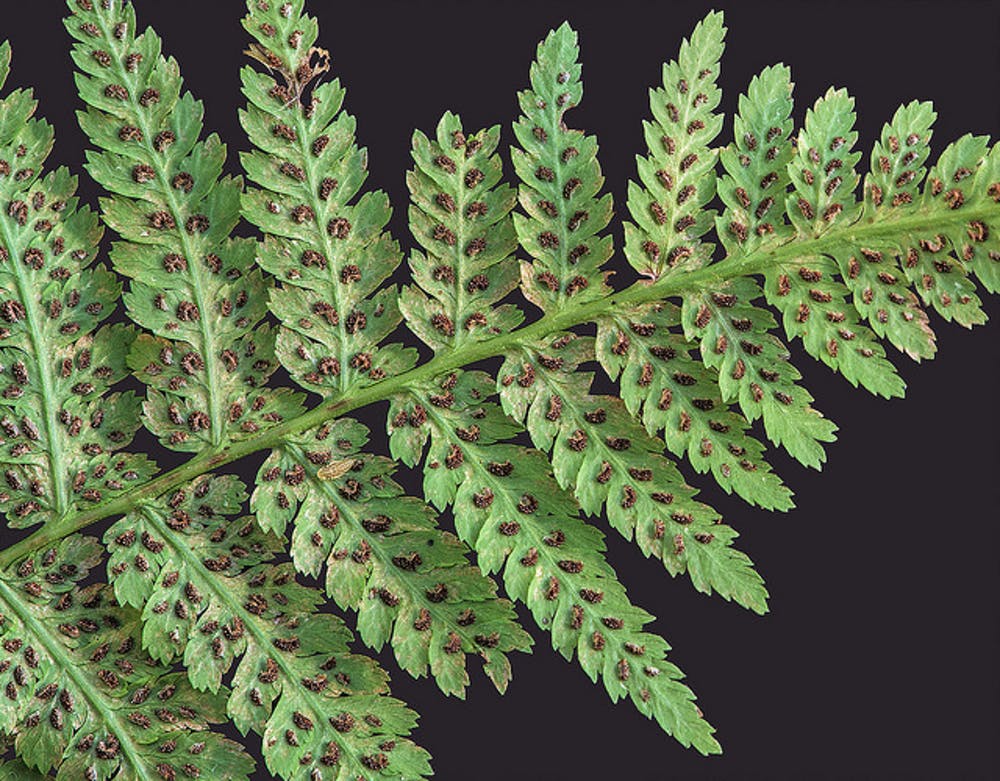
How do we call the brown spots you can see on the fern plant?
Spore seeds
Sori
Sporophytes
Fiddleheads
The growth hormone that is used to speed up the ripening of fruits for export is
giberellin.
ethylene.
cytokinin.
auxin.
I want to stop my seed from growing. I DONT want it to grow. Which hormone should I give it?
Auxins
Cytokinins
Ethylene
Abscisic acid
Gibberellins

Promotes seed dormancy
abscisic acid
auxin
cytokinins
gibberellin
ethylene
Plants that flower when exposed to darkness more than 12 hours of darkness are called ______________.
long-day plants
short-day plants
day-neutral plants
none of the above
What is an example of short-day plants?
roses.
cabbage
poinsettia
none of the these.
A vine plant brushes against a fence and wraps itself around the fence. To what response is the stimulus is the plant responding to?
phototropism
gravitropism
hydrotropism
thigmotropism

