wayground logo

Free Printable Worksheets

Font size

S
M
L
XL
Worksheets

Bio Quiz 7 grad

Total questions: 113

Worksheet time: 1hrs 9mins

Name
Class
Date
1.

Choose the correct stament

a)

Bones are hard and rigid.

b)

Bones are flexible and hard.

c)

Bones are flexible and soft.

d)

Bones are hard and soft.

2.

Choose the correct stament

a)

A muscle is rigid and flexible.

b)

A muscle is rigid and hard.

c)

A muscle is flexible and hard.

d)

A muscle is soft and flexible.

3.

What are joints

a)

A place where one bone meets

b)

A place where two bones meet

c)

Bones don't meet

d)

A place where three bones meet

4.

what is this joint ?

a)

ankle

b)

knee

c)

elbow

d)

wrist

5.

what is this joint ?

a)

ankle

b)

knee

c)

elbow

d)

wrist

6.

how knee moves ?

a)

up and down

b)

round and round

c)

left and right

d)

all of them

7.

how many muscles do we have ?

a)

450

b)

550

c)

650

d)

750

8.

which muscles do you use to throw a ball ?

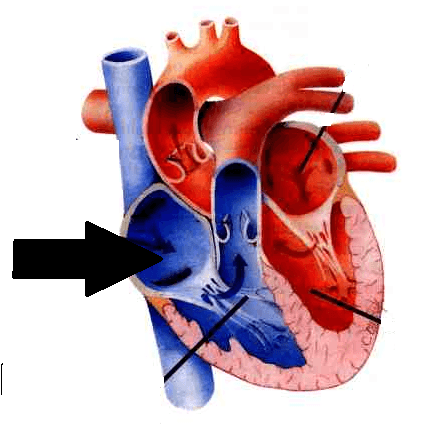
a)

triceps and biceps muscles

b)

stomach muscles

c)

calf muscles

d)

neck muscles

9.

which muscles do you use to bend your arm ?

a)

calf muscles

b)

thigh muscles

c)

biceps muscles

d)

stomach muscles

10.

THIS IS NOT THE FUNCTION OF MUSCLES

a)

TO GIVE SHAPE TO OUR BODY

b)

TO HOLD THINGS

c)

TO HELP IN PUMPING BLOOD TO ALL PARTS OF OUR BODY

d)

TO PROTECT OUR DELICATE PARTS OF OUR BODY

11.

Skeleton is composed by:

a)

Muscles.

b)

Bones.

c)

Joints.

d)

Tendonds.

12.

Muscles are:

a)

Hard and rigid.

b)

Flexible and rigid.

c)

Hard and soft.

d)

Soft and flexible.

13.

We can move due to...

a)

Muscles.

b)

Joints.

c)

Bones, muscles and joints.

d)

Tendonds.

14.

Choose a joint:

a)

Face.

b)

Elbow.

c)

Skull.

d)

Heart.

15.

Choose the correct stament

a)

A muscle is rigid and flexible.

b)

A muscle is rigid and hard.

c)

A muscle is flexible and hard.

d)

A muscle is soft and flexible.

16.
What everyday object is similar to a hinge joint?
a)
a door frame
b)
a door handle
c)
a door hinge
d)
none of the choices
17.
What everyday object is similar to a gliding joint?
a)
2 books sliding pass one another 
b)
a door handle
c)
a horse saddle
d)
a statue
18.
What everyday object is similar to an immovable joint?
a)
2 books sliding pass one another 
b)
a door handle
c)
a horse saddle
d)
a statue
19.
What type of joint is your elbow?
a)
pivot
b)
saddle
c)
ball and socket
d)
hinge
20.
What type of joint is your forearm?
a)
pivot
b)
saddle
c)
ball and socket
d)
hinge
21.
What type of joint is your shoulder?
a)
pivot
b)
saddle
c)
ball and socket
d)
hinge
22.
The man sitting in the saddle is similar to a saddle joint.  Where would you find a saddle joint?
a)
toes
b)
thumb
c)
ribs
d)
spine
23.
What body parts are these two using?
a)
muscles
b)
bones
c)
joints
d)
all of these
24.
Which type of joint allows for the least amount of movement?
a)
hinge
b)
ball and socket
c)
immoveable
d)
pivot
25.
Which type of joint allows for the most movement?
a)
hinge
b)
ball and socket
c)
immoveable
d)
pivot
26.
What type of joint is the wrist considered?
a)
hinge
b)
saddle
c)
gliding
d)
pivot
27.
Which joint is the skull considered?
a)
hinge
b)
ball and socket
c)
immoveable
d)
pivot
28.
What type of joint are the fingers?
a)
hinge
b)
saddle
c)
gliding
d)
pivot
29.
What happens when the bicep flexes?
a)
the tricep relaxes
b)
the tricep contracts
c)
the bicep relaxes
d)
the bicep freezes
30.
What happens when the bicep extends (relaxes)?
a)
the tricep relaxes
b)
the tricep contracts
c)
the bicep relaxes
d)
the bicep freezes
31.
What is the name of the place where two or more bones meet?
a)
muscle
b)
bone
c)
joint
d)
ligament
32.
Could your muscles continue working without stopping for rest?
a)
yes, always
b)
yes, if you ate a snack
c)
no, they would freeze
d)
no, they would stop from exhaustion
33.
What is the name of a body part that attaches one bone to another bone?
a)
muscle
b)
joint
c)
ligament
d)
tendon
34.
What is the name of a body part that attaches one bone to a muscle?
a)
muscle
b)
joint
c)
ligament
d)
tendon
35.
Which is a true statement?
a)
Bones help muscles move by applying force to them.
b)
A muscle attaches to a bone that attaches to a tendon.
c)
A muscle attaches to a ligament which attaches to a bone.
d)
Muscles help bones move by applying force to them.
36.
Which is a true statement?
a)
Bones help muscles move by applying force to them.
b)
A muscle attaches to a bone that attaches to a tendon.
c)
A muscle attaches to a ligament which attaches to a bone.
d)
A muscle attaches to a tendon that attaches to a bone.
37.
In the picture, when the hand raises, what is happening to the arm?
a)
The bicep is flexing, or tightening.
b)
The tricep is flexing.
c)
The bicep is freezing.
d)
The tendon puts a force on the tricep.
38.
In the picture, when the hand raises, what is happening to the arm?
a)
The bicep is relaxing from the force from the bone.
b)
The tricep is relaxing.
c)
The bicep is freezing.
d)
The tendon puts a force on the tricep.
39.
In the picture, when the hand raises, what is happening to the arm?
a)
The bicep applies a force to the tendon which raises the bones in the arm.
b)
The tricep applies a force to the tendon which raises the bones in the arm.
c)
The bicep applies a force to the ligament which raises the bones in the arm.
d)
The tendon puts a force on the triceThe bicep applies a force to the tendon which lowers the bones in the arm.
40.

What are joints

a)

A place where one bone meets

b)

A place where two bones meet

c)

Bones don't meet

d)

A place where three bones meet

41.

what is this joint ?

a)

ankle

b)

knee

c)

elbow

d)

wrist

42.

what is this joint ?

a)

elbow

b)

wrist

c)

knee

d)

ankle

43.

what is this joint ?

a)

ankle

b)

knee

c)

elbow

d)

wrist

44.

how knee moves ?

a)

up and down

b)

round and round

c)

left and right

d)

all of them

45.

how wrist moves ?

a)

up and down

b)

round and round

c)

non of them

d)

both of them

46.

how many muscles do we have ?

a)

450

b)

550

c)

650

d)

750

47.

which muscles do you use to run ?

a)

throat muscle

b)

thigh muscles

c)

shoulder muscles

d)

neck muscles

48.

which muscles do you use to throw a ball ?

a)

triceps and biceps muscles

b)

stomach muscles

c)

calf muscles

d)

neck muscles

49.

which muscles do you use to bend your arm ?

a)

calf muscles

b)

thigh muscles

c)

biceps muscles

d)

stomach muscles

50.

What are joints

a)

A place where one bone meets

b)

A place where two bones meet

c)

Bones don't meet

d)

A place where three bones meet

51.

what is this joint ?

a)

ankle

b)

knee

c)

elbow

d)

wrist

52.

what is this joint ?

a)

elbow

b)

wrist

c)

knee

d)

ankle

53.

what is this joint ?

a)

ankle

b)

knee

c)

elbow

d)

wrist

54.

how knee moves ?

a)

up and down

b)

round and round

c)

left and right

d)

all of them

55.

how wrist moves ?

a)

up and down

b)

round and round

c)

non of them

d)

both of them

56.

how many muscles do we have ?

a)

450

b)

550

c)

650

d)

750

57.

which muscles do you use to run ?

a)

throat muscle

b)

thigh muscles

c)

shoulder muscles

d)

neck muscles

58.

which muscles do you use to throw a ball ?

a)

triceps and biceps muscles

b)

stomach muscles

c)

calf muscles

d)

neck muscles

59.

which muscles do you use to bend your arm ?

a)

calf muscles

b)

thigh muscles

c)

biceps muscles

d)

stomach muscles

60.
One of the following does not have a hinge joint
a)
1.  jaw 
b)
 elbow
c)
Knee
d)
shoulder
61.
The two bones of the lower arm are
a)
tibia and fibula
b)
femur and humerus
c)
 ulna and radius
d)
humerus and radius
62.
Which of the following are ball and socket joints?---
A) 
elbow joint
B)
shoulder joint
C) Knee joint
D)Hip joint
a)
 a) A and B  
b)
b) B and C
c)
c) A and C
d)
d) B and D
63.
Man can stand straight because of the 
a)
blood flowing in the body
b)
 internal skeleton
c)
 digestive system
d)
presence of muscles.
64.
 The pivot joints occur in our skeleton at
A) Forearm
B)  knee
C) neck
D) hip 
a)
a) A and B    
b)
b) B and C
c)
c) A and C
d)
d) B and D
65.
With which of the following has a hinge joint between them?
a)
Skull and upper jaw
b)
skull and lower jaw
c)
Hip bone and backbone 
d)
hip bone and thigh bone. 
66.
Which of the two allows a greater movement of bones  
a)
A) a ball and socket joint
b)
B)  a hinge joint?
c)
C) Both
d)
D) none
67.
Which of the following has  endoskeleton 
a)
A) Cockroach
b)
B) Humans
c)
C) Both 
d)
D) None
68.
Joints of the bones help in the 
a)
A) moment
b)
B) Movement 
c)
C) locomotion
d)
D) both
69.
The contraction of the ___________pulls the bones during movement
a)
A) Bones 
b)
B) Muscles
c)
C) Both 
d)
D) none
70.

Skeleton of human body is made up of

a)

Cartilage

b)

Bones

c)

Both cartilage and bones

d)

None of the above

71.

Hip joint is

a)

Hinge joint

b)

Pivotal joint

c)

Fixed joint

d)

Ball and socket joint

72.

Which of the following are the functions of the skeleton

a)

Gives support to the body

b)

Protects inner organs

c)

Does not give shape to the body

d)

All of the above

73.

Which of the following joints is immovable?

a)

Lower jaw and upper jaw

b)

Upper jaw and skull

c)

Knee and hip joint

d)

Wrist and pivotal joint

74.

Underwater divers wear fin-like flippers on their feet to

a)

Swim easily in water

b)

Walk on water surface

c)

Look like a fish

d)

Walk on the sea bed

75.

Which of the following are the characteristics of the birds?

a)

Light bones

b)

Hollow bones

c)

Strong muscles

d)

Forelimbs modified as wings

76.

Hinge joint can allow movement upto

a)

360 degree

b)

90 degree

c)

45 degree

d)

180 degree

77.

An earthworm is able to move with the help of its

a)

Bones

b)

Bones and muscles

c)

Muscles

d)

Shell

78.

Muscular foot is a locomotary organ in

a)

Snakes

b)

Cockroach

c)

Earthworms

d)

Snails

79.

Which of the following organs are protected by the rib cage

a)

Stomach

b)

Heart

c)

Lungs

d)

Both heart and lungs

80.
In which system of the human body does the heart belong?
a)
Nervous
b)
Skeletal
c)
Cardiovascular
d)
Digestive
81.
Your blood is made up of which of the following...
a)
plasma, red blood cells, blue blood cells
b)
white and red blood cells
c)
plasma and platelets
d)
plasma, red blood cells, white blood cells, and platelets
82.
Which system permits blood to circulate and transports nutrients around the body?
a)
Nervous
b)
Respiratory
c)
Circulatory
d)
Digestive
83.
What part of blood is responsible for fighting infections?
a)
Red Blood Cells
b)
White Blood Cells
c)
Platelets
d)
Plasma
84.
What part of blood is responsible for carrying wastes, nutrients, and minerals?
a)
Red Blood Cells
b)
White Blood Cells
c)
Platelets
d)
Plasma
85.
The circulatory system works with the ___________ system to provide our body with oxygen.
a)
respiratory
b)
digestive
c)
muscular
d)
skeletal
86.

Identify No. 10:

a)

Pulmonary veins

b)

Pulmonary artery

c)

Aorta

d)

Vena cava

87.
Identify
a)
Left atrium
b)
Right atrium
c)
Left ventricle
d)
Right ventricle
88.

What are platelets?

a)

Very small plates used by woodland creatures and fairies

b)

The blood cells that form clots when you are cut to stop bleeding.

c)

They make your blood thinner when you are out of breath

d)

the take oxygen back to the heart

89.

Which describes all the parts of the circulatory system?

a)

heart, lungs, stomach, muscles

b)

heart, blood, arteries, and veins

c)

bones, skin, hair

90.
What does Deoxygenated mean?
a)
Oxygen-rich
b)
Blood flow
c)
Oxygen-poor
d)
Water Flow
91.
What is the heart ? 
a)
meaty organ 
b)
a small metal spike with a broadened flat head,
c)
organ of soft nervous tissue 
d)
muscular organ
92.

Name the valve at position 11:

a)

Aortic valve

b)

pulmonary valve

c)

mitral valve

d)

tricuspid valve

93.

Haemoglobin contains which mineral:

a)

gold

b)

iron

c)

iodine

d)

sodium

94.

The chamber of the heart that receives de-oxygenated blood from different parts of the body.

a)

Right Atrium

b)

Left atrium

c)

Right Ventricle

d)

Left Ventricle

95.

Delivers oxygen to your body cells.

a)

Plasma

b)

Red Blood cells

c)

White Blood cells

d)

Plasma

96.

Small blood vessels that diffuse oxygen, carbon dioxide, and nutrients are called ________.

a)

Veins

b)

Arteries

c)

Capillaries

97.

The system that delivers oxygen and gets rid of carbon dioxide.

a)

Skeletal

b)

circulatory

c)

Respiratory

d)

Nervous

98.

The only artery that carries de-oxygenated blood.

a)

Coronary artery

b)

Aorta

c)

Pulmonary Artery

d)

Superior Vena cava

99.

The direction of blood flow through the human body is maintained by:

a)

The elasticity of the vein walls.

b)

The pump action of the heart.

c)

Muscular contractions.

d)

A system of valves.

100.

Type of circulation that refers to blood flow from the heart to the lungs and back to the heart again.

a)

Systemic Circulation

b)

Pulmonary Circulation

c)

Cardiac Circulation

d)

Respiratory Circulation

101.

The instrument that is used to measure blood pressure.

a)

Stethoscope

b)

Sphygmomanometer

c)

Ultrasound

d)

ECG

102.

The cells in the blood that help fight germs like bacteria and viruses.

a)

RBC's

b)

WBC's

c)

Platelets

d)

Plasma

103.

The blood vessel that carries oxygenated blood from the heart to the body cells.

a)

Pulmonary artery

b)

Pulmonary Vein

c)

Aorta

d)

Superior Vena cava

104.

The blood vessel that brings oxygenated blood from the lungs to the heart.

(a)  

105.

The system that makes white blood cells.

a)

Skeletal

b)

Respiratory

c)

Nervous

d)

Circulatory

106.

The oxygen carrier in the blood

a)

Fibrin

b)

Fibrinogen

c)

Haemoglobin

107.

White blood cells are also known as thrombocytes.

a)

True

b)

False

108.

The veins that bring de-oxygenated blood from lower parts of the body.

(a)  

109.

The blood tastes saltish because of the presence of ______________.

a)

Sodium chloride.

b)

Glucose.

c)

Haemoglobin.

d)

Platelets.

110.

The heart beats at an average of 120 times per minute.

a)

True

b)

False

111.

A rise in blood pressure above 140/90 mm is known as ________.

a)

Hypertension

b)

Hypotension

112.

The proteins found on the surface of RBC's on the basis of which blood group can be identified.

(a)  

113.

The type of muscles present in the heart.

a)

Cardiac

b)

Skeletal

c)

Smooth

d)

Striated