Wayground logo

Free Printable Worksheets

Font size

S
M
L
XL
Worksheets

topic 1.2-the nuclear atom

Total questions: 39

Worksheet time: 32mins

Name
Class
Date
1.
Whose model showed atoms as uniformly packed spheres of positive matter filled with negatively charged electrons?
a)
J. J. Thomson
b)
John Dalton
c)
Ernest Rutherford
d)
Niels Bohr
2.
The electron was discovered in 1897.  Who discovered it?
a)
Ernest Rutherford
b)
John Dalton
c)
J. J. Thomson
d)
Niels Bohr
3.
Which scientist became known as "the father of the nuclear age"?
a)
J. J. Thomson
b)
John Dalton
c)
Ernest Rutherford
d)
Niels Bohr
4.
Whose experiment involved shooting small, positively charged alpha particles at a sheet of gold foil?
a)
J.J. Thompson
b)
Max Planck
c)
Ernest Rutherford
d)
Niels Bohr
5.
What is the number of protons that the element in this image contain?
a)
14
b)
7
c)
15
d)
18
6.
What is the atomic mass of "F"
a)
9
b)
18
c)
17
d)
19
7.
all matter is made of what 
a)
energy 
b)
atoms 
c)
electrons 
d)
compounds 
8.
The positive particles of an atom are 
a)
electrons 
b)
positrons 
c)
neutrons 
d)
protons 
9.
the central region of an atom where its neutrons and protons are is its 
a)
nucleus 
b)
electron cloud
c)
core 
d)
center 
10.
electrons have this type of charge?
a)
negative
b)
positive
c)
neutral
11.
What is the mass of an atom if it has 11 protons, 12 neutrons, and 11 electrons?
a)
22
b)
11
c)
34
d)
23
12.

An element is determined by the number of ___________________ (also known as its atomic number).

a)

Neutrons

b)

Electrons

c)

Protons

d)

Wontons

13.

A ___________________ is a combination of two or more atoms that are held together by covalent bonds.

a)

Moles

b)

Ions

c)

Molecules

d)

Megatrons

14.

The nucleus of an atom contains which subatomic particles?

a)

protons and electrons

b)

protons and neutrons

c)

electrons and neutrons

d)

protons, electrons, and neutrons

15.

Typically in an atom, which two subatomic particles are equal in number?

a)

protons and neutrons

b)

all subatomic particles are equal in number

c)

neutrons and electrons

d)

protons and electrons

16.
Particles in an atom that are neutral and have no charge are 
a)
negatrons 
b)
electrons 
c)
neutrons 
d)
protons 
17.

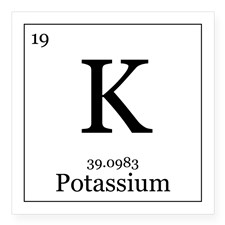
How many neutron are in the atom "K"?

a)

29

b)

19

c)

58

d)

20

18.
The atomic mass is equal to _.
a)
the number of protons only
b)
the number of neutrons only
c)
the total number of protons and neutrons
d)
the number of protons, neutrons, and electrons.
19.
An atom becomes _________ when it gains electrons.
a)
Positive
b)
Negative
c)
Neutral
d)
Invinsible
20.

When an atom loses an electron, it becomes a

a)

positive ion

b)

negative ion

c)

neutral ion

d)

neutral atom

21.
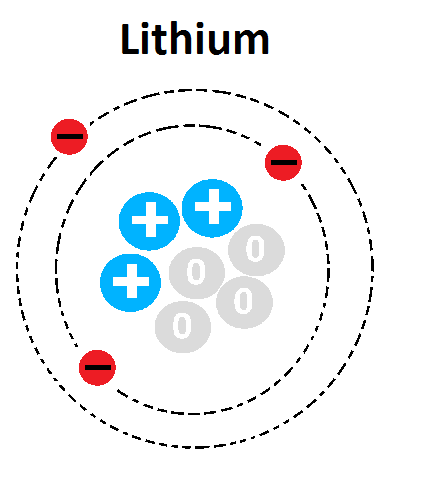
How many neutrons does the isotope of lithium have?
a)
8
b)
3
c)
4
d)
5
22.
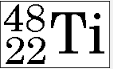
How many protons does this isotope of titanium have?
a)
48
b)
22
c)
26
d)
70
23.
How many neutrons does the isotope below have?     89 36Kr
a)
53
b)
36
c)
89
d)
125
24.

Isotopes of an element have a different number of...

a)

Protons

b)

Neutrons

c)

Electrons

d)

Mass

25.

Bromine-80 has how many neutrons?

a)

41

b)

42

c)

44

d)

45

26.

There are two primary isotopes found in any sample of copper: copper-63 and copper-65. The isotope 65Cu composes 69.2% of the sample and 63Cu comprises the other 30.8%. Based on this data, what is the atomic mass of copper?

a)

29 amu

b)

63.546 amu

c)

64.4 amu

d)

63.6 amu

27.

How do you calculate mass number?

a)

Mass x percent

b)

Protons + Electrons

c)

Protons + Neutrons

d)

Neutrons + Protons + Electrons

28.
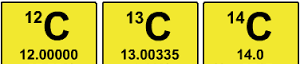
What do these isotopes of carbon all have in common?
a)
neutrons & mass number
b)
atomic number and neutrons
c)
atomic number and electrons
d)
protons, atomic number, and mass number
29.
In a correctly written symbol what would be located in the "A" position?
a)
number of neutrons
b)
atomic number
c)
number of electrons 
d)
mass number
30.
Isotopes are atoms of the same element with different #’s of __________ & therefore different __________.
a)
n0 ;  atomic #’s
b)
p+ ; atomic #’s
c)
e- ; atomic masses
d)
n0 ; atomic masses
31.
An atom is electrically neutral when
a)
protons and neutrons are the same
b)
protons and electrons are the same
c)
neutrons and electrons are the same
d)
neutrons balance the protons and electrons
32.
Two isotopes of carbon are carbon-12 and carbon-14.  These isotopes differ from one another by two protons.
a)
true
b)
false
33.
What is an ion?
a)
A Charged Atom
b)
A Large Atom
c)
A Small Atom
d)
A Cute Atom
34.
Cations are...
a)
Positive
b)
Negative
c)
Neutral
d)
Purring
35.
Which particles change the charge in atoms when ions are formed?
a)
Protons
b)
Electrons
c)
Neutrons
d)
Kittens
36.

What is a negative ion called?

a)

anion

b)

cation

c)

covalent

d)

isotope

37.
What is the atomic number?
a)
the number of protons
b)
the number of protons and neutrons
c)
the number of neutrons
d)
the number of protons and electrons
38.
What is the mass number defined as?
a)
the number of protons
b)
the number of protons and neutrons
c)
the number of neutrons
d)
the number of protons and electrons
39.
What is the atomic number of this atom?
a)
1
b)
3
c)
4
d)
7