
 Worksheets
Ecosystem Review
Total questions: 30
Worksheet time: 25mins
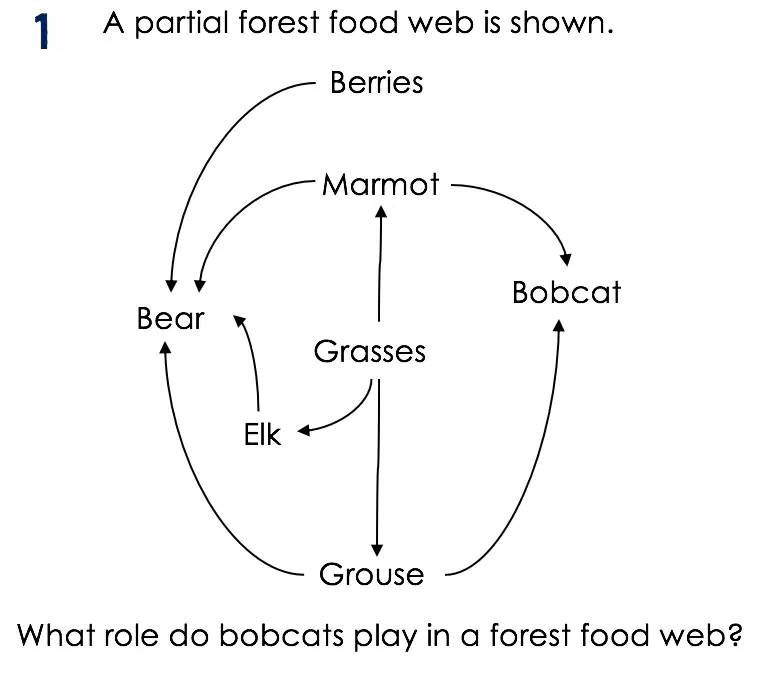
Which role do bobcats play in the forest food web shown?
Bobcats break down dead plants and animals and return nutrients to the soil.
Bobcats are consumers of marmots and grouses.
Bobcats produce their own energy.
Bobcats are predators of grasses and berries.
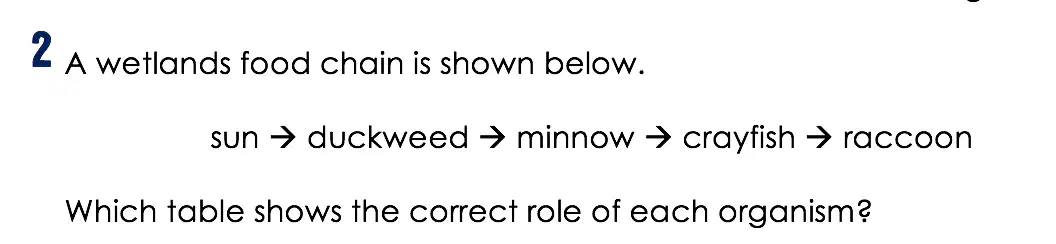
A wetlands food chain is shown.
Sun -> duckweed -> minnow -> crayfish -> racoon.
Which table shows the correct role of each organism?

A

B

C

D
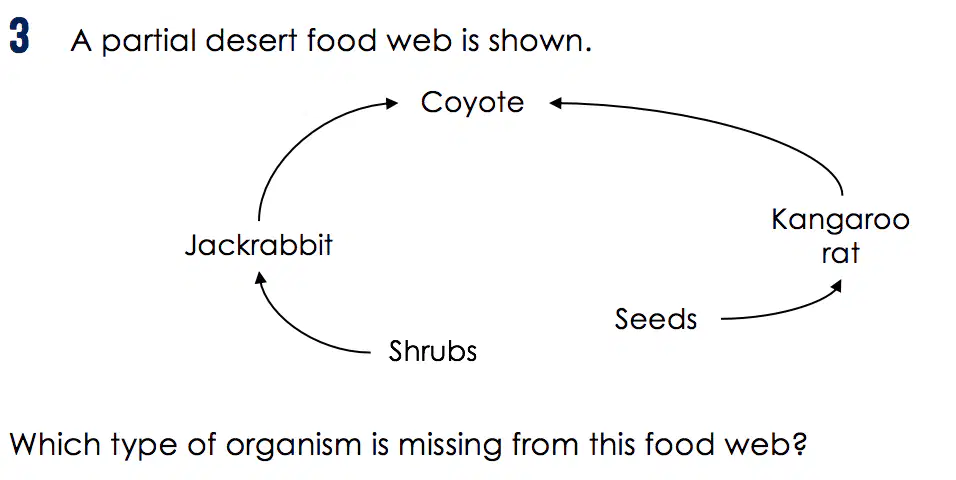
Which type of organism is missing from this food web?
Decomposer
Predator
Consumer
Producer
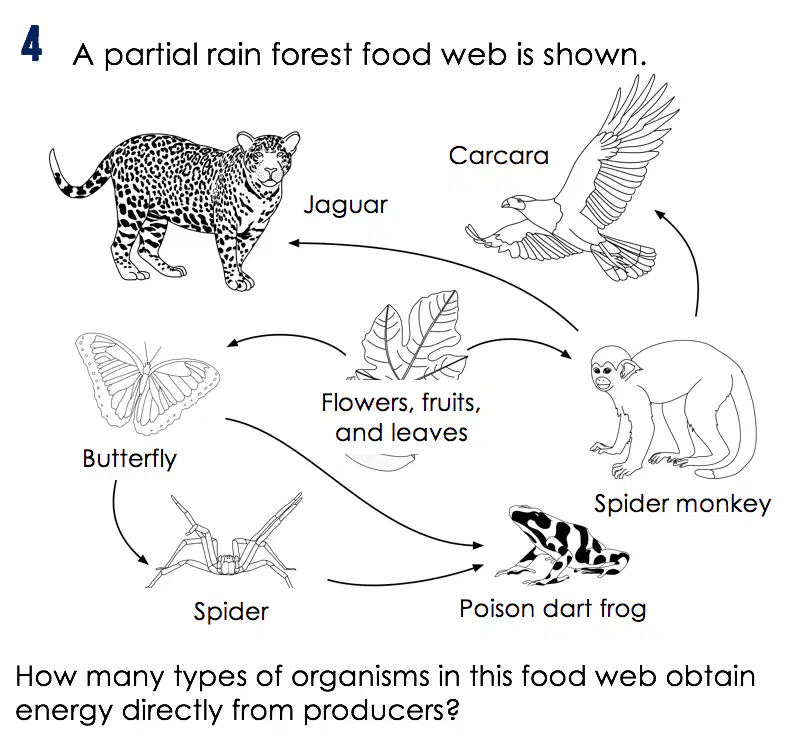
How many types of organisms in this rain forest food web obtain energy directly from producers?
One
Two
Three
Four
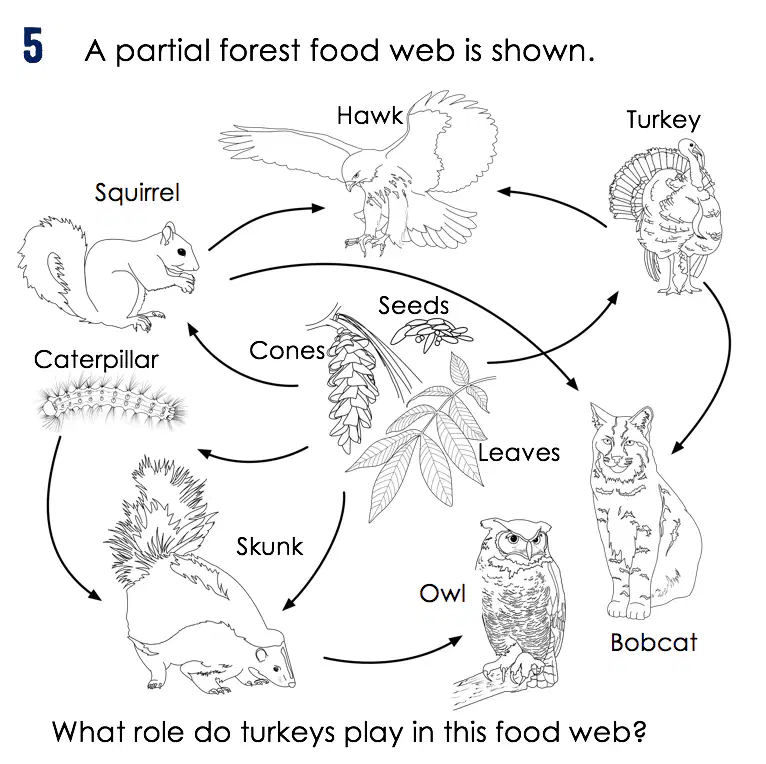
What role do turkeys play in this forest food web shown?
Decomposer
Predator
Consumer
Producer
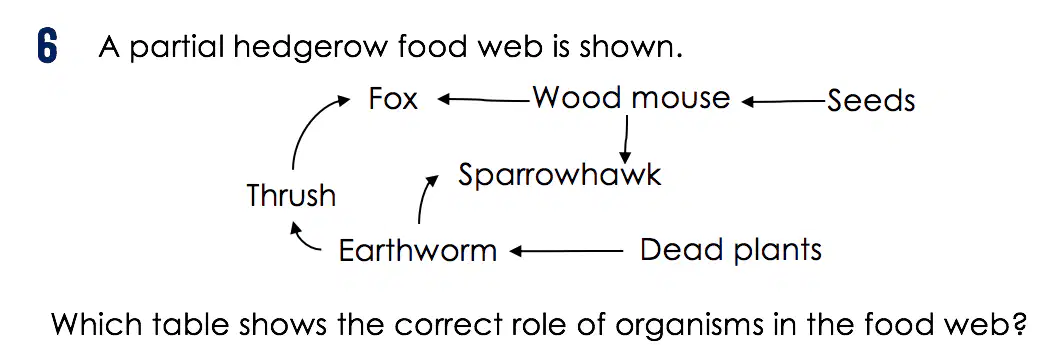
Which table shows the correct role of organisms in the hedgerow food web shown?

A

B

C

D
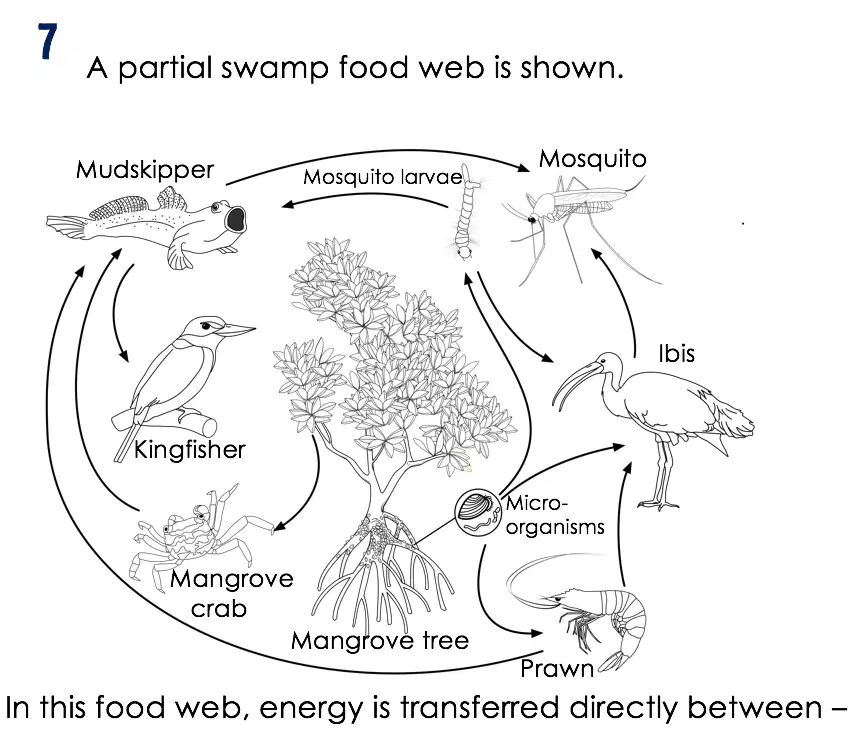
In this swamp food web, energy is transferred directly between
mosquitos and mudskippers
kingfishers and mangrove crabs
prawns and mosquito larvae
kingfishers and mangrove trees
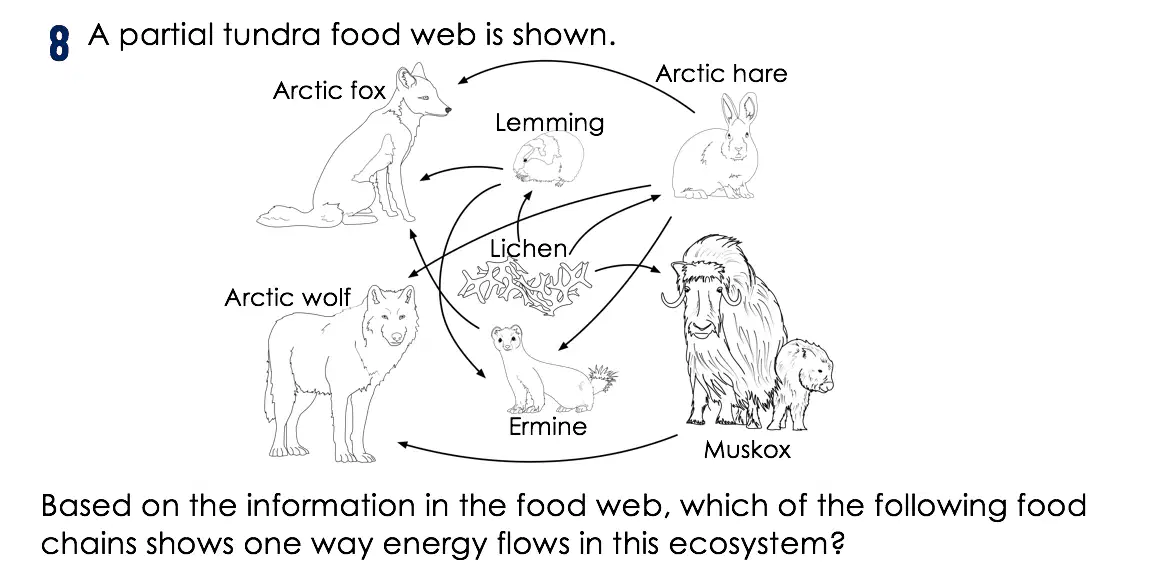
Based on the information in the tundra food web, which of the following food chains shows on way energy flows in the ecosystem?
Lichen -> Arctic hare -> muskox
Arctic wolf -> muskox -> lichen
Lichen -> lemming -> Arctic hare -> Arctic fox
Lichen -> lemming -> ermine -> Arctic fox
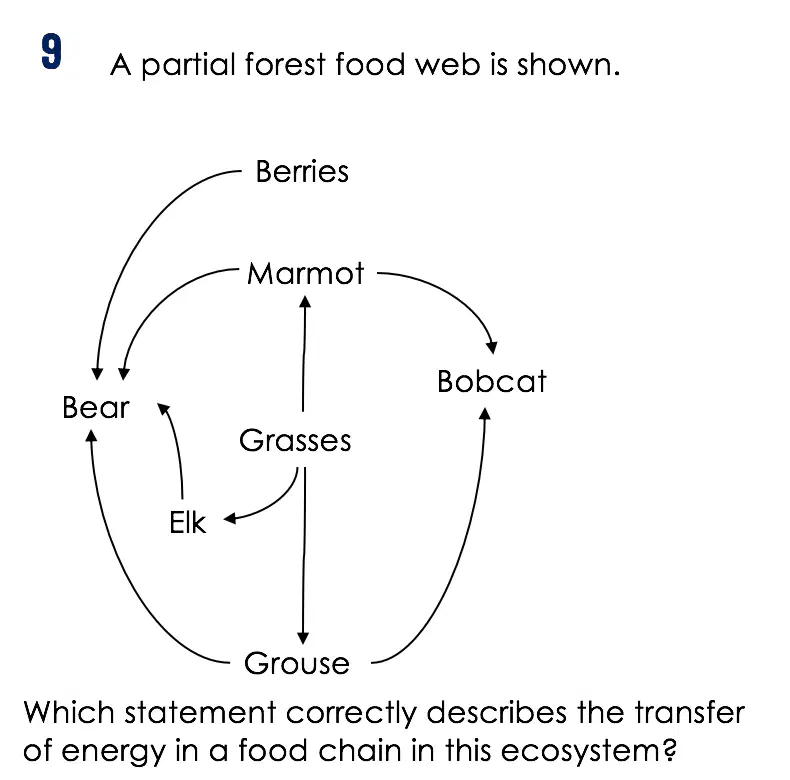
Which statement correctly describes the transfer of energy in a food chain in this ecosystem?
Energy is transferred from berries to bears to elk.
Energy is transferred from grasses to marmots to bobcats.
Energy is transferred from bobcats to grouses to grasses.
Energy is transferred from grasses to elk to grouses.
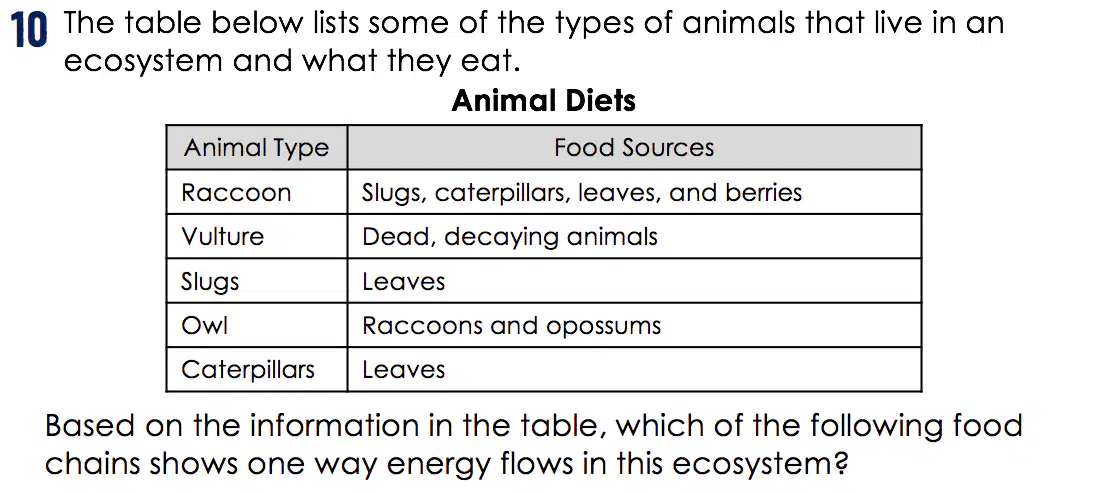
Based on the information in the table, which of the following food chains shows one way energy flows in this ecosystem?
Leaves -> caterpillars -> raccoons -> vultures
Leaves -> slugs -> caterpillars
Owls -> raccoons -> berries
Leaves -> slugs -> owls
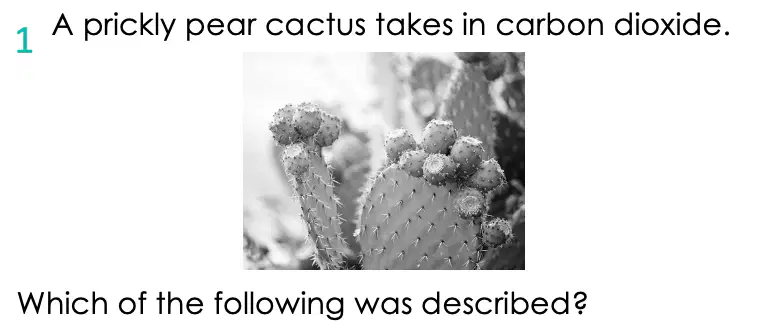
A prickly pear cactus takes in carbon dioxide. Which of the following was described?
Two organisms interacting
An organism interacting with a nonliving component of its ecosystem
Two organisms competing for space
A producer helping another producer
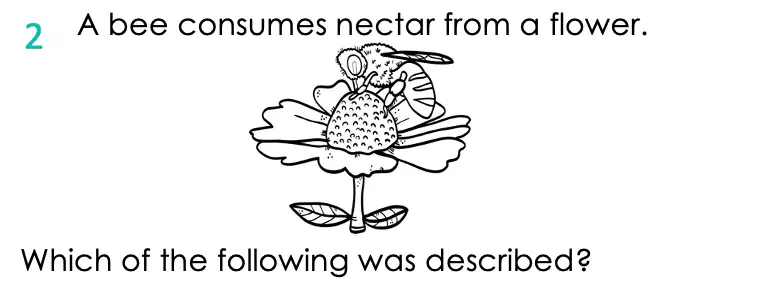
A bee consumes nectar from a flower. Which of the following was described?
Two organisms competing for food
A producer helping another producer
An organism interacting with a nonliving component of its ecosystem
An organism depending on another organism for energy
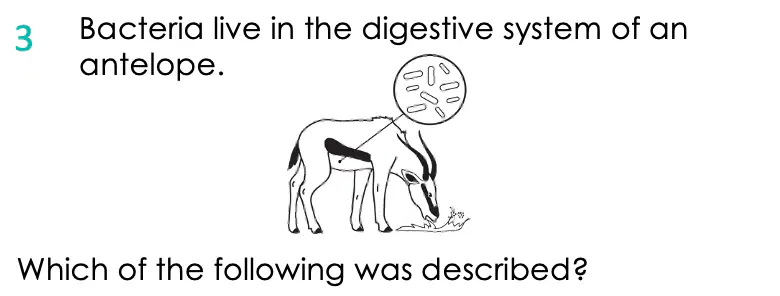
Bacteria live in the digestive system of an antelope. Which of the following was described?
A consumer interacting with a producer
A producer helping another producer
An organism interacting with a nonliving component of its ecosystem
An organism depending on another organism
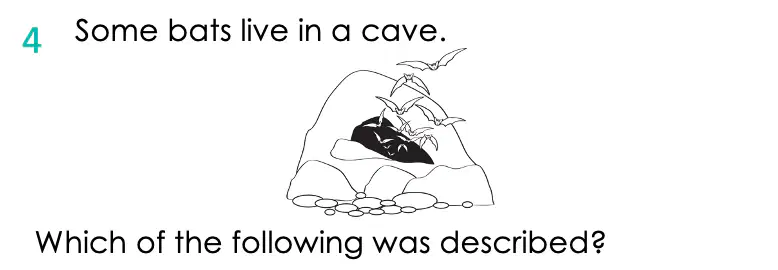
Some bats live in a cave. Which of the following was described?
Different species competing for food
Organisms using nonliving components of their environment for food
Organisms using nonliving components of their environment for shelter
Organisms using living components of their environment for shelter
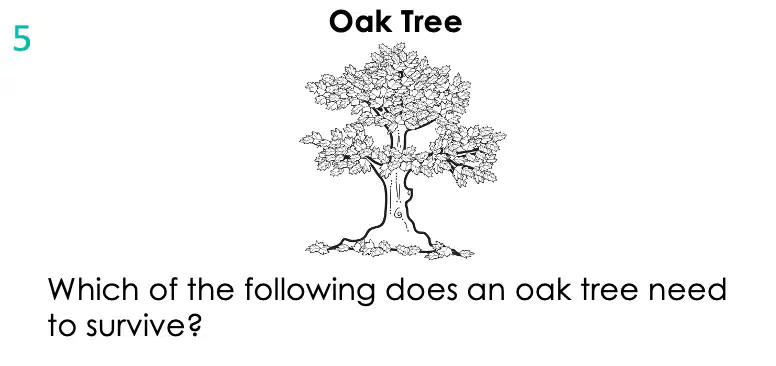
Which of the following does an oak tree need to survive?
Carbon dioxide
Wind
Predators
Oxygen
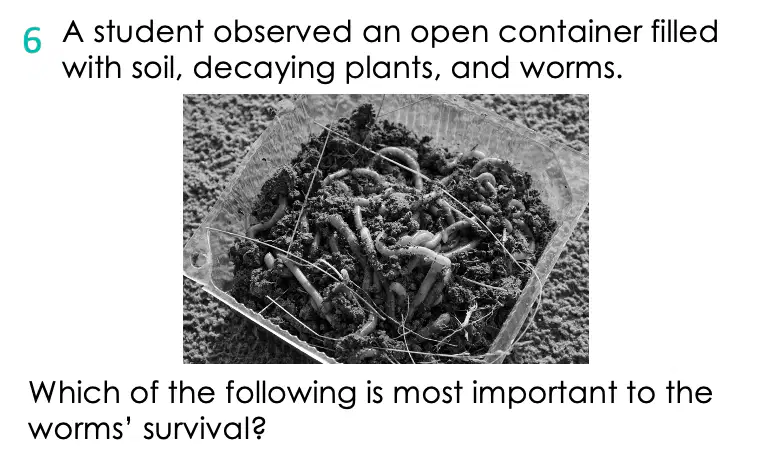
A student observed an open container filled with soil, decaying plants, and worms.
Which of the following is most important to the worms' survival?
Carbon Dioxide
Oxygen
Plastic
Sunlight
Which of these describes a living organism that uses a nonliving component of its ecosystem to survive?
A hermit crab inside a shell
A bird nesting in a tree hollow
Rabbits consuming grass
A tree producing acorns
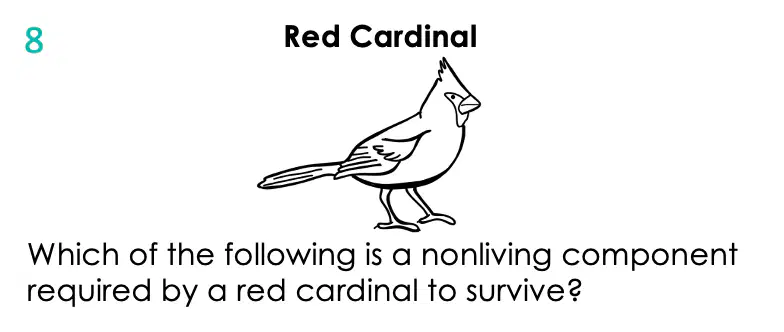
Which of the following is a nonliving component required by a red cardinal to survive?
Carbon Dioxide
Seeds, berries, and insects
Oxygen
All of the above
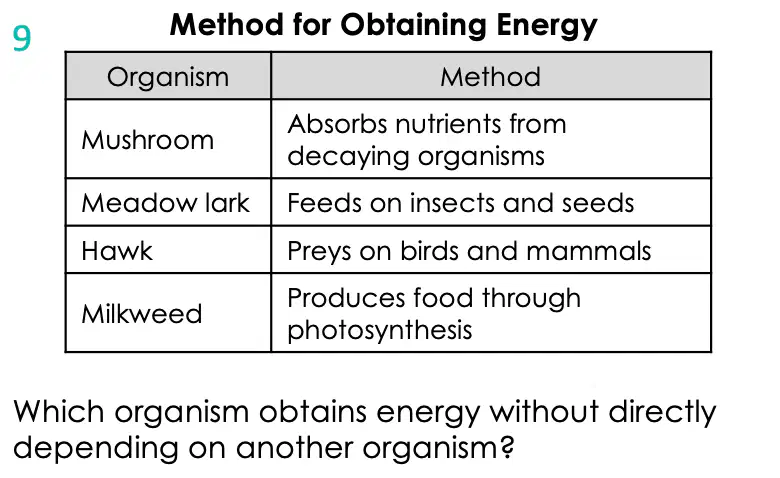
Which organism obtains energy without directly depending on another organism?
Mushroom
Meadow Lark
Hawk
Milkweed
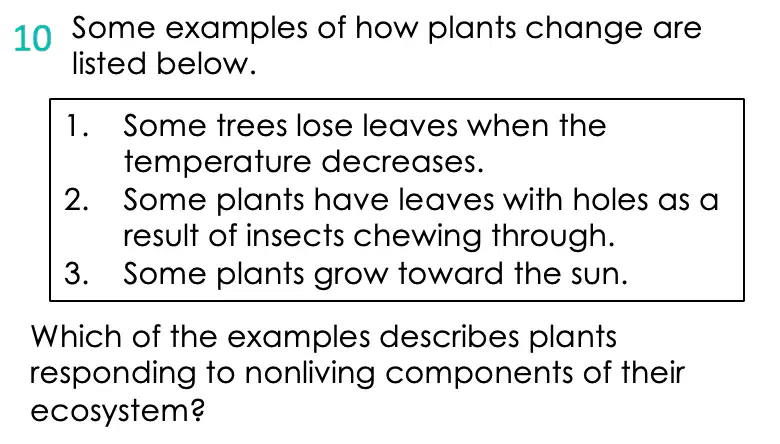
Which of the examples describes plants responding to nonliving components of their ecosystem?
1. Some trees lose leaves when the temperature decreases.
2. Some plants have leaves with holes as a result of insects chewing through.
3. Some plants grow toward the sun.
Example 1 only
Example 2 only
Example 1 and 3 only
Examples 1, 2, and 3

Natural disasters can also change ecosystems. What can organisms do if a disaster happens?
Fight, Survive, Struggle
Move, Adapt, Die
Stay, Sleep, Survive
Eat, Sleep, Repeat
constructing highways
planting trees
recycling paper
open up more habitats for organisms to live in
marine life is threatened
it would not change the ecosystem
animals cannot travel through their ecosystem the same


What would cause an increase in the rabbit population?
An increase in grass growing
An increase in caterpillars
An decrease in owls
An increase in fox

plants
frog
praying mantis
owl
A highway built in the middle of the desert.
Lightening strikes and starts a fire in the forest.
A rancher placing too many grazers in a small area leading to overgrazing.
True
False
A squirrel makes a change to its environment when it —
climbs a tree
digs a hole to bury an acorn
collects acorns
jumps from tree to tree

