
NEW
Font size
 Worksheets
8.P.1.1 Chemistry (E-C-M)
Total questions: 55
Worksheet time: 41mins
All matter is made of what...
energy
atoms
electrons
compounds
The positive particles of an atom are
electrons
positrons
neutrons
protons
The central region of an atom where its neutrons and protons are is its
nucleus
electron cloud
core
center
Particles in an atom that are neutral and have no charge are
negatrons
electrons
neutrons
protons

What does the 1.00794 stand for?
Hydrogen
atomic number
atomic mass
atomic explosion
In the modern periodic table, elements are arranged by:
atomic mass
atomic number
valence electrons
number of isotopes
A subatomic particle that has a negative charge is called --
a proton
a neutron
an electron
the nucleus
An arrangement of elements in order of their atomic numbers such that elements with similar properties fall in the same column or group.
Atomic Number
Electron Cloud
Periodic Table
Nucleus
A subatomic particle with a positive charge is called --
a proton
a neutron
an electron
a nucleus
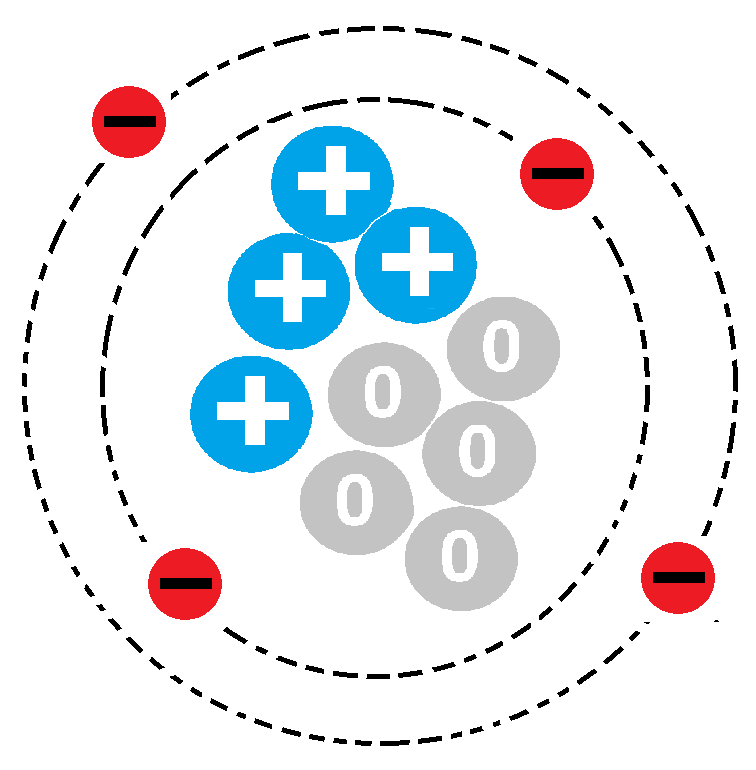

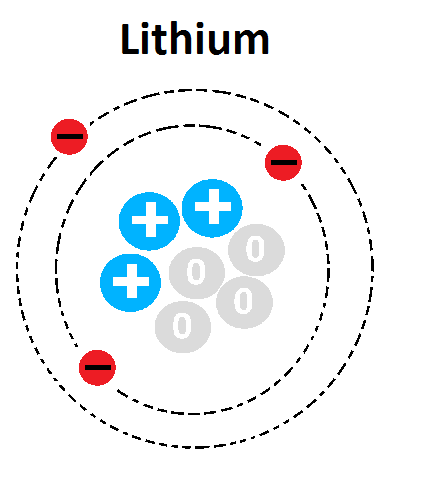
What is the mass number of this atom?
1
3
4
7
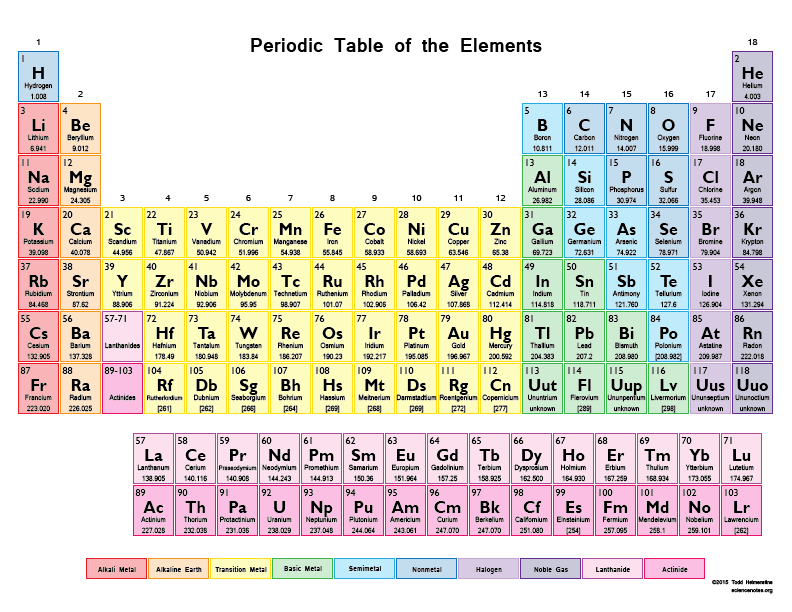
What is the atomic number of Barium, Ba? (enlarge the periodic table)
20
38
56
88

Ambient Air
Heterogeneous
Homogeneous


What kind of mixture is shown in the picture?
Homogeneous
Heterogeneous

What kind of mixture is shown in the picture?
Homogeneous
Heterogeneous

What kind of mixture is shown in the picture?
Homogeneous
Heterogeneous
What is the definition of matter?
Anything that has mass and takes up space
A substance that is liquid, solid, or gas
Anything that is pure
Anything that you can see or hold
two or more different physical forms in which an element can exist. Graphite, charcoal, and diamond are all allotropes of carbon.
actinides
heterogeneous
allotropes
solution
Smallest possible unit into which matter can be divided, while still maintaining its properties
atom
molecule
element
compound
The smallest particle in a chemical element or compound that has the chemical properties of that element or compound.
mixture
molecule
element
compound
Simplest form of pure substance. They cannot be broken into anything else by physical or chemical means.
compound
mixture
molecule
element
Pure substances that are the unions of two or more elements. They can be broken into simpler substances by chemical means.
compound
element
mixture
atomic mass
Two or more substances that are not chemically combined with each other and can be separated by physical means. The substances in the mixture retain their individual properties.
compound
homogeneous mixture
mixture
heterogenous mixture
The mass of a given atom or molecule. Number of protons and neutrons added together.
tomic mass
atomic number
atomic mass
molecule
The number of protons in the nucleus of an atom.
heterogenous mixture
homogeneous mixture
atomic number
atomic mass
A mixture that appears to be the same throughout.
homogeneous mixture
proton
heterogenous mixture
neutron
A mixture that does not appear to be the same throughout.
homogeneous mixture
electron
heterogenous mixture
atomic number
Positively charged particles that help make up the nucleus of the atom.They are equal to the electrons and atomic number of the atom.
neutron
proton
electron
nucleus
Neutral particles; have no electric charge and help make up the nucleus of the atom. They contribute to the atomic mass.
proton
electric
neutron
electron
Negatively charged particles found outside the nucleus in electron orbits/levels and are equal to the number of protons. They are involved in the formation of chemical bonds.
proton
neutron
electron
electric
What is the best example of a pure substance?
peanuts
milk
gold
air
Which of the following is true regarding mixtures?
One substance not combined with any other substances.
Two or more substances physically mixed and can be separated.
Two or more substances that are impossible to separate.
One substance that forms a compound alone.
Which of the following can be classified as heterogeneous mixture?
Tea
Salad
Kool-aid
Salt Water
What must happen for a mixture to be considered homogeneous?
Particles must be uniform throughout and difficult to see parts.
Particles must be non-uniform throughout and easy to see parts.
Particles must be uniform throughout but easy to see parts.
Particles must be non-uniform throughout and difficult to see parts.
On an element square , which number tells how many protons are in an atom?
Periodic Number
Atomic Number
Atomic Mass
Element size number
Which number tells you how many protons and neutrons are in an atom?
Periodic Number
Atomic Number
Atomic Mass
Element size number
Which number indirectly tells you the number of electrons in a balanced (neutral) atom?
Perodic Number
Atomic Number
Atomic Mass
Element size number

What phase is this?
Gas
Liquid
Solid

What phase is this?
Solid
Liquid
Gas

What phase is this?
Solid
Liquid
Gas

