
 Worksheets
THEATER ARTS#
Total questions: 68
Worksheet time: 34mins
Name
Class
Date
1.
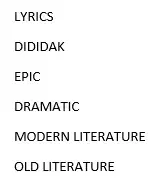
1. A literary work whose contents depict an event with an exaggerated picture.
(a)
2.
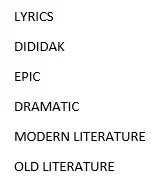
2. Literary works whose contents are moral messages, etiquette, religion, and so on.
(a)
3.
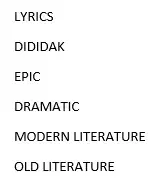
3. Essay that describes something objectively without following the author's personal thoughts and feelings
(a)
4.
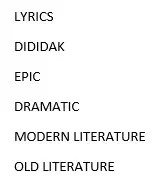
4. Literary works produced by writers who were in the era of the kingdom or where there was no national movement.
(a)
5.
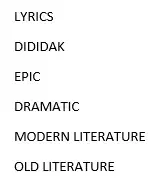
5. Literary works that live and develop in the life of modern society.
(a)
6.
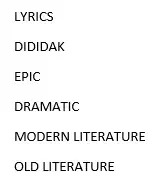
6. Essays containing subjective feelings of the author
(a)
7.
1. It is best to always have the “moral of the story” finishes to share the lesson.
a)
TRUE
b)
FALSE
8.
2. Use eye contact to communicate your story to the audience.
a)
TRUE
b)
FALSE
9.
3. As a storyteller, do not use mics for your storytelling, storytellers need to rely on their voice, a sign of professionalism.
a)
TRUE
b)
FALSE
10.
4. Let the story speak to the audience in its own way and skip the need to tell them what to think.
a)
TRUE
b)
FALSE
11.
5. Preparations will not matter as long as you are confident.
a)
TRUE
b)
FALSE
12.
6. Consider your pacing when you are storytelling.
a)
TRUE
b)
FALSE
13.
7. It is better to have impromptu actions than preplanning it for the storytelling.
a)
TRUE
b)
FALSE
14.
8. Do not hesitate to remove some important details in your story.
a)
TRUE
b)
FALSE
15.
9. Use a strong and confident voice.
a)
TRUE
b)
FALSE
16.
10. The "moral of the story" finishes can be used for young audiences.
a)
TRUE
b)
FALSE
17.
11. Solo theatre is a form of theatrical performance that combines songs, spoken dialogue, acting and dance.
a)
TRUE
b)
FALSE
18.
12. One of the highlights of fringe theatre is that it’s pretty frugal in nature – in terms of technicalities, production value etc.
a)
TRUE
b)
FALSE
19.
13. A farce theater allows audiences to converse with the actors and interact with their surroundings, thereby breaking the fourth wall.
a)
TRUE
b)
FALSE
20.
14. Melodrama is a form of theater wherein the plot, characters, dialogues are all exaggerated.
a)
TRUE
b)
FALSE
21.
15. Solo theater are told from a first person perspective.
a)
TRUE
b)
FALSE
22.
1. It is thought that the first theatrical performances arose from ____________.
a)
family culture
b)
churches and cults
c)
animals and insects
d)
rituals and religious ceremonies.
23.
2. It conveys a social message to the audience in a more palatable format.
a)
Melodrama
b)
Fringe Theater
c)
Tragedy
d)
Comedy
24.
3. This play is based on human suffering and emotionally painful events.
a)
Melodrama
b)
Fringe Theater
c)
Tragedy
d)
Comedy
25.
4. These plays are based on a historical narrative – they are either an enactment of a historical event or personality, or an adaptation of the same.
a)
Melodrama
b)
Historical Theater
c)
Farce
d)
Solo Theater
26.
5. This play is led by only one actor.
a)
Melodrama
b)
Historical Theater
c)
Farce
d)
Solo Theater
27.
6. This theater play is more about scale, and it relies on making people react to the story more rationally than emotionally.
a)
Musical Theater
b)
Fringe
c)
Solo Theater
d)
Epic Theater
28.
7. It is a form of theatrical performance that combines songs, spoken dialogue, acting and dance.
a)
Musical Theater
b)
Fringe
c)
Solo Theater
d)
Epic Theater
29.
8. These are seats that rose up and are located around the orchestra area.
a)
theatron
b)
theater risers
c)
risers
d)
theatries
30.
9. Western theater history traces its origins back to the theater of __________
a)
ancient India
b)
ancient Rome
c)
ancient Greece
d)
ancient China
31.
10. It is located behind the orchestra, where the costumes and masks were stored.
a)
Skene
b)
Personal assistant's corner
c)
Table
d)
Skane
32.
11. Ancient Greek drama was originally performed in an
a)
hallways
b)
ancient chambers
c)
indoor amphitheater
d)
outdoor amphitheater
33.
12. The__________ theater featured stunning tricks such as acrobatics and mime.
a)
French theater
b)
Chinese theater
c)
Japanese theater
d)
Greek drama
34.
13. The earliest example of theater is thought to have occurred in ___________.
a)
Greece
b)
Spain
c)
Egypt
d)
Russia
35.
14. Cornielle, who wrote Corneille’s Le Cid, is a/an _________ playwright.
a)
English
b)
Greek
c)
Japanese
d)
French
36.
15. In _____, there were three actors who played all the roles in a play as well as a chorus in the play.
a)
French theater
b)
Chinese theater
c)
Japanese theater
d)
Greek theater
37.
16. In this theater, the actors wear masks and elaborate costumes
a)
Tragedy
b)
Kabuki
c)
Farce
d)
Noh
38.
17. Kabuki Theater began in the year___________.
a)
1500s
b)
1700
c)
1600s
d)
1800s
39.
18. In _____________, there are two forms of theater that survive today, the first is Noh theater, which is the oldest form, the second is Kabuki theater,
a)
French theater
b)
Chinese theater
c)
Japanese theater
d)
Greek drama
40.
19. William Shakespeare is a/an _________ playwright lauded until today for his masterworks of comedy, tragedy, and history.
a)
Chinese
b)
French
c)
English
d)
Greek
41.
20. She is the first Kabuki performer
a)
Okuni
b)
Okuri
c)
Okune
d)
Okure
42.
21. It is the art created primarily for visual perception, as drawing, graphics, painting, sculpture, and the decorative arts.
a)
Performing Arts
b)
Visual Arts
c)
Literary Arts
d)
Applied Arts
43.
22. An artwork that aims to represent actual objects or subjects from reality.
a)
Abstract Art
b)
Representational Art
c)
Non- Objective Art
d)
Real Art
44.
23. Art forms in which a human performance is a principal product.
a)
Performing Arts
b)
Visual Arts
c)
Literary Arts
d)
Applied Arts
45.
24. It is an art that makes language as a medium, can be interpreted as a branch of art that contains everything both oral and written.
a)
Performing Arts
b)
Visual Arts
c)
Literary Arts
d)
Applied Arts
46.
25. An artwork that takes nothing from reality. It is created purely for aesthetic reasons.
a)
Abstract Art
b)
Representational Art
c)
Non- Objective Art
d)
Real Art
47.
26. A literary work that is described using diction, characterized by a dense but beautiful discussion. It can indirectly cause a tendency of someone to sharpen their awareness through language that has a rhythm and special meaning.
a)
Prose
b)
Drama
c)
Poetry
d)
Essay
48.
27. In the intrinsic element of poetry, it is the effort of the poet in arousing the imagination of the reader about the event or feeling experienced by the poet so that the reader can feel it
a)
Diction
b)
Image
c)
Rhythm
d)
Rima
49.
28. An Artwork that aims to take subjects from reality but presents them in a way that is different from the way they are viewed in our reality.
a)
Abstract Art
b)
Representational Art
c)
Non- Objective Art
d)
Real Art
50.
29. In the intrinsic element of poetry, these are the words chosen by a poet in creating poetry. These words express beauty and feelings.
a)
Diction
b)
Image
c)
Rhythm
d)
Rima
51.
30. In the intrinsic element of poetry, it is the alternating up and down, the long-short pronunciation of poetic language on a regular basis.
a)
Diction
b)
Image
c)
Rhythm
d)
Rima
52.
Improve
a)
6th
b)
1st
c)
2nd
d)
3rd
e)
4th
53.
Taking notes
a)
4th
b)
1st
c)
2nd
d)
3rd
e)
5th
54.
Brainstorm
a)
2nd
b)
1st
c)
3rd
d)
4th
e)
5th
55.
Locate resources
a)
3rd
b)
1st
c)
2nd
d)
4th
e)
5th
56.
Organize
a)
5th
b)
1st
c)
2nd
d)
3rd
e)
4th
57.
Asking questions
a)
1st
b)
2nd
c)
3rd
d)
4th
e)
5th
58.
Define the criteria.
a)
3rd
b)
1st
c)
2nd
d)
4th
e)
5th
59.
Decide what kind of rubric you will use.
a)
2nd
b)
1st
c)
3rd
d)
4th
e)
5th
60.
Define the purpose the activity for which you are creating a rubric.
a)
1st
b)
2nd
c)
3rd
d)
4th
e)
5th
61.
Create your rubric.
a)
6th
b)
1st
c)
2nd
d)
3rd
e)
4th
62.
Design the rating scale.
a)
4th
b)
1st
c)
2nd
d)
3rd
e)
5th
63.
Write descriptions for each level of the rating scale
a)
5th
b)
1st
c)
2nd
d)
3rd
e)
4th
64.
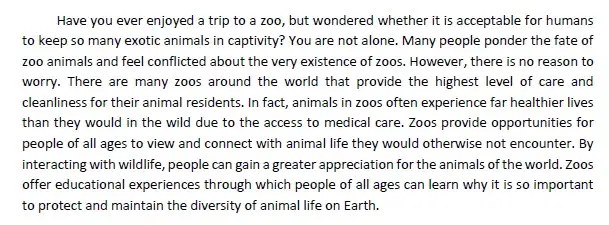
1.
a)
Exposition prose
b)
Argumentative prose
c)
Narrative prose
d)
Descriptive prose
65.
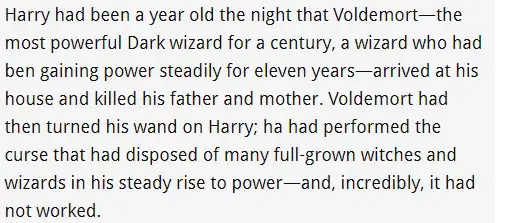
2.
a)
Exposition prose
b)
Argumentative prose
c)
Narrative prose
d)
Descriptive prose
66.
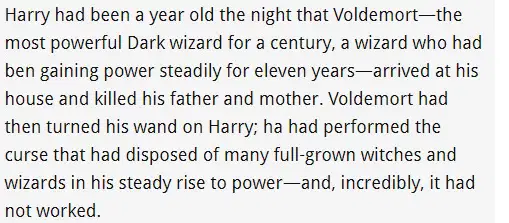
3.
a)
Exposition prose
b)
Argumentative prose
c)
Narrative prose
d)
Descriptive prose
67.

4.
a)
Exposition prose
b)
Argumentative prose
c)
Narrative prose
d)
Descriptive prose
68.

5.
a)
Exposition prose
b)
Argumentative prose
c)
Narrative prose
d)
Descriptive prose
100 %

