
 Worksheets
(Old) NW3 Review
Total questions: 61
Worksheet time: 58mins
The DNA triplet sequences present in our genome code for amino acids. These sequences can be found in -
in humans only
plants and animals only
prokaryotes
All living things
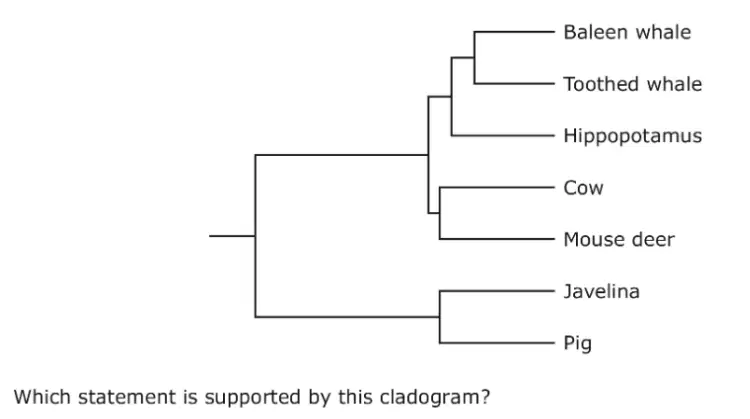
This cladogram shows the evolutionary relationships among some mammals based on homologous structures.
Hippopotamuses are more closely related to cows than javelinas
Toothed whales are more closely related to mouse deer than hippopotamuses
Javelinas and pigs are more closely related than baleen whales and toothed whales
Cows and mouse deer are more closely related than javelinas and pigs
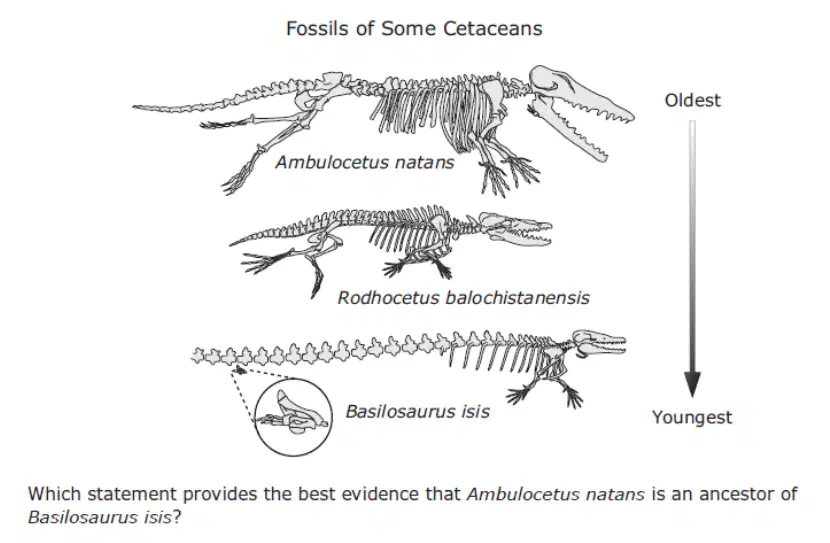
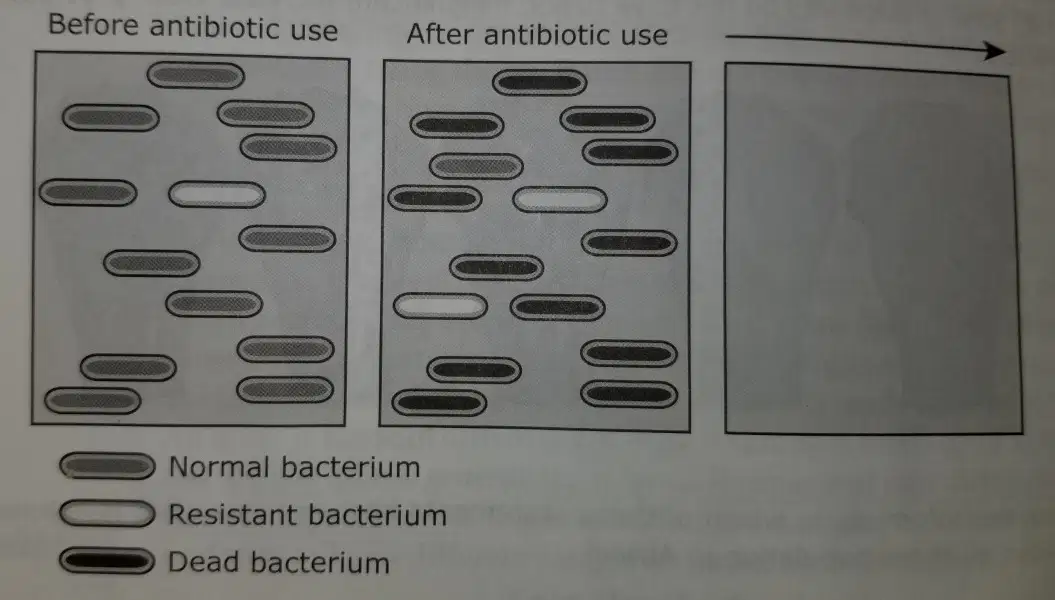
Antibiotics are sometimes prescribed by doctors to treat bacterial infections. However, some bacteria have genes that allow them to survive during exposure to antibiotics, as shown in the illustration. If the genes in the resistant bacteria help them and their offspring survive and reproduce, then what will the next generation of bacteria, to be shown in the blank box, likely look like compared to those in the first box?
A lower frequency of the resistance cells
A higher frequency of the resistant individuals
A similar frequency of resistant cells
A higher frequency of the normal individuals
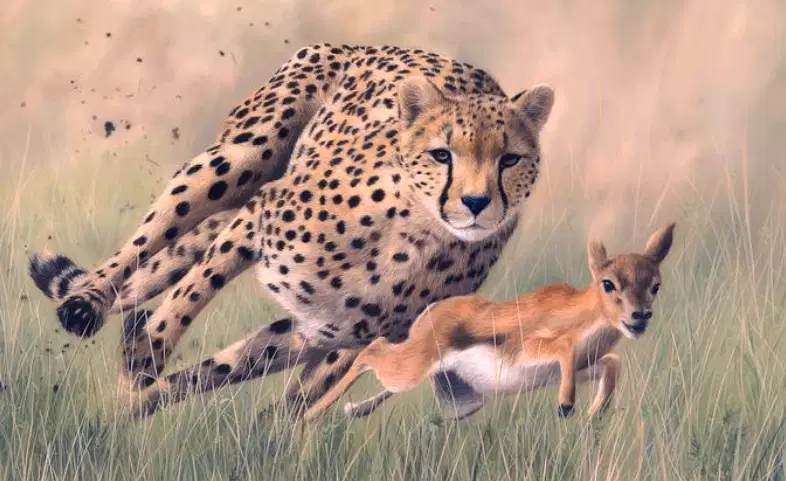
The African cheetah (Acinonyx jubatus) commonly hunts primary consumers such as the Thomson's gazelle (Eudorcas thomsonii). While the cheetah depends on surprise, its main hunting advantage is its absolute top running speed and acceleration. Over time, the gazelle population is put under a selective pressure to favor the fastest of gazelles. Which of the following best describes how the selection pressure will affect the population distribution of gazelles?
Directional Selection
Stabilizing Selection
Disruptive Selection
None of these

On a camping trip, a student found the animal shown below on the ground near his tent. According to the key, to which group of invertebrates does the animal belong?
Insects
Arachnids
Mollusks
Worms
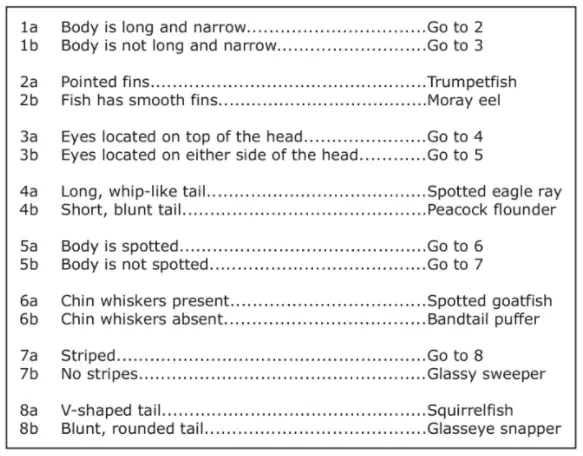
Based on this dichotomous key, which two fish have eyes located on either side of their head and are not spotted?
Glassy sweeper and squirrelfish
Glasseye snapper and spotted eagle ray
Spotted goatfish and bandtail puffer
Peacock flounder and glassy sweeper
An organism has the following characteristics: Eukaryotic, Multicellular, Heterotroph, No cell wall, and reproduces sexually. Which of the following classification most correctly describes the organism?
Domain Eukarya - Kingdom Animalia
Domain Eukarya - Kingdom Fungi
Domain Bacteria - Kingdom Eubacteria
Domain Archaea - Kingdom Archaebacteria

The chart below shows the classification of four organisms. According to the chart, which two organisms are most similar and most closely related?
organisms 1 and 2
organisms 2 and 3
organisms 1 and 3
organisms 3 and 4
Members of the kingdoms Plantae and Animalia are similar in that they both -
are heterotrophs.
have eukaryotic cells.
are unicellular.
contain cell walls.
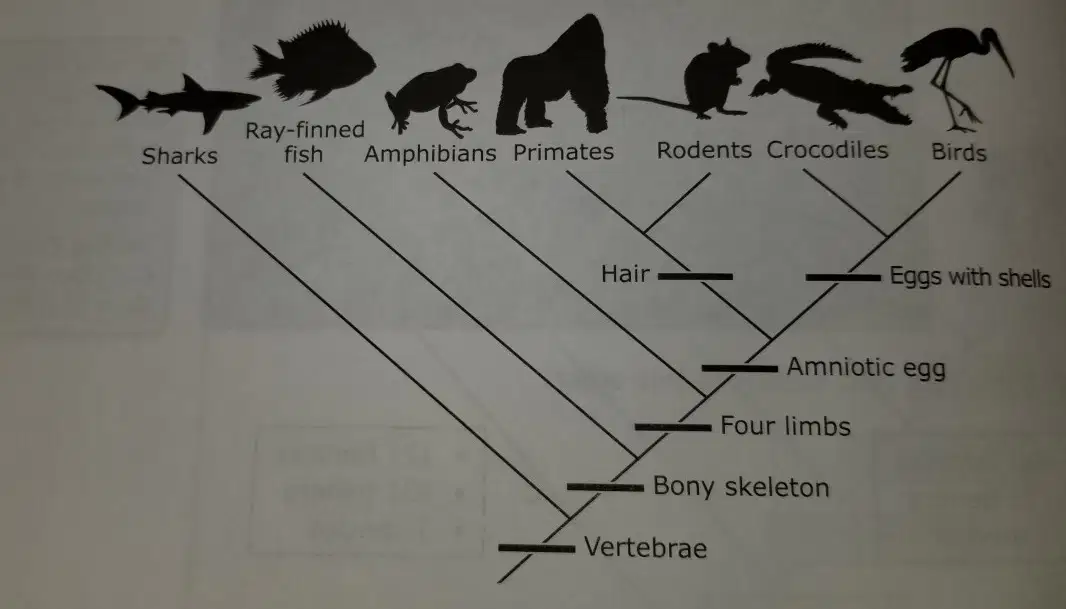

Students set up a controlled experiment by growing the same type of seedlings in two different locations. After a period of time, the students observed the seedlings and recorded their observations in the table shown. What caused the shoots of the seedlings on the windowsill to bend toward the window?
Hormones produced in response to a light stimulus
Sugars produced in response to a gravity stimulus
Carbon dioxide produced in response to a water stimulus
Water produced in response to a nitrogen stimulus

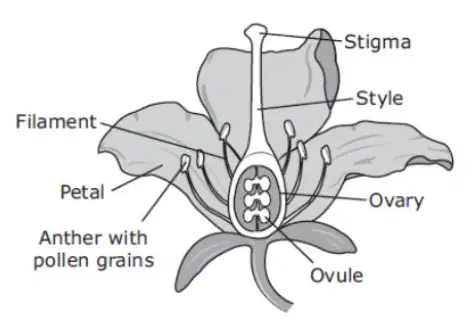
A chart of some plant systems and functions is shown. Which system interactions depend on the plant's ability to respond to the direction of light?
Option 1
Option 2
Option 3
Option 4
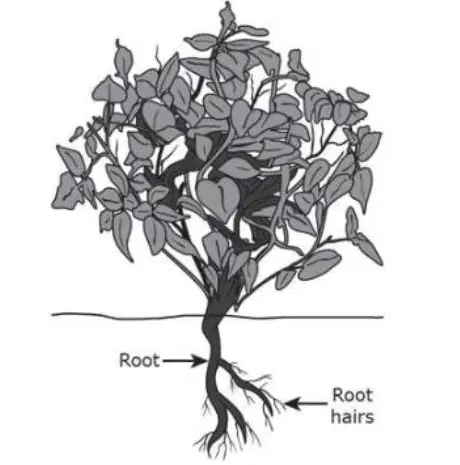
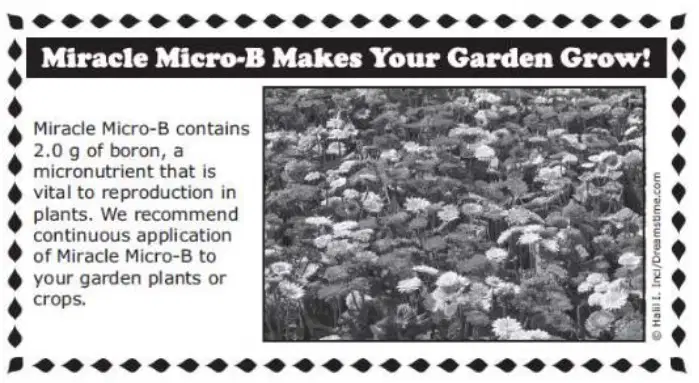
A student reads the advertisement for a product containing a plant micronutrient that can be added to the soil. Based on this information, which of the following could the student reasonably conclude?
The boron is transported to epidermal tissues by the plant's shoot system.
The boron is stored in plant stems until after the flowers are pollinated by a pollinator.
The boron is concentrated in the roots until the plant's reproductive tissues mature.
The boron is transported to the shoot system from the roots, where it aids in the reproductive tissue.

(a) is the idea that evolution occurs slowly. The fossil record shows (b) changes over millions of years
A change in a gene
replication
translation
mutation
transcription
A forest fire ignites and kills many members of a population of rattlesnakes. This is an example of:
gene flow
genetic drift
mutation
succession

This image is an example of:
genetic drift
gene flow
mutation
succession
Mutation
Change in DNA sequence
Gene Flow
Genes travel through migration
Genetic Drift
Random reduction in genetic variation
Migration
Organisms travel to other regions
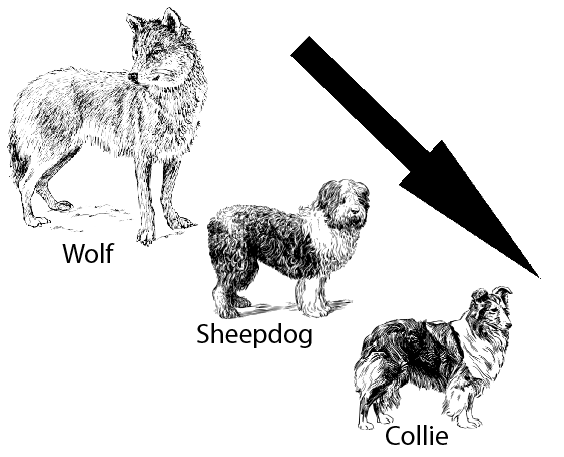
Gradualism means Natural Selection would normally happen over many generations and very
slowly
quickly
in space
beyond time
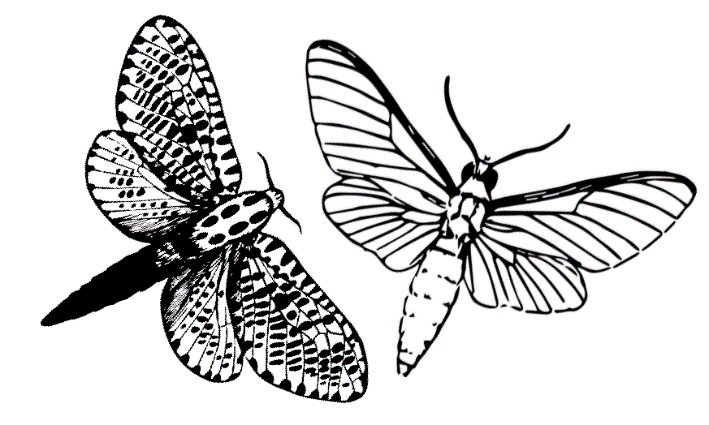
According to natural selection, light colored tree trunks would favor
light colored moths
dark colored moths
red colored moths
red and light colored moths
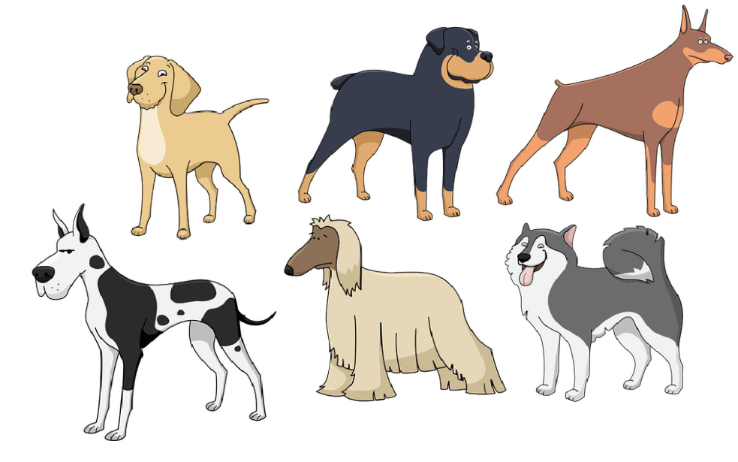
Genetic diversity in a species makes long term survival of some members
impossible
improvable
more likely
less likely
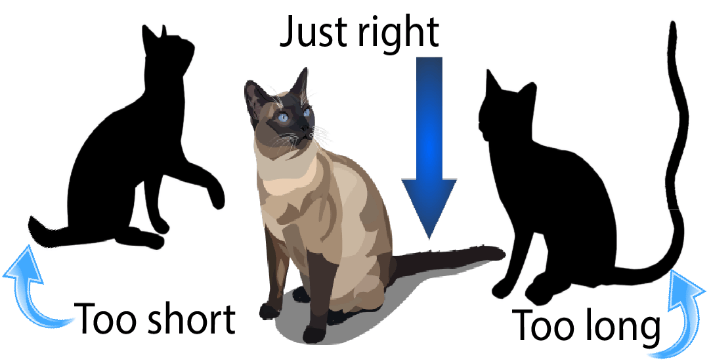
Average phenotypes are favored in the environment, while extremes have lower survival rates.
seasonal selection
distruptive selection
directional selection
stabilizing selection
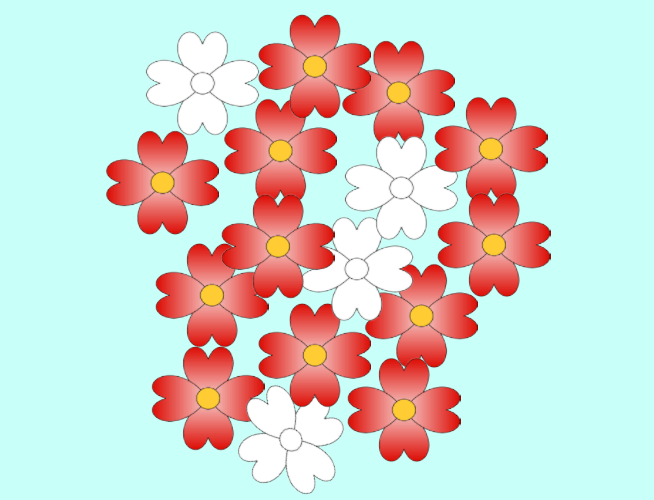
The frequency that single genes (alleles) for a trait appear in a population.
Genome
Gene frequency
Genetic Drift
Population Frequency
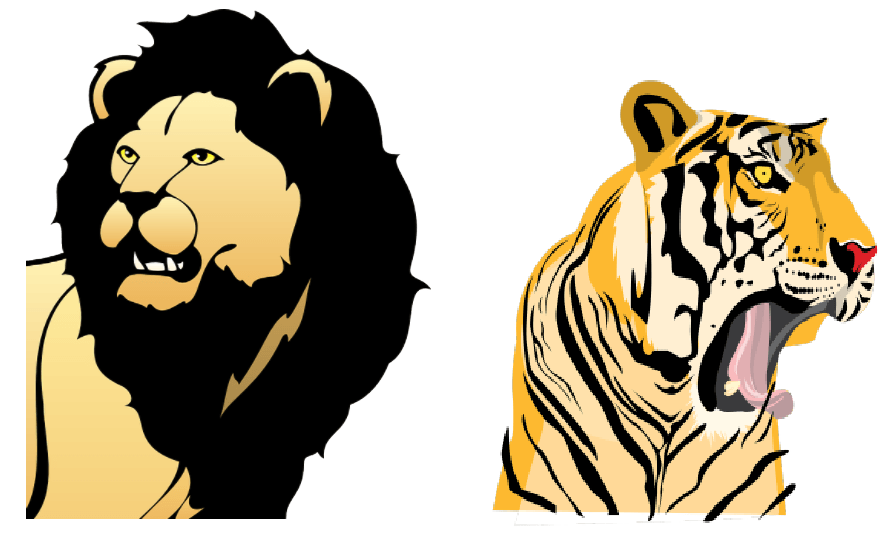
Organisms of the same species can no longer interbreed therefore creating two species.
Gene Pool
Genetic Drift
Gene Frequency
Speciation

The extreme population phenotypes are favored by the environment.
Disruptional (Diversifying) Selection
Directional Selection
Stabilizing Selection
All of the above
Which classification group (taxa) defines a single organism?
Which classification group includes the most orgnaisms?
Which classification ranks (taxa) are more specific than the family rank? Select ALL that apply.
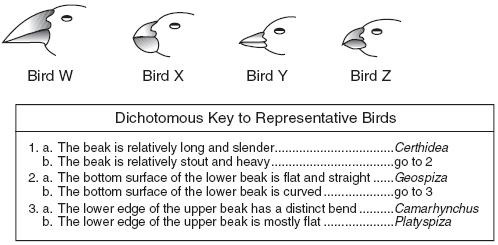
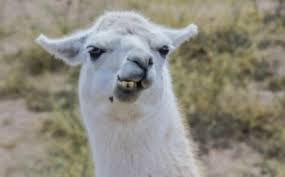
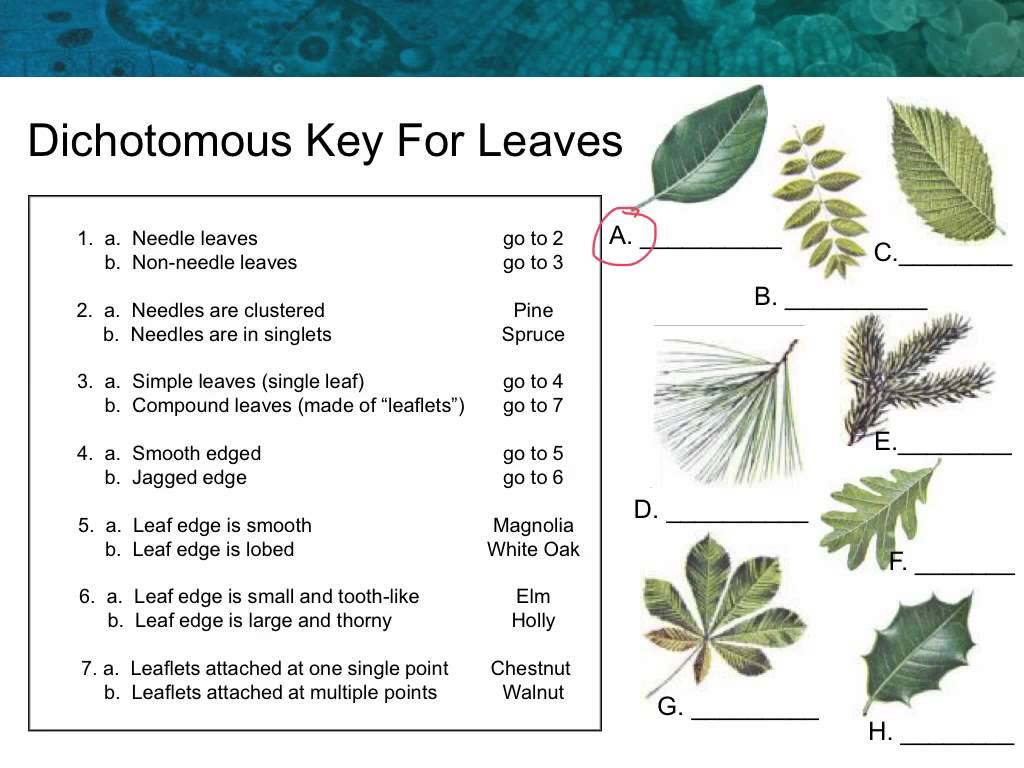
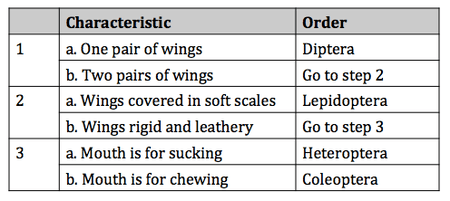

Which Kingdom?
Animalia
Plantae
Fungi
Archaea

Which Kingdom?
Animalia
Plantae
Fungi
Protista

Which Kingdom?
Protista
Plantae
Animalia
Fungi
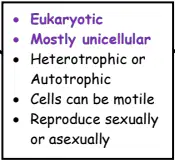
Which Kingdom?
Protista
Plantae
Archaea
Eubacteria
Eubacteria
Animalia
Archaea
Plantae
Fungi
Protista


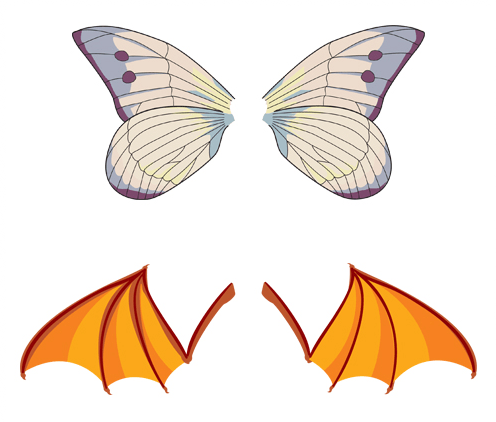
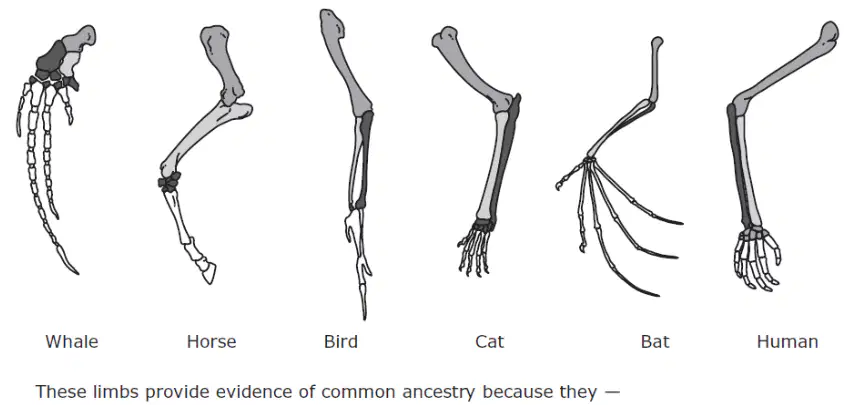
What is this an example of?
Homologous structure
Analogous structure
Vestigial organs
Functional adaption
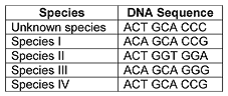
Match the following terms with their definitions
Evolution
a change in a species DNA over time because of natural selection
Adaptation
Any variation that makes an organism better able to survive
Variation
An inherited trait that makes and individual different
Mutation
A permanent change in the DNA
When is a trait most likely to be passed on to the next generation?
When it serves no purpose
When it becomes an advantage to the organism's survival
When it gives the organism a lot of water
When it prevents the organism from finding a mate
In the phrase "survival of the fittest," the term "fittest" refers to:
The best-adapted organisms
The biggest organisms
The smartest organisms
The fastest organisms

Plants curling around a pole or mailbox is an example of:
Phototropism
Germination
Turgor pressure
Thigmotropism

Stomata are made of specialized cells called ______ which surround a tiny pore/opening
stoma
guard cells
dermal cells
diffusion channels

The diffusion of water vapor out of a leaf
transportation
transformation
transpiration
translocation

The main function of stomata is to
capture sunlight
protect leaves from insects
allow gases to move rapidly in/out of leaves
release sugars into the atmosphere

