
 Worksheets
Polarity & Bonds
Total questions: 28
Worksheet time: 16mins

Fluorine
Helium
Hydrogen
Oxygen
A bond with a partially negative end and a partially positive end is:
polar
nonpolar

Is this molecule polar or non-polar?
Polar
Non-polar

Is this molecule polar or non-polar?
Polar
Non-polar
True or False: Shorter bonds are stronger bonds with larger bond energy.
True
False
When the bond is stronger, the bond energy is
lower
higher
Bond energy is the energy required to:
Break the bond
Form the bond
Remove an electron from the outermost shell
If a bond has a higher bond energy that means that the bond is
Harder to break
Easier to break
Select the LONGEST bond
HF
HBr
HCl
Select the LONGEST bond
KBr
NaBr
NaCl
Electronegativity is best defined as:
An atom's ability to REMOVE an electron from another atom
An atom's ability to LOSE its own electron
In a POLAR covalent bond the electrons spend more time around the:
more electronegative atom
less electronegative atom
central atom
Which of the following is a TRUE statement?
Polar liquids dissolve polar solids
Polar liquids dissolve nonpolar solids
Polar liquids dissolve both polar and nonpolar solids

Is this correct way to draw the Lewis Dot Structure for Carbon?
Yes
No, too many electrons
No, not enough electrons
No, dots are in wrong places
USE THE PERIODIC TABLE
How many valence electrons does Phosphorus have?
31
5
15
4
Atomic number tells us the number of
protons
neutrons
protons & neutrons
as long as it is an ATOM, the number of electrons
equals # of neutrons
equals the mass number
equals # of protons
The number of neutrons is equal to
mass number
atomic number
mass number + atomic number
mass number - atomic number

Based on VALENCE ELECTRONS, this could represent the outer ring of:
Mg
Cl
C
O
The halogens have
1 valence electron
2 valence electrons
7 valence electrons
8 valence electrons
In order for an atom to become stable, it requires:
A full outer shell of valence electrons
0 valence electrons
1 valence electron
4 valence electrons
Electrons on the outermost shell that are involved in bonding and reactions are known as:
Ground state electrons
Electromagnetic electrons
Valence electrons
This type of bond happens when electrons are shared EQUALLY between the two bonded atoms.
Polar covalent
Nonpolar covalent
Ionic
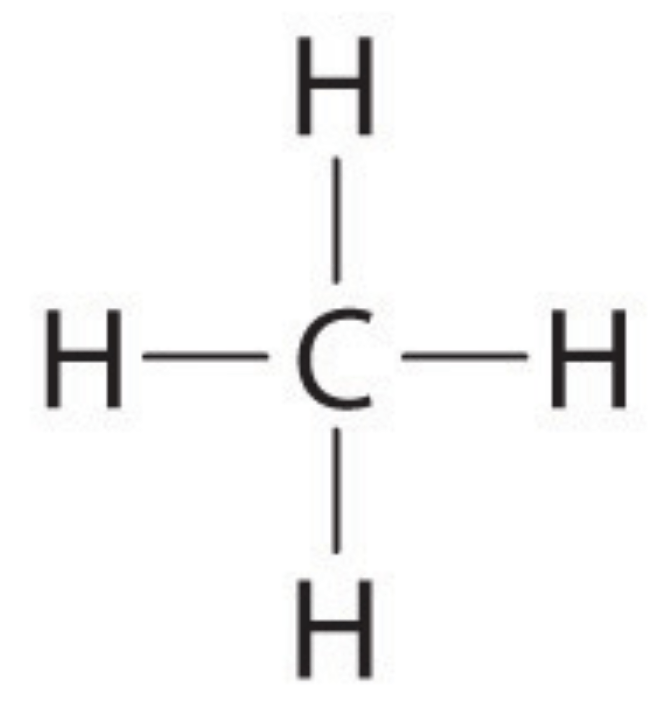
Classify the following molecule as either polar or nonpolar
polar
nonpolar

Classify the following molecule as either polar or nonpolar
polar
nonpolar
Covalent bonds are formed between:
Two nonmetals
Two metals
A metal & a nonmetal

