
 Worksheets
Properties of Solutions
Total questions: 25
Worksheet time: 25mins
In a solution, what is the solute?
The substance(s) that exists in smaller quantities
The substance that exists in the greatest quantity
The mixing of different substances.
The process in which neutral molecules lose or gain electrons
In a solution, what is the solvent?
The substance(s) that exists in smaller quantities
The substance that exists in the greatest quantity
The mixing of different substances.
The process in which neutral molecules lose or gain electrons
What are two parts that make up a solution?
solvent and solute
concentration and dilation
non polar and polar
solid, liquid, and gaseous
Salt dissolved in water is a
compound
element
heterogeneous mixture
solution
Another name for a homogeneous mixture is
an element.
a solution.
a compound.
If I dissolve sugar in water, what is the solute?
Water
Hydrogen
Sugar
Carbon
If we are making Kool-aid with Kool-aid powder and water, which part is the solvent?
water
powder
sugar
powder and sugar

How many grams of K2Cr2O7, are soluble in 100 g of water at 95 ºC?
83 grams
75 grams
40 grams
12 grams
How many grams of CaCl2, are soluble in 100 g of water at approximately 17 ºC?
58 grams
70 grams
0 grams
12 grams
When a certain amount of solvent cannot hold any more solute it is called a ________ solution.
unsaturated
Saturated
A small amount of NaCl is dissolved in water to make a solution. In this solution
water is the precipitate
water is the solute
NaCl is the solvent
NaCl is the solute
Solution where more solute can still be dissolved at the given temperature.
Saturated
Unsaturated
Supersaturated
Homogeneous solution
If 20 g of sugar can dissolve in 100ml of water at room temperature, which one is unsaturated?
10 g of sugar dissolved in 100 ml of water
10 g of sugar dissolved in 50 ml of water
20 g of sugar dissolved in 100 ml of water
20 g of sugar dissolved in 50 ml of water
Which solution is most likely the super saturated solution?
25 g of salt in 10 ml of water
15 g of salt in 20 ml of water
10 g of salt in 400 ml of water
5 g of salt in 400 ml of water.
What does it mean to be "Soluble" ?
Capable of being a solid.
To have soul.
Capable of being dissolved.
To sink.
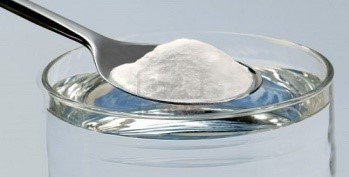
In this mixture, which of the following will be the solute?
The water in the glass
The glass that holds the final mixture
The solution containing both powder and water
The powder on the spoon
If I dissolve carbon dioxide in water, what is the solvent?
Carbon Dioxide
There is no solvent
Oxygen
Water

How does a solution become supersaturated?
dissolve lots of solute in it.
dissolve a little solute in it.
dissolve more solute than you should be able to.
dissolve a solvent in it.
When the solution equilibrium point is reached and no more solute will dissolve, the solution is said to be _________.
unsaturated
saturated
supersaturated
What do you call a solution that contains less than the maximum amount of solute that is capable of being dissolved?
unsaturated solution
saturated solution
supersaturated solution
insoluble solution
Which of the following best describes a supersaturated solution?
a solution that contains the maximum amount of solute that is capable of being dissolved
a solution that contains less than the maximum amount of solute that is capable of being dissolved.
a solution that contains more than the maximum amount of solute that is capable of being dissolved.
none of the above
Which of the following factors does NOT affect the solubility of a solute in a solvent?
Temperature
Pressure
Nature of solute and solvent
Color of the solute
What is the term for the maximum amount of solute that can dissolve in a given amount of solvent at a specific temperature?
Solubility
Concentration
Saturation
Molarity
In an experiment, a student adds salt to water until no more salt dissolves. What type of solution is formed?
Unsaturated
Saturated
Supersaturated
Dilute
Which of the following is an example of a real-world application of a solution?
Air (a mixture of gases)
Saltwater (salt dissolved in water)
Sand and water mixture
Oil and water mixture

