NEW
Font size
 Worksheets
Microevolution
Total questions: 50
Worksheet time: 27mins
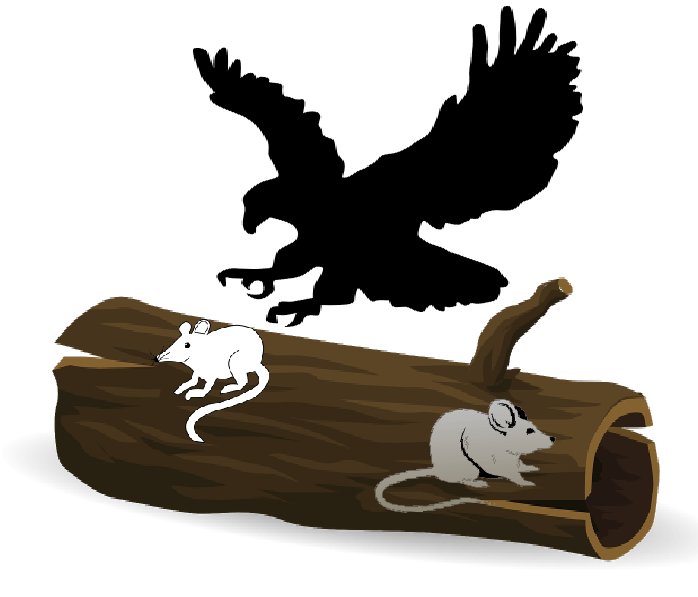
Over the years, white mice became extinct and darker mice survived. This is
stabilizing selection
directional selection
disruptive selection
due to exercise
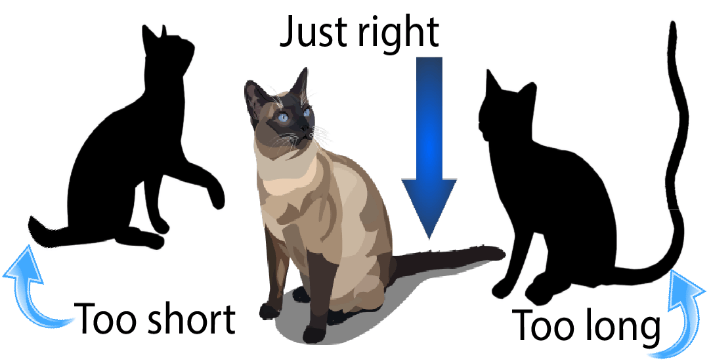
What type of selection occurs when average phenotypes are favored in the environment, while extremes have lower survival rates?
seasonal selection
distruptive selection
directional selection
stabilizing selection
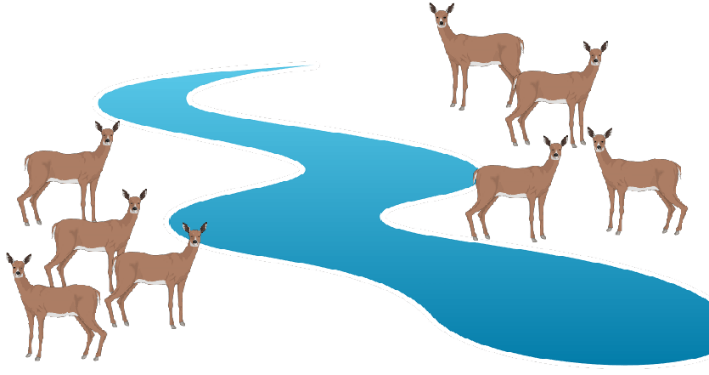
What type of isolation occurs when two populations of the same species are separated by land barriers like rivers or mountains?
geographical isolation
temporal isolation
adaptive ratiation
behavioral isolaton
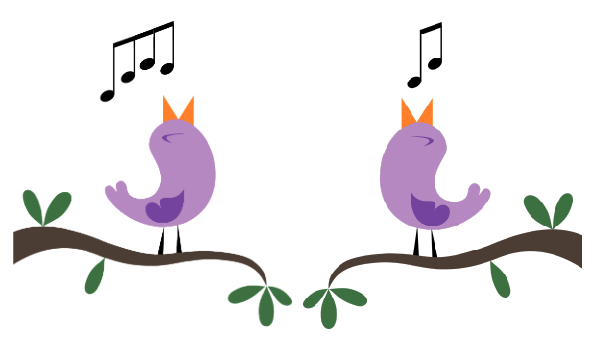
What type of isolation occurs when two populations of the same species do not have the same mating rituals or signals?
geographical isolation
temporal isolation
adaptive ratiation
behavioral isolaton
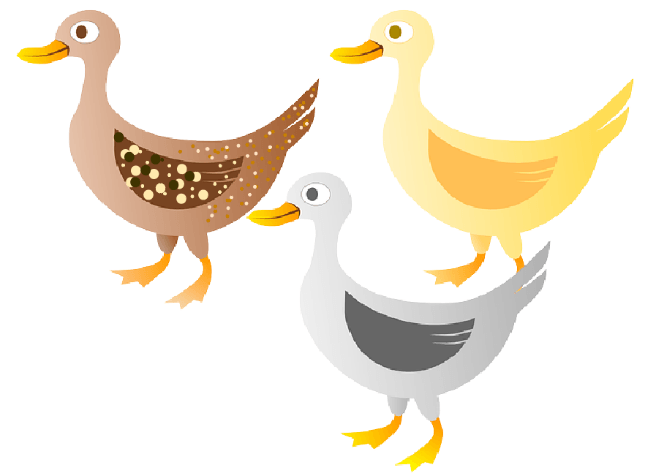
All the genes, including all the different alleles for each gene, that are present in a population at any one time
allele
gene pool
genome
mitosis
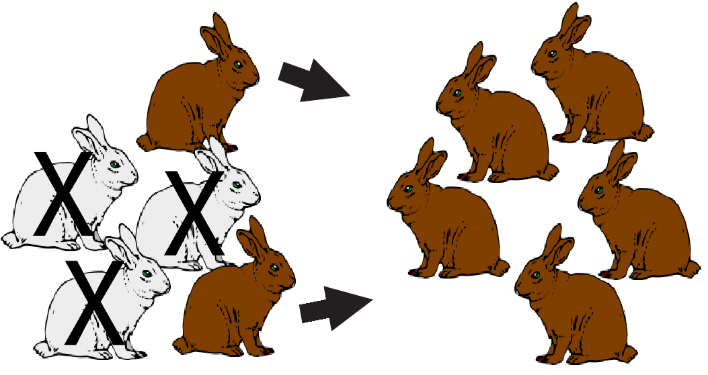
Occurs when a small group of individuals colonizes a new habitat.
Gene Pool
Mitosis
Speciation
Founders Effect
A natural disaster leads to a severe reduction in population.
Gene Pool
Bottleneck Effect
Founders Effect
Gene Frequency
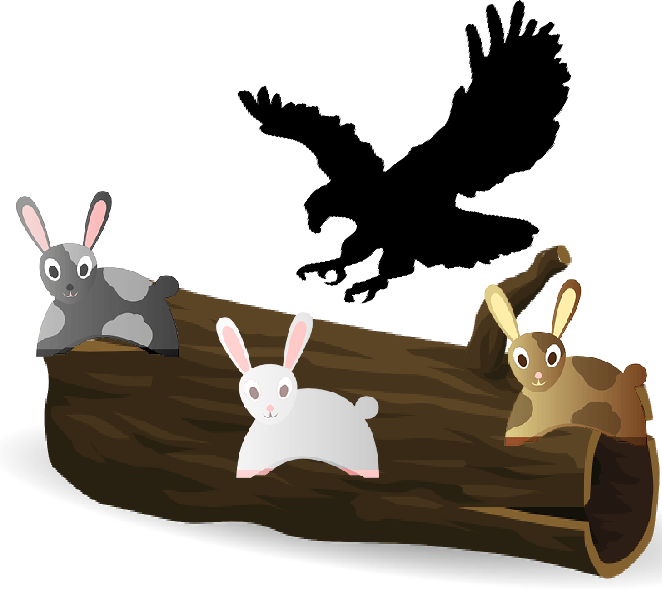
What type of selection occurs when the extreme population phenotypes are favored by the environment?
Disruptive Selection
Directional Selection
Stabilizing Selection
All of the above
Natural selection
Patterns of Inheritance
Heredity
Gene pool
The ability of an organism to survive and reproduce is known as?
Adaptation
Trait
Fitness
Variation


Robins typically lay four eggs. If more than four eggs are produced, the baby chicks are malnourished, while smaller egg numbers result in no viable (able to live) baby chicks. This is an example of what type of selection?
stabilizing
disruptive
direction
none of the above
Only populations can evolve. Individuals cannot evolve.
True
False

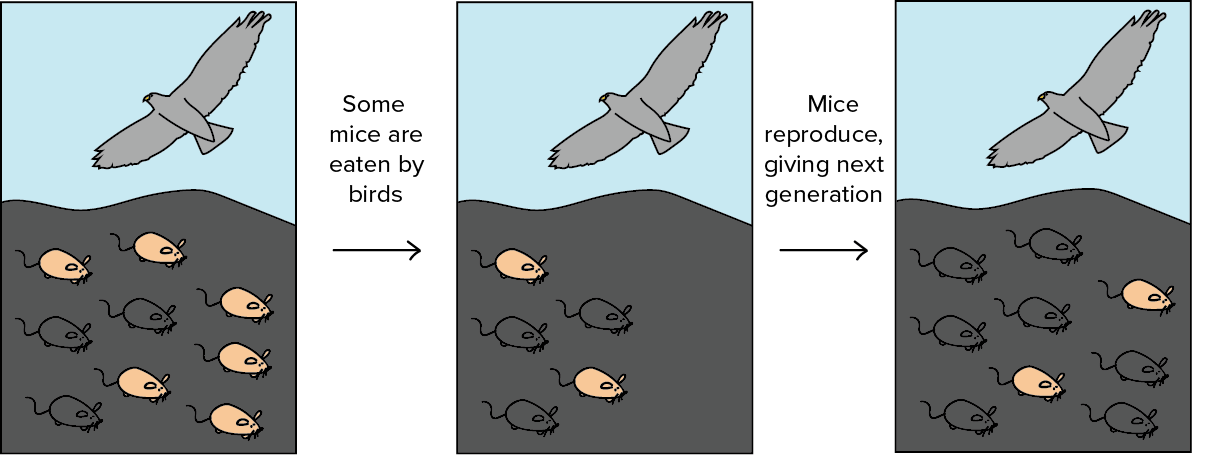
What type of natural selection is this?
Disruptive Selection
Directional Selection
Stabilizing Selection
Natural Selection

If all 5 Hardy-Weinberg assumptions are true, a population is said to be in genetic equilibrium. This means
it is evolving
it is not evolving
Which Hardy-Weinberg condition is violated when there are very few tortoises in the population of an island?
Large Population
No immigration/emigration
No random mating
No mutation
Which Hardy-Weinberg condition is violated when a young male lion leaves his pride and enters another?
No mutation
No immigration/ emigration
No natural selection
Large population
Which Hardy-Weinberg condition is violated when a female peacock chooses a male based on his tail size?
Random mating
No immigration/ emigration
No natural selection
large population
Which of the following Hardy Weinberg conditions is NOT met in this situation? A black moth blends in with a darkened tree trunk better than a peppered moth making it harder to see.
Large Population
No natural selection.
No immigration/ emigration
Random mating

What does the image represent?
Founder effect
Bottleneck effect
Mutation
Natural Selection
How does gene shuffling increase genetic variation?
By causing mutations
By adding new alleles.
By recombining existing alleles to create new combinations.
By acting upon the phenotypes.
Can natural selection act directly upon genotypes?
Yes, it only acts upon genotypes.
No, it only acts upon phenotypes.
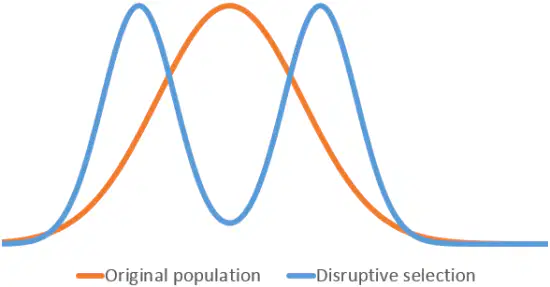
What can happen to a population after disruptive selection?
The population can split into two new species.
Most of the population dies.
The population is at equilibrium.
The population stays the same size.
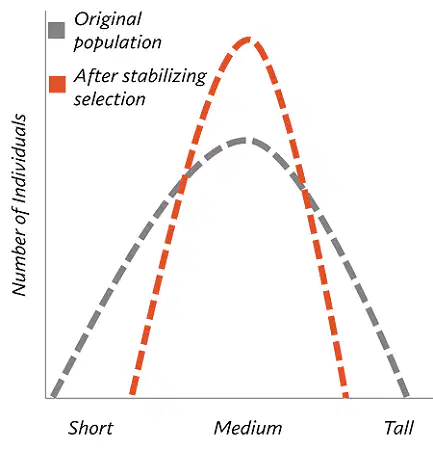
What will happen to the population after stabilizing selection?
The traits at the extremes increase.
The population moves towards the average trait while the extreme traits are lost.
The population will become divided into two new species.
The population won't change.
How does natural selection change the gene pool?
It doesn't.
By introducing new alleles into the population.
Through separation of species.
By introducing new phenotypes.
What type of Isolation occurs when two flowers bloom at different times?
Mechanical Isolation
Behavioral Isolation
Temporal Isolation
Geographic Isolation
How does geographic isolation cause gene pools to remain separate?
Different behaviors keep organisms from breeding.
The organisms are physically separated by a barrier.
The physiology keeps them from mating.
Time separates the organisms from their mating seasons.
How does mechanical isolation prevent organisms from interbreeding?
Different behaviors keep organisms from breeding.
The organisms are physically separated by a barrier.
Their physiology keeps them from mating.
Time separates the organisms from their mating seasons.
How does behavioral isolation prevent organisms from mating?
Different behaviors keep organisms from breeding.
The organisms are physically separated by a barrier.
Their physiology keeps them from mating.
Time separates the organisms from their mating seasons.
What must happen for two populations to become new species?
They must become separated.
They must all undergo a mutation.
Each individual must evolve.
All individuals must colonize a new habitat.
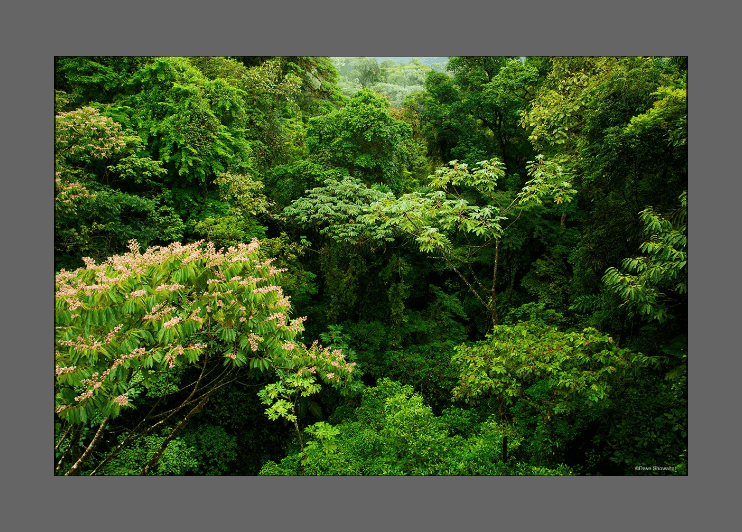
Both a yellow and green beetle of the same species live in the rainforest canopy. You would expect:
The green population increases and the yellow decreases.
Both populations should stay the same.
Both populations will increase.
The green population decreases and the yellow increases.
TRUE or FALSE: Natural selection will still occur if each individual has the same exact traits
TRUE
FALSE
How do you "win" at natural selection?
survive
go extinct
survive & reproduce

Due to pollution, a pond becomes darker over time. Which trait variation became more common?
Light-skinned fish
Dark-skinned fish
The population's skin would stay the same color.