
Font size
 Worksheets
Polarity, IMF, Molecule Shapes
Total questions: 73
Worksheet time: 1hrs 5mins

Is this molecule polar or non-polar?
Polar
Non-polar

Is this molecule polar or non-polar?
Polar
Non-polar

Is this molecule polar or non-polar?
Non-polar
Polar

Would this molecule be more soluble in (more likely to mix with) a polar or nonpolar solution?
Polar
Nonpolar
Neither


Would this molecule be more soluble in (more likely to mix with) a polar or nonpolar solution?
Polar
Nonpolar
Neither

How many chemical bonds can each carbon atom form?
one
two
three
four
Which substance has the weakest intermolecular forces?
Substance A, boiling point of 75 °C
Substance B, boiling point of 105 °C
Substance C, boiling point of 25 °C
Substance d, boiling point of 45 °C

Intermolecular forces for: CO2
Dispersion Force
Dipole dipole
Hydrogen bonding
What does "like dissolves like" mean?
polar solvents dissolve in polar solutes
polar solutes dissolve in polar solvents
non-polar solvents dissolve in polar solutes
non-polar solutes dissolve in polar solvents
What does it mean when we say water is a "polar molecule"?
The molecule is cold
The molecule has ionic bonds
The molecule has covalent bonds between its atoms
It has partial positive and negative charges at opposite ends.
What kind of solute will dissolve in a polar solution? (Select all that apply)
polar covalent solvent
nonpolar covalent solvent
ionic solvent
metallic solvent
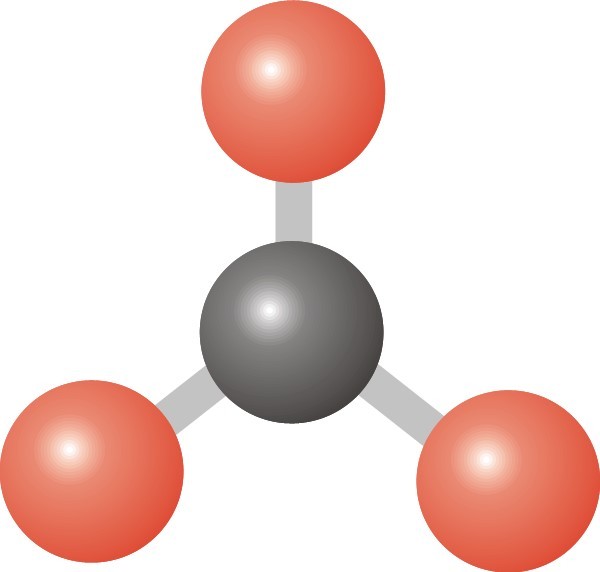
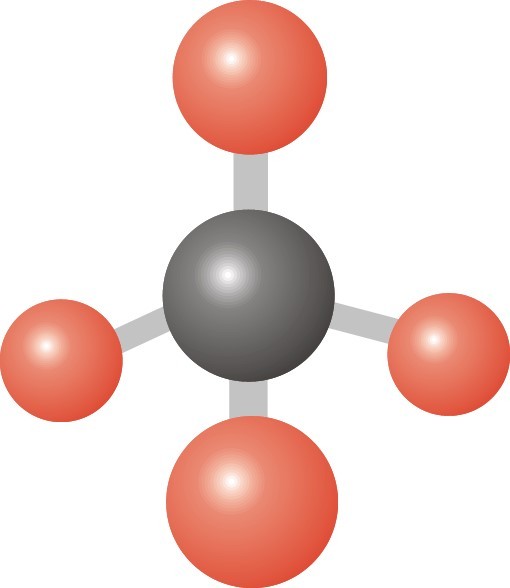
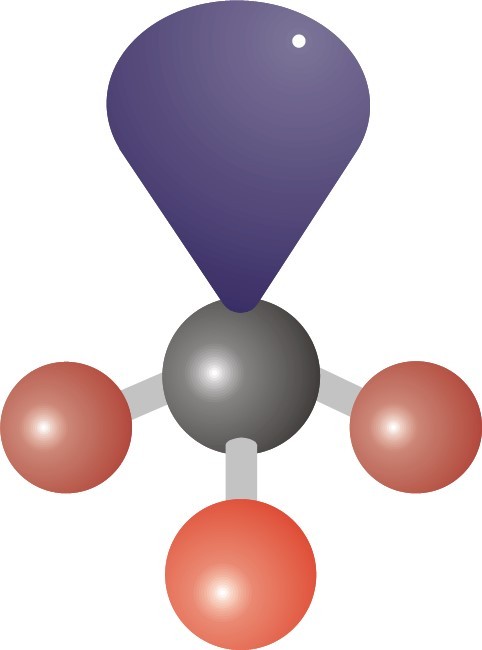
Who could this be? (The purple cloud represents a lone pair!)
What is the correct Lewis Dot Structure for ammonia NH3


Which is the correct Lewis structure for carbon dioxide?


Which of the following best explain how to determine the shape of the molecule above?
there are 3 atoms bonded to the central atom and 2 lone pairs
there are single bonds
there are 3 atoms bonded to the central atom and 0 lone pairs of electrons on the central atom

What is the molecular shape of H2S?
linear
trigonal planar
bent
tetrahedral
1
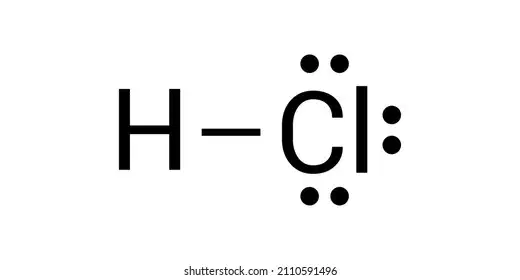
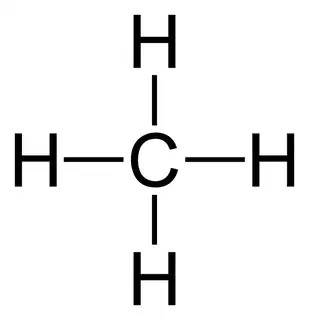
What shape would a molecule have if it has 4 bonded pairs around its central atom? (It may help if you sketch this out)
Linear
Trigonal planar
Tetrahedral
Bent
If sodium and oxygen formed a bond, it would be classified as --
polar covalent
nonpolar covalent
ionic
metallic
Which electrons are involved in a chemical bond?
Valence electrons
Inner shell electrons
Electrons are not involved in bonding
__________ bonds involve an unequal sharing of electrons, while __________ bonds involve an equal sharing of electrons.
Nonpolar, polar
Polar, metallic
Metallic, nonpolar
Polar, nonpolar
If boron (eneg: 1.5) forms a covalent bond with bromine (eneg: 2.8), which end of the bond will be partially positivie?
the boron end
the bromine end

Which type of IMF is responsible for the attraction pictured above?
Dipole-Dipole Interaction
Ion-Dipole Interaction
Hydrogen Bonds
Covalent Bond
Ionic Bond
Which of the following has hydrogen bonding?


The polarity of a bond is determined by...
The sum of the electronegativities of the two atoms
The difference in the electronegativities of the two atoms
The charges of the atoms
None of the Above
Wax is a nonpolar solid. Hexane is a nonpolar liquid.
Will wax dissolve in hexane?
YES because they are both nonpolar
YES because their names both contain an "x"
NO because at least one substance has to be polar to dissolve.
NO because solids can't dissolve in liquids.

Is this molecule polar or nonpolar?
Polar
Nonpolar

Is this molecule polar or nonpolar?
Draw in the dipole arrows!
Polar
Nonpolar

Is this molecule polar or nonpolar?
Draw in the dipole arrows!
Polar
Nonpolar

Is this molecule polar or nonpolar?
Draw in the dipole arrows!
Polar
Nonpolar
Stronger IMFs result in ..................... of the melting and boiling points of the substance.
an increase
a decrease
no change

What is the molecular shape for HCN and is it polar or nonpolar?
bent; polar
bent; nonpolar
linear; polar
linear; nonpolar
What is responsible for water's unique properties such as high boiling point, strong surface tension, and slow to evaporate?
It has strong hydrogen bonding
ionic bonding
it has only London dispersion forces present
it's linear shape
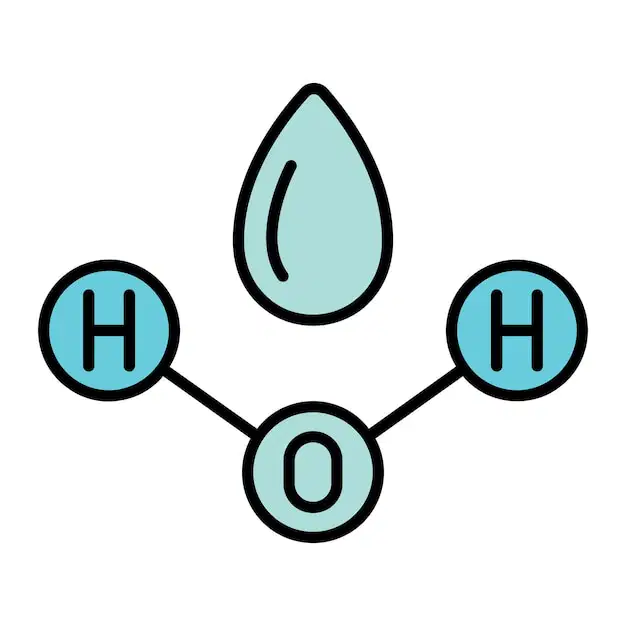
What is the shape and polarity of H2O?
linear; nonpolar
linear; polar
bent; polar
bent; nonpolar
Which of the following forces are found between two NONPOLAR molecules?
London Dispersion Force
Dipole-dipole
Hydrogen bond

Why does water bead on a clean window?
Water has a strong IMF ~ high surface tension and stick together and resist spreading out
Water has a weak IMF ~ weak surface tension and stick together and resist spreading out
A weak IMF will result in a
high melting point
high viscosity
high surface tension
low surface tension
List the three IMFs from strongest to weakest.
Hydrogen Bond, London Dispersion, Dipole-dipole
London Dispersion, Dipole-dipole,
Hydrogen Bond
Hydrogen Bond, Dipole-dipole, London Dispersion
Dipole-dipole, Hydrogen Bond, London Dispersion

Which type of IMF is responsible for the attraction pictured above? Choose the strongest IMF present.
Dipole-Dipole Interaction
London Dispersion
Hydrogen Bonds
Ionic Bond
The strength of temporary dipoles that occur in London Dispersion forces:
is greater than intramolecular forces

What leads to the bent shape of this molecule?
bonds
electrons
protons
lone pairs

What is the shape of this molecule?
bent
linear
trigonal pyramidal
trigonal planar

The shape of this molecule is...
tetrahedral
linear
trigonal pyramidal
trigonal planar

The reason why there is an arrow pointing towards the F is:
it is a polar bond
it is a non-polar bond
it is an ionic bond
fluorine has the highest electronegativity
the F side of the molecule has a partial negative because the electrons are around F
What IMFs are possible in polar molecules that do NOT have Hydrogen?
London Dispersion Forces
Dipole dipole forces
Hydrogen Bond
The weakest IMF is
London Dispersion Forces
Dipole dipole forces
Hydrogen Bond
What IMF does a polar molecule have when there is a Hydrogen but the Hydrogen is NOT bonded to N, O, or F?
London Dispersion Forces
Dipole dipole forces
Hydrogen Bond

Oil does not dissolve in/mix with water because
they have different densities.
one is ionically-bonded and the other is covalently-bonded.
one is polar and the other is non-polar.
oil is more viscous than water.

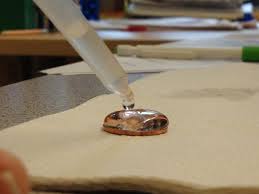
The attraction that causes water and other liquids to form drops on surfaces is called ________________. This is also water’s ability to be attraction to other water molecules.

