Worksheets
Unit 8 Retest Practice
Total questions: 20
Worksheet time: 10mins
Which body systems work together to protect the body from pathogens?
Muscular & Vascular
Digestive & Excretory
Circulatory & Immune
Endocrine & Reproductive
How do the circulatory system and immune system work together to respond to an injury?
Increased blood flow allows for an increase in the exchange of O2 and CO2 at the site of the injury.
Increased blood flow removes infected cells from the body at the site of the injury.
Increased blood flow kills healthy cells which prevents infection at the site of the injury.
Increased blood flow carries white blood cells to the site of the injury.
After the anther produces pollen, what structure on the flower must then receive the pollen for fertilization to start?
Ovary
Stigma
Style
Filament
Guard cells close the _____ to prevent excess water loss.
collenchyma
epidermis
trichomes
stomata
The surface of the stomach is lined with epithelial cells called surface mucous cells. These cells produce a thick mucus that coats the epithelium on the inside surface of the stomach. What is the purpose of the mucous coating?
It traps nutrients inside the epithelium as food passes through the stomach.
It protects the epithelium from the acid content of the stomach.
It causes the epithelium to expand as food enters the stomach.
It allows the epithelium to aid in the process of digestion.
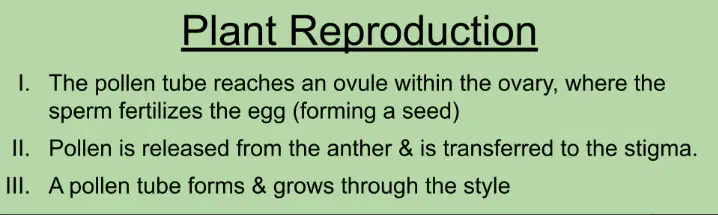
Put the following steps in the correct order.
I, II, III
III, II, I
III, I, II
II, III, I
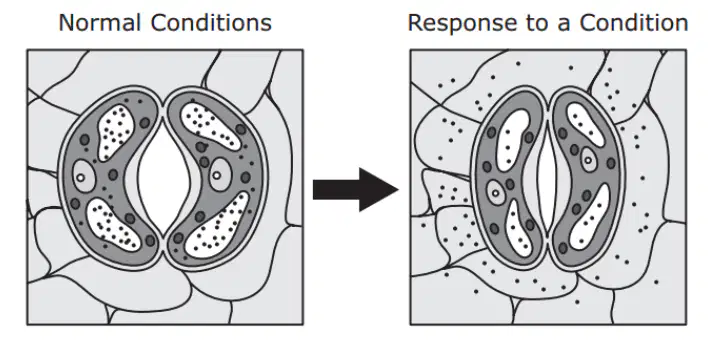
The response represented in the illustration would most likely be caused by...
a reduced supply of oxygen
high concentrations of glucose
long periods of rainfall
little available water
A plant's response to gravity is called...
Thigmotropism
Geotropism
Phototropism
Hyrdrotropism
The hormone auxin causes the cells on the shady side of a plant shoot to elongate. This kind of response is called...
phototropism
geotropism
hydrotropism
thigmotropism
Which of the following functions at the same organizational level as the stomach?
Skeleton
Epithelial tissue
Liver
A squamous cell
Leaves are part of a plant's shoot system. The xylem tissue in leaves transports the...
bacteria needed for nitrogen fixation in the root nodules
wax needed to coat the surface of growing tissue
water & minerals that are absorbed by the roots
oxygen that regulates the rate of carbohydrate production
Which two organ systems are primarily responsible for removing waste products from the body?
Circulatory & Nervous
Digestive & Excretory
Immune & respiratory
Excretory & Immune
What system first alerts the muscular system of a mouse to react to the presence of a predator?
Circulatory
Nervous
Endocrine
Excretory
During the final stages of human gestation, receptors for the hormone oxytocin increase on the smooth muscle cells of the uterus. The release of oxytocin during labor stimulates the smooth muscle tissue in the wall of the uterus. The vigorous contraction of the uterine smooth muscle helps push the baby through the birth canal so that delivery can occur. This process involves the interaction of which organ systems?
Endocrine and muscular only
Endocrine, muscular, and reproductive
Endocrine, reproductive, and excretory
Endocrine and reproductive only
Which two body systems of a rabbit helps the rabbit outrun a pursuing coyote?
Skeletal & Circulatory
Digestive & Excretory
Respiratory & Circulatory
Endocrine & Immune
Which two humans systems work together to provide body cells with O2 while removing CO2?
Nervous & Endocrine
Muscular & Skeletal
Respiratory & Circulatory
Excretory & Integumentary
What is the primary function of plant leaves?
to support the plant
to trap sunlight for photosynthesis
to produce flowers
to take in water
Which four body systems interact to allow a person to sneeze?
Muscular, immune, nervous, respiratory
Nervous, respiratory, circulatory, skeletal
Respiratory, endocrine, skeletal, circulatory
Lymphatic, skeletal, respiratory, muscular
Which type of muscle makes up the heart?
Smooth
Skeletal
Cardiac
All of these
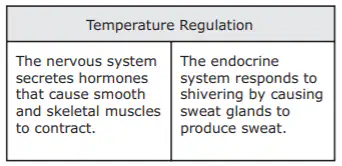
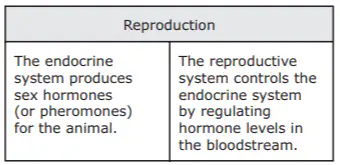
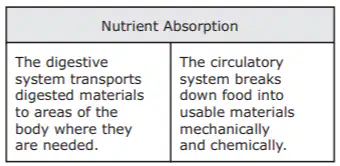
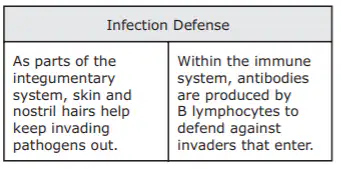
Animal body systems often coordinate their actions to carry out specific functions for the whole animal. Which of these correctly describes the interaction of two biological systems for a specific purpose in the human body?