
NEW
Font size
 Worksheets
3rd Quarter Final Exam
Total questions: 21
Worksheet time: 11mins
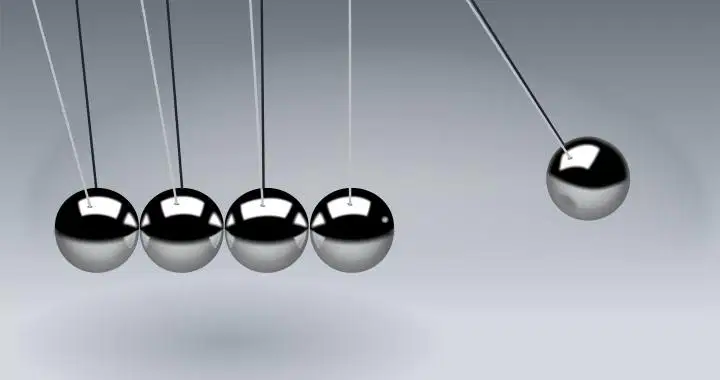
What is the tendency of an object to resist a change in motion?
Inertia
Pushing
Pulling
All of the above
The process in which atoms are rearranged to produce new substances is..
None of the above
A chemical Formula
A chemical reaction
All of the above
What is Newton's First Law?
The law that states an object at rest stays at rest and an object in motion stays in motion with the same speed and in the same direction unless acted upon by an unbalanced force
The law that states that the acceleration of an object depends on the mass of the object and the amount of force applied.
The tendency of an object to resist being moved.
None of the Above

A chemical reaction that requires an input of energy.
Reactant
Exothermic Reaction
Chemical formula
Endothermic reaction
What is Newton's 2nd Law?
A net force
The law that states that an object at rest stays in motion and an object in motion stays in motion.
All of the above
The law that states that the acceleration of an object depends on the mass of the object and the amount of force applied.

What is a push or pull?
Inertia
A force
Newtons 2nd Law
A net force
What is Newton's 3rd Law?
The law that states that whenever an object exerts a force on a second object, the second object exerts an equal and opposite force on the first.
The combination of all forced acting on an object.
All of the above

What uses chemical symbols and numbers to represent a given substance?
Numbers
Chemical Formula
Chemical Reaction
Symbols
What is a chemical equation?
Substances that participate in a chemical reaction.
All of the above
An equation that uses symbols to show the relationship between the starting substances and the substances that are produced by a chemical reaction.
An expression that uses symbols to show the relationship between the starting substances and the substances that are produced by a chemical reaction.
The law that states that matter is neither created nor destroyed.
Law of Conservation of Mass
Law of Conservation of Energy
Reactants
Products
______ are substances that participate in a chemical reaction.
Products
Reactants
Products are substances formed in a reaction.
True
False
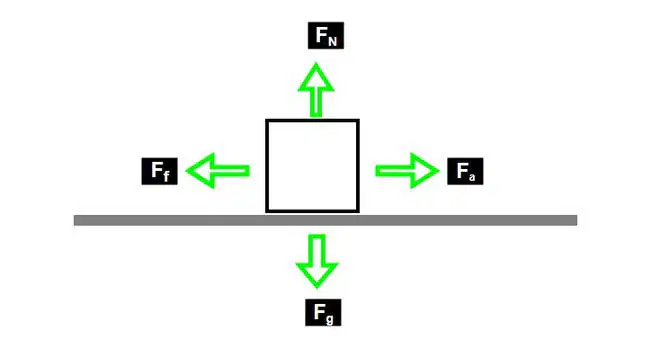
The combination of all forces acting on an object is..
Force
Newtons 2nd Law
Net force
A push or pull
The energy of stretched or compressed objects.
Potential energy
Mechanical Potential Energy
elastic potential energy
gravitational potential energy

A chemical reaction in which energy is released to the surroundings.
A formula
Exothermic reaction
Endothermic reaction
A symbol
A law that states that energy cannot be created or destroyed.
Newton's 3rd Law
Law of conservation of energy
Law of conservation of mass
Potential energy that depends on an object's position is called..
Mechanical Potential Energy
Potential energy
Kinetic energy
elastic potential energy
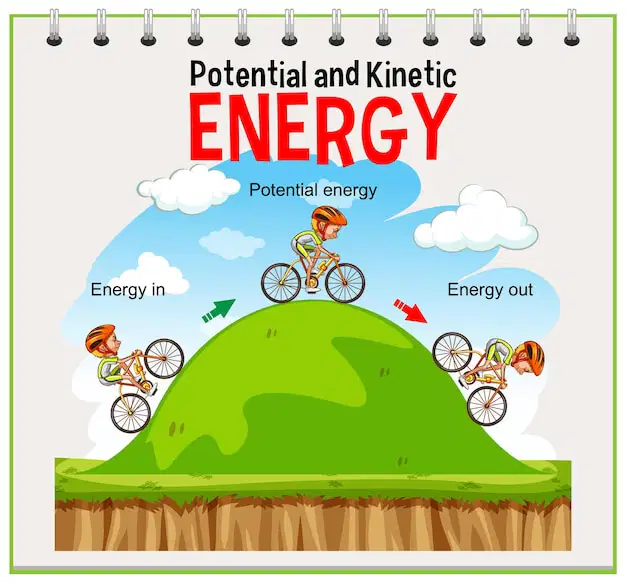
The energy of motion.
Potential Energy
Kinetic Energy
The energy possessed by an object due to its motion and position is referred to as..
Mechanical energy
Kinetic energy
Energy
Mechanical potential energy
What is the energy an object possesses because of its position in a gravitational field?
Mechanical Potential Energy
gravitational potential energy
Gravity
Mechanical energy
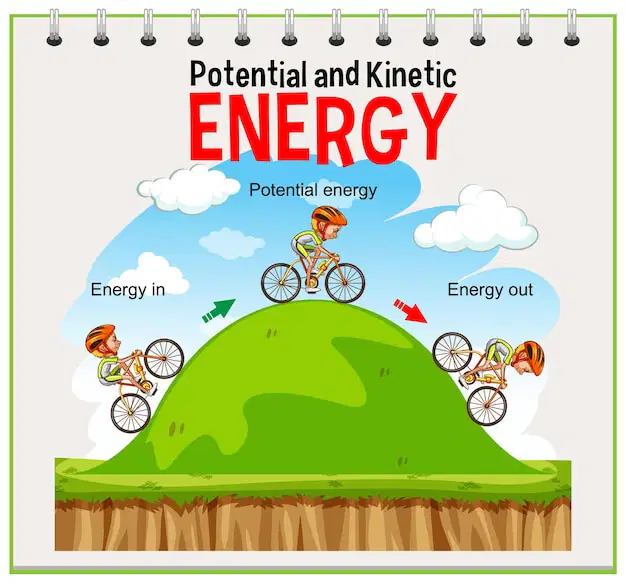
What is potential energy?
None of the above
elastic potential energy
The energy of motion.
The energy an object has because of its position.

