
 Worksheets
World before WWI, WWI and WWII Test prep
Total questions: 45
Worksheet time: 27mins
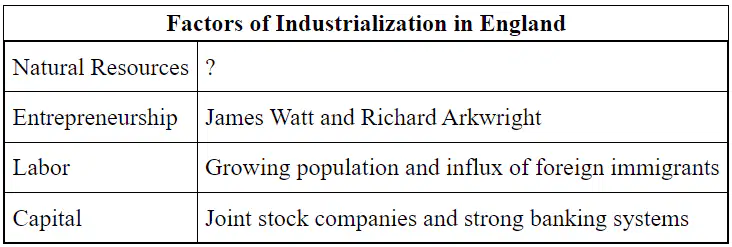
Which natural resource BEST completes this chart about the industrial revolution?
Iron ore and draft animals
Gold and silver deposits
Coal and river networks
Fertile soil and steady winds
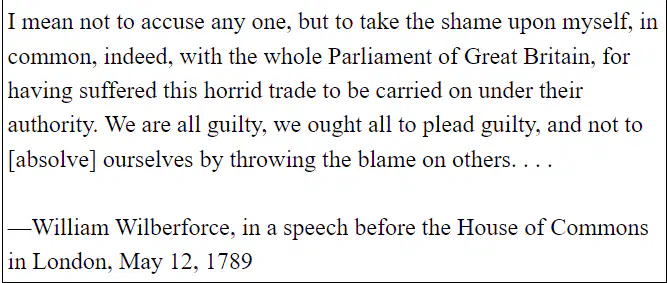
Which English Parliamentary reform was Wilberforce promoting?
(Hint: READ CAREFULLY!!!)
closing debtors prisons
abolition of the trade of enslaved people
prohibition of alcohol
regulating child labor

Which of the following titles should replace “???” as the title of the graphic organizer?
Socialism and Capitalism
Feudalism and Utilitarianism
Socialism and Feudalism
Capitalism and Monotheism
Which of the following words best describes the sentiment/thought process show below:
“I love my ethnicity and my country. I am extremely proud of its culture, history, and beliefs.”
Nationalism
Romanticism
Utopianism
Idealism
Which of the following answer choices would complete the list below ?
Industrial Revolution in England
• Urban centers expanded.
____________________
• The manufacturing sector created new jobs.
• A middle class of managers and professionals emerged.
decreased membership in labor organizations
limits on the power of legislative bodies
extension of self-rule to colonies (less imperialism)
women's demand for suffrage expansion (voting)
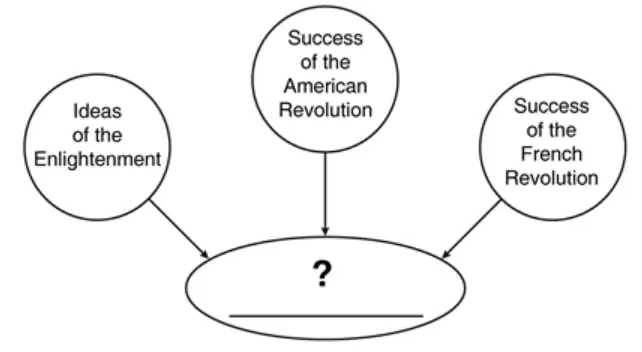
Which of the following correctly completes the graphic?
(Note that the arrows are pointing TOWARD the question mark bubble)
Spanish Colonization of Cuba
Growth of American Imperialism
European Colonization of South America
Latin American Independence Movements
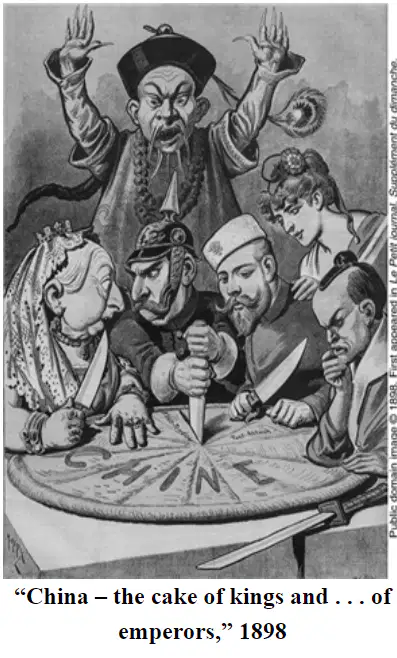
The cartoon represents what development during the late 1800s?
(Note: the political cartoon shows racist depictions of multiple ethnic groups, please email me if you have concerns or questions).
You may need to zoom in on your web browser.
military planning by rival European alliance systems
the expansion of democracy around the world
economic reforms by socialist political leaders in the Soviet Union
the establishment of spheres of influence in China by European imperial powers

The map shows how some nations competed for resources through which process?
establishing colonies
seizing technology
reducing taxes
making loans
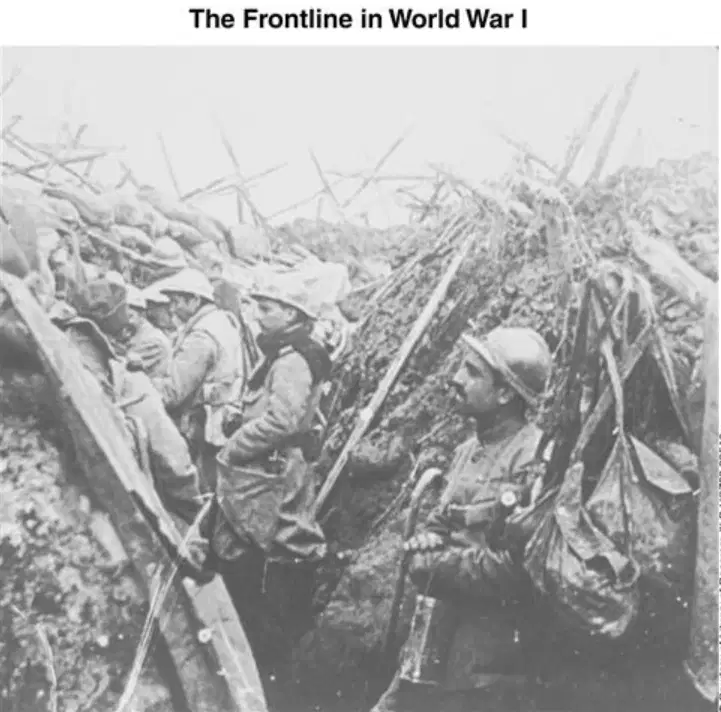
During WWI, Trench warfare caused which of the following?
the implementation of the Schlieffen Plan.
a stalemate along the Western Front.
entry of the United States into the war.
blitzkrieg tactics to be used in Western Europe.
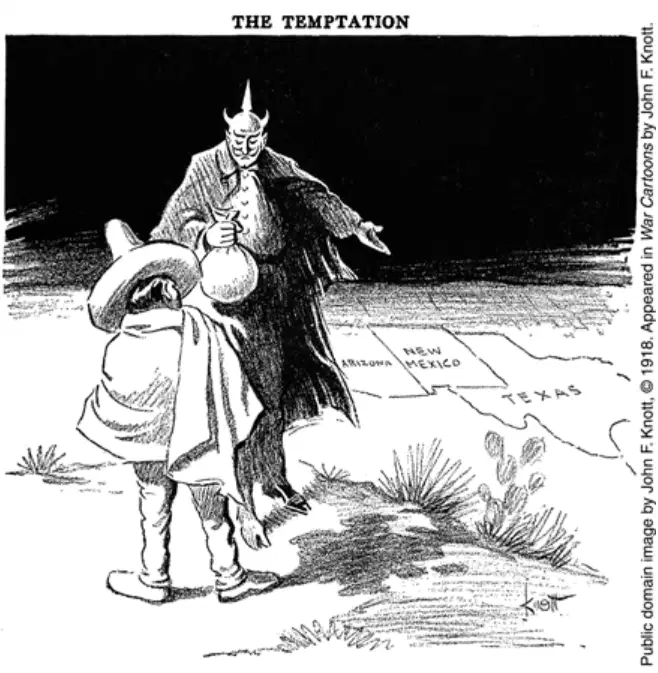
The cartoon shown was published in 1917. The figure in black represents Kaiser Wilhelm II.
The situation shown in the cartoon led directly to which of these events?
(Hint: Read the title, then think about the nation directly south of the United States)
a declaration of war on Mexico by the United States
a declaration of war on Germany by the United States
the annexation of southwest territories by the United States
the establishment of a naval blockade around the United States
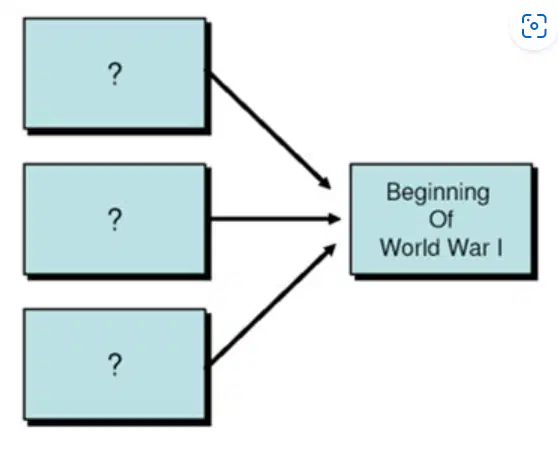
All of the following can accurately complete the diagram above EXCEPT
German unhappiness with the Treaty of Versailles.
rise of nationalism throughout European countries.
alliance system divides Europe into opposing camps.
increased tension with growth of European militarism.
How did the Russian Revolution impact the war strategy of the Allied forces during WWI?
The Allied forces gained access to Russian military intelligence.
The Allied forces could no longer force Germany to fight the war on two fronts.
The Allied forces gained strategic military positions on the Eastern Front.
The Allied forces no longer had to repel Russian advances into Europe

Which result BEST completes this diagram?
Russian revolutionaries reentered the war on the side of the Germans.
Germany sent troops to support Russian revolutionaries.
Russian soldiers obtained land grants for serving in the war.
Germany shifted its forces to the Western Front.
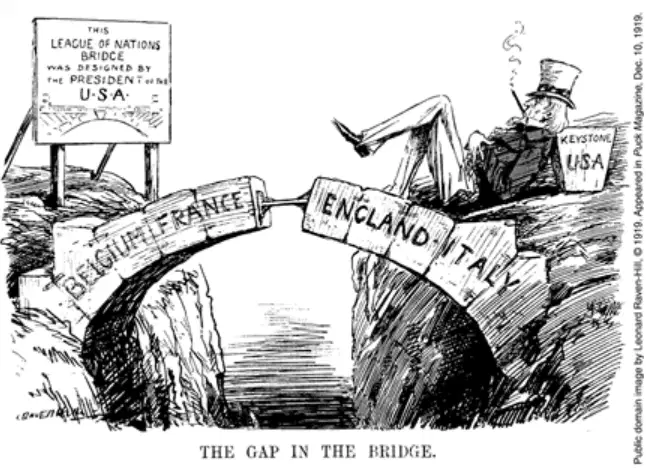
The cartoonist would MOST likely agree that the United States:
(ZOOM IN AND READ THE SIGN)
failed to provide military forces it had committed to an international conflict.
angered world leaders by taking control of an international organization.
refused to provide funds to rebuild world capitals.
declined/refused to take steps to preserve world peace.
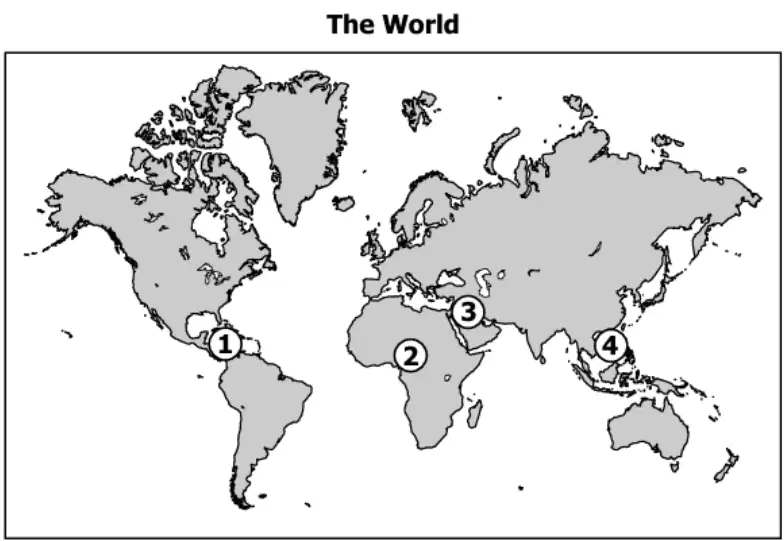
What region was protected from outside influence by the Monroe Doctrine?
1
2
3
4
Which of the following WWII leaders was known for his many speeches encouraging the people of London to be "undaunted and unweary," during the Battle of Britain?
Winston Churchill
Joseph Stalin
Adolf Hitler
Charles De Gaulle
Which Allied invasion was Dwight D. Eisenhower in charge of?
D-Day
Midway
Operation Barbarossa
VJ-Day
Which leader fled their nation and hid in Great Britain as their capital city fell to Germany in 1940?
Charles De Gaulle
Winston Churchill
Benito Mussolini
Josef Stalin
Which pairing of world leader and country is NOT CORRECT?
Franklin Roosevelt/USA
Benito Mussolini/Italy
Hideki Tojo/Phillipines
Josef Stalin/Russia
All of the following statements were TRUE of the Italian dictator Benito Mussolini EXCEPT:
Mussolini’s leadership resulted in overwhelming Italian victories over Allied military forces
Mussolini allied with Hitler during World War II to acquire territory and expand power.
Mussolini came to power in Italy during the 1920s when he was appointed Prime Minister
Mussolini created a fascist state in Italy and maintained power by controlling elections and terrorizing opponents.
Which nation was NOT a member of the Axis powers during World War II?
Germany
Japan
Soviet Union
Italy
Which nation was NOT a member of the Allied powers during World War II?
France
Japan
Great Britain
United States
Which of the following leaders spoke this famous quote?
"a day which will live in infamy."
Winston Churchill
Dwight D. Eisenhower
Joseph Stalin
Franklin D. Roosevelt
Which of the following military operations was U.S. General Douglas MacArthur in charge of?
Surrender of Japan
D-Day invasion
Operation Barbarossa
Battle of the Bulge
Which of the following battles took place between July 1940 to September 1940, and involved the bombing of British civilians in order to destroy their morale?
Battle of Britain
Battle of Dunkirk
Battle of the Bulge
Battle of Stalingrad
Which of the following invasions caused WWII in 1939?
Invasion of Belgium
Invasion of Poland
Invasion of Germany
Invasion of France
Which military strategy was employed by Nazi Germany when they first began WWII? (HINT: it involved brutal attacks using tanks and aircraft followed by infantry).
gestapo
blitzkrieg
trench warfare
kamikaze
Which 1944 victory of World War Two was a MASSIVE turning point for the Allies in Europe?
The Siege of Leningrad
The Normandy landing
The Battle of Britain
The Battle of the Bulge
Which 1942 naval victory was the biggest turning point for the Allies in the Pacific?
The Battle of Midway
The Battle of Okinawa
The Battle of Iwo Jima
The Battle of Guadalcanal
Which of the following nations did NOT sign the Tripartite Act?
Germany
Italy
Japan
Russia
Why did Japan attack Peral Harbor?
to take political control of Hawaii
to establish a permanent military base
to destroy U.S. naval strength
to expand an economic trade embargo
Which of the following factors allowed Adolf Hitler to rise to power at the end of WWI?
failures of the Treaty of Versailles
failures of the Marshall Plan
weaknesses of the United Nations
Josef Stalin's appointment to political power
(NOTE: the below statement is an analysis of racist, and bigoted Anti-Semitism in Nazi Germany, and is not a reflection of the U.S. Holocaust museum's beliefs).
"The Nazis . . . believed that Germans were 'racially superior' and that the Jews, deemed 'inferior,' were an alien threat to the so-called German racial community."
—U. S. Holocaust Memorial Museum, “The Holocaust” Holocaust Encyclopedia
The above statement best reflects the thought process behind which event?
the bombing of Britain
the implementation of Hitler's Final Solution
the invasion of Poland
the establishment of The Anti-Comintern Pact
Why was the nation of Israel created after WWII?
Soviet collectivization of Ukrainian peasants
the persecution of religious groups during the Holocaust
U.S. internment of Japanese residents during World War II
Tojo’s refusal to surrender during World War II
What was the purpose of the Marshall Plan?
provide massive aid to all European nations after WWII (prevent spread of communism)
force Germany to pay massive war reparations for their part in WWI
provide massive aid and relief to the winners of WWII
establish a new homeland for the Jewish refugees of WWII
Which of the following best represents the motivation for the founding of the United Nations?
Europeans hoped to gain access to restricted foreign markets.
Former Axis nations hoped to play a larger role in the post-WWII world.
Nations wanted to found a peace keeping organization to prevent further war.
Countries hoped to set up a system that supported international immigration
Which of the following is a direct impact of the Nuremberg trials?
Leaders were removed from their positions after their nations were defeated.
Leaders were found legally responsible for crimes against humanity.
Leaders were given opportunities to explain their actions.
Leaders were imprisoned by the war’s victors.
The atrocities of the Holocaust inspired Eleanor Roosevelt to draft which of the following humanitarian documents?
The Universal Declaration of Human Rights
The United Nations
The Nuremberg Letters
The Humanitarian Coalition Commission
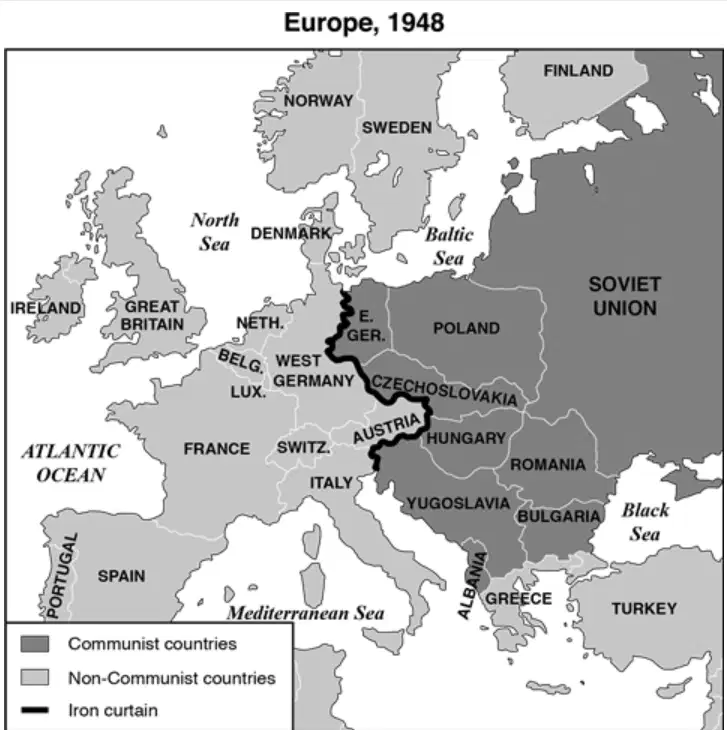
Which of these BEST describes the Iron Curtain?
a natural barrier that isolated Europe from Asia
a physical wall built to protect Asian countries from European countries
a water route that increased trade between Western Europe and the Soviet Union
a political division that separated Soviet-controlled countries from Western Europe
Which of the following events caused the end of WWII?
an Allied invasion of Japan.
a revolution by the people of Japan.
the atomic bombings of Hiroshima and Nagasaki
Adolf Hitlers suicide
Which organization was established in reaction to the creation of the North Atlantic Treaty Organization (NATO)?
African Union
United Nations
Warsaw Pact
World Bank
Which of the following people wrote about the glory of capitalism in his book "The Wealth of Nations?"
(HINT: He is known as the "father of economics")
Adam Smith
Karl Marx
Jean Jacques Rousseau
George C. Marshall
Which of the following people wrote about the failings of capitalism and suggested communism as an alternative in his book "The Communist Manifesto?"
Adam Smith
Karl Marx
Jean Jacques Rousseau
George C. Marshall
What was the top-secret code name for the development of the atomic bomb in the United States?
Manhattan Project
Operation Barbarossa
Little Boy and Fat Man's debut
Shiganshina Project
Prior to World War II, nations such as France and Great Britain engaged in a tactic called ___________, which means they allowed Germany to act aggressively without consequences in hopes that it would avoid a large scale war.
Appeasement
Blitzkrieg
Kamikaze
Abdominous

