
 Worksheets
Great Depression & New Deal
Total questions: 73
Worksheet time: 41mins
During the Great Depression, who wanted a "share the wealth" plan?
Huey Long
Francis Townsend
Charles Coughlin
Herbert Hoover
After the Stock Market Crash of 1929, what did President Hoover recommend for Americans?
Withdraw all of your money from the banks
Take advantage of the stock "sale" and buy more
Handle business as usual
He Ignored it and didn't recommend anything
Which of the following was not a goal of the New Deal?
Reform
Relief
Recovery
Retirement
During the Great Depression, neighborhoods of shacks would be known as...
Shantytowns
Hoovervilles
Ghettos
Projects
Who primarily benefited from the 2nd New Deal (1934-1941)?
Big Pharma
Big Business
Small Farms + Labor
Oil industry
True or False: Conditions for Minorities improved during the Great Depression
True
False
How did Hoover handle the Bonus Army?
The US Army was sent in
The protesters gave up
He personally paid them their bonus
Congress and the veterans compromised
___________ is the practice of using borrowed funds from a broker to trade a financial asset.
Saving
Margin
Speculation
Investing
During the Great Depression, who demanded a "living wage"?
Francis Townsend
Herbert Hoover
Huey Long
Charles Coughlin
What was Black Tuesday?
A massive sale that companies held once a year
The day the Dust Bowl hit
The 1929 collapse of the Stock Market
The total eclipse of 1929
What was the bank run?
A 5k run sponsored by the big banks
People wanting to give as much money as possible
Banks running out of paper
Americans withdrawing all of their money from the banks
What factor did not contribute to the Dust Bowl?
The Hoover Dam
Overgrazing
Unusual Weather Conditions
Overplowing
Who primarily benefited from the 1st New Deal (1933-1934)?
Consumers
Nobody
Agricultural Business + Big Business
banks
Which of these was NOT a reason Conservatives opposed the New Deal?
It increased the power of the presidency
It added to the National Debt
It didn't go far enough
It encouraged idleness
During the Great Depression, who wanted a program to pay unemployed people over the age of 60 every month?
Francis Townsend
Charles Coughlin
Herbert Hoover
Huey Long
Why did FDR try and purge the Democratic party?
Many of them were communists
He wanted more of his close friends in congress
They were too old
They were too conservative

Which of the following best completes this graphic organizer?
Increase in consumer spending
Overspeculation in the stock market
Decrease in military spending
Government subsidization of agriculture

What does the sticker in this illustration represent to patrons of this bank?
Restrictions on the federal government’s ability to set prime interest rates
The power of the federal government to privatize the bank in order to stimulate economic growth
Limitations on the role of the federal government in providing home loans
The federal government’s assurance of protection on individual bank deposits
Which of these factors contributed most to the Dust Bowl?
Flash flooding and intense deforestation
Prolonged drought and poor farming practices
High winds and railroad construction
Severe heat and rapid suburban development

Lines like the one shown above were partially the result of —
growing demand for payment of military pensions
a sudden increase in agricultural exports
the passage of the Selective Service Act
widespread business failures

Which speaker expresses the main argument against President Franklin D. Roosevelt's plan to increase the number of justices on the Supreme Court?
Speaker 1
Speaker 2
Speaker 3
Speaker 4
Which headline describes the primary issue faced by the federal government at the onset of the Great Depression?


What is the main function of the Federal Deposit Insurance Corporation?
Assisting banks in recovering unpaid loans
Providing monetary aid to struggling banks
Guaranteeing job security for bank employees
Protecting personal savings in the event of bank failure
The Social Security Act affected the role of the federal government by —
authorizing the government to impose a flat tax
creating a government-administered benefits program
implementing new regulations on interstate travel
establishing an agency to monitor immigration

Which action completes this cause-and-effect diagram?
Banks lower interest rates
Elected leaders lower tariff rates
Companies lay off employees
Labor unions demand higher wages
President Franklin D. Roosevelt proposed an increase in the number of Supreme Court justices because the Court ruled against —
the gold standard
some New Deal programs
internment camps
some rationing programs

Over speculation-In stock market lead to Great Depression
True
False

Federal Government would take on a new role by playing a larger role in helping the welfare of Americans, protecting economy, and helping provide jobs and mortgage loans. Relief, Recover, Reform
Return to Normalcy
New Deal
Square Deal
Roosevelt Corollary

What is this showing?
The Social Security Act
The Tennessee Valley Authority
The Civilian Conservation Corps.
The Agricultural Adjustment Act

What is this showing?
The Social Security Act
The Tennessee Valley Authority
The Civilian Conservation Corps.
The Agricultural Adjustment Act
What did the Agricultural Adjustment Act do?
It increased food sold around the world
It Increased food prices
It decreased food prices
It decreased food sold around the world
How was the New Deal supposed to help?
It would give people vacations
It would give people homes
It would give people jobs
It would give people free money
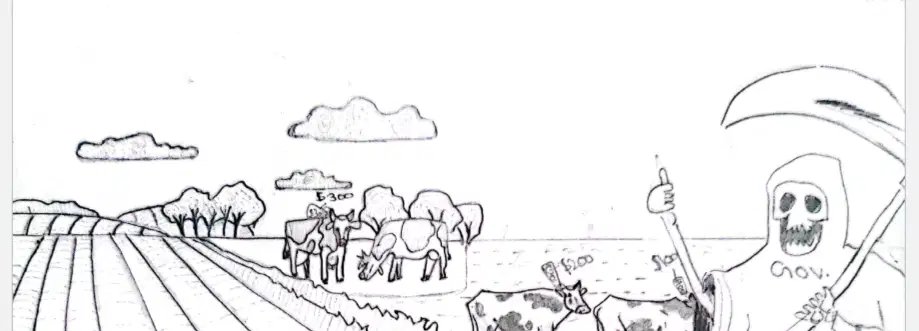
How did the Gov. increase prices of food?
SELECT TWO ANSWERS
It burned crops
It set animals free
It killed animals
It gave food away for free
How high did unemployment get during the Great Depression?
10%
50%
25%
75%
The Civilian Conservation Corps
brought low-cost electric power to rural areas, including the building of publicly owned and operated power plants and flood-control projects
allowed business, labor, and the public to create codes to regulate production, prices wages, hours, and collective bargaining. Businesses used it to create new monopolies by forcing smaller firms out of business
was created in 1933 to oversee the rebuilding of America's infrastructure, such as roads, schools, and libraries
employed about 2.5 million young, unmarried men to work on different nature related projects like planting forests, cleaning up beaches, and building bridges and dams.
The Great Depression
refers to the growing rates of individuals suffering from mental health issues in the aftermath of the cultural shift of the 1920s
refers to the crash of the U.S. stock market on October 29th, 1929
refers to the worldwide economic collapse caused by overproduction and financial speculation
refers to the economic struggles of the United States in the 1930s, which was primarily due to the rampant consumerism of the 1920s and America's struggling economy after World War I.
In 1932 Franklin D. Roosevelt and Herbert Hoover disagreed most strongly about the desirability of
farm price supports
federal aid to corporations
a balanced federal budget
federal relief to individuals
The Bonus Army
refers to the people living in makeshift homeless camps that popped up throughout the nation during the Great Depression
refers to the citizens that organized in support of the New Deal reform programs initiated by President Hoover
refers to the survivors of towns ravaged by the horrors of the Dust Bowl in the midwest
refers to the World War I veterans who marched on Washington D.C. to demand immediate payment of their service bonuses
What caused Hoover to take cautious steps in his approach to the Great Depression?
his religious beliefs
his political philosophy
his educational background
his lack of leadership experience
What problem were both the Civilian Conservation Corps (CCC) and the Works Progress Administration (WPA) developed to address?
Excessive stock market speculation
High unemploment
Increased use of credit
Overproduction of goods
Provide health care benefits to southerners
Encourage African-Americans to settle in the valley
Improve economic conditions in a poor rural region
Evacuate farmers from the impoverished region
The Public Works Administration (PWA)
brought low-cost electric power to rural areas, including the building of publicly owned and operated power plants and flood-control projects
allowed business, labor, and the public to create codes to regulate production, prices wages, hours, and collective bargaining. Businesses used it to create new monopolies by forcing smaller firms out of business
was created in 1933 to oversee the rebuilding of America's infrastructure, such as roads, schools, and libraries
employed about 2.5 million young, unmarried men to work on different nature related projects like planting forests, cleaning up beaches, and building bridges and dams.
What was one advantage that people in rural areas had during the Great Depression that people in the cities lacked?
the ability to grow food
the ability to live in shantytowns
the ability to obtain assistance at bread lines
he ability to relocate to the Pacific Coast states
Established large-scale national works program to create jobs. Employed men and women to build hospitals, schools, parks, and airport; gave work to artists, writers, and musicians (1935)
Work Progress Administration (WPA)
Fairl albor Standards Act (FLSA)
Civilian Conservation Corps (CCC)
Tennesse Valley Authority (TVA)
How did Americans express their dissatisfaction for the way Hoover handled the Great Depression?
They voted for Republicans in the 1930 election.
They attached his name to negative symbols of the Great Depression.
They refused to work on the Boulder Dam project.
They demanded that the government bail them out.
Civilian Conservation Corps
Federal Deposit Insurance Corporation
Securities and Exchange Commission
National Recovery Administration
What problem were both the Civilian Conservation Corps (CCC) and the Works Progress Administration (WPA) developed to address?
Excessive stock market speculation
High unemploment
Increased use of credit
Overproduction of goods
This required corporations to provide complete, truthful information on all stock offerings.
Federal Securities Act
Fair Labor Standards Act
Federal Emergency Relief Administration
Federal Writers' Project
Franklin D. Roosevelt took many actions during his “First Hundred Days” in the White House in 1933, but what was the FIRST thing he did?
close all of the nation’s banks and order inspections of those banks
end slavery
borrow money from China
desegregate the Military
The Emergency Banking Act
increased tariffs on agricultural and industrial imports from foreign nations, which led to retaliation by other nations and led to diminished demand for American exports
was a measure that aimed to raise prices for long-suffering farmers by having the government buy up farm surpluses
was the executive order that shut down banks for several days to calm widespread panic during the Great Depression
Created the FDIC, a government institution which inusred personal savings accounts up to $5,000
The National Recovery Administration (NRA)
brought low-cost electric power to rural areas, including the building of publicly owned and operated power plants and flood-control projects
allowed business, labor, and the public to create codes to regulate production, prices wages, hours, and collective bargaining. Businesses used it to create new monopolies by forcing smaller firms out of business
was created in 1933 to oversee the rebuilding of America's infrastructure, such as roads, schools, and libraries
employed about 2.5 million young, unmarried men to work on different nature related projects like planting forests, cleaning up beaches, and building bridges and dams.
Established a federal minimum wage, guaranteed overtime pay, set standards for record keeping, and prohibited most employment of minors in "Oppressive child labor." (1938)
Fair Labor Standards Act (FLSA)
National Recovery Act (NRA)
National Labor Relations Act (NLRA)
Work Progress Administration (WPA)
What was the outcome of the Bonus Army's march to Washington D.C.?
Congress granted them partial payment with the balance to be paid in 1945.
They were allowed to take out loans against their promised bonus.
Although the House of Representatives passed the bill to distribute the bonus early, it failed to pass the Senate and Hoover had them forcibly removed by the army.
They were granted their payment early.
Why was much of the prosperity of the 1920s more superficial than real?
Many people were living beyond their means (what they could afford).
Many people were relocating from farms to the cities.
Many people were becoming wealthier in the stock market.
Many people were benefiting from increased jobs after the war.
Many Americans opposed the idea of forced retirement
The angry judges reacted by striking down much of the New Deal legislation
It appeared to interfere with the Constitution's separation of powers
Why did President Franklin D. Roosevelt attempt to “pack” the U.S. Supreme Court in 1937?
he was angry that the court had ruled some of his New Deal programs unconstitutional
he wanted to appoint a number of his friends to the court
he felt that having so many older men on the court was dangerous for the nation
he was having a bad week
The Agricultural Adjustment Act
increased tariffs on agricultural and industrial imports from foreign nations, which led to retaliation by other nations and led to diminished demand for American exports
was a measure that aimed to raise prices for long-suffering farmers by having the government buy up farm surpluses
was the executive order that shut down banks for several days to calm widespread panic during the Great Depression
was the New Deal act that raised prices for farm produce by paying farmers subsidies to reduce production
This New Deal Program set standards for business practices and let companies that followed their rules use the Blue Eagle on their products.
Wagner Act
NRA
REA
HOLC
The Hawley-Smoot Act
increased tariffs on agricultural and industrial imports from foreign nations, which led to retaliation by other nations and led to diminished demand for American exports
was a measure that aimed to raise prices for long-suffering farmers by having the government buy up farm surpluses
was the executive order that shut down banks for several days to calm widespread panic during the Great Depression
Created the FDIC, a government institution which inusred personal savings accounts up to $5,000
What did the Bonus Army hope to gain by assembling near the Capitol?
higher wages from employers
food and shelter in a shantytown
publicity for the Communist Party
their veteran's benefits
Which of the following best represents Herbert Hoover's philosophy?
The government should never help people out
The government should help people at the state & local level, not the federal level
There should be a new deal for the American people where the federal government would help people
The federal government program Federal Farm Board and the farmer-created Farm Holiday Association both had one thing in common. What was it?
Both led to mass violence, with hundreds of farmers killed in a revolt
Both pressured the banks to stop foreclosing on farm property
Both operated on the principle of cutting supply to raise prices
Both programs advocated laissez-faire policies for seed and fertilizer
In the Presidential Election of 1932, what was the main reason FDR won?
Hoover could not run for president again because he already served 2 terms
FDR had military experience and the people saw him as a war hero
Americans blamed Hoover for the Great Depression and wanted a new president willing to experiment economically.
FDR believed the government should be able to interfere with the economy
Which area of the U.S. did the Dust Bowl affect the most?
the South
California
the North
the Great Plains
Hoovervilles were known as
shantytowns where homeless people lived during the Great Depression
the town Herbert Hoover was from
the first suburbs built after WWI
housing projects constructed through one of the New Deal programs
Later in Hoover's term, he engaged in major federal spending on which of the following?
Large-scale public works projects.
Cash grants to individuals.
Low interest loans to corporations.
Hoover enacted all of these policies.
Which statement about Franklin D. Roosevelt’s New Deal program is most accurate?
the Trickle Down method of economic reform worked quickly
Social welfare programs were expanded.
Government regulation of business was reduced.
Government should tax the wealthy at 100%
What was one factor that led to the Great Depression?
government regulation of the stock market
high wages
increased tax rates for corporations
reckless investment in the stock market
Much of the domestic legislation of the New Deal period was based on the idea that the
federal government should
support big business instead of workers
assume some responsibility for the welfare of people and the economy
own and operate all the major industries of the country
require local communities to be responsible for social welfare programs
What do the following have in common?
Wages did not keep up with the cost of living
Overproduction of consumer goods
Excessive buying on credit
Keynesian Economic Theory
Features of a Bull Stock Market
Monopolistic Business Practices
Causes of the Great Depression
How did the power of government change during the Great Depression?
Presidential and Congressional powers were strengthened.
Checks and balances failed to prevent a dictatorship
The Supreme Court was eliminated.
Power shifted from the federal government to the states

