
Font size
 Worksheets
Foundations in Personal Finance Chapter 1
Total questions: 37
Worksheet time: 20mins
a person or organization that uses a product or service
Consumer
Personal Finance
Debt
Loan Shark
money owed to another person or company
Debt
Credit
Interest
Personal Finance
the granting of a loan and the creation of debt; any form of deferred payment
Credit
Interest Rate
Loan Shark
Interest
the additional cost a lender charges for borrowing their money
Interest
Asset
Liabilities
tax
the amount by which the value of a person’s assets exceeds or falls behind the value of their liabilities
Net Worth
Asset
Expense
Net Income
anything that is owned by an individual, including money in the bank or investments
Asset
Net Worth
Consumer
Tax
financial debts or obligations
Positive Net Worth
Net Income
Expense
Liability
the dollar value of a person’s assets is greater than the dollar value of their liabilities
Positive Net Worth
Financial Plan
Gross Income
Credit
what a person earns after payroll taxes and other deductions are taken out; often referred to as take-home pay
Net Income
Expense
1090
Gross Income
Personal Finance
all the financial decisions an individual or family must make in order to earn, budget, save, spend, and give money over time
a person or organization that uses a product or service
money owed to another person or company
an expression used to describe a person or household whose monthly income is devoted to expenses and has little to no savings
Paycheck to Paycheck
all the financial decisions an individual or family must make in order to earn, budget, save, spend, and give money over time
a person or organization that uses a product or service
money owed to another person or company
an expression used to describe a person or household whose monthly income is devoted to expenses and has little to no savings
the dollar value of a person’s liabilities is larger than the value of their assets
Negative Net Worth
Financial Plan
Gross Income
Credit
the cost of goods or services; money paid out
Assest
Expense
Liability
Budget
the knowledge and skill base necessary for people to be informed consumers and manage their finances effectively
Negative Net Income
Economics
Financial Literacy
Positive Net Income
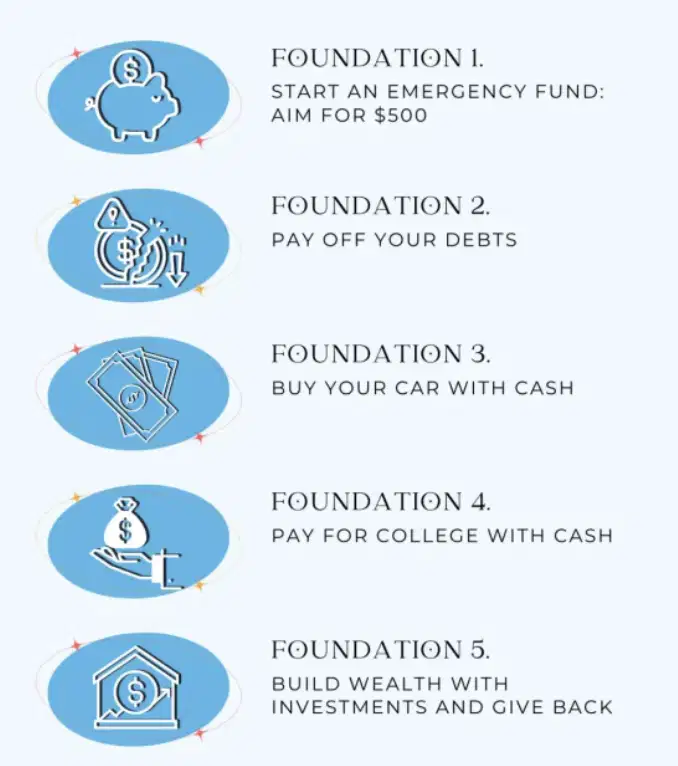
Place the following Five Foundations in their correct order.
Save a $500 Emergency Fund
Get out and stay out of Debt
Pay cash for your car
Pay cash for college
Build wealth and give
Personal finance is 20% head knowledge about money. What‘s the other 80%?
Cash in the bank
Behavior
Experience
Relationships
Making the right choices with your money—managing your money—involves knowing how . . .
A. Planning, saving, spending, and investing will define your financial portfolio
B. To make bank deposits using registers with the appropriate transactions listed
C. Consumer decisions will affect your accounts
D. Earning, budgeting, saving, spending, and giving affect your money
You should always make sure you have a…
A. Budget
B. Credit line
C. Direct deposit
D. Credit card
To gain an understanding of your personal finances, you should know . . .
A. Your financial goals
B. Where you stand financially, how much income you have, what goals you want to set, and how you’ll reach those goals
C. How much income you have
D. Your investment portfolio and your financial advisors’ contact information
What is The First Foundation?
A. Pay cash for college.
B. Build wealth and give.
C. Save a $500 emergency fund.
D. Open a checking account.
Personal finance is 20%________ and 80% _________.
A. Head knowledge; behavior
B. Behavior; head knowledge
C. Cause; effect
D. Reactions; behaviors
As a single adult, you should . . .
A. Keep managing your money as a priority
B. Have an accountability partner you trust somewhat
C. Beware of planned and budgeted buying
D. Seek a financial counselor or advisor by age 25
What is The Fifth Foundation?
A. Pay cash for your car.
B. Get out and stay out of debt.
C. Find a financial professional.
D. Build wealth and give.
What are The Five Foundations?
A. A personal financial action plan
B. A starting point for adults regarding finances
C. A financial literacy technique
D. A common conclusion for debt
To know your net worth, subtract your liabilities from your _______.
A. Other liabilities
B. Net income
C. Previous net worth
D. Assets
A money principle to keep in mind is to live on________you make.
A. Exactly 20% below what
B. More than
C. The same as
D. Less than
Being a spender has many more positives than being a saver.
True
False
Personal finance is all the financial decisions a(n)______________ must make in order to earn, budget, save, spend, and give money over time.
Individual or Company
Individual or Family
Bank
Company or Organization
After World War 1, the demand for products increased, and people began getting credit without loan sharks. Because of this, credit…
Was devalued in the marketplace
Was offered at an even higher interest rates by loan sharks
Increased so rapidly, loan sharks became obsolete
Started to become more socially acceptable
A money principal to keep in mind is to live on ________ you make.
Exactly 20% below what you make
More than
The same as
Less than
Savers have a tendency to be….
Strict with their purchases but spend money without a plan
Strict with only purchases for themselves
Strict with what they spend their money on, other than groceries
Strict with their money and not spend any of it.
What is the best way to avoid running out of money too quickly?
You can put your money in a safe place, like a bank, and not spend it.
You can invest in college.
You can make it a habit to plan and set goals for your money
You can avoid making purchases for the next 30 days.
Your money personality impacts
How you handle money
Your financial literacy level
Your understanding of bank transactions
What you plan for as an adult
An important money principal to consider is that you should ______ and ______ your money.
Invest; Endow
Spend: Invest
Invest; Lay Out
Save; Invest
In 1972, what association made borrowing money to attend college much easier than it had been?
The Student Federal Funding Association (SFFA)
The Federal Student Approval Association (FSAA)
The Student Loan Approval Association (SLAA)
The Student Loan Marketing Association (SLMA)
Without any debt, you can be outrageously _________.
Selfish
Generous
Cautious
Thrifty
Match the following wants and needs

Want

Need

Need

Need

