
 Worksheets
GED Science Final Review
Total questions: 106
Worksheet time: 3hrs 39mins
The cell part found only in plant cells that provides support and structure to the cell is
Cell membrane
Cell wall
Nucleus
Chloroplast
The control center of the cell. It contains the DNA
Vacuole
Chloroplast
Nucleus
Mitochondria
Process that makes glucose and oxygen from water and carbon dioxide
Photosynthesis
Chloroplast
Mitochondria
Cellular respiration
Cell parts that build proteins according to the DNA code
Mitochondria
Chloroplast
Nucleus
Ribosomes

Organism whose cells contain a nucleus
Prokaryote
Eukaryote
Golgi apparatus
Chloroplast
Specialized structure that performs important cellular functions within a cell
Vacuole
Ribosome
Organelle
Nucleus
The function of flagella is:
Movement
Provide Energy
Protection
Make Proteins
What is the purpose of the scientific method?
To solve problems and create experiments
To research new information
To practice safety
To become a scientist
Which is a good example of a hypothesis for the following scientific question, "Does playing violent video games lead to higher blood pressure?"
Playing violent video games gives people higher blood pressure.
If you have higher blood pressure, then you play violent video games.
If you play violent video games you will have higher blood pressure.
If you play violent video games, then you will have higher blood pressure.
A dependent variable is __________.
What is measured in an experiment
What you change in an experiment
A prediction about an experiment
What stays the same in an experiment
Which of these contains steps in the right order?
Ask a question, form a hypothesis, research, plan and conduct an investigation, draw conclusions, report and share results, make a conclusion
Form a hypothesis, ask a question, research, plan and conduct an investigation, draw conclusions, report and share results
Observe and ask questions, form a hypothesis, plan and conduct an investigation, draw conclusions, report and share results
Form a hypothesis, ask a question, research, report and share results, plan and conduct an investigation, draw conclusions


What body system breaks down food?
circulatory system
nervous system
digestive system
respiratory system
What body system controls movement of the human body?
circulatory system
nervous system
digestive system
respiratory system
What body system takes oxygen into the body and gives off carbon dioxide?
circulatory system
nervous system
digestive system
respiratory system

Which of these is NOT a function of the digestive system?
breaks down food
absorbs nutrients
eliminates waste
takes oxygen to body cells

This part of the brain helps with balance and coordination by controlling how the the muscles work together.
cerebrum
cerebellum
brain stem

The nervous system is composed of the ___, ___, and ___.
heart, brain, kidneys
lungs, liver, stomach
brain, spinal cord, nerves
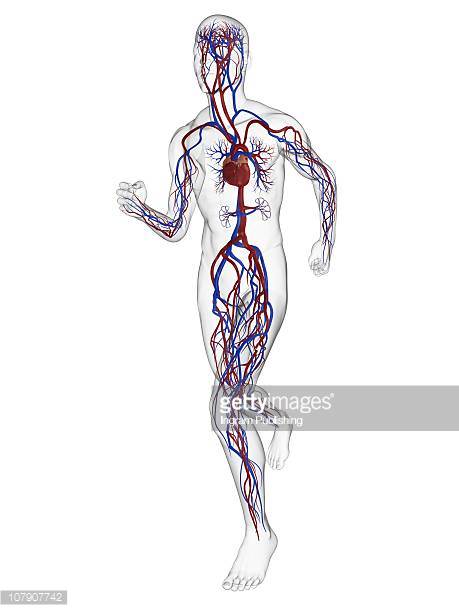
What is the main organ of the circulatory system?
small intestine
bone
lungs
heart
Arteries carry oxygen rich blood away from the heart.
True
False
What is the scientific study of heredity?
Heredity
Genetics
Allele
Choose the correct match.
A genotype is the genetic makeup of an organism or
the set of genes an organism carries in its cells. A phenotype is the physical characteristics of an organism.
A phenotype is the genetic makeup of an organism or
the set of genes an organism carries in its cells. A genotype is the physical characteristics of an organism.
Small sections of DNA that control the traits of an organism
genes
DNA
traits
heredity
Two versions of the same trait caused by genes that come from two different parents.
allele
dominant genes
genetics
recessive gene


In the punnett square, what is the probability for white fur?
The center of our solar system is the....
Earth
Sun
Moon
Asteroid belt
There are _________ planets in our solar system.
6
7
8
9
Scientists who study the solar system and outer space are called ______________.
astronomers
astronauts
The _________ is the thickest layer.
crust
mantle
outer core
inner core
The hottest layer is the ___________.
crust
mantle
outer core
inner core
The _________ is the thinnest layer.
crust
mantle
outer core
inner core

How many steps are there in the Geological Carbon Cycle?
8
9
7
6
What is nitrogen fixation?
Nitrogen incorporated into plant tissues
Plants get nitrogen from nitrates
A type of pineapple
When nitrogen gas is converted into ammonia
____________ is a process in which carbon dioxide is absorbed and converted into carbohydrates.
Cellular respiration
Photosynthesis
Biosphere
Carboniferous
What is happening when one animal is consuming another?
A plant is creating carbohydrates
Energy is transferred through the food chain
Carbon dioxide
Plants absorb carbohydrates and water
What is a food chain?
The flow of energy from one thing to another
The way animals eat each other
The way the sun makes everything
How the plants grow
An example of a predator:
shark
mouse
rabbit

What is a decomposer?


_________ is an all encompassing term for loose or unconsolidated material that originate from a parent rock (clastic), chemical precipitation, or chemical secretion by an organism
Mud
Sediments
Quartz
Erosion
What is two or more substances that are together in the same place but their atoms are not chemically bonded.
Mixture
Solution
Colloid
Suspension
___________________ is a measure of how much solute can dissolve in a given solvent at a given temperature.
Solute
Solvent
Solubility
Solution
_______________ is a mixture containing small, undissolved
particles that do not settle out.
Mixture
Solution
Colloid
Suspension
A ______________ is the part of a solution that is dissolved by a solvent.
Solution
Solvent
Solute
Solubility
A mixture containing a solvent and at least one solute that has the same properties is called _____________
Suspension
Solution
Mixture
Colloid
The part of a solution that is usually present in the largest
amount and dissolves a solute is called _______________
Solvent
Solution
Solute
Solubility
________________ are mixtures that have different parts that can be seen.
Solution mixture
Pure mixture
Homogenous mixture
Heterogenous mixtures
___________________ are mixtures that have a uniform or same appearance throughout it.
Heterogenous mistures
Homogenous mixtures
Solution mixtures
Pure mixtures
If you rub a balloon on your hair, it will stick to a wall.
Which of these objects develops a negative charge because of this rubbing action?
wall
your hair
your hands
balloon
Tyra and Mark produced static electricity in two balloons.
Which of the following is the best reason why the balloons push each other apart?
The balloons have magnetic charges
The balloons have no charges
The balloons have opposite charges
The balloons have the same charge
Ashley is classifying some objects as conductors or insulators. What is the difference between conductors and insulators?
A conductor allows electrical current to flow through it easily, while an insulator does not.
An insulator allows electrical current to move through it easily, while a conductor does not.
A conductor has a static charge, while an insulator does not.
An insulator is a metal, while a conductor is not a metal.
Abbie was making breakfast before school and used her toaster to warm her bagel. What energy transformation took place within her toaster?
Electrical energy to heat and light energy.
Electrical energy to sound energy.
Electrical energy to mechanical energy.
Electrical energy to light and sound energy.


An Atom
cannot be broken into any smaller piece of matter
is a molecule
a chemical bond
all of the above

A molecule
Has one type of atom
As two or more different atoms
is an element
all of the above

An element is
Made up of different types of atoms
Made up of the same type of atoms
none of the above
all of the above

The three states of matter you find on the periodic table are
Iron gold and silver
solid liquid and gas
freezing melting condensation
non of the above

A neutron is negatively charged
true
false
none of the above
all of the above

A proton is a positively charged particle
true
false
all of the above
none of the above

An electron has a _______ charge
positive
neutral
negative
none of the above

What makes up the nucleus of the atom?
Protons and neutrons
Protons and electrons
neutrons and electrions
electrons

two or more atoms that bind together form
an element
a molecule
atoms
none of the above

Which pair of words best describes these rocks?
rough and flat
smooth and oval
rough and round
smooth and layered
Which is not a state of matter?
gravity
gas
solid
liquid
The way an object looks, tastes, smells, sounds, and feels are called ___.
units of matter
types of matter
states of matter
properties of matter

