
 Worksheets
Advanced Biology - Final Revision Sheet
Total questions: 180
Worksheet time: 2hrs 6mins
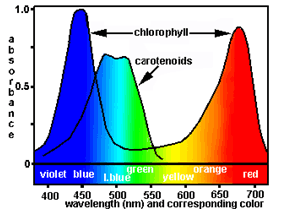

What are the products of Photosynthesis
Carbon and glucose
Oxygen and Glucose
Carbon and Oxygen
Water and Glucose
What is Carbon Fixation?
When 3-PG is being converted into G3P
When sugar and energy interact to form the molecule RuBP making the cycle start again
When RuBP is being formed
It incorporates CO2 and binds it to RuBP using rubisco
What would be true for a plant that is growing (gaining mass)?
rate of photosynthesis = rate of cellular respiration
rate of photosynthesis > rate of cellular respiration
rate of photosynthesis < rate of cellular respiration
What would be true for a plant that is kept in the dark? What would happen to the plant's mass?
rate of photosynthesis = rate of cellular respiration ; stay the same
rate of photosynthesis > rate of cellular respiration ; decrease
rate of photosynthesis < rate of cellular respiration ; decrease

What most likely causes the trends in oxygen concentration shown in the graph above?
The water becomes colder at night and thus holds more oxygen.
Respiration in most organisms increases at night.
More organisms are respiring at night than during the day.
Photosynthesis produces more oxygen than is consumed by respiration during the day.
Are the photosystems light dependent or independent?
Light independent
Light dependent
Where does the plant get H+ to make NADPH
Air
Carbon
Water
Oxygen
Photosynthesis is a ____ reaction.
catabolic
anabolic
single displacement
organic

Which organelle is responsible making food (Glucose) using sunlight?
Cell Membrane
Nucleus
Chloroplast
Mitochondria
Cellular respiration happens in the
plants only
animals only
chloroplasts
mitochondria
Which of the following processes transport oxygen from the alveoli into the capillaries?
Respiration
Inhalation
Exhalation
Diffusion
What is diffusion process?
Molecules move from a region of lower concentration to a region of higher concentration
Molecules move from a region of higher concentration to a region of lower concentration
Enzymes are _____________?
Hydrocarbons
Hormones
Lipids
Proteins
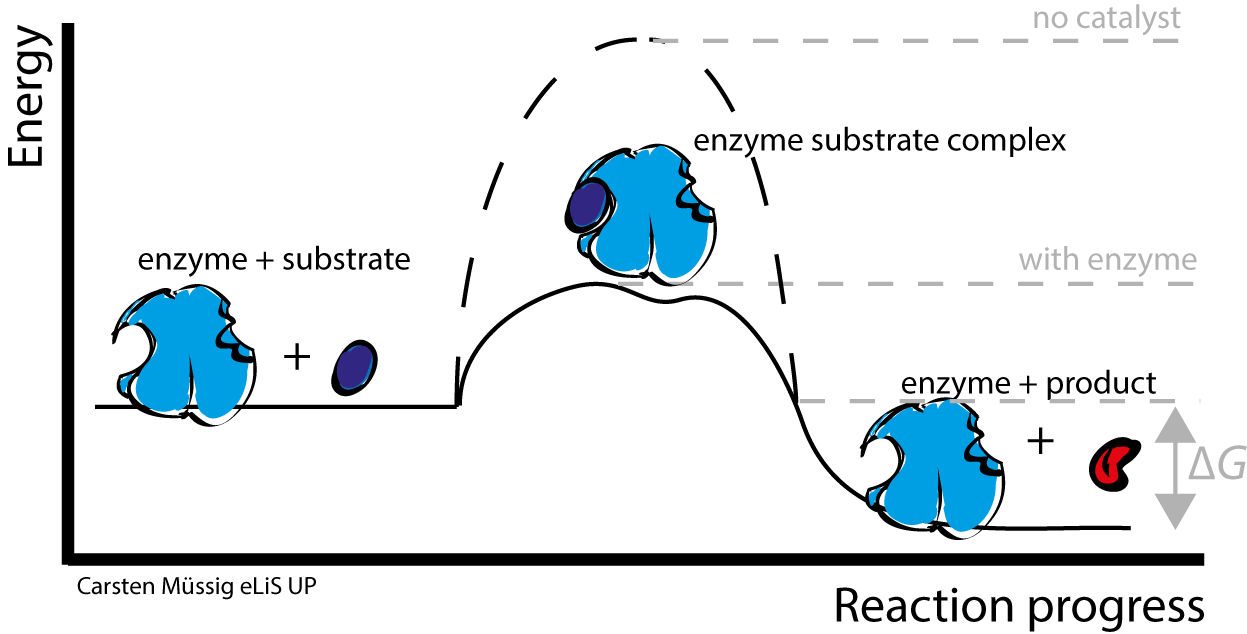
What is activation energy
The energy released after chemical reactions
The energy required to activate an enzyme
Energy absorbed by chemical reactions
A substance that is more basic has a _____ pH than a substance that is acidic.
A base is a substance
That releases OH- ions when dissolved in water
That releases H+ ions when dissolved in water
Does not release any ions when dissolved in water
None of the above


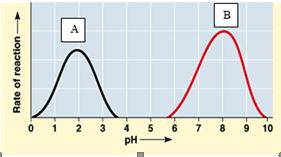
What is the optimal pH of enzyme A?
8
2
5.7-10
10

In a test of pH levels, a baking soda has a pH of 9 and bleach has a pH of 12. What is true about there relationship?
Both of the solution are bases
Both of the solution are acids
The Baking soda is an acid and the Bleach is a base
The baking soda is a base and the Bleach is an acid.
What does pH measure?
the amount of hydrogen (H+) ions
the amount of hydroxide (OH-) ions
amount of water
all of the above

Cells can only work if their enzymes are functioning. What can you infer from the graph?
Cells function best at low pH values
Cells function fine at all pH values
Cells function best at high pH values
Cells do not function well if the pH is too high or too low


Which type of plant is adapted to live in areas that are hot AND humid?
C3
C4
CAM
All
Acetyl-CoA is joined up to a ________________________ to form ________________________.
6 carbon compound; acetate
3 carbon compound; acetyl-CoA
4 carbon compound; acetyl-CoA
4 carbon compound; citric acid
6 carbon compound; citric acid
Glycolysis requires oxygen
True
False
What part of the chloroplast does the Calvin cycle take place?
outer membrane
thylakoid
stroma
inner membrane
Two features of anabolic reaction sequences are...
Breakdown of molecules & requires energy
Breakdown of molecules & Releases energy
builds up molecules & releases energy
builds up molecules & requires energy
Which type of transport does NOT require energy?
osmosis
passive transport
diffusion
All are correct

The cell expands in __________ solution.
hypotonic
isotonic
hypertonic
super sonic
Which process describes the movement large molecules into the cell?
Endocytosis
Exocytosis
Passive Transport
Diffusion
Which is an example of an active passport?
Sodium potassium pump using carrier protein
Water pump using channel protein
Sugar pump using carrier protein
Diffusion through the phospholipid bilayer.


Concentration of substances is the same.
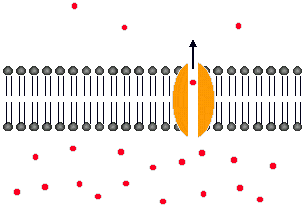
Need help from channel proteins. No energy required.

Uses energy.

Uses energy.

Doesn't need energy

In the picture to the right, which area(s) represent(s) the hydrophobic part ( Non Polar) of the phospholipid membrane?

What type of transport is shown in the image?
Active transport because particles are moving from high concentration to low concentration
Active transport because particles are moving from low concentration to high concentration
Passive transport because particles are moving from high concentration to low concentration
Passive transport because particles are moving from low concentration to high concentration

The cell below is in a _________ solution.( becomes smaller or shrinks)

The cell below is in a _____________ solution.( becomes bigger)
Select ALL types of passive transport.
Simple Diffusion
Facilitated Diffusion
Osmosis
Endocytosis
Sodium-Potassium Pump
S:
stack of flattened, membrane-bound sacs
found in all eukaryotic cells
F:
sorts, packages, modifies, transports proteins made by the ribosomes + rough ER
Golgi apparatus
nucleus
vesicle
chloroplast
Which cell type contains a nucleus and membrane-bound organelles?
eukaryote
prokaryote
Control center of the cell:
ER
Golgi Bodies
Cell Membrane
Nucleus

Name of this organelle structure.
chloroplast
mitochondria
vacuole
cytoplasm
nucleus

An organelle that transports and packages large molecules like complex carbohydrates, lipids and proteins.
Sometimes called golgi body or golgi complex.
Ribosome
Golgi Reticulum
Endoplasmic Apparatus
Golgi Apparatus
Which organelle belongs in plant cells only?
Cell Membrane
Mitochondrion
Chloroplast
Nucleus
Which organelle belongs in plant cells only?
Cytoplasm
Mitochondrion
Cell Wall
Nucleus
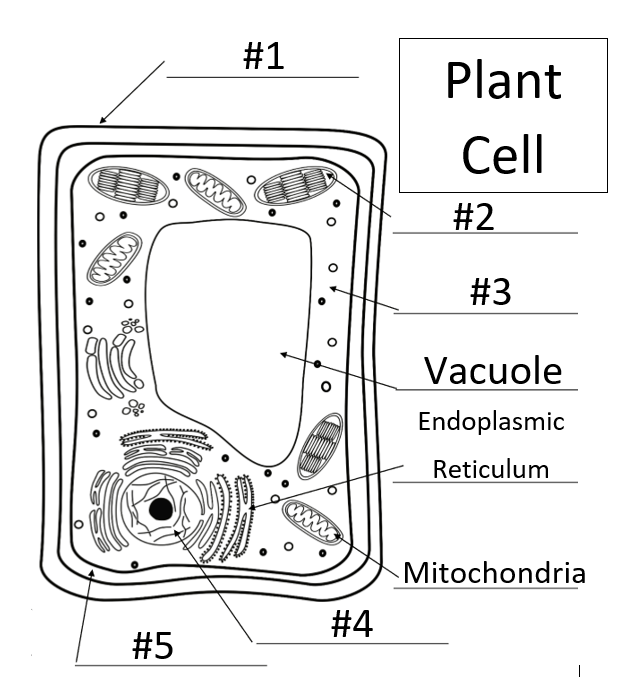
Which organelle is #1 ( which protects and supports plant cell)?
Vacuole
Chromosomes
Cell Wall
Nucleus
Endoplasmic reticulum is the site of
proteins
lipids
All the above
how many types of ER are there?
1
2
3
4
Which of the following is the basic type of E.R. ?
Rough E.R.
Smooth E.R.
Both of above
None of above

Small protein filaments in the cytoplasm that give shape and support to a cell
cell membrane
cell wall
vacuoles
lysosomes
cytoskeleton
Stores materials in the cell like a closet
vacuoles
lysosomes
Golgi bodies
ribosomes
mitochondria
Helps remove wastes and damaged cell parts
vacuoles
chloroplasts
ribosomes
mitochondria
lysosomes

What type of cell is this? (check all that apply)
plant
animal
prokaryote
eukaryote
bacteria
Which of these would be considered a C4 Pathway plant?
cactus
sugar cane
oak tree
aglae
Two features of anabolic reaction sequences are...
Breakdown of molecules & requires energy
Breakdown of molecules & Releases energy
builds up molecules & releases energy
builds up molecules & requires energy
.
In the first stage of photosynthesis,
carbon compounds are produced
the Calvin cycle takes place
sunlight is required to generate ATP
carbon dioxide is utilized
The waste product produced during the Krebs cycle is...
Oxygen
Water
Carbon Dioxide
ATP
What answer choice best describes a reaction where no oxygen is present in the process?
phosphorylation
carbon fixation
photorespiration
aerobic respiration
anaerobic respiration
Breaking starch down into smaller maltose molecules is which type of reaction.
a synthesis reaction
a degradation reaction
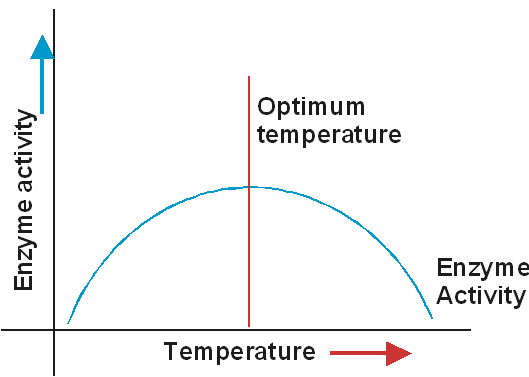
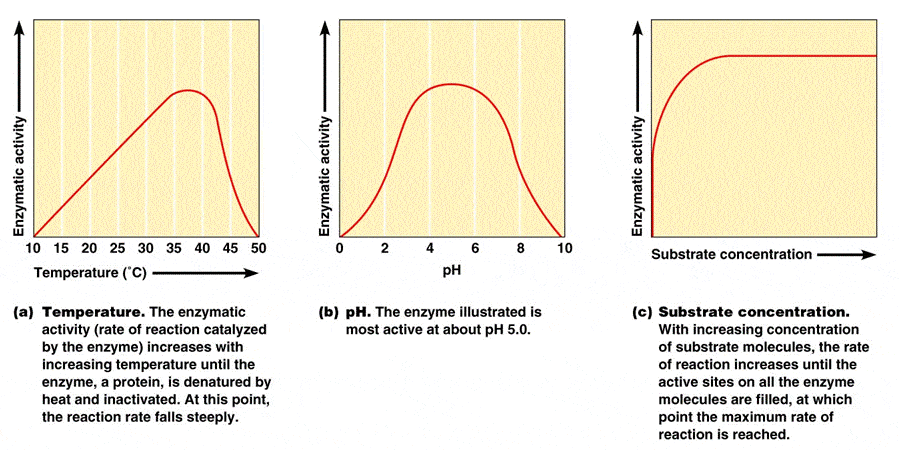
In order to increase the rate of reaction using an enzyme a scientist could.... (Choose all that apply)
Increase the amount of substrate
Decrease the temperature
Increase the temperartue
Introduce a competitive inhibitor

Which enzyme functions best in acidic environments?
neither enzyme
Enzyme A
Enzyme B
Both enzymes


At the end of this reaction, has energy been released or absorbed?
Absorbed
Released
There is not enough information to tell.
There is not change in the amount of energy in the system.
The second law of Thermodynamics define
Entropy
Energy
Enthalpy
Heat
How is ADP converted back to ATP?
Phosphate group is removed.
Phosphate group is added.
A → B → C → D Enzyme B is inhibited. What happens to the concentration of C?
C increases
C decreases
C stays the same
Energy cannot be created or destroyed, but transferred or transformed…
First law of thermodynamics
Second law of thermodynamics
Third law of thermodynamics

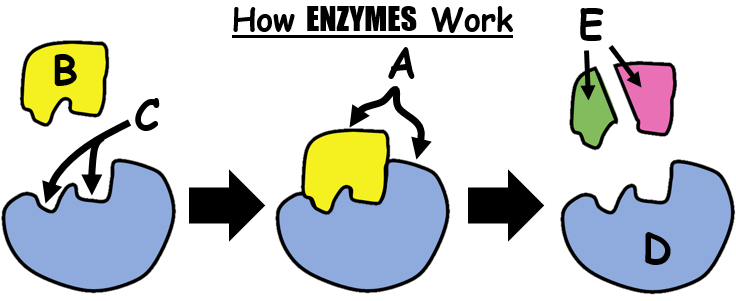
This reaction is…
Endergonic
Exergonic
Which of the following do not affect enzymes ability to function?
pH
substrate concentration
temperature
water

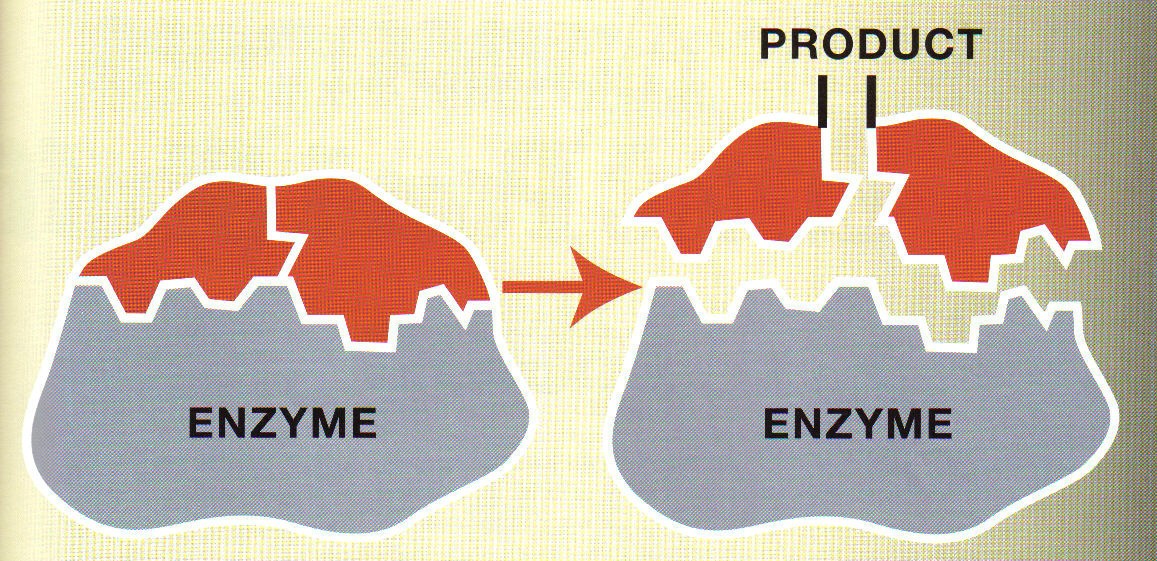
Molecules that bind to enzymes and enhance an enzyme's ability are called:
CoFactors
Competitive Inhibitors
Allosteric Inhibitors
Which of the following is an enzyme?
lactose
adenosine
protease
phosphate
Endergonic reactions require energy and are ___
spontaneous (-ΔG)
non-spontaneous (+ΔG)
spontaneous (+ΔG)
non-spontaneous (-ΔG)
Photosynthesis synthesizes sugars. Overall, it is a(n) ___ reaction.
catabolic
anabolic
regulator binds to the active site of an enzyme, blocking the substrate
feedback inhibition
competitive inhibition
noncompetitive inhibition


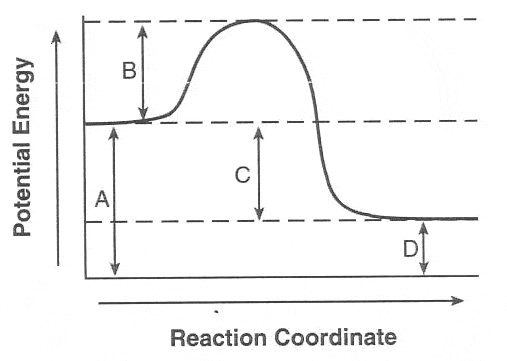
Breaking starch down into smaller maltose molecules is which type of reaction.
a synthesis reaction
a degradation reaction
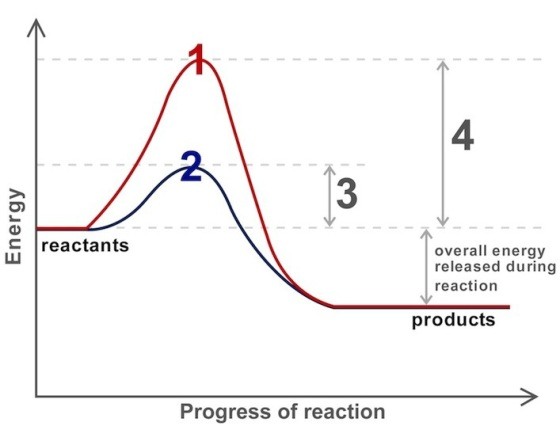
Which color line represent a reaction with an enzyme present?
Blue
Red
Both
Neither

You perform an enzyme-controlled reaction. Based on your results, which of the following is true?
The enzyme works best when the pH is alkaline
The enzyme was most active at pH 4.6
The temperature must have increased and then decreased during the course of the experiment
The salinity was altered during the experiment
Which of the following do not affect enzymes ability to function?
pH
substrate concentration
temperature
water
Which of the following would NOT denature an enzyme?
HIGH temperature
LOW pH
HIGH pH
LOW temperature
Cellular respiration breaks down glucose. Overall, it is a(n) ___ reaction.
catabolic
anabolic
Which molecule enters Kreb's Cycle?
CO2
Glucose
Acetyl CoA
What are the products of the Krebs Cycle?
Pyruvate, water, ATP, NADH
Acetyl CoA, NADH
NADH, FADH2, carbon dioxide, ATP
ATP, glucose
When will lactic acid build up in animal cells?
When there is excess carbon dioxide
When the cells produce too much ATP
When there is not enough oxygen to fuel the mitochondria
When the cells need to remove excess oxygen to avoid damaging their components.

The plasma membrane is best described as ___________ permeable.
selectively permeable
completely permeable
impenetrable
unimportant

The majority of the plasma membrane is composed of a bilayer of ______.
phospholipids
proteins
carbohydrates
cholesterol

Select all that apply.
Plasma membranes are composed of a bilayer of phospholipids with ________, _________, and ________ embedded within.
proteins
carbohydrates
DNA
cholesterol

What does A represent?
hydrophilic phosphate heads
hydrophobic phosphate heads
membrane proteins
cholesterol
What does G represent?
phosphlipids
carbohydrates
membrane proteins
cholesterol
Passive transport does not require ______ input from the cell.
energy
matter
reactant
solute

Passive movement of substances from high to low concentration.
diffusion
active transport
hydrolysis
endocytosis

During diffusion, substances move from high to low concentrations, or
down a concentration gradient.
up a concentration gradient.

_____________ diffusion can be used by the cell to move larger polar molecules and ions across the membrane.
Facilitated
Active
Complex
Emaciated

Facilitated diffusion is an example of passive transport because
substances move up a concentration gradient
substances move from low to high concentration
no energy is required
the cell uses ATP in the process

Diffusion will occur until ________ is reached and concentrations on both sides of the membrane are the same.
equilibrium
transport
gravity
solution
Cystic fibrosis is a genetic condition that is associated with defects in the CFTR protein found in the membrane. After being synthesized, where does it go to be modified, packaged, and sorted?
Golgi Bodies
Rough ER
Smooth ER
Lysosome

The following data was collected by observing subcellular structures of three different types of cells. How can you determine these are eukaryotic cells?
They have ribosomes
They have membrane bound organelles
They have DNA
They have a plasma membrane

The following data was collected by observing subcellular structures of three different types of eukaryotic cells. Identify a function of Cell X.
Detoxification
Secretion of Proteins
Motility
Storage

The following data was collected by observing subcellular structures of three different types of eukaryotic cells. Identify a function of Cell Y.
Detoxification
Secretion of Proteins
Motility
Storage

The following data was collected by observing subcellular structures of three different types of eukaryotic cells. Identify a function of Cell Z.
Detoxification
Secretion of Proteins
Motility
Storage
Where is the mRNA (used for synthesis of proteins) made?
Nucleus
Ribosome
Rough ER
Smooth ER
Tay Sachs results from a build-up of fats due to an error in which organelle that is responsible for digesting macromolecules?
Rough ER
Smooth ER
Lysosome
Golgi Bodies
Which kind of cell is prokaryotic, may or may not have a cell wall, and has no membrane bound organelles?
Animal
Bacteria
Fungi
Plant
Select any substances that can simply diffuse through the cell membrane.
Oxygen gas
Sugar
Charged ions
Small
Charged
The diffusion of water through the cell membrane along its own concentration gradient is known as (a) .
Select all forms of cell transport that require ATP energy.
Facilitated diffusion
Endocytosis
Exocytosis
Active Transport

This cell is experiencing which kind of situation?
Hypertonic
Hypotonic
Isotonic
In this kind of situation, the *initial* concentration of water is greatest _____________ the cell.
Inside of
Outside of
In this kind of situation, water will move _____ the cell, causing it to ___________.
into, swell
out of, swell
into, shrink
out of, shrink
In this kind of situation, the solutes will move _____ the cell, causing it to ___________.
into, swell
out of, swell
into, shrink
out of, shrink
TRICK QUESTION Dr. Halah You almost got me. I know the membrane is IMPERMEABLE to the solutes, so they stay while the WATER moves!
Which organelle uses digestive enzymes to break down old cellular components and/or invading bacteria/virsus and recycles those components to other organelles for use in building new macromolecules?
Gap junction
Nucleus
Golgi Body
Lysosome
Select all forms of passive transport below.
Diffusion
Facilitated Diffusion
Endocytosis
Exocytosis
Osmosis
During osmosis, water always moves from an area of ____ solute concentration to ____ solute concentration.
high, high
high, low
low, low
low, high
Which substance would most easily pass through the cell membrane?
Oxygen
Glucose
Sodium ions
Water

What is the role of ribosomes?
To store genetic information.
To produce glycolipids.
To synthesize proteins.
To hydrolyze waste materials.
If a cell is placed in a hypotonic solution, what is likely to happen to it over time?
The cell will swell, as water flows into the cell.
The cell will not change, as it will be at dynamic equilibrium.
The cell will lyse, as water bursts the cell.
The cell will shrink, as water flows out of the cell.
Which of the following describes the endosymbiotic theory?
A prokaryotic cell engulfed several other types of smaller prokaryotic cells, and eventually its compartmentalization made the cell eukaryotic.
A eukaryotic cell engulfed several other types of smaller prokaryotic cells, and eventually its compartmentalization made the cell prokaryotic.
A prokaryotic cell engulfed several other types of smaller eukaryotic cells, and eventually its compartmentalization made the cell eukaryotic.
A eukaryotic cell engulfed several other types of smaller eukaryotic cells, and eventually its compartmentalization made the cell prokaryotic.

