wayground logo

Free Printable Worksheets

Font size

S
M
L
XL
Worksheets

ok??????????????????????????????????????????????

Total questions: 176

Worksheet time: 2hrs 58mins

Name
Class
Date
1.
What are the products of photosynthesis?
a)
water and carbon dioxide
b)
oxygen and glucose
c)
oxygen and carbon dioxide
d)
oxygen and water
2.
What molecule absorbs sunlight for photosynthesis?
a)
chloroplast
b)
thylakoid
c)
grana
d)
chlorophyll
3.
Use the diagram to answer the question. Between which parts of the molecule must the bonds be broken to form an ADP molecule?
a)
A and B
b)
A and C
c)
B and C
d)
C and D
4.
Most plants appear green because chlorophyll
a)
absorbs green light.
b)
absorbs violet light.
c)
does not absorb green light.
d)
does not absorb violet light.
5.
What is the name of the simple sugar that is produced in photosynthesis?
a)
Sucrose
b)
Dextrose
c)
Glucose
d)
Lactose
6.
Chlorophyll is green because
a)
it absorbs green wavelengths of light
b)
it absorbs blue and yellow wavelengths of light
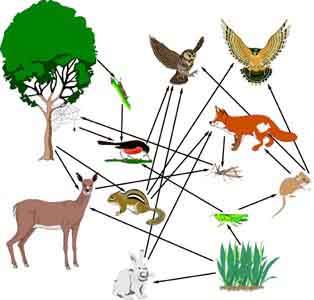
c)
it reflects green wavelengths of light
d)
it is an optical illusion caused by the transmission of light
7.
What is the output of photosynthesis?
a)
ATP
b)
Glucose
c)
CO2
d)
light
8.
Which sentence correctly describes photosynthesis. (assume there is enough sunlight)
a)
CO2 and water combine and make O2 and glucose
b)
O2 and water combine to make glucose and CO2
c)
O2 and CO2 combine to make water and glucose
d)
CO2 and glucose combine to make O2 and water
9.
____________________ provides the energy necessary for photosynthesis.
a)
water
b)
sunlight
c)
glucose
d)
soil
10.
The ____________ is the most photosynthetic part of a plant.
a)
leaf
b)
flower
c)
roots
d)
stem
11.
the products of photosynthesis are...
a)
glucose and sunlight
b)
carbon dioxide and water
c)
glucose and chlorophyll
d)
oxygen and glucose
12.
Glucose is a ...
a)
sugar
b)
carbohydrate
c)
source of quick energy
d)
all are correct
13.
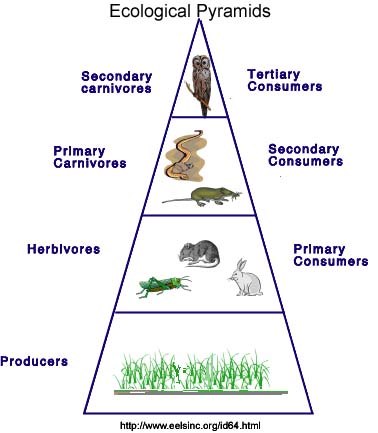
A leaf is the broadest part of the plant and this is good for photosynthesis because, the broad leaf....
a)
curls up when touched
b)
increases surface area
c)
catches rain water
d)
stores lipids for the plants
14.
What type of respiration requires oxygen?
a)
Aerobic
b)
Anaerobic
15.
What are the products of anaerobic respiration?
a)
Glucose and oxygen
b)
Carbon dioxide and water
c)
Lactic acid
d)
Carbon monoxide
16.
Which type of respiration is most efficient?
a)
Aerobic
b)
Anaerobic
17.
Aerobic respiration is different from anaerobic respiration in that aerobic respiration needs...
a)
chlorophyll
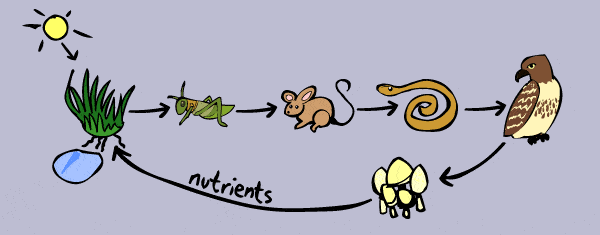
b)
carbon dioxide
c)
glucose
d)
oxygen
18.
A weightlifter is using heavy weights in short bursts for a competition. Because his muscle cells are not able to take in enough oxygen to make very much ATP the weightlifter begins to get fatigue in his muscles. Which of the following processes is most likely going on in the muscles of the weightlifter as he competes in his event
a)
As the cells run out of oxygen they switch to anaerobic respiration, which allows the cell to make small amounts of ATP in the absence of oxygen. 
b)
As the cells run out of oxygen, they die off gradually and the weightlifter's muscles have fewer contracting muscle cells.
c)
The cells will never run out of oxygen if the weightlifter is breathing.
d)
As the cells run out of oxygen, they will continue to make the same amount of ATP, since oxygen is not required to make ATP. 
19.
What are the products of photosynthesis?
a)
water and carbon dioxide
b)
oxygen and glucose
c)
oxygen and carbon dioxide
d)
oxygen and water
20.
The main source of energy for all life comes from ____.
a)
the Earth
b)
the moon
c)
the sun
d)
the food we eat/make
21.
Plants need ________ for photosynthesis
a)
oxygen
b)
soil
c)
carbon dioxide
d)
sugar
22.
When an organism breaks down food, the atoms get rearranged into different molecules. When the atoms get rearranged, what is released?  
a)
Energy
b)
Water
c)
Glucose
d)
Oxygen 
23.
Cellular respiration is similar in both plants and animals in what way?
a)
Energy is required and oxygen is released.
b)
Nitrogen is required and energy is released.
c)
Oxygen is required and energy is released.
d)
Oxygen is required and carbon is released.
24.
What is absorbed by the tree roots and transported to the leaves?
a)
air
b)
water
c)
carbon
d)
glucose
25.
What is the equation for photosynthesis
a)
Water + Carbon dioxide + Energy -> Oxygen + Glucose
b)
Carbon dioxide + Glucose -> Oxygen + Water + Energy
c)
Oxygen + Carbon dioxide + Energy  -> Glucose + Water
d)
Glucose + Oxygen -> Carbon dioxide + Water + Energy
26.
What pigment in the leaf captures energy from the sun?
a)
carbon
b)
chlorophyll
c)
air
d)
chloroplast
27.
Carbon dioxide enters the leave through what opening?
a)
root
b)
stem
c)
stomata
d)
stomach
28.

What is the chemical equation for cellular respiration?

a)

Glucose + Oxygen -> Carbon dioxide + Water + Energy

b)

Oxygen + Carbon dioxide + Energy -> Glucose + Water

c)

Carbon dioxide + Glucose -> Oxygen + Water + Energy

d)

Water + Carbon dioxide + Energy -> Oxygen + Glucose

29.
What are the products of photosynthesis?
a)
water and carbon dioxide
b)
oxygen and glucose
c)
oxygen and carbon dioxide
d)
oxygen and water
30.
Which statement about photosynthesis is correct?
a)
Plants get the energy they need for photosynthesis from water.
b)
Plants get the energy they need for photosynthesis from soil.
c)
Plants get the energy they need for photosynthesis from sunlight.
d)
Plants do not require energy to perform photosynthesis.
31.
The main source of energy for all life comes from ____.
a)
the Earth
b)
the moon
c)
the sun
d)
the food we eat/make
32.
Which of the following is not needed for photosynthesis to occur?
a)
sunlight
b)
carbon dioxide
c)
water
d)
oxygen
33.
Why do we eat food?
a)
to provide energy/fuel
b)
to eliminate waste products
c)
to prevent diseases
d)
to kill pathogens
34.
Plants need ________ for photosynthesis
a)
oxygen
b)
soil
c)
carbon dioxide
d)
sugar
35.
When an organism breaks down food, the atoms get rearranged into different molecules. When the atoms get rearranged, what is released?  
a)
Energy
b)
Water
c)
Glucose
d)
Oxygen 
36.
Cellular respiration is similar in both plants and animals in what way?
a)
Energy is required and oxygen is released.
b)
Nitrogen is required and energy is released.
c)
Oxygen is required and energy is released.
d)
Oxygen is required and carbon is released.
37.
Which of the following best represents the missing step?
a)
Atoms rearranged
b)
Light emitted
c)
Temperature decreased
d)
Water added
38.
Where does cellular respiration take place?
a)
Mitochondria
b)
Chloroplast
c)
Stomata
d)
Leaf
39.
Glucose is a form of ______ Energy. 
a)
Radiant
b)
Chemical
40.
What is absorbed by the tree roots and transported to the leaves?
a)
air
b)
water
c)
carbon
d)
glucose
41.
Which of the following go through the process of photosynthesis?
a)
bees
b)
algae
c)
humans
d)
mushrooms
42.
What is the chemical equation for cellular respiration?
a)
Glucose + Oxygen -> Carbon dioxide + Water + Energy
b)
Oxygen + Carbon dioxide + Energy  -> Glucose + Water
c)
Carbon dioxide + Glucose -> Oxygen + Water + Energy
d)
Water + Carbon dioxide + Energy -> Oxygen + Glucose
43.
What is the equation for photosynthesis
a)
Water + Carbon dioxide + Energy -> Oxygen + Glucose
b)
Carbon dioxide + Glucose -> Oxygen + Water + Energy
c)
Oxygen + Carbon dioxide + Energy  -> Glucose + Water
d)
Glucose + Oxygen -> Carbon dioxide + Water + Energy
44.
What pigment in the leaf captures energy from the sun?
a)
carbon
b)
chlorophyll
c)
air
d)
chloroplast
45.
Carbon dioxide enters the leave through what opening?
a)
root
b)
stem
c)
stomata
d)
stomach
46.
The waste gas given off by cellular respiration is?
a)
oxygen
b)
carbon dioxide
c)
nitrogen
d)
methane
47.
After cellular respiration is complete, on 38% of the energy in glucose is used. What happens to the rest of the energy?
a)
released as heat
b)
stored for later use
c)
eliminated by the digestive system
d)
turned into protein
48.
Where does glycolysis take place?
a)
Cytoplasm
b)
Stroma
c)
Thylakoid
d)
Mitochondria
49.
This process releases chemical energy from sugars and other carbon-based molecules to make ATP when oxygen is present.
a)
photosynthesis
b)
light-independent reaction
c)
cellular respiration
d)
light-dependent reaction
50.
Glucose is broken down during which process
a)
Krebs cycle
b)
Calvin cycle
c)
Glycolysis
d)
Photosynthesis
51.
Which is not a waste product of cellular respiration?
a)
Water
b)
Heat
c)
Carbon Dioxide
d)
Oxygen
52.
What is cellular respiration?
a)
the breakdown of glucose  to release ATP
b)
the breakdown of glucose to release NADH
c)
the breakdown of glucose to release FADH
d)
the breakdown of glucose to release carbon
53.
The energy in ATP is stored 
a)
in the bond between the second and third phosphate
b)
in the bond between the first and second phosphate
c)
in the bond between the adenosine and the first phosphate
d)
I like turtles
54.
Where does glycolysis take place?
a)
Cytoplasm
b)
Stroma
c)
Thylakoid
d)
Mitochondria
55.
What is the name of the 1st step of cellular respiration?
a)
Glycolysis
b)
Kreb's Cycle
c)
ETC
d)
Anaerobic respiration
56.

Which of the following is a reactant of cellular respiration?

a)

Glucose

b)

Carbon Dioxide

c)

Water

d)

ATP

57.

Which of the following is a reactant of cellular respiration

a)

Carbon Dioxide

b)

Water

c)

Oxygen

d)

ATP

58.

Which of the following is a product of cellular respiration?

a)

Glucose

b)

Carbon Dioxide

c)

Oxygen

d)

Radiant Energy

59.

Which of the following is a product of cellular respiration?

a)

Radiant Energy

b)

Oxygen

c)

Glucose

d)

Water

60.

Which statement is true regarding cellular respiration?

a)

The reactants of cellular respiration are identical to the reactants of photosynthesis.

b)

The reactants of cellular respiration are obtained from the products of photosynthesis.

c)

The products of cellular respiration are the same as the products of photosynthesis

d)

Cellular respiration only occurs in autotrophs, photosynthesis occurs only in heterotrophs.

61.
What is the correct equation for cellular respiration?
a)
6O2 + C6H12O6 -> 6CO2 + 6H2O + Energy
b)
6O2 + C6H12O6 + Energy -> 6CO2 + 6H2O
c)
6CO2 + 6H2O -> 6O2 + C6H12O6 + Energy
d)
6CO2 + 6H2O + Energy -> 6O2 + C6H12O6
62.

A decrease in the amount of oxygen available will....

a)

not have an effect on the amount of energy produced during cellular respiration

b)

decrease the amount of glucose produced during cellular respiration

c)

cause the amount of water produced during cellular respiration to increase

d)

decrease the amount of energy produced during cellular respiration

63.

Producers are:

a)

animals

b)

rocks

c)

plants

64.

Plants are called producers because they can produce their own:

a)

music

b)

food

c)

air

65.

Animals that eat only plants are called:

a)

herbivores

b)

omnivores

c)

carnivores

66.

Animals that eat only meat are called:

a)

herbivores

b)

carnivores

c)

omnivores

67.

Animals that eat both plants and animals are called:

a)

herbivores

b)

carnivores

c)

omnivores

68.

A food chain is:

a)

an animal that eats only plants.

b)

a diagram that shows how energy moves from one organism to another. (Grass>Mouse>Owl)

c)

An animal that is hunted and eaten by another animal.

69.

A living thing that breaks down dead plants and animals - such as, fungi, worms, bacteria, is:

a)

decomposer

b)

food web

c)

omnivore

70.

A system of many food chains that interact with each other:

a)

predator

b)

consumer

c)

food web

71.

An animal that hunts and eats other animals:

a)

producer

b)

plants

c)

predator

72.

A living thing that needs to eat other living things for food:

a)

consumer

b)

producer

c)

desk chair

73.

A living thing:

a)

organism

b)

rock

c)

weather

74.

An animal that is hunted and eaten by another animal:

a)

predator

b)

prey

c)

scavenger

75.

An animal that searches for and eats dead animals:

a)

scavenger

b)

scavenger

c)

scavenger

76.

An example of a herbivore:

a)

cow

b)

lion

c)

wolf

77.

An example of a carnivore:

a)

giraffe

b)

eagle

c)

cow

78.

An example of a producer:

a)

apple tree

b)

cat

c)

dog

79.

An example of a consumer:

a)

grass

b)

roses

c)

dog

80.

An example of an omnivore:

a)

raccoon

b)

oak tree

c)

water

81.

An example of a predator:

a)

shark

b)

mouse

c)

rabbit

82.

An example of prey:

a)

lion

b)

mouse

c)

shark

83.
What is a trophic level?
a)
Each level represented within a food chain or web.
b)
Levels of ecosystems that the world is divided into.
c)
Different levels of nutrients present within an organism.
d)
The levels of sunlight an autotroph needs to survive. 
84.
All energy on Earth ultimately comes from what source?
a)
Water
b)
Sun
c)
Consumers
d)
Oxygen
85.
An organism that uses sunlight to create its own food is known as a:
a)
Producer
b)
Heterotroph
c)
Consumer
d)
Decomposer
86.
What does a food chain represent?
a)
How all living organisms within a habitat are connected.
b)
All of the things that a particular animal eats.
c)
How plants create their own food.
d)
A single path of energy transfer within a habitat.
87.
The arrows in a food chain or web represents what?
a)
They point to the organism that is being eaten.
b)
It shows how sunlight flows within an ecosystem.
c)
They show what direction the energy is flowing between organisms. 
d)
They represent how water is transferred within a habitat.
88.
What does a food web represent?
a)
All connections of energy flow throughout all organisms in a habitat.
b)
The specific ways that mutualism is carried out.
c)
A single pathway or energy flow between organisms. 
d)
How carnivores get their food. 
89.
An energy pyramid represents what?
a)
How much sunlight is available for the ecosystem to use. 
b)
How much energy a particular organism needs. 
c)
How much energy is needed to build a pyramid. 
d)
The amount of energy available to the next 'feeder' in a food web.
90.
Why is there a limited amount of energy that can be passed on to the next feeding level?
a)
There is never enough sunlight available. 
b)
Some ecosystems have limited resources. 
c)
Organisms use some of the energy they get from eating.
d)
All the energy is available to be passed on. 
91.
The largest group of organisms found in a food web would be:
a)
Primary Consumers
b)
Producers
c)
Decomposers
d)
Tertiary Consumers
92.
A community of living and nonliving things in their natural environment makes up a 
a)
food web
b)
ecosystem
c)
food chain
93.
An animal that hunts other animals for food is a ___________
a)
herbivore
b)
predator
c)
prey
d)
omnivore
94.
which symbiosis is this 
a)
parasitism 
b)
mutualism
c)
commensalism
d)
nonalism 
95.
Members of a species in a defined area
a)
Ecosystem
b)
community
c)
biodiversity
d)
population
96.
Where an organism lives
a)
habitat
b)
niche 
c)
heterotrogh
d)
biosphere
97.
Non-living factor that affects an ecosystem
a)
biotic factor
b)
abiotic factor
c)
food chain 
d)
biome
98.
Organisms that breaks down and absorbs nutrients from dead organisms 
a)
consumer
b)
trophic level
c)
decomposer
d)
species
99.
Limiting factors are sometimes helpful because they can keep the population from getting too large.
a)
True
b)
False
100.
If the population of a certain predator increases, there is often _______ its prey
a)
a decrease the population of
b)
an increase of the population of 
c)
great news for its prey of
d)
no  impact found on
101.
If there is more food than usual in an ecosystem, then...
a)
Populations will stay the same
b)
Populations will decrease
c)
Populations will increase
102.

Which of the following is a behavioral adaptation?

a)

A porcupines quills

b)

An opossum playing dead

c)

A polar bears blubber

103.

What happens if an animals moves to a new habitat, and cannot get its basic needs of food, water, shelter, and space?

a)

Nothing

b)

Extinction

c)

The animal will adapt no matter what

104.

What will happen to the plants and animals in an area during a drought?

a)

They will learn to live without water

b)

They will hibernate until it rains

c)

They will all die

d)

Some will die, some will live, and some will move to a new place

105.

In a forest ecosystem, which of the following is NOT an example of a limiting factor that would greatly affect a rabbit population?

a)

a rainy season

b)

a disease that causes rabbits to die

c)

grass available to eat

d)

the population of hawks that eat rabbits

106.

What would happen to the bird if the green fish died out?

a)

the bird population would grow

b)

the bird population would die out

c)

the smaller fish will die out

107.

What is the bottom layer of the an energy pyramid?

a)

producer

b)

tertiary consumer

c)

Secondary consumer

d)

primary consumer

108.

the top layer of an energy pyramid a primary consumer?

a)

true

b)

false

109.

What does an energy pyramid show?

a)

Energy flow in a community

b)

Longest lifespans

c)

The stronger animal the higher it is on the pyramid

110.

What would happen if their were no producers?

a)

Every population would grow larger

b)

Everything would die out

c)

The animals would make their own food

111.

What would happen if the primary consumers died out?

a)

the producers would grow and the secondary and tertiary consumers would die

b)

producers would die out

c)

consumers would grow

112.

Is a scavenger a primary consumer?

a)

Yes

b)

No

113.

decomposers are producers.

a)

true

b)

false

114.

A cheetah can be a primary, secondary, tertiary consumers.

a)

yes

b)

No

115.

All tertiary consumers are scavengers

a)

true

b)

false

116.

How does the energy flow in an energy pyramids?

a)

up the pyramid

b)

down the pyramid

117.

Does the energy get lower or higher when it is transferred through each animal?

a)

It gets higher

b)

It gets lower

118.

What amount of percentage does the energy decrease as it goes up the pyramid?

a)

100%

b)

1000%

c)

10%

d)

1%

119.

What does the decomposer do?

a)

Eat dead animals

b)

Eat dead plants

c)

Return nutrients back to the

environment

d)

All of the above

120.

Can energy be destroyed?

a)

Duhh

b)

No obviously

c)

I don't know

121.

What are primary consumers?

a)

They are herbivores

b)

They are heterotrophs

c)

They are the first to consume the energy

d)

All of the above

122.

Can heterotrophs make their own food?

a)

Yes

b)

No

123.

True or false ~ All organisms make their own food.

a)

True

b)

False

124.

True or False ~ All organisms need energy?

a)

False

b)

True

125.

How are energy pyramids organized?

a)

Tropic Levels

b)

Tropical Levels

c)

Animal Levels

126.

Where do producers get their energy from?

a)

The sky

b)

The sun

c)

The ground

127.

What is a autotroph?

a)

Makes its own food

b)

Eat other animals

c)

Eats plants

128.

What is the process in which an animal makes it's own food?

a)

Ground food making

b)

Photosynthesis

c)

It's just called "Animals making their own food"

129.

Do consumers make their own food also?

a)

Yes

b)

No

130.

What are heterotrophs?

a)

An animal in which it makes it's own food

b)

An animal in which it eats other animals

131.
an organism that makes its own food
a)
producer
b)
consumer
c)
herbivore
d)
scavenger
132.
an animal that eats both plants and animals
a)
carnivore
b)
herbivore
c)
omnivore
d)
consumer
133.
In an energy pyramid, energy_______ as you move up the pyramid.
a)
Increases
b)
Decreases
c)
Stays the same
d)
Changes up and down
134.
An organism that eats another organism.
a)
Autotroph
b)
Heterotroph
c)
Plant
d)
Producer
135.
In the energy pyramid here, how much of the energy in the producers gets passed to the herbivores?
a)
10%
b)
20%
c)
80%
d)
90%
136.
A food pyramid represent the relative amount of energy in trophic levels. Which of the following correctly shows a food pyramid?
a)
A
b)
B
c)
C
d)
D
137.
The deer, grasshopper, and bird are all examples of which type of consumers on this food pyramid?
a)
decomposers
b)
omnivores
c)
carnivore
d)
herbivore
138.
A third-level consumer has to be which type?
a)
Carnivore.
b)
Decomposer.
c)
Producer.
d)
Herbivore.
139.
A secondary consumer 
a)
eats primary consumers
b)
eats producers
c)
eats plants
140.
All the organisms on earth get their energy directly or indirectly from?
a)
Oxygen
b)
Water 
c)
Nitrogen
d)
The Sun
141.

Name the trophic level in Level 2.

a)

Primary

b)

Tertiary

c)

Consumer

d)

Secondary

142.

Name the correct trophic level for level 3.

a)

Consumer

b)

Secondary

c)

Producer

d)

Decomposer

143.

Name the correct trophic level for level 1.

a)

Tertiary

b)

Consumer

c)

Producer

d)

Quatemary

144.

All food webs and food chains begin with _________________.

a)

Primary Consumer

b)

Producers

c)

Secondary Consumers

d)

Predators

145.

This diagram shows the amount of energy that moves from one feeding level to another in a food web.

a)

Ecosystem

b)

Energy Pyramid

c)

Food Web

d)

Food Chain

146.

Name the correct trophic level for level 4.

a)

Tertiary

b)

Consumer

c)

Producer

d)

Quatemary

147.

Name the correct trophic level for level 5.

a)

Tertiary

b)

Consumer

c)

Producer

d)

Quatemary

148.

If there is 1000 Kcal available in the producers in trophic level 1, how much energy is available in the herbivores in trophic level 2?

a)

10Kcal

b)

1Kcal

c)

100Kcal

d)

1000Kcal

149.

Which level has the fewest organisms?

a)

Tertiary

b)

Secondary

c)

Primary

d)

Quaternary

150.

A third-level consumer has to be which type?

a)

Carnivore

b)

Producer

c)

Decomposer

d)

Herbivore

151.

A producer is a(n)____________.

a)

Autotroph

b)

Heterotroph

c)

consumotroph

d)

omnitroph

152.

Which is a producer?

a)

Deer

b)

Lion

c)

Tall grass

d)

Worm

153.

In the energy pyramid here, which organisms have the most energy available?

a)

Producers

b)

Carnivores

c)

Herbivores

d)

Top Predators

154.

In the energy pyramid below, which organism has the least amount of energy available?

a)

Producers

b)

Herbivores

c)

Carnivores

d)

Top Predators

155.

What would happen to the bird if the green fish died out?

a)

The bird population would grow

b)

The smaller fish will die out

c)

The bird population will die out

156.
What is a trophic level?
a)
Each level represented within a food chain or web.
b)
Levels of ecosystems that the world is divided into.
c)
Different levels of nutrients present within an organism.
d)
The levels of sunlight an autotroph needs to survive. 
157.
An organism that needs to eat other organisms to obtain energy is known as a:
a)
Autotroph
b)
Producer
c)
Consumer
d)
Mutualist
158.
The arrows in a food chain or web represents what?
a)
They point to the organism that is being eaten.
b)
It shows how sunlight flows within an ecosystem.
c)
They show what direction the energy is flowing between organisms. 
d)
They represent how water is transferred within a habitat.
159.
An energy pyramid represents what?
a)
How much sunlight is available for the ecosystem to use. 
b)
How much energy a particular organism needs. 
c)
How much energy is needed to build a pyramid. 
d)
The amount of energy available to the next 'feeder' in a food web.
160.
How much energy is available to be passed on to the next trophic level in an ecosystem?
a)
100%
b)
10%
c)
50%
d)
75%
161.
In the energy pyramid here, which organisms have the most energy available?
a)
Producers
b)
Carnivores
c)
Herbivores
d)
Top Predator
162.
In the energy pyramid here, how much of the energy in each level gets lost as heat or used by the organism for survival?
a)
80%
b)
90%
c)
10%
d)
20%
163.
Which best describes what a food chain shows you?
a)
Energy flow through an ecosystem
b)
Food flowing through an ecosystem
c)
Consumers going into other consumers
d)
Who eats who
164.
Where does the energy start in this food chain?
a)
Plant
b)
Sun
c)
Deer
d)
Wolf
165.
What is the role of a producer?
a)
Use sunlight to make food
b)
Gain energy from eating other organisms
c)
Keep other species from overpopulating
d)
Breaking down dead stuff 
166.
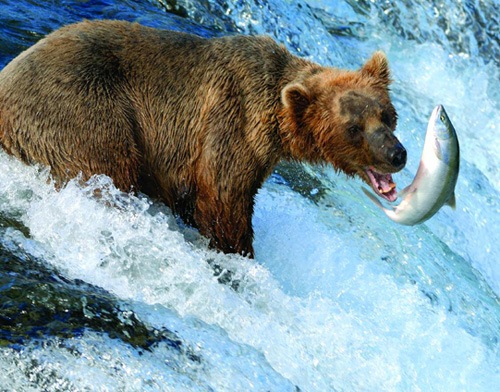
Bears eat a variety of foods including fish, berries, other types of vegetation.  Bears would best be classified as – 
a)
producers
b)
herbivores
c)
carnivores
d)
omnivores
167.
Snakes eat many types of small mammals including mice and rabbits as well as other lizards.  Snakes would best be classified as a - 
a)
producers
b)
herbivores
c)
carnivores
d)
omnivores
168.
Elodea is an autotrophic organism which produces sugars at the bottom of some freshwater food chains. Elodea would best be classified as - 
a)
producers
b)
herbivores
c)
carnivores
d)
omnivores
169.
Horses eat grasses and other plants in order to gain their nutrition.  Horses would best be classified as - 
a)
producers
b)
herbivores
c)
carnivores
d)
omnivores
170.
Which organism in this food chain is a producer?
a)
Fish
b)
Grass
c)
Grasshopper
d)
Hawk
171.
Which organism in this food chain is a secondary consumer?
a)
Fish
b)
Grass
c)
Grasshopper
d)
Hawk
172.
Which organism in this food chain is a primary consumer?
a)
Fish
b)
Grass
c)
Grasshopper
d)
Hawk
173.
Which organism in this food chain is a tertiary consumer?
a)
Fish
b)
Grass
c)
Grasshopper
d)
Hawk
174.
In this food pyramid, which level has the greatest amount of energy?
a)
Producers
b)
Primary Consumers
c)
Secondary Consumers
d)
Tertiary Consumers
175.

Which trophic level has the least amount of energy?

a)

1

b)

2

c)

3

d)

4

176.

Lol

a)

ok

b)

shut up

c)

lol

d)

bruvh