
 Worksheets
Final Review
Total questions: 175
Worksheet time: 3hrs 55mins
A form of energy resulting from the existence of charged particles
Electricity
Charge
Coulomb
Static
materials in which charges can flow freely and can carry an electric current
Conductors
Insulators
Magnets
Circuits
Materials that do not easily transfer an electrical current
Parallel
Volt
Conductor
Insulator
the work that must be done against electric forces to move charge from one point to another
Force
Potential difference
Current
Kinetic difference
the rate at which electric charges move through a conductor
Current
Potential difference
Resistance
Induction
A device that is a source of electrical current
Cell
Circuit
Transducer
Transistor
A common example of an electrical cell is a
Chloroplast
Lightswitch
Battery
Resistor
the opposition posed by a material or device to the flow of current
Current
Wattage
Resistance
Potential difference
A complete loop through which a current flows
Circuit
Battery
Wire
Track

What type of circuit is this?
Parallel
Series

What type of circuit is this?
Series
Parallel
Internal energy that can be
measured as temperature
Thermal Energy
Kinetic Energy
Potential Energy
Electrical Energy
A measure of the average kinetic energy in the particles of a substance
Phase
Kineticism
Temperature
Charge
Which of the following is not a unit of temperature?
Kelvin
Coulomb
Fahrenheit
Celsius
The temperature at which molecular movement is at a minimum
Absolute zero
Thermal Minimum
Total low
Freezing
Energy transferred between two objects of different temperature
Energy
Temperature
Heat
Convection
Balance the following equation. What is the coefficient for HBr?
CaO + 3 C → CaC2 + CO
HCl + Zn → H2 + ZnCl2
O2 + 2H2 --> 2H2O
MgCl2 --> Mg4+ Cl2
_Zn+_HCl-->_ZnCl2 +_H2
_Mg + _Cl2 --> _MgCl2
_N2 + _H2 --> _NH3
P4+O2 --> P2O3
Al2O3 --> Al + O2
How many moles of Aluminum oxide do you have if you have 2 moles of Al?
What is the total number of moles of S that reacts when 4.0 moles of Na were completely consumed?
What is the total number of moles of H2O produced when 12 mole of NH3 is completely consumed?
How many moles of N2 is needed to react with 6 moles of H2?
What is the total number of moles of CO2 needed to make 2 moles of C6H12O6?
___N2+___F2 --> ___ NF3
4Fe + 3O2 → 2Fe2O3
2H2O2 →2 H2O + O2
Fe + CuSO4 -> Cu + FeSO4
AgNO3 + NaCl → AgCl + NaNO3
CaCO3 + Ag2SO4 → CaSO4 + Ag2CO3
A + BC--> AC + B
2HI --> H2 + I2
Zn + H2S → ZnS + H2
FeS + HCl → H2S + FeCl2
Fe + O2 → Fe2O3
Substance that changes the rate of a chemical reaction without being consumed in the reaction
bonding
catalyst
chemical reaction
activation energy
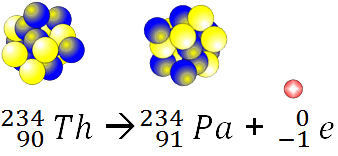
Which type of nuclear radiation is being emitted here?
Alpha
Beta
Gamma
Neutron Emission
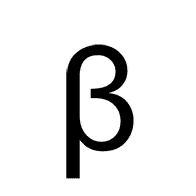
Has the symbol
Alpha
Beta
Gamma
Neutron Emission
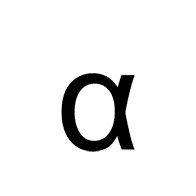
Has the symbol
Alpha
Beta
Gamma
Neutron Emission
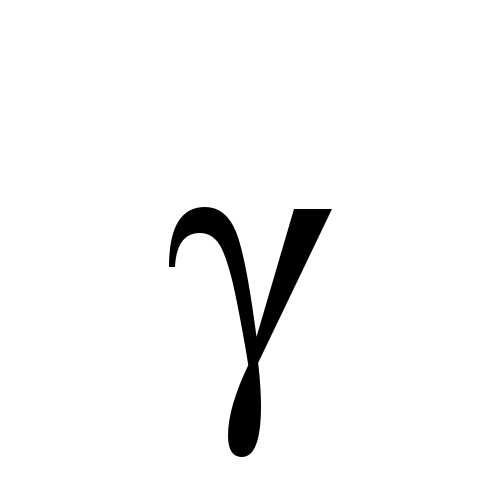
Has the symbol
Alpha
Beta
Gamma
Neutron Emission

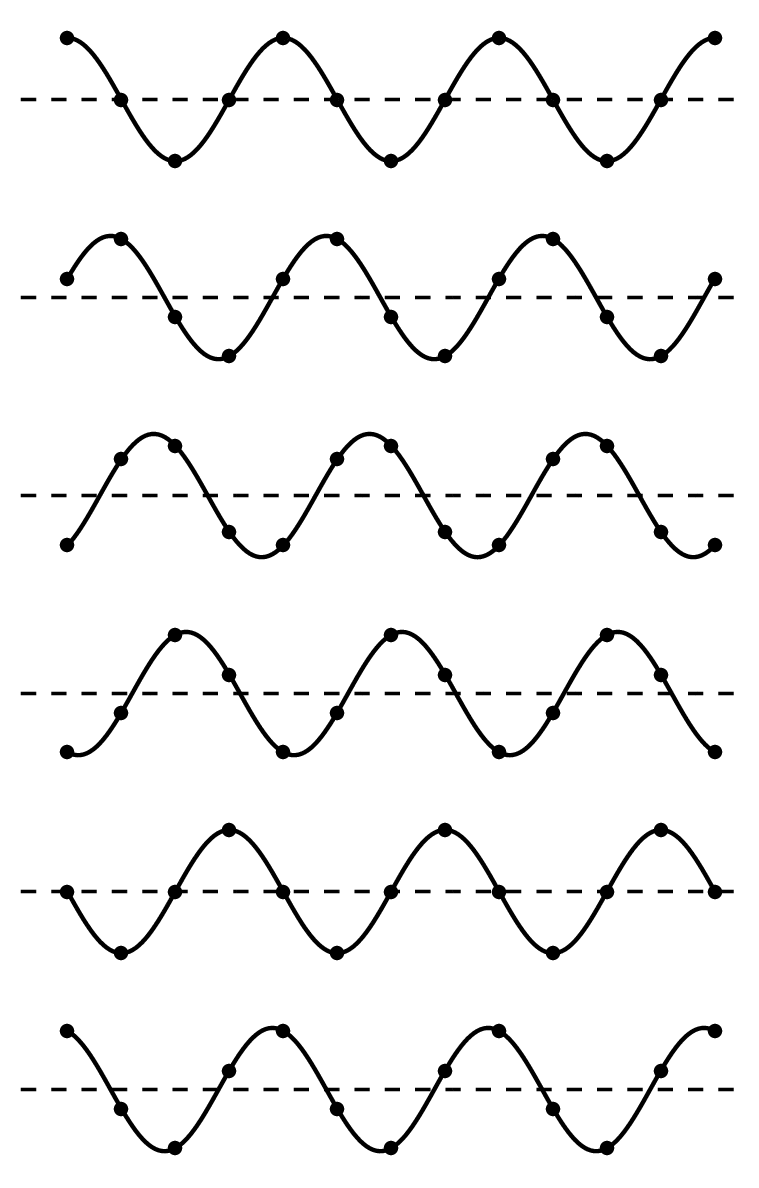
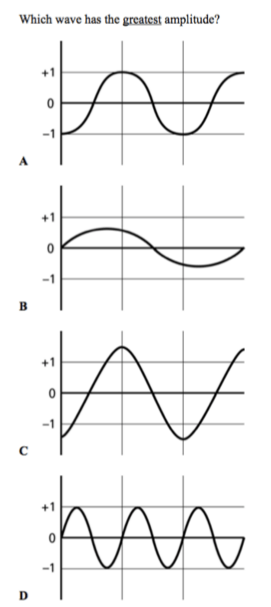


Acceleration = (final velocity - initial velocity)/ time.
Find the acceleration of the elephant.
Given: The elephant accelerates from 2 m/s to 5 m/s in 3 seconds.
A string has a period of .8 seconds. What is its frequency?
1.25 seconds
.2 seconds
.2 hertz
1.25 hertz
The unit for frequency
Hertz
Heinz
Seconds
Cycles


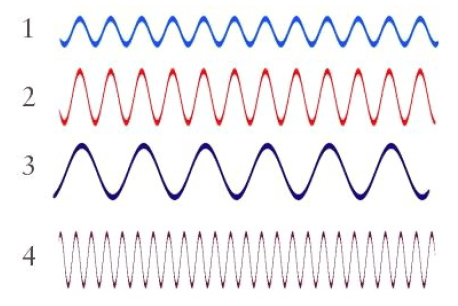
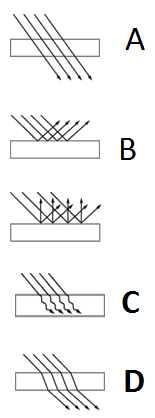
absorption
diffraction
reflection
refraction
transmission

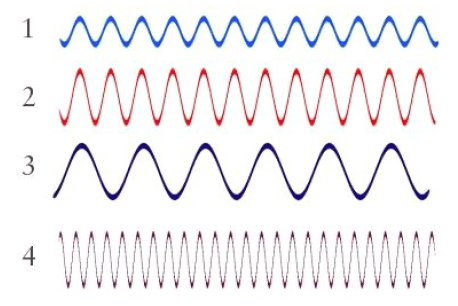
absorption
diffraction
reflection
refraction
transmission






Friction between two objects in motion
potential friction
kinetic friction
static friction
motion friction
Friction between two objects at rest
potential friction
kinetic friction
static friction
motion friction

