
 Worksheets
Quiz #2 - Properties & Changes of Matter, Separation Techniques
Total questions: 175
Worksheet time: 12hrs 2mins

Rank the objects from MOST dense to LEAST dense.
left, center, right
right, center, left
left, right, center
right, left, center
center, left, right
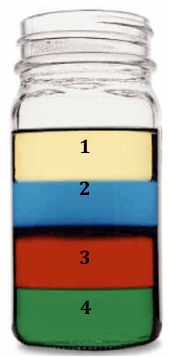
Put the liquids in order from most dense to least dense?
4, 3, 2, 1
1, 2, 3, 4
3, 4, 2, 1,
4, 3, 1, 2
What is the formula for density?
density = mass x volume
density = mass / volume
density = mass + volume
density = mass - volume
Jack has a rock. The rock has a mass of 14g and a volume of 2cm3. What is the density of the rock?
7 mL
7 g/cm3
28 g/cm3
1/7 g/cm3

What is the density of a substance if its mass is 20g and the volume is 5mL?
4g
2.5g
4g/mL
2.5mL

The density of a substance is 2.6 g/mL. If you cut it and half, what is the density of one of the halves?
the same
1.3g/mL
5.2g/mL
None of the above is correct

The volume of a substance that floats in water will have a greater volume than mass.
True
False
An object floats in liquids with a density of 2 g/ml, 1.5 g/mL and 1.0 g/mL. It sinks in a liquid with a density 0.5 g/mL. What could be an estimate of it's density.
3.8 g/mL
1.5 g/mL
.75 g/mL
2.2 g/mL
A graduated cylinder has a mass of 80.0 g when empty. When 20.0 mL of water is added, the graduated cylinder has a mass of 100 g. If a stone is added to the graduated cylinder, the water level rises to 45.0 mL and the total mass is now 156 g. What is the density of the stone?
2.24 g/mL
3.5 g/mL
2 g/mL
2.22 g/mL
A. gasoline 0.7 g/ cm3 B. lead 11.3 g/ cm3 C. mercury 13.6 g/ cm3 D. Paraffin(wax) 0.87 g/ cm3 E. platinum 21.4 g/ cm3
Which substance(s) above will not sink in water?
A & B
C & E
B & C
A & D
True or False: The density of a specific type of material never changes.
True
False
Frank has a paper clip. It has a mass of 9g and a volume of 3cm3. What is its density?
3 g/cm3
1/3 g/cm3
27 g/cm3
39 g/cm3
Frank has an eraser. It has a mass of 4g, and a volume of 2cm3. What is its density?
8 g/cm3
2 g/cm3
1/2 g/cm3
24 g/cm3
Put the liquids in order from most dense to least dense?
4, 3, 2, 1
1, 2, 3, 4
3, 4, 2, 1,
4, 3, 1, 2
An object with which of the following densities will float on water?
0.7 g/cm3
1.2 g/cm3
3.5 g/cm3
11.4 g/cm3
Helium balloons rise on earth because
helium is less dense than air
helium is more dense than air
helium is cooler than air
helium is warmer than air
A student knows the mass of an object. What other variable does the student need to know to calculate the object's density?
Color
Volume
Length
Which measurement would be the most useful for identifying an unknown liquid?
Weight
volume
mass
density
Jack has a rock. The rock has a mass of 14g and a volume of 2cm3. What is the density of the rock?
7 mL
7 g/cm3
28 g/cm3
1/7 g/cm3
The tool used to measure the mass of a substance or object is a ______________.
balance
graduated cylinder
ruler
thermometer
Which lab tool might you use to measure the volume of a liquid?
electric scale
bunsen burner
test tube
graduated cylinder

What is the volume of Object X?
10.0 mL
15.0 mL
20.0 mL
25.0 mL
What is the volume of 150 grams of lead if it has a density of 11.3 g/cm3?
13.3 g
13.3 cm3
.075 g
1695 cm3
An empty beaker has a mass of 60 grams. When mercury is added to the beaker, it has a mass of 200 grams. What is the mass of the mercury?
140 grams
200 grams
140 mL
260 g

The density of this material is 2 g/cm3. There are 24 cm3 of this material. Find the total mass of this material.
12 grams
48 grams
12 g/cm3
48 g/cm3

Which box has a higher density?
Box A
Box B
cannot be determined
they are the same

What is the density of the star?
98 g/mL
5 g/mL
5.0 g/mL
125 g/mL
A. gasoline 0.7 g/ cm3 B. lead 11.3 g/ cm3 C. mercury 13.6 g/ cm3 D. Paraffin(wax) 0.87 g/ cm3 E. platinum 21.4 g/ cm3
Which substance(s) above will not sink in water?
A & B
C & E
B & C
A & D
A graduated cylinder has a mass of 80.0 g when empty. When 20.0 mL of water is added, the graduated cylinder has a mass of 100 g. If a stone is added to the graduated cylinder, the water level rises to 45.0 mL and the total mass is now 156 g. What is the density of the stone?
2.24 g/mL
3.5 g/mL
2 g/mL
2.22 g/mL
When you graph the mass (y-axis) vs the volume (x-axis) of a specific pure substance, the slope of the line is:
density
negative
a curved line
a straight line that does not travel through the origin
Physical properties....
change the matter when studied
can be observed and measured without changing the matter being studied
include the ability to burn and rust
are useless unless studied in a lab
Melting point is...
The temperature at which a solid can change to a liquid
The temperature at which a solid can change to a gas
The temperature at which a gas can change to a liquid
The temperature at which a liquid can change to a solid
The boiling point is ...
The temperature at which a liquid changes to a gas
The temperature at which a solid changes to a gas
The temperature at which a gas changes to a solid
The temperature at which a liquid changes to a solid
What word describes the relationship between the mass of a material and its volume?
Volume
Weight
Height
Density
___________ is the ability to conduct electricity.
Reprocity
Conductivity
Density
Sublimation
Substances that do NOT conduct heat and electricity well are called ______________.
Metals
Silver
Conductors
Insulators
Color is a _________________.
Chemical property
Physical property
Absence property
____________ is the relative resistance of a material (usually a metal) to denting, scratching, or bending.
Density
Hardness
Conductivity
Color
If a substance has luster, it is ________
shiny/reflective
weak
dull
easily pulled into a wire
The ability to be hammered into different shapes is __________.
ductility
malleability
density
volume
______________________ can only be recognized when substances react or do not react chemically with one another.
Physical properties
Chemical properties
Flammable properties
Colorful properties
Flammability means the ability to _______ and is a _________ property.
melt; chemical
rust; physical
change; physical
burn; chemical
A rusting bicycle
Physical Change
Chemical Change
Glass breaking
Physical Change
Chemical Change

Is sharpening a pencil a physical or chemical change?
Physical
Chemical
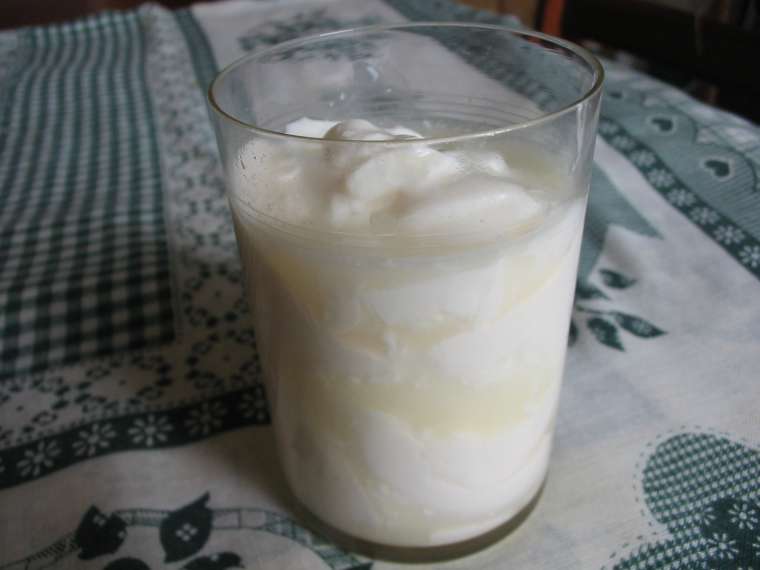
Is milk going sour a physical or chemical change?
Physical
Chemical
which one is the definition of chemical property?
a property or characteristic of a substance that is observed during a reaction where the chemical composition of a substance is changed
any change that results in the formation of new chemical substances
combustibility
Physical properties are
properties that can be observed without changing the identity of the substance
properties that describe how a substance changes into a completely different substance

Ability to rust is this type of property:
Physical property
Chemical property
Odor: Chemical or Physical Property
Chemical Property
Physical Property
Separating sand from gravel
Physical Change
Chemical Change
Freezing chocolate-covered bananas
Physical Change
Chemical Change
Melting butter for popcorn
Physical Change
Chemical Change
Burning toast
Physical Change
Chemical Change
Which of the following techniques can we use to separate homogeneous mixtures?
Crystallisation
Distillation
Evaporation
All of the above

Name the separation technique
Distillation
Crystallisation
Magnetic Separation
Condensation

Name the separation technique
Filtration
Evaporation
Distillation
Separation

Name the separation technique
Distillation
Filtration
Sieving
Crystallisation
One pure substance boils, escapes, condenses, and gets collected as a liquid.
Distillation
Filtration
Decantation
Recrystallization

Distillation
Centrifugation
Filtration
Chromatography

Which separation technique is shown below
filtration
crystallization
sublimation
evaporation
A physical blend of two or more components?
product
phase
reactant
mixture
A substance that can be separated into two or more substances only by a chemical change is a(n)_____.
solution
element
mixture
compound
Which of the following is true about homogeneous mixtures?
Known as solutions
Consist of two or more phases
Have compositions that vary
Are always liquid
Which of the following is classified as a mixture?
pure water
pure air
pure nitrogen
pure gold
Which of the following is a heterogeneous mixture?
air
salt water
steel
soil
What is the purpose of chromatography in separation techniques?
To combine the components of a mixture.
To identify the components of a mixture.
To heat the components of a mixture.
To separate and analyze the components of a mixture.
What is the purpose of distillation in separation techniques?
To separate a mixture of liquids based on their different densities.
To separate a mixture of solids based on their different melting points.
To separate a mixture of liquids based on their different boiling points.
To separate a mixture of gases based on their different solubilities.
Which separation technique is used to separate different components of a mixture based on their different affinities to a stationary phase and a mobile phase?
filtration
distillation
chromatography
evaporation
Which separation technique is used to separate a mixture of liquids with different boiling points?
distillation
filtration
evaporation
chromatography
Describes a mixture with a uniform composition.
heterogeneous
compound
homogeneous
chemical reaction
An example of a homogeneous mixture is
distilled water.
oxygen.
noodle soup.
stainless steel.
Which physical property is fractional distillation based on?
Different boiling points
Different melting points
Different solubilities
Different densities

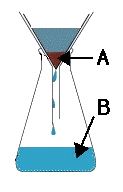
Choose the pair that correctly identifies A and B.
A: Residue,
B: Filterate
A: Solute,
B: Filtrate
A: Residue,
B: Filtrate
A: Solute,
B: Filterate

In a coffee machine, the ground coffee is separated from the coffee solution by using..
sand paper
filter paper
toilet paper
tissue paper

Lead is an element. What word below describes an element?
pure substance
compound
heterogenous mixture
homogenous mixture

The Matter Classification of Air is
Compound
Element
Pure Substance
Mixture

Salt is an example of which classification of Matter?
Element
Pure Substance
Mixture
Compound

Salt Water is
Mixture
Homogeneous Mixture
Pure Substance
Heterogeneous Mixture

List All That Describe the Matter Classification of Blood.
Solution
Homogeneous Mixture
Heterogeneous Mixture

How would you Classify Sugar?
Pure Substance
Element
Mixture
Compound

What would the Classification of Raisin Bread be?
Compound
Pure Substance
Mixture
Heterogeneous Mixture

Brass is Classified as
Pure Substance
Compound
Mixture
Alloy

The Matter Classification for Iron is
Compound
Element
Pure Substance
Solution

Sand & Water are Classified as
Homogeneous Mixture
Pure Substance
Mixture
Heterogeneous Mixture

Copper is a/an
Element
Pure Substance

How would you classify this image?
homogeneous mixture
heterogeneous mixture
Is the following a pure substance or mixture? Brass (Cu and Zn)
pure substance
mixture

How would you classify this image?
homogeneous mixture
heterogeneous mixture
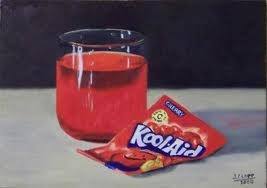
How would you classify this image?
homogeneous mixture
heterogeneous mixture

Classify the particle diagram.
element
compound
mixture of elements
mixture of compounds
mixture of elements and compounds

Classify the particle diagram.
element
compound
mixture of elements
mixture of compounds
mixture of elements and compounds
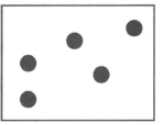
Classify the particle diagram.
element
compound
mixture of elements
mixture of compounds
mixture of elements and compounds
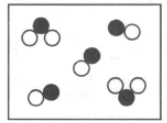
Classify the particle diagram.
element
compound
mixture of elements
mixture of compounds
mixture of elements and compounds
Is the following homogeneous or heterogeneous? Fruit salad
homogeneous mixture
heterogeneous mixture
Is the following a homogeneous or heterogeneous mixture? coffee mixed with cream and sugar
homogeneous mixture
heterogeneous mixture
Is the following an element or compound? hydrogen peroxide (H2O2)
element
compound
Is the following an element or compound? A silicon (Si) chip.
element
compound
Is the following a pure substance or mixture? Trimix (oxygen, nitrogen, and helium) found in a scuba tank
pure substance
mixture
Is the following a pure substance or mixture? Baking Soda ( NaHCO3 )
pure substance
mixture
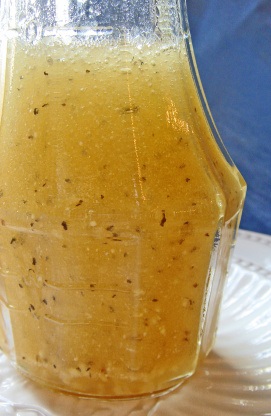
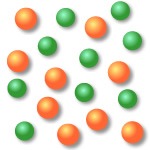

Does this image represent a chemical or a physical change?
Chemical change
Physical change

Does this image represent a chemical or physical change?
Chemical change
Physical change
What pure substance is made of 2 or more types of atoms?
compound
element
What is the difference between a pure substance and a mixture? Select all that apply.
substances are made of many different things while mixtures are just made of 1
a substance has one type of particle while a mixture has 2 or more types
a mixture is physically combined and can be physically separated while a substance is chemically bonded
a mixture is chemically bonded together while a substance is physically combined
choose the choice that best describes differences between a solid, liquid, and a gas by using the behavior of their particles.
Solids have particles that are tightly packed and vibrate in place, liquids have particles that are close but can move past each other, and gases have particles that are far apart and move freely.
Solids have particles that are far apart and move freely, liquids have particles that are tightly packed and vibrate in place, and gases have particles that are close but can move past each other.
Solids and liquids have particles that are tightly packed, while gases have particles that are close but can move past each other.
Solids have particles that are far apart and move freely, liquids have particles that are close but can move past each other, and gases have particles that are tightly packed and vibrate in place.
Identify seawater as an element, compound, or a mixture.
Element
Compound
Mixture
None of the above

What process of separating mixture is illustrated on the animated gif posted here?
decantation
distillation
evaporation
condensation

Is this a pure substance?
Yes
No


What are the number of times each level of the independent variable is tested?
constants
control
trials
dependent variable
The vertical axis of a line graph is called the __________.
slope
line of best fit
x-axis
y-axis

Find the slope of the line for the graph.
1
4
0
8

Find the slope of the line for the graph.
-1
-4
0
-8

Find the slope of the line for the graph.
-1
-4
0
-8

The line graph shows five years of data about a dog. What information does the graph show?
How the mass of the dog changed.
How much food the dog consumed.
What kinds of food the dog consumed.
When the dog was measured each month.

Is defined as the probability that a product, system, or service will perform its intended function adequately for a specified period of time.
Accuracy
Authenticity
Reliability
Convert 50 miles/h into m/s using these relationships
1 mile = 1609.34 meters "
1 hr = 60 minutes
1 minute = 60 seconds
22.33 m/s
80467 meters
13411 m/s
Match the expressions to their resulting units.

yards

centimeters

kilometers

meters

inches
What is its speed in m/s?
(1 km = 1000 m)
Match the expressions to their resulting units.
yards
centimeters
kilometers
meters
inches

What is the equivalent of 5 fl oz per minute in gallons per hour?
4.68 gallons per hour
18.75 gallons per hour
2.34 gallons per hour
38,400 gallons per hour
What is the SI unit for mass?
kilograms
pounds
meters
liters
What two units can be used when measuring volume
grams and seconds
cubic meters and liters
milliliters and centimeters
cubic centimeters and kelvin
What is the SI unit for length?
meter
mass
liter
second
1000 grams = _____kilograms
1
100
1000
10

What type of correlation does the graph show?
Positive Correlation
Negative Correlation
No Correlation

What type of correlation does the graph show?
Positive Correlation
Negative Correlation
No Correlation

What type of correlation does the graph show?
Positive Correlation
Negative Correlation
No Correlation
Which type of correlation most likely represents the relationship between number of hours studied for an exam and the grade on the exam?
Positive Correlation
Negative Correlation
No Correlation
Which type of correlation most likely represents the relationship between distance traveled to school and number of shirts owned?
Positive Correlation
Negative Correlation
No Correlation
Which type of correlation most likely represents the relationship between amount spent on heating and temperature?
Positive Correlation
Negative Correlation
No Correlation
Which graph depicts the strongest positive correlation?


A positive correlation is a relationship between two variables such that as one variable decreases the other decreases.
True
False
A negative correlation is a relationship between two variables such that as one variable increases the other decreases.
True
False
Which variables are most likely positively correlated with temperature? Select ALL that apply.
sale of ice cream
number of boating accidents
sales of winter clothing
sales of televisions
Which variables are most likely negatively correlated with screen time? Select ALL that apply.
number of texts sent
amount of time asleep
amount of time playing video games
amount of time playing sports


The (a) is what you change or the (b) while the (c) is the (d) of that change.
Why is it important to collect multiple data points when measuring speed in an experiment?
To make the experiment more time-consuming
To ensure the results are accurate and reliable by averaging out any anomalies
To reduce the amount of data analysis required
To confuse the students
What is a potential issue with collecting only one data point over a series of three trials in an experiment measuring speed?
It simplifies the data analysis process (i.e., the process should be hard)
It ensures inconsistent results across all three trials
How does collecting multiple data points help in identifying anomalies in an experiment measuring speed?
Collecting multiple data points helps identify anomalies by establishing a baseline for expected speed measurements, allowing for the detection of significant deviations.
Why is it inadequate to collect only one data point in an experiment measuring speed?
It is inadequate because one data point does not provide a reliable measure of speed due to potential variability and measurement errors.
An experimenter measures the speed of a car by recording the time it takes to travel a fixed distance. They only record the time once for each trial. What is the main issue with this approach?
In an experiment to measure the speed of sound, the experimenter uses a stopwatch to measure the time it takes for a sound to travel a known distance. What is the flaw in this approach?

