
 Worksheets
jismo science
Total questions: 65
Worksheet time: 33mins
Our body has five senses that help us gather information about our surrounding. One of our five senses is ear. Which of the followings is an incorrect option for the functions of the ear?
Catching sound waves.
Maintaining body balance.
Keeping right body’s temperature.

Sahara Desert is an example of environment which is located in Africa. It is known as one of the hottest places on the Earth. Which of the following options does not describe the environmental condition in Sahara Desert?
It has dry and thin soil.
It has big temperature difference at day and nighttime.
It does not have any plant grows on its soil.

This is an illustration of Eddy standing in front of a flat mirror. There were his cat and toy behind the mirror. When he looked at the mirror, what were the objects did he see in the mirror?
Only himself
Himself, light bulb, and cupboard
Himself, light bulb, cupboard, cat, and toy

Eddy saw his image closely in the flat mirror as shown in the picture below. What was the result on the mirror when he turned his head to the left side?
His head in the mirror also turned left and looked the same.
His head in the mirror turned right and looked the same.
His head in the mirror turned right and looked smaller.

Below is the illustration of a doll when it is placed in front of the flashlight. The shadow formation of the doll will be different based on its distance from the flashlight. Which
flashlight position will create the tiniest shadow?
1
2
3

Before the analog watch was invented, people used a device called sundial for telling the time by the movement of the Sun. It has a pointer that will create a shadow based on the position of the Sun at that time. From the picture below, what time is shown by the sundial?
8 a.m.
1 p.m.
8 p.m.
Lenses are used in a variety of technical and scientific tools. Each of them has a specific function. Which of the following options is the tool to see a very small object?


Kenzo did an experiment with 3 different conditions of magnifying glasses to collect the sunlight and try to burn the black paper as illustrated below. Based on the three conditions as shown below, which of the following options did burn the black paper the fastest?
a
b
c

Long before the analog and digital clocks were founded, people used a sundial in which the sunlight was needed to find out the time. Sundials are very useful, especially during the day. One of the ways to create a simple sundial is by using a stick that is plugged into a
surface and using stones to mark the shadow movement.
Which explanation is the most appropriate to
illustrate why the shadow on the sundial moves ?
Shadow movement occurs because the Sun rotates.
Shadow movement occurs because the Sun revolves.
Shadow movement occurs because the Earth
revolves.
Shadow movement occurs because the Earth rotates.

The Eskimos in the Arctic Archipelago have already known how to adapt well with their environment since a long time ago. The materials and construction of their houses are special. They live temporarily in an igloo during the hunting time in winter when the temperature is around -50°C. Instead of feeling cold, the Eskimos feel warm if they stay inside the igloo.
What is the correct reason behind that phenomenon?
Snow is a good insulator that prevents the heat release from the igloo to the outside.
Snow is a good conductor that receives the heat easily from human body.
The dome shape is good for the heat release.
Igloo does not have any ventilation to prevent leaking of the heat to the air outside.

Without using a compass, we still can find a direction
from the shadow. Which of the following positions of
the shadow indicates the one in the afternoon (p.m.)?
1
2
3

A
B
C

A
B
C

A
B
C
Kate was doing an experiment using three different types of mirrors, which are plane, convex, and concave mirrors. Each mirror shows different image reflection. When Kate uses plane mirror in her bathroom, her reflection becomes upright, the same size, and reversed direction.
When Kate uses her mother’s magnifying mirror which is concave mirror, her reflection becomes bigger and upright. When Kate uses rear-view mirror from her father’s car which is convex mirror, how will her reflection look like?
Upright, the same size, has a wide field of view
Upside-down, bigger, has a narrow field of view
Upright, smaller, has a wide field of view

A. 1 - 2 – 3
B. 2 - 3 - 4
C. 3 - 5 - 6
One of the digestive organs in human body is mouth. It is the first organ where the digestion process starts. Which of the following options is not correct about the function of mouth?
To taste food with the taste sensor
To digest food with saliva
To chew food into smaller size

A
B
C

A
B
C
Evaporation is a process when liquid changes into gas. Evaporation does not always need a high temperature to occur. Which one of the following options is the example of evaporation in our daily life?
Water in the freezer
Water droplets on leaves in the morning
Sea water at noon

The Earth completes a rotation every 24 hours which is known as a whole day. Below is an
illustration of the Earth rotating on its axis. Which of the following options shows (1) the
period of time on area X and (2) the relevant activity during that time?
Daytime - Playing fireworks
Daytime - Hiking
Nighttime - Observing fireflies
Nighttime - Gardening
Below is the illustration of a doll when it is placed in front of the flashlight. The shadow formation of the doll will be different based on its distance from the flashlight. Which
flashlight position will create the tiniest shadow?
1
2
3
Choose the right shadow that can be created based on the sun position.


Zoe made a simple balance scale using a wooden stick and string to measure the weight of 4
objects as illustrated below. Study the following illustration carefully. Which object is the
heaviest?
a
b
c
d
A
B
C


Look at the following scales and fill in the blanks with “heavier than”, “lighter than” or “the same as”.
The tennis ball weighs _________ the apple.
The tennis ball weighs lighter than the apple.
The tennis ball weighs heavier than the apple.
The tennis ball weighs the same as the apple.

Look at the following scales and fill in the blanks with “heavier than”, "lighter than" or "the same as" ?
The tennis ball weighs ......... the book.
The tennis ball weighs lighter than the book.
The tennis ball weighs heavier than the book.
The tennis ball weighs the same as the book.

__________________ are consumers that eat ONLY MEAT (other animals)?
Omnivores
Carnivores
Producers
Herbivores

________________ are consumers that eat ONLY PLANTS.
Herbivores
Carnivores
Omnivores
Producers

__________________ are consumers that eat BOTH Plants and Animals for food.
Omnivores
Producers
Herbivores
Carnivores
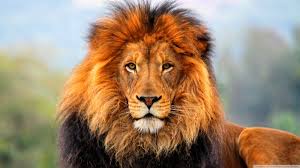


A diurnal animal is active in the
day
sun
night
water
Nocturnal animals are active in the
sun
day
night
morning
Which animal is diurnal?


Which animal is nocturnal?


A giraffe is a _____________ animal.
nocturnal
diurnal

A
B
C
D

A
B
C
D

What is happening in the picture?
Push
Pull

Look at the picture. Which statement is CORRECT?
The reindeer is pushing the Santa.
The Santa is pushing the reindeer.
The reindeer is pulling the Santa.
The Santa is pulling the reindeer.

Pull
Push

Where will the tree's shadow be?
A
B
C

Which direction is right for creating this shadow
1
2
3


A
B
C
D

A
B
C
D

A
B
C
D

A
B
C
D

A
B
C
D

A
B
C
D
The Earth completes a rotation every 24 hours which is known as a whole day. Below is an
illustration of the Earth rotating on its axis. Which of the following options shows (1) the
period of time on area X and (2) the relevant activity during that time?
Daytime - Playing fireworks
Daytime - Hiking
Nighttime - Observing fireflies
Nighttime - Gardening

Sound is a vibration that travels through a medium as a wave. Freddy did an experiment to
prove this theory as illustrated below. He spread 1 tablespoon of salt on top of the bowl
which is covered with plastic wrap. He held the metal tray in the air but next to the bowl.
Then, by using a metal spoon, he hit the metal tray like a drum while observing the salt.
What is the result of this experiment?
The salt is not moving because sound vibration cannot be transferred through
different media.
The salt is moving because sound vibration is transferred through air and reach the
plastic wrap.
The salt is not moving because sound vibration has not enough power to move thing.
The salt is moving because sound vibration is transferred to the bowl first and then
reach the plastic wrap.

Gravity is a force that pulls objects toward the Earth. When objects are dropped, they will
fall to the ground. However, the air has a resistance that defies gravity and creates an
upward force. This resistance causes objects to fall at different speeds. Five children did an
experiment by dropping 5 cups of the same size from the second floor onto the ground. Each of them turned the cup upside down and dropped it at the same time. Which of the
following options shows all the cups falling more slowly?
1-3-5
2-3-4
3-4-5
1-3-4

There are several characteristics that categorize plants as living things. One of the examples
is the behavior of Mimosa pudica. It is well known as ‘sensitive plant’ because its leaves will
curl when we touch them. What is the characteristic of living thing that explains the
behavior of this plant?
Living things can move on their own
Living things will die without oxygen
Living things adapt to their environment
Living things respond to stimuli

One late afternoon, Kaito did an experiment by sticking a bar magnet with a tape to a
styrofoam plate to observe whether magnet can be used as a compass. When he put the
styrofoam plate on the water and turned it a few times, it finally stopped. In which direction
would the South pole of the magnet be pointing?
A
B
C
D

Jib and Sua did an experiment by blowing out a candle as illustrated below. Each of them
blew a candle which was placed behind an object. Jib used a round-shaped object while
Sua used a square-shaped one. The shape of objects will give a different impact to the air
movement. When they blew out the candles at the same time, whose candle would put
out easier and why?
Jib’s candle; it is because the air spreads in all direction.
Sua’s candle; it is because the air goes around the object.
Jib’s candle: it is because the air movement follows the shape of the object.
Sua’s candle; it is because the shape of the object makes the air move easier.
Puffer fish is mostly found in tropical and subtropical ocean. This fish has elastic stomach
that allows it to quickly take large amount of water to transform into a bigger size. What is
the purpose of that behavior?
To draw attention of their preys.
To get more oxygen when they are breathing.
To communicate with other puffer fish.
To protect themselves and scare their predators away.
River is a place where we can naturally find flowing water which will end up in sea, lake, or
another river. River consists of fresh water with many natural resources. What kind of
things we cannot utilize from the river?
The soil as natural fertilizer for plant
The small stones as construction material
The fish and shrimp as the sources of protein
The water as the source to water rice field
Zoe made a simple balance scale using a wooden stick and string to measure the weight of 4
objects as illustrated below. Study the following illustration carefully. Which object is the
heaviest?
a
b
c
d
Ecosystem is a geographic area where plants, animals, and other organisms live together
with abiotic components and interact with each other. There are many kinds of ecosystem
exist on the Earth. Ocean, rain forest, and desert are the examples of ecosystem where
they have different kinds of population and community. Which one of the following options
correctly shows the examples of populations which live in a pond ecosystem?
Snail, duck, cod fish, water lily
Duck, tadpoles, frog, lotus
Snail, frog, clownfish, water lily
Swan, tadpoles, coral, lotus
Recycling is the process of converting waste materials into reusable objects. It also allows
materials to be used more than once. The recycling process is one of the ways to reduce
pollutions in our environment. Recyclable materials include glass, paper, metal, plastic, and
so on. Mention 2 benefits of recycling.

James did an experiment by tying a magnet with a string and hanging it as shown in the
picture below. After spinning the magnet for a while, it had always pointed to the North
and South. He repeated the experiment many times and the result was always the same.
Why did it happen?

