
NEW
Font size
S
M
L
XL
 Worksheets
Enzymes EOC Review
Total questions: 20
Worksheet time: 17mins
Name
Class
Date
1.
What is a substance called if it speeds up a chemical reaction?
a)
reusable
b)
catalyst
c)
specific
d)
fragile
2.
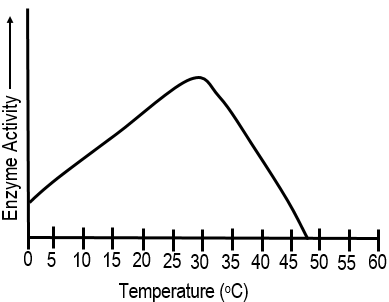
Based on the graph, what is the optimal temperature for this enzyme?
a)
15oC
b)
40oC
c)
30oC
d)
35oC
3.
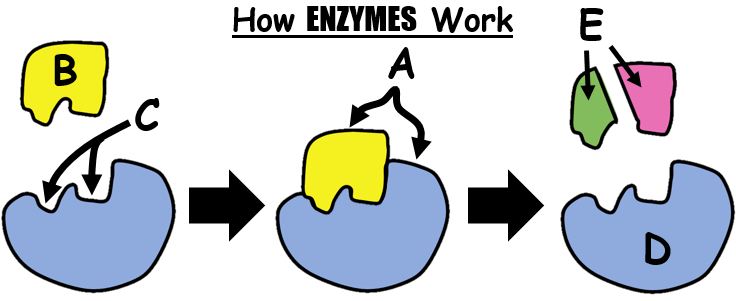
In the diagram, what is letter A?
a)
product
b)
substrate
c)
enzyme-substrate complex
d)
active site
4.
Enzymes are...
a)
nucleic acids
b)
proteins
c)
lipids
d)
carbohydrates
5.
What is the function of an enzyme?
a)
enzymes break themselves into small pieces
b)
enzymes slow down chemical reactions
c)
enzymes speed up chemical reactions
d)
enzymes combine products to form reactants
6.
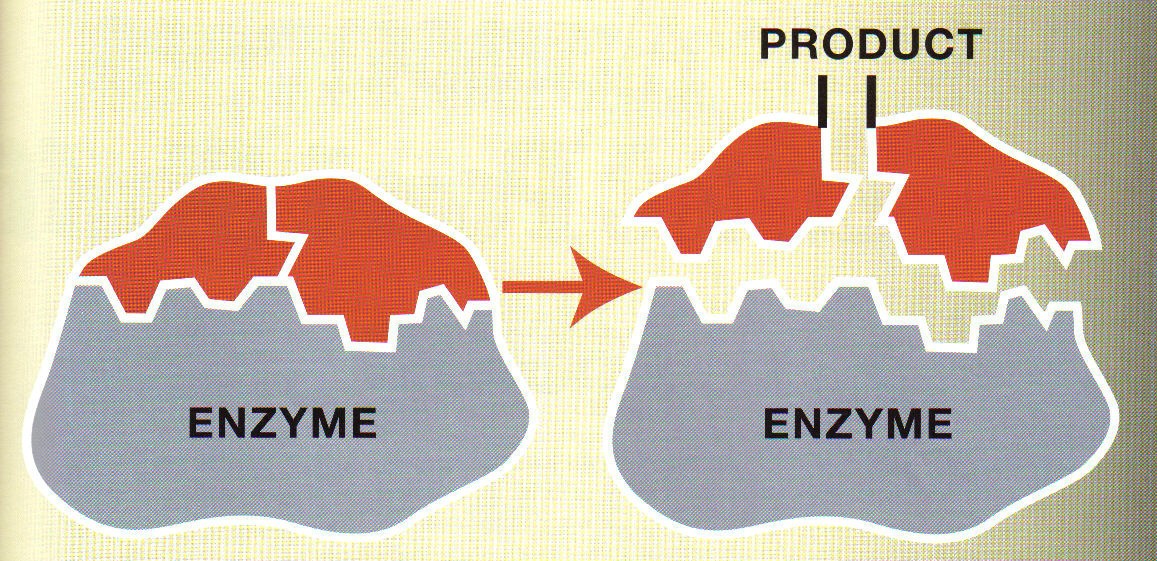
Enzymes speed up reaction rates by changing...
a)
Activation Energy
b)
pH
c)
Hydrogen Bonds
d)
Kinetic Energy
7.
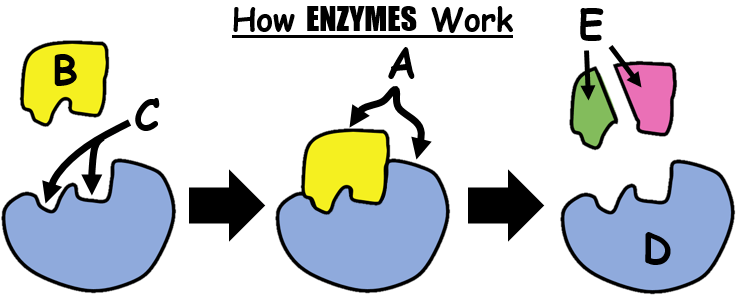
Letter D...
a)
active site
b)
enzyme
c)
substrate
d)
products
8.
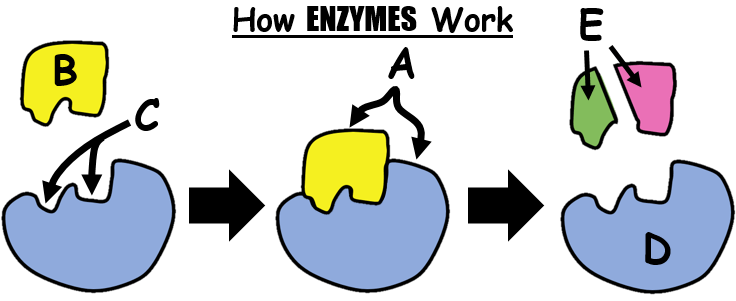
Letter B...
a)
active site
b)
enzyme
c)
substrate
d)
products
9.
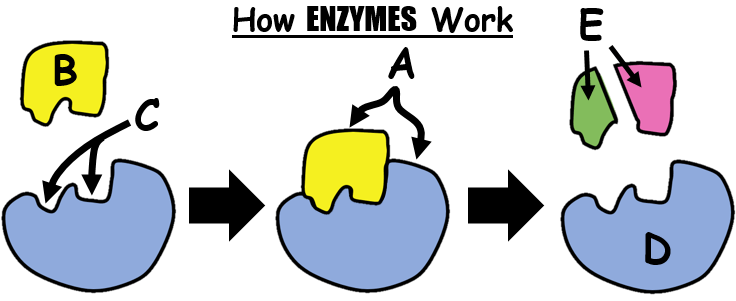
Letter C...
a)
active site
b)
enzymes
c)
substrate
d)
products
10.
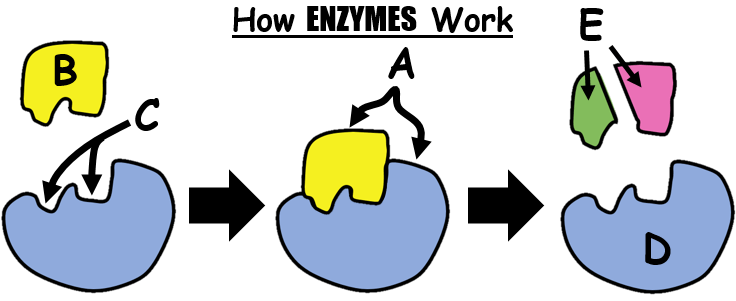
Letter E...
a)
active site
b)
enzyme
c)
substrate
d)
products
11.
With what 3 letters do enzymes typically end?
a)
-ose
b)
-ase
c)
-ese
d)
-tic
12.

Which of the following conclusions can be drawn from this graph?
a)
The optimum pH of the enzyme is 6.6.
b)
The optimum pH of the enzyme is 5.8
c)
The enzyme’s activity increases as pH increases 5.0 to 9.0
d)
The enzyme’s activity is greater around pH of 8.0 .
13.
What happens to an enzyme when it is denatured?
a)
Activation energy is lowered.
b)
It becomes stronger.
c)
It loses its shape.
d)
Activation energy is raised.
14.
Every enzyme has a optimal temperature and pH. True or False?
a)
True
b)
False
15.
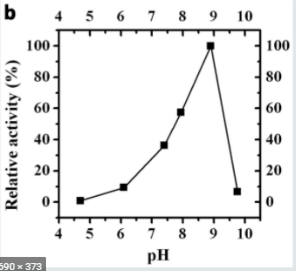
What is the optimal pH for this enzyme?
a)
6
b)
10
c)
9
d)
7
16.
The ____________________ mechanism describes how each substrate must fit into the enzyme.
a)
lock and key
b)
hammer and nail
c)
jigsaw puzzle
d)
seesaw
17.
Where do substrates bind to an enzyme?
a)
calcium channels
b)
active site
c)
receptor molecules
d)
voltage-gated channels
18.

The following figure is illustrating
a)
Dehydration Synthesis
b)
Hydrolysis
19.

The following figure is illustrating
a)
Dehydration Synthesis
b)
Hydrolysis
20.
A __________ consists of many monomers bonded together.
a)
monomer
b)
hydrocarbon
c)
peptide
d)
polymer
Reset

