wayground logo

Free Printable Worksheets

Font size

S
M
L
XL
Worksheets

Evolution Review

Total questions: 52

Worksheet time: 44mins
Name
Class
Date
1.
Where the better adapted organisms survive to pass traits along to offspring.
a)
Evolution
b)
Natural Selection
c)
Extinction
d)
Artifical Selection
2.
Why are advantageous traits more likely to be passed onto offspring?
a)
Because they are more likely to survive and reproduce.
b)
Because they come from dominant alleles.
c)
Because they come from recessive alleles.
d)
Because the trait is an acquired phenotype.
3.
Natural selection is when ____________ decides who survives and who doesn't
a)
nature
b)
humans
c)
animals
d)
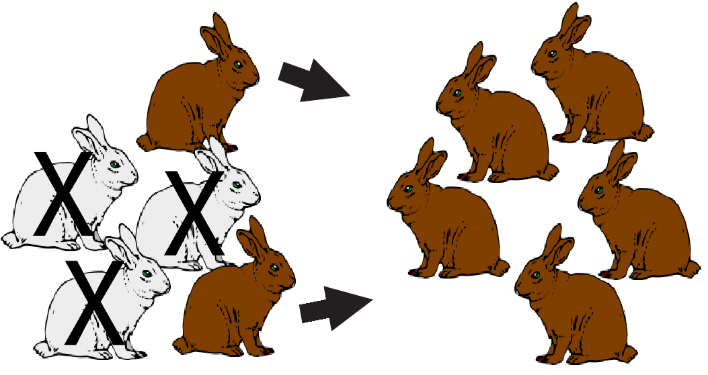
years
4.
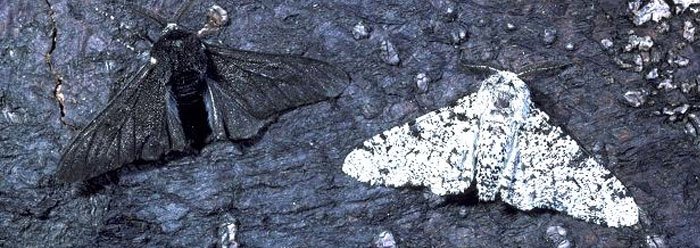
The trees these moths used to live on were white, but have been covered in soot from coal factories. Which moth will be more successful in this environment?
a)
Dark moth
b)
Light moth
c)
Both will be equally successful
d)
Neither will be successful
5.
Change over time
a)
Natural Selection
b)
Selective Breeding
c)
Homeostasis
d)
Evolution
6.
Which best describes mutations?
a)
Always helpful
b)
Always harmful
c)
Can be helpful or harmful
d)
Always neutral
7.
Structures with the same parts have different functions; suggests that organisms share a common ancestry
a)
vestigial structures
b)
homologous structures
c)
adaptive radiation
d)
fossil
8.
Study of embryos of various organisms to show a common ancestor because of similarities in development
a)
natural selection
b)
embryology
c)
speciation
d)
evolution
9.
The diagram shows fossils in different rock layers. Which of these statements about the age of these fossils is most likely correct?
a)
Fossil A and C are the same age
b)
Fossil B is older than fossil C
c)
Fossils A is older than fossil B
d)
Fossil D is older than fossil C
10.
What does Darwin's theory of evolution suggest?
a)
species change over time
b)
extinct species are not related to living species
c)
different species can interbreed
d)
animals that look alike are most closely related
11.
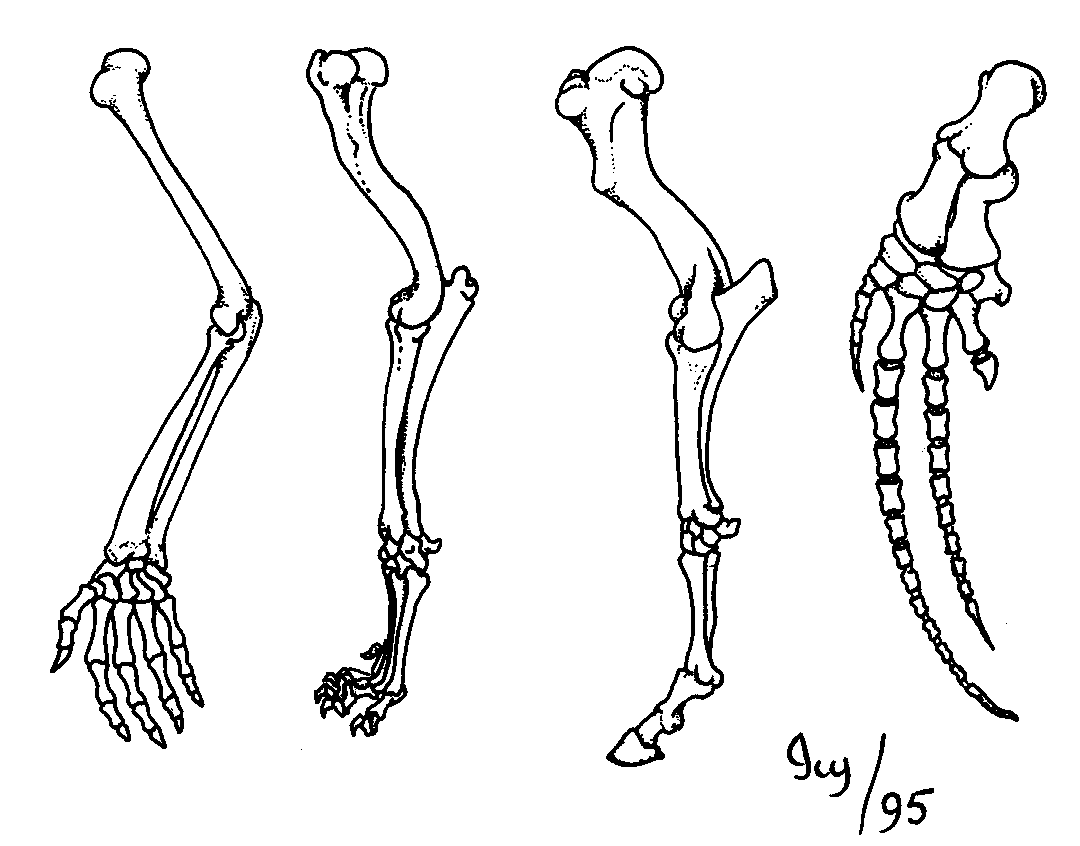
What type of structures are these?
a)
homologous
b)
vestigial 
c)
analogous
d)
fossil
12.
Which of these best represents a time period in which an organism could evolve?
a)
5 days
b)
100 years
c)
10,000 years
d)
2 decades
13.

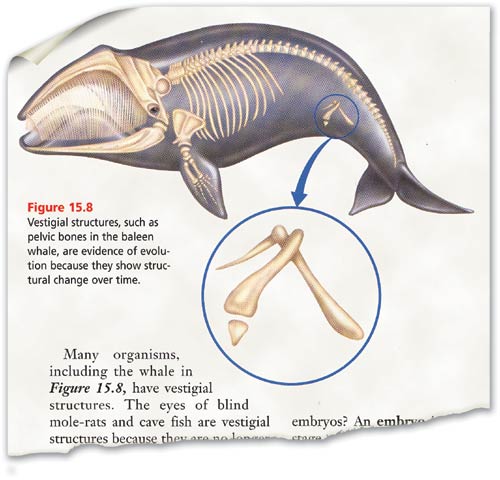
Whales are aquatic mammals that contain a pelvis (hip) bone. Even though it does not aid in its movement, the function must have been used by a common ancestor of the whale. Thus, the pelvis is referred to as a(n)

a)

vestigial structure

b)

analogous structure

c)

homologous structure

14.
A theory has significant evidence to support it.  True or False
a)
True
b)
False
15.
The ability of an organism to survive and reproduce in its specific environment 
a)
diversity.
b)
evolution
c)
adaptation
d)
 fitness
16.
Where humans have bred organisms together based on traits we like.
a)
Evolution
b)
Natural Selection
c)
Extinction 
d)
Artificial Selection
17.
Genetic differences between organisms of the same species
a)
Variation
b)
Adaptation
c)
Behavior
d)
Environment
18.
The difference in the physical traits of an individual from those of other individuals in a group is called a(n)
a)
change
b)
adaption
c)
species
d)
variation
19.
The long and sharp beak of a woodpecker is an example of:
a)
Natural Selection
b)
Selective Breeding
20.
An error in DNA copying that results in a new trait
a)
Homeostasis
b)
Mutation
c)
Natural Selection
d)
Selective Breeding
21.
In the graph shown, how many species of lizards seem to have beneficial adaptations?
a)
1
b)
2
c)
3
d)
4
22.
Mistakes or changes that occur int he DNA sequence are called....
a)
adatations
b)
Darwinism
c)
mutations
d)
natural selection
23.
The preserved remains or physical evidence of an organism that lived in the past are called...
a)
evolutionary features
b)
fossils
c)
mutations
d)
variations
24.
What most likely caused the finches on the Galapagos Islands to have beaks that were differnt from the finches living on the South American mainland?
a)
They were different types of food available on the island.
b)
The finches on the islands had to drink salt water.
c)
There were different types of predators living on the island.
d)
The finches on the mainland built different types of nests.
25.
Which beneficial variation would be most helpful in a desert environment?
a)
white fur
b)
claws for burrowing
c)
grean and black camouflage
d)
flippers
26.

Which scientist visited the Galapagos Islands and came up with the theory of natural selection?

a)

Theodor Schwann

b)

Gregor Mendel

c)

Charles Darwin

d)

Rudolf Virchow

27.

Gigantopithecus were very large primates that lived 500,000 years ago. Since none of these mammals are still today, they are said to be....

a)

Extinct

b)

Threatened

c)

Endangered

d)

Declining

28.

Scientists have collected millions of fossils of different organisms, and have developed a timeline of life on Earth. What do we call this?

a)

Mutation

b)

Natural Selection

c)

The theory of evolution

d)

Fossil Record

29.

A physical or behavioral trait that helps an organism survive and reproduce in its environment is called a what?

a)

An adaptation

b)

A response to a stimulus

c)

A mutation

d)

Evolution

30.

What is the study of organisms at the early stages of development?

a)

DNA studies

b)

Comparative Embryology

c)

Extinction

d)

Fossil Record

31.
Which of the following is an example of a vestigial structure?
a)
the wings of a red-tailed hawk
b)
the hind limbs of a house cat
c)
the fins of sharks
d)
the tailbone of a human
32.
Ostrich wings are examples of
a)
homologous structures
b)
vestigial structures
c)
adaptations
d)
traits
33.
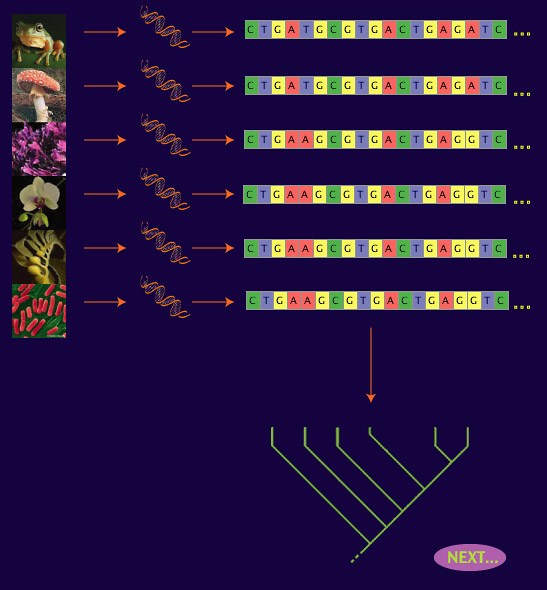
Two organisms that are closely related would have
a)
very similar DNA sequence
b)
exactly the same DNA sequences
c)
no proteins in common
d)
completely different DNA sequence
34.
Comparing human hemoglobin of chimpanzees, horses, kangaroos, and chickens, reveal that humans have the fewest amino acid differences with 
a)
Kangaroos
b)
Horses
c)
chickens
d)
chimpanzees
35.
All the individuals of a species that live in a particular area are called a
a)
variation
b)
population
c)
fossil
d)
group
36.
Which layer is oldest?
a)
A
b)
W
c)
G
d)
Z
37.
According to the law of superposition, which layer is the youngest?
a)
A
b)
B
c)
C
38.

What

type

of structure?

a)

Homologous

b)

Analogous

c)

Embryological

d)

Vestigial

39.

What

type

of structure?

a)

Homologous

b)

Analogous

c)

Embryological

d)

Vestigial

40.

What

type

of structure?

a)

Homologous

b)

Analogous

c)

Embryological

d)

Vestigial

41.

Mountains and now breeds on the Santa Rita Mountains with another established population.

a)

Gene Flow

b)

Genetic Drift

42.

A forest fire ignites in the Sam Houston State Forest and kills many members of a population of pigmy rattlesnakes.

a)

Gene Flow

b)

Genetic Drift

43.

Select the best answer based on the image.

a)

Gene Flow

b)

Genetic Drift

44.

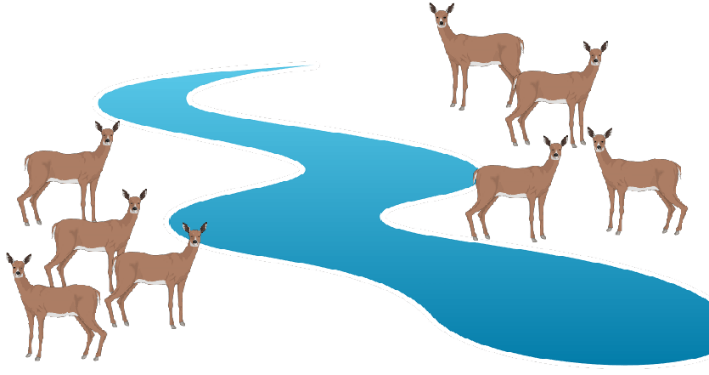
A population of flowers on one side of a river transports pollen to flowers on the other side of the river

a)

Gene Flow

b)

Genetic Drift

45.

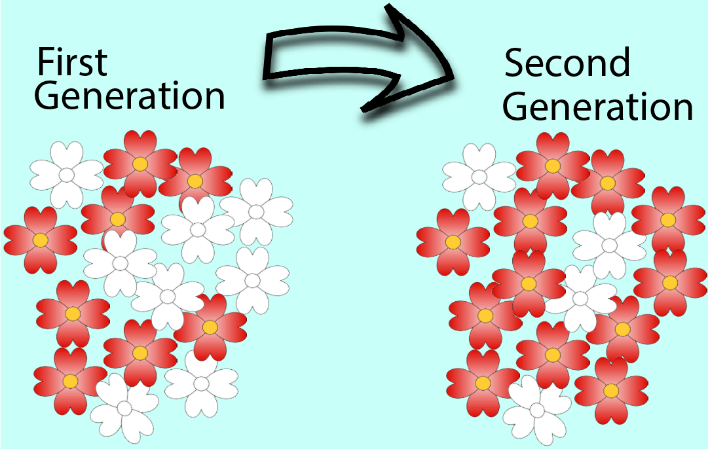
Select the best answer based on the image.

a)

Gene Flow

b)

Genetic Drift

46.

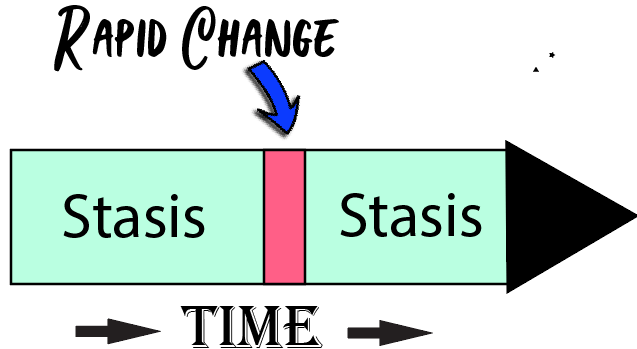
Punctuated Equilibrium implies catastrophic events caused natural selection to speed up due to great environmental changes.

a)

True

b)

False

47.

Two populations of the same species are separated by land barriers like rivers or mountains.

a)

geographical isolation

b)

temporal isolation

c)

adaptive ratiation

d)

behavioral isolaton

48.

All the possible gene combinations in a population.

a)

allele

b)

gene pool

c)

genome

d)

mitosis

49.

Changes in the gene pool over time.

a)

Mitosis

b)

Genetic Variation

c)

Gene Pool

d)

Genetic Drift

50.

Isolated small populations speed up genetic drift.

a)

Gene Pool

b)

Mitosis

c)

Speciation

d)

Founders Effect

51.

Organisms of the same species can no longer interbreed therefore creating two species.

a)

Gene Pool

b)

Genetic Drift

c)

Gene Frequency

d)

Speciation

52.

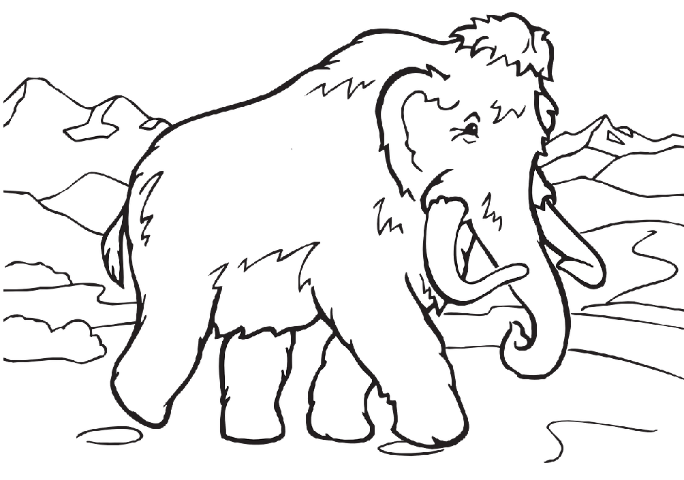
Severe population reduction reduces the gene pool

and increases the rate of genetic drift. Woolly mammoths became extinct. Elephants survived.

a)

Gene Pool

b)

Bottleneck Effect

c)

Founders Effect

d)

Gene Frequency