
NEW
Font size
 Worksheets
AP Govt Unit 2
Total questions: 63
Worksheet time: 33mins
In order to protect the new government, the founding fathers placed:
many representatives in Congress
many hurdles in the legislative process
many committees in the legislative process
many sections into bills
The legislative process starts with the:
debates over bills on the floor of Congress
creation of a bill in committee
drafting of the bill in the Senate
introduction of the bill in either the House or the Senate
A president can often encourage legislation by:
appealing to the public
working with congressional staff
appealing to committees
presenting an executive order
During the legislative process, collecting information about a bill is a job for:
congressional staff
enclaves
subcommittees
pollsters
After hearing from experts on a bill, committee members are given an opportunity to:
decide if they are going to vote
mark up a bill with their suggestions
debate on a bill
cross-examine experts
While discharge petitions are rarely successful, they can:
cause committees to pick new leaders
stop committees from tabling bills
force a committee to act on a bill
make Congress vote on the bill
Filibusters are used to delay a bill because a senator refuses to:
vote
participate in debate
stop talking
review the committee report
A _ is an action that can stop a filibuster and requires a three-fifths vote
unanimous consent agreement
discharge petition
cloture
termination
If a president decides to use the ____ power against a bill, it goes back to Congress
oversight
inaction
rejection
veto
A body of voters that are represented by members of Congress is a:
constituency
district
region
division
Apportionment is a term used when deciding:
constituency
population allocation
how many districts are needed
how many representatives a state needs
Gerrymandering is when:
district lines are redrawn for the benefit of a specific group of people or a special interest
districts are redrawn based on population sizes
populations are counted to determine how many representatives are needed for a district
district lines are redrawn and have unequal population sizes
Majority-minority districts were created in the hope of:
uniting multiple minority groups
electing more African American representatives
creating poor districts
highlighting minority issues
Partisan gerrymandering is an attempt by one party to:
consolidate the votes for another party
lessen the votes for another party
stop the votes for another party
waste the votes for another party
The Baker vs. Carr decision:
ended the practice of gerrymandering
established the separate but equal clause
ended the practice of drawing district lines by race
required the creation of districts with equal populations
The Supreme Court ruled in that districts drawn along racial lines were unconstitutional:
Plessy vs. Ferguson
Shaw vs. Reno
Marbury vs. Madison
McCulloch vs. Maryland
Most candidates work with to gain experience before running for Congress.
political parties
student governments
local governments
social circles
Which of the following best reflects the philosophy expressed in Thomas Hobbes' Leviathan that the framers eventually drew on to shape the government of the United States?
Without a social contract, man lives a life that is "nasty, brutish, and short."
The state exists only to serve the will of the people.
Political leaders are appointed by God and have divine right to rule.
"If men were angels, no government would be necessary."
The debates between the Federalists and Anti-Federalists were mainly focused on
rural vs. agrarian economic priority.
church vs. state authority.
state vs. federal taxation.
national vs. state supremacy.
Each state must recognize official documents and civil judgments rendered by the courts of other states due to
the necessary and proper clause.
the supremacy clause.
the full faith and credit clause.
the federal system.
Which amendment states "The powers not delegated to the United States by the Constitution, nor prohibited by it to the States, are reserved to the States respectively, or to the people"?
Second Amendment
Tenth Amendment
Thirteenth Amendment
Fifth Amendment
The Constitutional Convention sought to replace the Articles of Confederation because they
created a large central government
guaranteed a separation of powers
failed to provide for states' rights
did not have the ability to tax and provide for the common defense
14th Amendment
Equal Representation
Racial Gerrymandering
1993
New York Times v US
Mapp v Ohio
Baker v Carr
Shaw v Reno
14th Amendment
Equal Representation
1 person = 1 vote
1962
Tinker v Des Moines
Baker v Carr
Plessy v Ferguson
McDonald v Chicago
Which of the following statements about gerrymandering is true?
It has been banned by United States Supreme Court decisions starting with Baker v. Carr
It was used traditionally to maintain urban control of the House of Representatives.
It can be used by a political party to draw boundary lines to control as many districts as possible.
It guarantees greater constituency control over elected representatives.
The role Congress plays in ensuring that executive branch agencies are carrying out their legislated responsibilities is known as
judicial review
legislative oversight
executive privilege
bicameralism
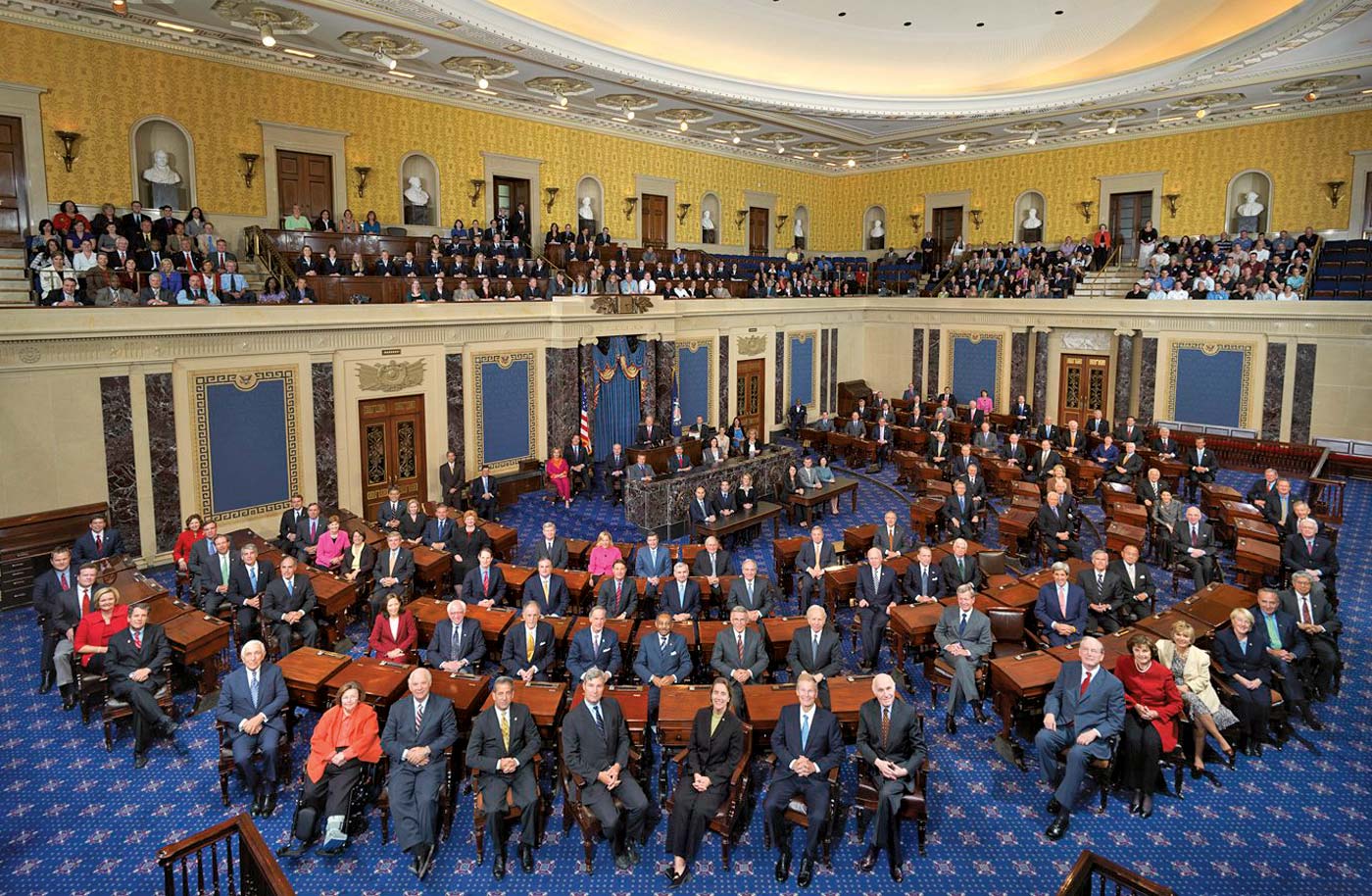
After a national census has been taken, changes in population distribution cause the changing of congressional seats among the states. This effect is commonly called
Congressional redistricitng
Apportionment
Gerrymandering
Repportionment
A system that shares power between the national government and the state government is a characteristic of:
the Articles of Confederation
the Constitution
a republic
federalism
Congress is granted the powers necessary to carrying out its enumerated abilities through:
the commerce clause
the implied powers clause.
the necessary and proper clause
the expressed or enumerated powers clause
The term "pork barrel" refers to legislation specifically designed to
encourage a balanced federal budget
distribute excess produce to the poor
equalize representation between farming and nonfarming states
provide funding for local projects that are intended to benefit constituents
Which of the following is the most likely consequence of divided government?
Reorganization of the federal bureaucracy
Conflicts between states
Delays in confirmation of federal court nominees
Conflicts between national government and states
Of the following, which is the most powerful figure in Congress?
The Chair of the House Ways and Means Committee
The Speaker of the House
The Majority Whip of the House
The Chair of the Senate Finance Committee
Most of work of legislating in Congress takes place in
joint committees
standing committees
select committees
conference committees
When a bill passes the House and the Senate in different versions, the bill is resolved by which of the following types of committee?
Conference
Select
Rules
Standing
The direct election of Senators was established with the
Addition of the Bill of Rights
The creation of the Articles of Confederation
Signing of the Constitution
The passing of the Seventeenth Amendment
How old do you have to be to run for President?
25
30
35
40
What article of the U.S. Constitution deals with the Executive Branch?
Article 1
Article 2
Article 3
Article 4
What president caused the 22nd amendment (2 term limits) to be passed?
Theodore Roosevelt
Franklin D. Roosevelt
John F. Kennedy
Woodrow Wilson
What article of the U.S. Constitution deals directly with the Legislative Branch?
Article 1
Article 2
Article 3
Article 4
How many members are in the House of Representatives?
100
335
435
535
How long is a Senator's term?
2 years
4 years
6 years
8 years
A Senator and Representative can run and serve as many times as they'd like to.
True
False
How many federal judges are there on the Supreme Court?
7
8
9
10
When a justice agrees with the outcome of a case but for a different reason, this is called a...
Majority opinion
Minority opinion
Concurring opinion
Dissenting opinion
The group opposed to the new Constitution and believed in strong state governments were known as:
Federalists
Antifederalists
Nationalists
Constitutionalists
Which statement BEST describes Federalist No. 51?
An essay in which John Jay argued that a Bill of Rights in the Constitution would prevent the government from trampling on the rights of people
An essay in which Alexander Hamilton argued that the economy under the Constitution would thrive with a stronger national government
An essay in which James Madison argued that tyranny will be prevented through separation of powers and federalism
An essay in which George Washington argued that anarchy would be the only option if the Constitution was not adopted
Jane is reading a Federalist Paper that describes the problem of factions and how the dangers of such groups can be mitigated with a large republic and a republican government. Which of the Federalist Papers is Jane reading?
Federalist No. 51
Federalist No. 12
Federalist No. 10
Federalist No. 63
Brutus No. 1 can be described as:
an Antifederalist Paper that advocated for the Articles of Confederation and outlined the strengths of the Articles
an Antifederalist Paper that urged readers to vote against the Constitution in the upcoming ratifying elections
an Antifederalist Paper that argued slavery was immoral and should be made illegal in a government that emphasizes liberty and human rights
an Antifederalist Paper that argued America was too large to be governed as a republic and the Constitution gave too much power to the national government
How is the Electoral College an example of the founders’ mistrust of pure democracy?
It keeps the wealthy and educated elites in control of the national government
It allows for the will of the people to be checked in the election of representatives
It prevents the president from being directly elected by American citizens
It establishes a way for people to influence elections and have their voices heard
"Friend of the Court"
Amicus Curiae
Appellate Jurisdiction
Attorney General
Binding Precedent
Some may agree with the majority and join that vote
but have reservations about the majority's legal reasoning
Class Action Suit
Common Law
Concurring Opinion
Defendant
When judges strike down laws or reverse public policy.
To remember this concept, think judges acting
to create the law
liberal
.judicial activism
judicial review
judicial self-restraint
He is the Chief Justice of the Supreme Court.
John Roberts
precedent
respondent
plea bargain
4 Judges of the nine justices agree to accept the case, the appeal is granted.
senatorial courtesy
rule of four
solicitor general
special legislative
courts
interprets the Constitution in its
original context
stare decisis
strict
constructionist
Supreme Court
U.S. Circuit Court of
Appeals
Chief Justice of the United States. Among the Warren Court's most important decisions was the ruling that made racial segregation in public schools unconstitutional.
U.S. District Courts
Earl Warren
Supreme Court
writ of certiorari

