wayground logo

Free Printable Worksheets

Font size

S
M
L
XL
Worksheets

Q3 Quarterly Review

Total questions: 97

Worksheet time: 1hrs 1mins

Name
Class
Date
1.

A firsthand account of an event that occurred. It can be in the forms of a photograph, diary, video recordings, documents, and speeches to name a few.

a)

Primary Source

b)

Secondary Source

2.

A source of information that is not a first-hand account. Examples are text books, magazine articles, encyclopedias, and biographies.

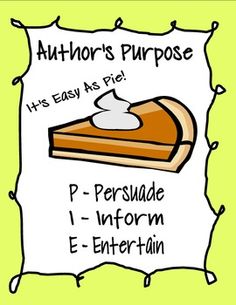
a)

Primary Source

b)

Secondary Source

3.

A documentary on PBS about WWII

a)

Primary

b)

Secondary

4.

The History Channel explaining what life was like for a slave

a)

Primary

b)

Secondary

5.
a)

Primary

b)

Secondary

6.
a)

Primary

b)

Secondary

7.

Neil Armstrong giving an interview about being the first man to walk on the moon

a)

Primary

b)

Secondary

8.

CE

a)

Before Christ

b)

Anno Domini

c)

Common Era

d)

Before the Common Era

9.

BCE

a)

Before Christ

b)

Common Era

c)

Anno Domini

d)

Before the Common Era

10.
A document or other record of past events created by someone who was present during the events or the time period in which they occurred.
a)
Secondary Source
b)
Primary Source
11.

Information created after an event by someone who did not experience the event firsthand are called...

a)

primary sources

b)

secondary sources

12.

Prejudice in favor of or against one thing, person or group compared with another, usually in a way considered to be unfair is known as ...

a)

bias

b)

collectivity

c)

point of view

d)

judgment

13.

Does the information relate to your topic or answer your question? This questions connects to...

a)

accuracy

b)

relevance

c)

authority

d)

purpose

14.

When you determine the author's purpose, which one is most trustworthy?

a)

An author trying to inform

b)

An author trying to persuade

c)

An author trying to sell something

d)

An author trying to entertain

15.

Why is it important to consider the author's bias?

a)

The author might not give you all the facts

b)

The author might not be qualified to write about the topic

c)

The author might be making a joke

d)

The author might be writing a blog post

16.

How do you make sure that you are getting accurate information?

a)

Only choose .org and .gov websites

b)

Avoid all news websites, since they are sensational

c)

Look at several sources on the same topic to make sure the information is the same

17.

Which of the following most nearly means the same as objective?

a)

Not alive, inanimate

b)

Having strong beliefs

c)

Trying to persuade

d)

Not biased, truthful

18.
I received a brochure from Disney World.  What would be the purpose of the brochure?
a)
Entertain with pictures of Mickey Mouse
b)
Inform me about Disney and entertain
c)
Inform me about Disney but also persuade me to take a trip there
d)
Inform me about Disney's attractions
19.
An expository essay on your best friend is written most likely to ?
a)
Inform readers about who and why they are your best friend
b)
Persuade readers to get a best friend
c)
Entertain the reader with a story about your best friend
d)
Express your feelings 
20.
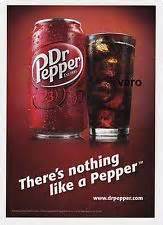
A commercial ad in a magazine purpose is to ?
a)
Persuade you to buy and drink more Dr. Pepper
b)
Inform you of all the ways Dr. Pepper is bad for you.
c)
Entertain you with a catch phrase.
d)
Express how delicious Dr. Pepper is 
21.
Define the Author's Purpose "to inform".  
a)
A reading passage that contains facts about a particular subject.
b)
A reading passage that has many descriptive details.
c)
A reading passage that is enjoyable to read, tells, a personal story, or teaches a lesson through the use of a story.
d)
A reading passage that contains many opinions or tries toc onvince readers to do something, buy something, or believe something.  
22.
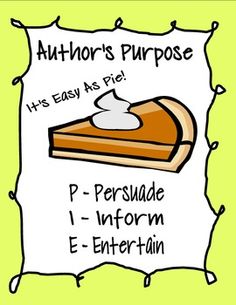
What are the three reasons for writing?  
a)
Persuade, Inform, Entertain
b)
Personal, Interview, Entertain
c)
Persuade, Irony, Entertain
d)
Personal, Inform, Evolve
23.
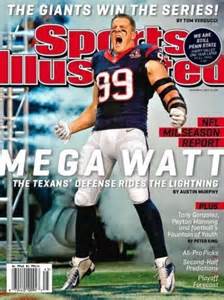
A magazine article about JJ Watt is most likely to 
a)
Entertain the reader with a funny interview
b)
Inform the reader about JJ Watt's professional career
c)
Persuade you to watch the Texans
d)
Express JJ Watt's feelings about football 
24.
What is the author's purpose for a biography ?
a)
Persuade the reader to change your opinion
b)
Inform the reader about an important person's life
c)
Entertain the reader with a story
d)
Express the author's opinion about the person's life
25.
Define the Author's Purpose "to persuade".  
a)
A reading passage that contains facts about a particular subject.
b)
A reading passage that has many descriptive details.
c)
A reading passage that is enjoyable to read, tells, a personal story, or teaches a lesson through the use of a story.
d)
A reading passage that contains many opinions or tries toc onvince readers to do something, buy something, or believe something.  
26.
Define the Author's Purpose "to entertain".  
a)
A reading passage that contains facts about a particular subject.
b)
A reading passage that has many descriptive details.
c)
A reading passage that is enjoyable to read, tells, a personal story, or teaches a lesson through the use of a story.
d)
A reading passage that contains many opinions or tries toc onvince readers to do something, buy something, or believe something.  
27.
Define the Author's Purpose "to inform".  
a)
A reading passage that contains facts about a particular subject.
b)
A reading passage that has many descriptive details.
c)
A reading passage that is enjoyable to read, tells, a personal story, or teaches a lesson through the use of a story.
d)
A reading passage that contains many opinions or tries toc onvince readers to do something, buy something, or believe something.  
28.
Driving west from Capital Park, turn left onto Maple Avenue. Continue for three blocks until you come to Trumbull Street, and then turn right. The library will be on your left.
a)
Persuade
b)

Entertain

c)

Instruct

d)
Inform
e)

Criticize

29.
Which of the following is NOT a claim?
a)
California is the best state in the USA.
b)
Twinkies taste better than other snack cakes because of their texture, their creamy filling, and their golden appearance.
c)
The school year began on August 18 and will end on June 4
d)
Christmas is the best holiday of the year.
30.

According to the American Health Association, peanut butter has 10 grams of protein per serving.

a)

Claim

b)

Evidence

31.
What does Reasoning mean?
a)
A solid and reasonable argument
b)
A written response to a claim
c)
An explanation that connects your evidence back to the claim
d)
An opinion you believe in 
32.
What is the best definition for claim? 
a)
A statement you believe to be false. 
b)
A statement you believe to be true. 
c)
Evidence that proves something right. 
33.

Evidence is facts that led you to make the ______________.

a)

claim

b)

reasoning

c)

evidence

d)

summary

34.

The reasoning explains why the evidence _____________ the claim.

a)

stops

b)

supports

c)

distracts

d)

removes

35.

Mansa Musa was from which country in Africa

a)

Mali

b)

Congo

c)

Madagascar

d)

I don't Know

36.

Musa was famous for making a pilgrimage to?

a)

Mali

b)

Mecca

c)

Miami

d)

None of these

37.

What does Musa have in common with Bill Gates and Warren Buffett and others in the article

a)

Wealthiest Man in History

b)

Famous historians

c)

None of these

38.

Musa's wealth was a result of the countries vast resources of?

a)

Salt

b)

Gold

c)

Copper

d)

Spices

39.

What city did Musa visit on his way to Mecca?

a)

Rome

b)

Egypt

c)

Cairo

d)

Calabasas

40.
Which continent is ancient Mali located on?
a)
Asia
b)
Africa
c)
North America
d)
South America
41.

How much money was Mansa Musa worth?

a)

40 billion

b)

400 million

c)

400 trillion

d)

400 billion

42.
What did Mansa Musa give away on his journey to Mecca?
a)
gold
b)
sliver
c)
salt
43.

the quality of being believable or trustworthy

a)

credibility

b)

fact

c)

evidence

d)

bias

44.

A statement that can be proved

a)

fact

b)

evidence

c)

reasoning

d)

subjective point of view

45.

the writer's position on an issue or problem, usually supported by evidence

a)

fact

b)

reasoning

c)

claim

d)

evidence

46.

a cause, explanation, or justification for an action or event.

a)

fact

b)

evidence

c)

claim

d)

reason

47.

proof, usually found directly in the text

a)

evidence

b)

opinion

c)

reasoning

d)

claim

48.

An original document containing the observations, ideas, and conclusions of an individual. It is a firsthand account presented by someone present or actively participating in the event. Examples include manuscripts, photographs, oral histories, and personal journals.

a)

Evidence

b)

Primary Source

c)

Objective point of view

d)

Secondary Source

49.

A secondhand account of an event or a retelling of another person's observations written by someone who did not witness or actually participate in the events. Includes sources that combine, synthesize, and or interpret information from primary sources. Examples include encyclopedias, textbooks, and reviews.

a)

Fact

b)

Primary Source

c)

Objective Point of View

d)

Secondary Source

50.

prejudice in favor of or against one thing, person, or group compared with another

a)

fact

b)

bias

c)

objective point of view

d)

evidence

51.

Google.com

a)

Credible source

b)

Not a credible source

c)

Not a Source

52.

Yahoo.com

a)

Credible

b)

Not a credible source

c)

Not a Source

53.

An educational database

a)

Credible source

b)

Not a credible source

54.

National Geographic for Kids

a)

Credible source

b)

Not a credible source

55.

A Facebook post

a)

Credible source

b)

Not a credible source

56.

The meaning of accuracy is:

a)

up to date and current

b)

related to archery

c)

truthful and correct in all details

d)

a person, book, website, etc., that gives information

57.

A website is biased when:

a)

it gives information about religious practices

b)

it is accurate and factual

c)

the author is a expert on the subject

d)

it shows prejudice toward one side of a subject or issue

58.

What does the word relevant mean when you are evaluating a source?

a)

Not a trustworthy source for research

b)

Something that is true and valid

c)

Up-to-date and accurate

d)

Related to the topic that is being researched.

59.
What does it mean to evaluate something?
a)
read it 
b)
share it
c)
think critically about it
d)
learn it
60.
Inform means...
a)
Give informal speech
b)
Give information
c)
Take the form
d)
Give in a form
61.
Newspaper articles are used for...  
a)
Persuading
b)
Entertaining
c)
Informing
62.
If the author is trying to make you laugh his/her purpose is...
a)
To Entertain 
b)
To Persuade 
c)
To Explain
d)
To Inform
63.

To determine how credible a source is, it is important to know who the author is

a)

True

b)

False

64.

A website is biased when:

a)

doesn't tell the whole story

b)

is trying to convince you to take a side

c)

it contains opinion instead of fact and is prejudiced and not impartial

d)

all of the above

65.

An attitude that favors some ideas or people over others.

a)

accuracy

b)

bias

c)

credibility

d)

verify

66.

When using a website as a source, you want to use a website who's purpose is to...

a)

Persuade you

b)

Sell you something

c)

Share an idea

d)

Inform you

67.

1. Why is it important to evaluate the credibility of sources?

a)

Credible sources will provide the support to produce high quality and convincing arguments

b)

It's only important if the source is current

c)

Everything you read online is always true

68.

What should be considered when evaluating the author of a source?

a)

The author's credentials (experience in the field or at an university)

b)

If the author has written about the topic somewhere else

c)

The types of organizations, research-based in which the author may be associated

d)

All of the above

69.

3. What should be considered when evaluating the credibility of print sources?

a)

If the cover looks academic and well written

b)

Who published the source

c)

If there is more than one author

70.

Reviewing the domain (.edu, .gov, .org, .com) of a digital source does not impact whether or not it is credible.

a)

True

b)

False

71.

Does it matter if a source is current (up-to-date) or not?

a)

No, every source is important

b)

No, the publishing date does not interfere with credibility

c)

Yes, with some exceptions based on the content that is written

d)

None of the above

72.

A website should be all opinion based in order to be reliable.

a)

True

b)

False

73.
This type of map shows physical features of the land, including valleys, canyons, plains, and mountains.
a)
Political
b)
Physical
c)
Time Zones
d)
Map Key
74.
 A __________ is used to identify the direction of north, south, east, and west.
a)
Compass Rose
b)
Map Scale
c)
Latitude Lines
d)
Longitude Lines
75.
The __________ directions are north, east, south, and west.
a)
cardinal
b)
intermediate
c)
map
d)
most imprtant
76.
 This type of map shows governmental boundaries of countries, states, and/or counties.  It sometimes includes cities, roads, and significant bodies of water.
a)
Physical
b)
Political
c)
Product
d)
Map
77.
 A __________ is used to identify what the symbols on the map stand for.  The meaning of the symbol may be explained using this.
a)
Physical Map
b)
Map Key
c)
Compass Rose
d)
Map
78.
The red question mark is located to the _________ of the compass rose.
a)
North 
b)
South
c)
East
d)
West
79.
 The red question mark is located to the _________ of the compass rose.
a)
Northeast
b)
Southeast
c)
Northwest
d)
North
80.
 The red question mark is located to the _________ of the compass rose.
a)
Southwest
b)
Southeast
c)
South
d)
West
81.
The red question mark is located to the _________ of the compass rose.
a)
North
b)
Northeast
c)
Northwest
d)
East
82.
The red question mark is located to the _________ of the compass rose.
a)
North
b)
South
c)
Southeast
d)
Southwest
83.
How many continents are there?
a)
4
b)
1
c)
5
d)
7
84.
Which of the following is NOT a continent?
a)
Africa
b)
North America
c)
Germany
d)
Europe
85.
What is the map element that tells what symbols on the map mean?
a)
Key/Compass
b)
Key/Legend
c)
Legend/Scale
d)
Inset/Scale
86.
Which continent is located at letter "A"?
a)
Antarctica
b)
Africa
c)
Australia
d)
Asia
87.
Which continent is located at letter "B"?
a)
North America
b)
South America
c)
Central America
d)
African America
88.
Which continent is located at letter "C"?
a)
North America
b)
South America
c)
Central America
d)
African America
89.
Which continent is located at letter "D"?
a)
Asia
b)
Africa
c)
Europe
d)
Australia
90.
Which continent is located at letter "E"?
a)
Africa
b)
Asia
c)
Australia
d)
Antarctica
Antarctica
91.
Which continent is located at letter "F"?
a)
Asia
b)
Africa
c)
Australia
d)
Antarctica
92.
Which continent is located at letter "G"?
a)
Asia
b)
Africa
c)
Australia
d)
Antarctica
93.

What is the name of the ocean labeled with a letter A?

a)

Indian Ocean

b)

Arctic Ocean

c)

Atlantic Ocean

d)

Pacific Ocean

94.

What is the name of the ocean labeled with a letter B?

a)

Arctic Ocean

b)

Southern Ocean

c)

Indian Ocean

d)

Atlantic Ocean

95.

What is the name of the ocean labeled with a letter C?

a)

Pacific Ocean

b)

Indian Ocean

c)

Arctic Ocean

d)

Atlantic Ocean

96.

What is the name of the ocean labeled with a letter D?

a)

Atlantic Ocean

b)

Indian Ocean

c)

Pacific Ocean

d)

Southern Ocean

97.

What is the name of the ocean labeled with a letter E?

a)

Indian Ocean

b)

Arctic Ocean

c)

Southern Ocean

d)

Pacific Ocean