wayground logo

Free Printable Worksheets

NEW

Font size

S
M
L
XL
Worksheets

Mollusks and Worms

Total questions: 31

Worksheet time: 19mins
Name
Class
Date
1.
Which part of the Mollusk body is specialized for burrowing, feeding, and movement?
a)
trochophores
b)
visceral mass
c)
mantle
d)
foot
2.
Which part of the Mollusk body is the tissue covering the body and secretes the shell?
a)
Mantle
b)
Trochophore
c)
Foot
d)
Visceral Mass
3.

Which part of the Mollusk body contains most of the organs?

a)

Foot

b)

Visceral Mass

c)

Trochophore

d)

Mantle

4.
Which class of Mollusks have the most advanced nervous system?
a)
Gastropods
b)
Bivalves
c)
Cephalopods
d)
arthropods
5.

Which of the following is the organ used by many Mollusks for excretion?

a)

gills

b)

nephridia

c)

mantle

d)

visceral mass

6.
Which of the following is the correct description of the body cavity of Mollusks?
a)
They are  protostome acoelomates
b)
They are protostome coelomates
c)
They are deuterostome coelomates
d)
They are protostome pseudocoelomates
7.

Which class of Mollusks have many species that are somewhat sedentary?

a)

Gastropods

b)

Bivalves

c)

Cephalopods

d)

arthropods

8.
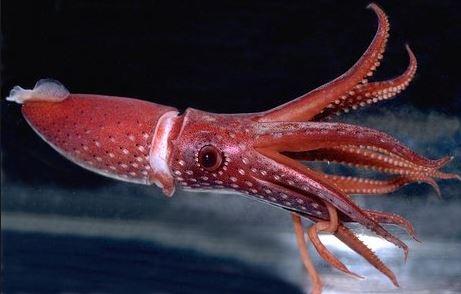
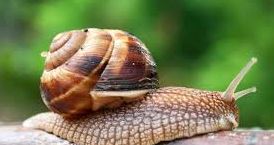
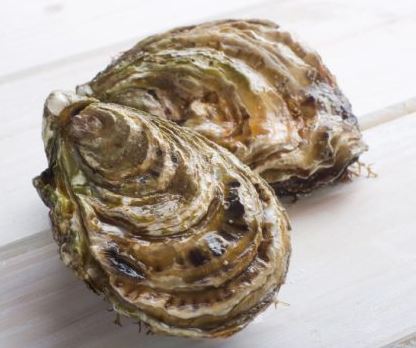
What Mollusk group does the picture belong to?
a)
Gastropod
b)
Bivalve
c)
Cephalopod
9.
What Mollusk group does the picture belong to?
a)
Gastropod
b)
Bivalve
c)
Cephalopod
10.
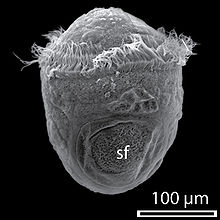
The mollusk larval stage of development is called the
a)
coelomate
b)
trochopore
c)
radula
d)
cephalopod
11.

Which part of the mollusk contains the heart, digestive and reproductive organs?

a)

radula

b)

head-foot

c)

coelom

d)

trochopore

12.
Organs that are in contact with blood supply and specialized for gas exchange
a)
trochopore
b)
radulas
c)
bivalves
d)
gills
13.

Mollusk's tongue-like strip covered with teeth that point backward is called the ____ Note: clams have labial palps but not this structure.

a)

trochopore

b)

radula

c)

gills

d)

visceral mass

14.
Which of the following is the correct description of reproduction in Mollusks?
a)
Mostly asexual
b)
Budding
c)
Regeneration
d)
Mostly sexual
15.
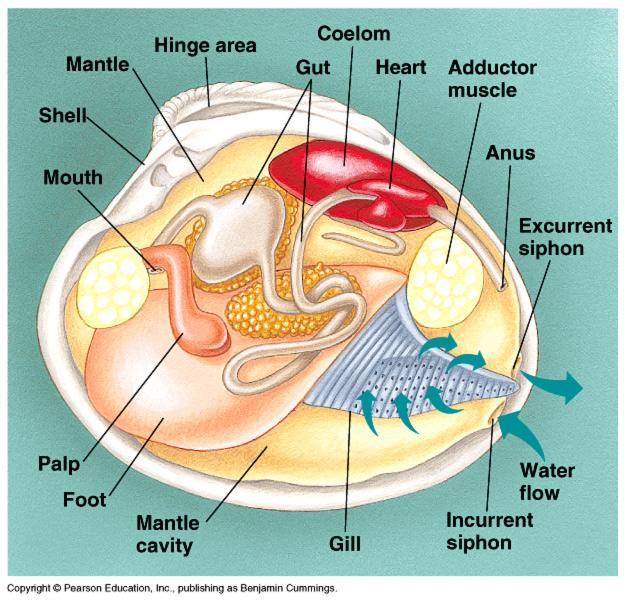
Which group of Mollusks does the picture belong to?
a)
Gastropod
b)
Bivalve
c)
Cephalopod
16.
# 16 Points to what feature?
a)
excurrent siphon
b)
incurrent siphon
c)
intestines
d)
foot
17.
Which phylum of worms has a bilateral symmetry, one-way digestive system, respiration through skin, hydrostatic skeleton and segmented body?
a)
Annelida
b)
Platyhelminthes
c)
Nemotoda
d)
Nemertea
18.
Annelida means:
a)
"pore bearing"
b)
"little rings"
c)
"soft body"
d)
"earth worm"
19.
A stiff hair, bristle or bristle like process or part on an organism
a)
Ganglia
b)
Setae
c)
Parapodia
d)
Nephridia
20.
Which structure is NOT associated with digestion?
a)
Gizzard
b)
pharynx
c)
nephridia
d)
crop
21.
Which of the following is a thickened segment of the earthworm’s body is used in reproduction?
a)
Septa
b)
Setae
c)
Clitellium
d)
Ganglia
22.
If present, which type of skeleton is found in worms?
a)
Longitudinal
b)
Circular
c)
Exoskeleton
d)
Hydrostatic
23.

Which of the following is a structure related to excretion in worms?

a)

Ganglia

b)

Gizzard

c)

Nephridia

d)

Crop

24.
Which phylum of worms are pseudoceolomates?
a)
Platyhelminthes
b)
Nematoda
c)
Annelida
25.
Which phylum includes hookworms, pinworms, and heart worms?
a)
Platyhelminthes
b)
Nematoda
c)
Annelida
26.

Which of the following is the evolutionary advancement found in annelids but NOT in any Mollusks?

a)

Three germ layers

b)

A complete digestive system

c)

Cephalization

d)

Segmentation

27.
Heartworm
a)
Phylum Platyhelminthes
b)
Phylum Nematoda
c)
Phylum Annelida
28.
Most complex worm Phylum
a)
Phylum Platyhelminthes
b)
Phylum Nematoda
c)
Phylum Annelida
29.
Which worm is a member of the clade ecdysozoa?
a)
Roundworm
b)
Flatworms
c)
Segmented worms 
d)
Bookworms
30.
The photo (of a slide) shows the cross section of a roundworm.  It shows a cuticle, which must be shed to grow.  This is characteristics of __.
a)
Protostomes
b)
Lophotrochozoa
c)
Ecdysozoa
d)
Baterlia 
31.

Annelids and mollusks are both members of the ___ clade.

a)

Deuterostome

b)

Lophotrochozoa

c)

Ecdysozoa

d)

Cnidaria