
Font size
 Worksheets
Visual/trich situations-WebXam Prep
Total questions: 26
Worksheet time: 17mins

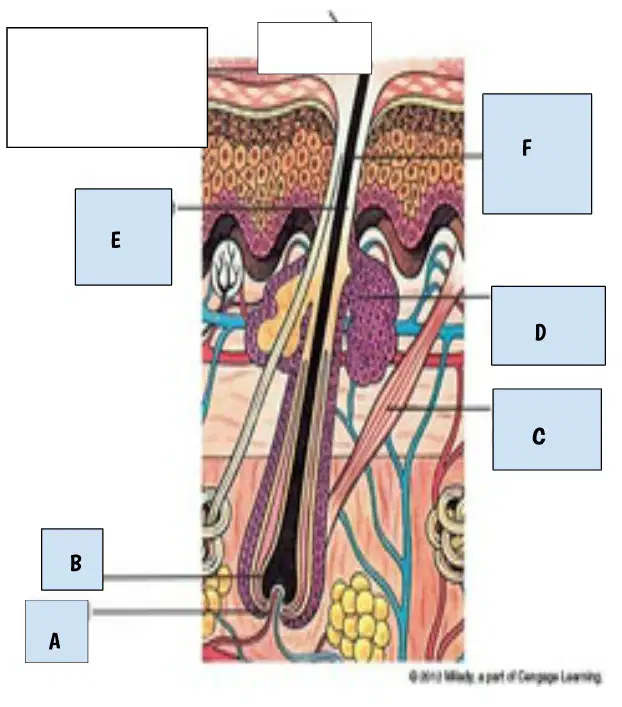
What does the "A" represent in this picture?
Cuticle
sweat gland
dermal papilla
hair bulb
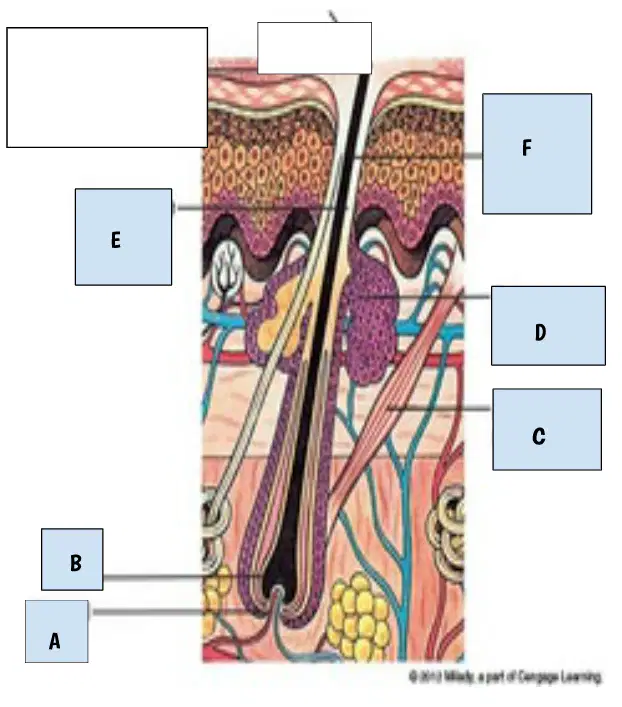
What does the "B" represent in this picture?
dermal papilla
hair root
hair bulb
hair shaft
What does the "C" represent in this picture?
arrector pili muscle
Sebaceous gland
suderiferous gland
arrector gland

What does the "D" represent?
Hair root
suderiferous gland
sebaceous gland
arrector pili muscle
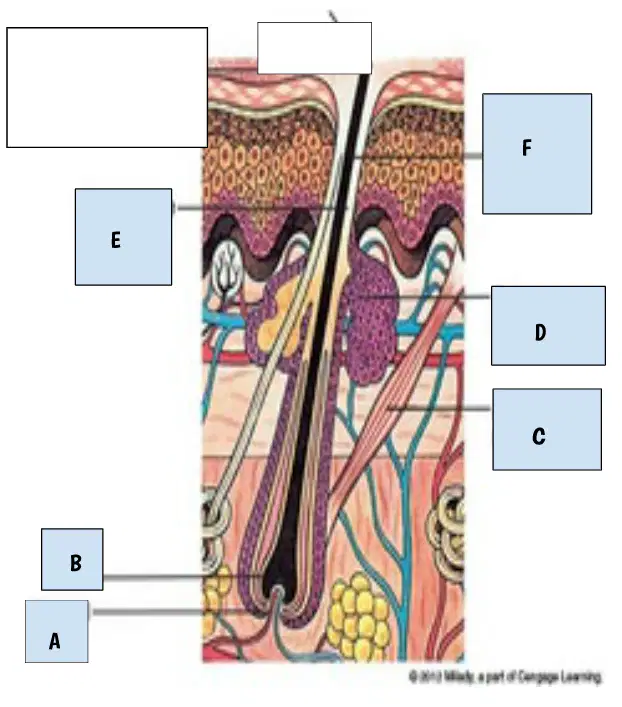
What does the "E" represent ?
hair root
hair tube
hair shaft
hair follicle
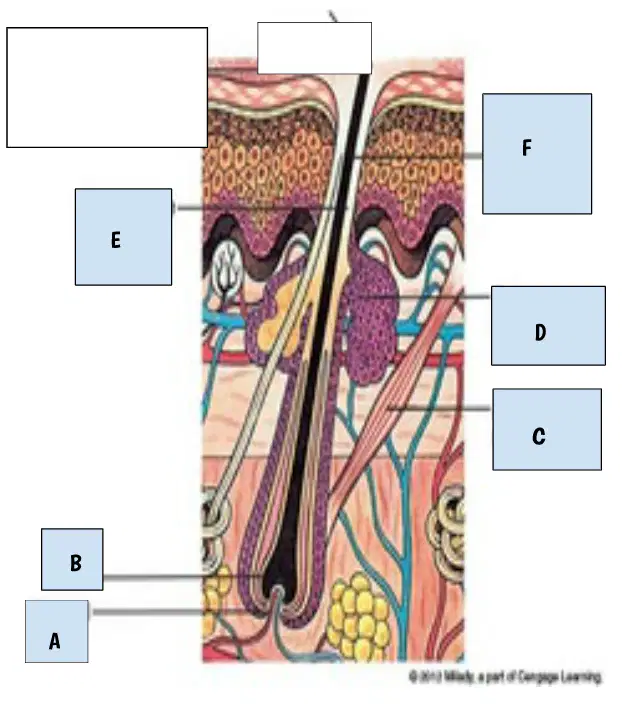
What does the "F" represent?
hair srand
hair shaft
hair root
Dermis
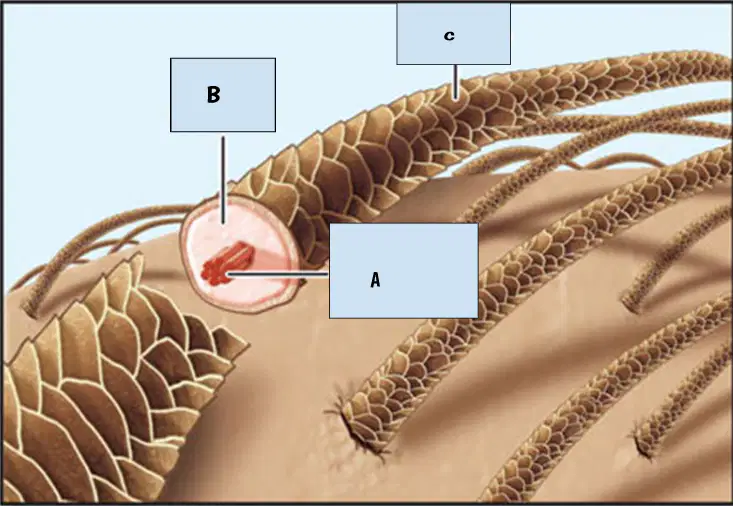
What does the "A" represent?
cuticle
cortex
medulla
hair root

What does the "B" represent?
*HINT*This is where melanin is found!
cortex
medulla
matrix
cuticle
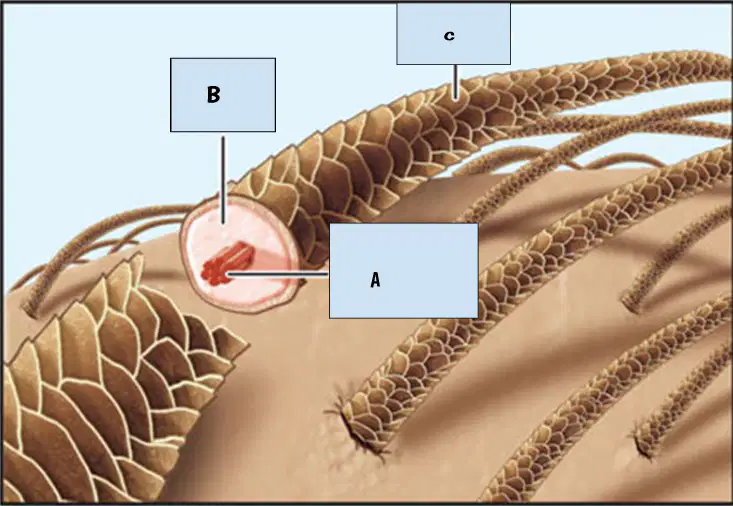
What does the "C" represent?
cortex
capillary
medulla
cuticle

What pathogenic bacteria does the "A" represent?
Staphylococci
cocci
Streptococci
diplococci

What pathogenic bacteria does the "B" represent?
diplococci
Streptococci
cocci
staphylococci
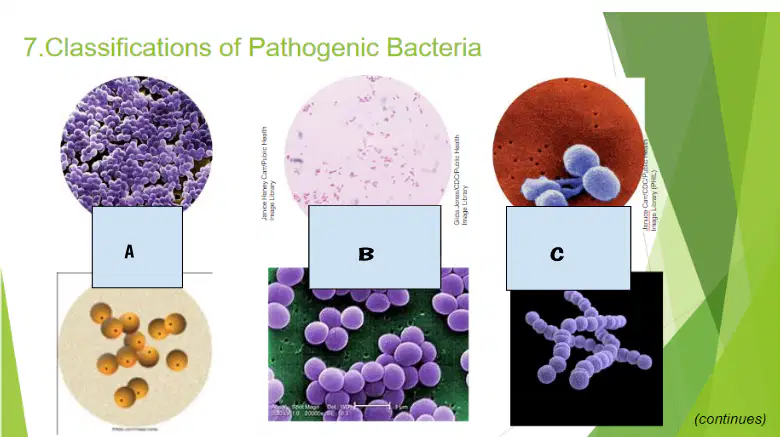
What pathogenic bacteria does the "C" represent?
cocci
streptococci
diplococci
staphylococci
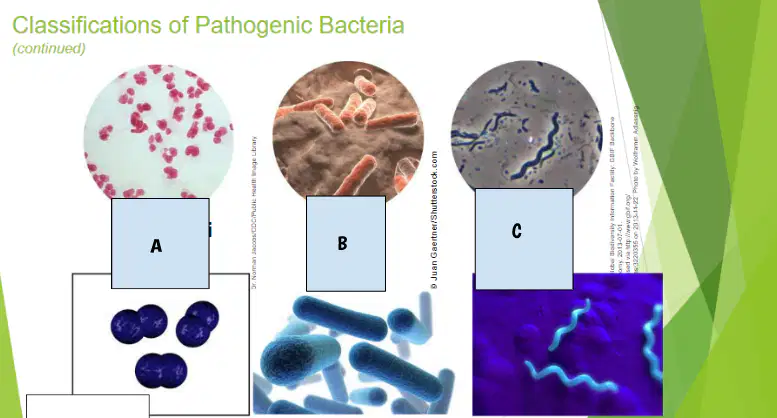
What pathogenic bacteria does the "A" represent?
cocci
bacilli
Diplococci
streptococci

What pathogenic bacteria does the "B" represent?
cortex
cocci
diplococci
Bacilli

What pathogenic bacteria does the "C" represent
Spirilla
Helix
Cocci
Bacilli
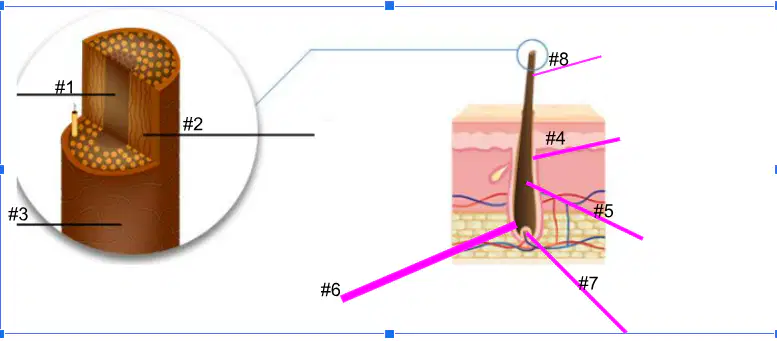
What is #8 pointing to? (a)
Drag & drop the term to match the line it's pointing to.
Hair shaft
hair root
hair follicle
medulla
cuticle
cortex
hair bulb
arrector pili
Mrs. Brand is a very loyal client of the Hearts Salon. She colors & perms her naturally blond hair & makes a weekly visit to the salon for a wet set & comb out. On her most recent visit, Jean her regular stylist, notices that Mrs. Brand's hair is very dry& rough looking.
When Mrs. Brand has her hair colored or permed, the chemical solution is formulated to first raise and swell which layer to gain access to the inner structure.
follicle
cuticle
cortex
medulla
Mrs. Brand is a very loyal client of the Hearts Salon. She colors & perms her naturally blond hair & makes a weekly visit to the salon for a wet set & comb out. On her most recent visit, Jean her regular stylist, notices that Mrs. Brand's hair is very dry& rough looking.
If Mrs. Brand's hair looks & feels dry & rough, it is most likely a result of:
contracting of the cuticle layer of the hair
too much swelling of the hair's cortex
contracting of the hair's cortex
too much swelling of the cuticle layer.
Mrs. Brand is a very loyal client of the Hearts Salon. She colors & perms her naturally blond hair & makes a weekly visit to the salon for a wet set & comb out. On her most recent visit, Jean her regular stylist, notices that Mrs. Brand's hair is very dry& rough looking.
In order for her permanent haircolor to actually change the hair's color, which layer of Mrs. Brand's hair must be affected?
follicle
cuticle
cortex
medulla
Mrs. Brand is a very loyal client of the Hearts Salon. She colors & perms her naturally blond hair & makes a weekly visit to the salon for a wet set & comb out. On her most recent visit, Jean her regular stylist, notices that Mrs. Brand's hair is very dry& rough looking.
Based on the information you have on Mrs. Brand, it is very likely that her hair is missing a:
follicle
cuticle
cortex
medulla
Mrs. Brand is a very loyal client of the Hearts Salon. She colors & perms her naturally blond hair & makes a weekly visit to the salon for a wet set & comb out. On her most recent visit, Jean her regular stylist, notices that Mrs. Brand's hair is very dry& rough looking.
The appearance of Mrs. Brand's hair indicates that:
the medulla has never been opened
the cortex is completely closed
the cuticle has been opened many times
the follicle is completely absent
Mrs. Brand is a very loyal client of the Hearts Salon. She colors & perms her naturally blond hair & makes a weekly visit to the salon for a wet set & comb out. On her most recent visit, Jean her regular stylist, notices that Mrs. Brand's hair is very dry& rough looking.
Mrs. Brand's hair is made up of approximately _______percent protein.
19
73
90
100
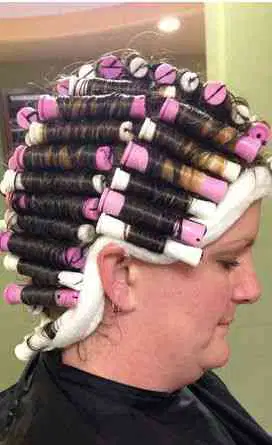
Mrs. Brand is a very loyal client of the Hearts Salon. She colors & perms her naturally blond hair & makes a weekly visit to the salon for a wet set & comb out. On her most recent visit, Jean her regular stylist, notices that Mrs. Brand's hair is very dry& rough looking.
When Mrs. Brand's hair undergoes the procedure pictured, the strong chemical side bonds that are broken are called:
protein bonds
hydrogen bonds
salt bonds
disulfide bonds
Mrs. Brand is a very loyal client of the Hearts Salon. She colors & perms her naturally blond hair & makes a weekly visit to the salon for a wet set & comb out. On her most recent visit, Jean her regular stylist, notices that Mrs. Brand's hair is very dry& rough looking.
When Mrs. Brand's hair is wet, the bonds that are broken are called:
protein bonds
hydrogen bonds
salt bonds
disulfide bonds
Mrs. Brand is a very loyal client of the Hearts Salon. She colors & perms her naturally blond hair & makes a weekly visit to the salon for a wet set & comb out. On her most recent visit, Jean her regular stylist, notices that Mrs. Brand's hair is very dry& rough looking.
Mrs. Brand's natural hair color is a result of the _____ in her hair's cortex.
keratin
eumelanin
pheomelanin
peptides

