
NEW
Font size
 Worksheets
Unit-9 Maintaining Motors and Generators
Total questions: 52
Worksheet time: 26mins
Affect the casing and electrical connections of a DC Motor, which of these is true.
The exposure to explosive, abrasive or conducting dust.
The supply current to the motor
The level of operating hours only
When the servicing maybe required
Which device takes an electrical input and produces a mechanical output.
Transformer
Rotary Synchronous Actuator
AC Generator
Motor
Which one is a valid weekly inspection that would be recommended for maintenance on generators.
General Inspection of Electrical Connections
Drain and top up any Coolant.
Lubrication of the stator windings
Changing any fuel filters
Which of these is a genuine type of rotor construction used in AC motors.
Permanent magnetic motor
Shunted wound rotor.
An Insulated Stator
Squirrel Cage Rotor
What generator develops its charge generated from the tribo electric effect as an option.
Brushless Generator
Stepper motor
PMDC Generator
Electrostatic Generator
The motor converts ____energy to_______ energy.
Electrical Energy to Mechanical Energy
Mechanical to Electrical
Light to mechanical
Mechanical to sound
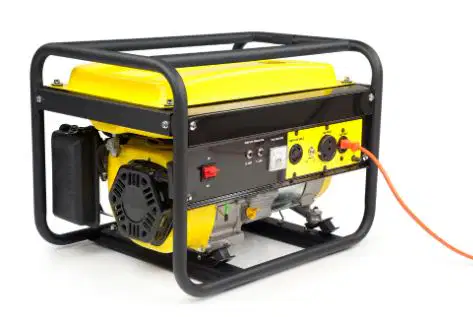
The generator converts ____energy to_______ energy.
Electrical to Mechanical
Mechanical to electrical
Mechanical sound
Electrical to light
What type of device used in an electrical fan
Generator
Motor
Alternator
Carburetor
In consideration of Torque and power of DC motors, ARMATURE torque is proportional to
Distance of each conductor from the center of the axis
Iron losses and supply voltage
The friction loss of the bearings and the commutator
The material of the pole pieces
When comparing three phase induction motors to single phase motors, which statement is true.
The efficiency of a single-phase motor is greater.
A powerful motor, a smaller frame than a single-phase motor
3-Phase motors have lower torque
A brushed motor requires less maintenance.
Which 3 phase motor uses, a moving conductor in a magnetic field, create electric current flow.
PMDC
A shunt wound synchronous three phase motor.
A series-wound motor
An Induction motors.
What is the most common ferrous material used for DC motor brushes
Carbon
Sintered lead lined glass
High grade Aluminum or Silver
Laminated Iron
Which one of the following is a true advantage of an AC Generator.
DC is hard to obtain by rectifiers.
Poor power to weight ratio
AC voltages can't be stepped down.
Better power to weight ratio
Which of these is an advantage of a Permanent Magnetic DC motor.
Speed control is difficult to keep efficient.
No input power consumes for excitation it improves efficiency.
The poles may permanently demagnetize.
No field coil, for extra armature windings to be fitted.
Spacing of the three phases in a three-phase motor, what is the distance apart of each phase.
180 degrees
90 degrees
60 degrees
120 degrees
Which 3 phase motor is suited to high precision devices due to its self-excitation and rotation
Squirrel Caged Three phase induction motor.
Synchronous only - Three phase motor.
Three phase generators
Series and Shunt Wound direct current motor.
Which mode of a 3 Phase Induction motor, when the component runs above the synchronous speed.
Continuous mode
Generating Mode
Motoring mode
Breaking Mode
Which kind of actuator uses a drive action moving back and forth on a longitudinal axis to enable operation without human assistance?
Rotary Stepper Motor
Ambient passive LED
Linear Actuator
Single Action with spring action return Solenoid
What are the two types of motors that come under the category of a Rotary Actuator.
Shunt Wound and Compound Motor
Servomotor and a single series shunt motor
Stepper and Servo Motor
AC induction and synchro motors
Which three components are commonly found with the Stator Assembly of a DC motor.
Pole pieces, Brush gear, and Field windings
Iron Core, Commutator and Poles
Drive Shaft, Pole face and Pieces
Yoke, Commutator, Armature
Which form of DC motor, where a high starting torque is required and variable speed.
Series Wound Motor
Shunt Wound Motor
Brushless PMDC motor
Compound Motor
As well as adjusting the power supply for speed control, which of these are correct parameters that effect Torque and Power?
The net output power & work done.
Number of field poles & the rotational speed of armature rpm
The supply voltage & frequency
Armature and yoke construction
When examining the speed control of an Induction motor, which methods is the cheapest and easiest.
Change of armature windings
Changing the no. of stator poles
Changing the applied voltage
Constant voltage/frequency ctrl
It is the rotating part of the dc motor.
Armature
Frame
Stator
Rotor.
Magnetic lines of force are also called…………………………
Flux
Poles
Magnetic field
Magnets
The brush in the motor is made of………………
Carbon
Iron
Gold
Silver
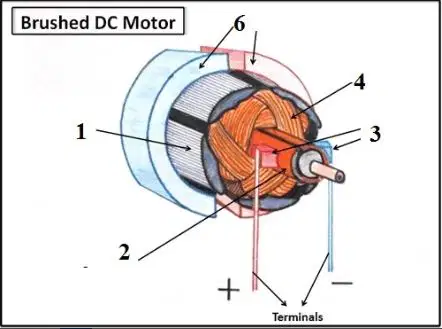
Which parts indicates the No. 6?
Rotor magnets
Stator Magnets
Armature winding
Pole pieces
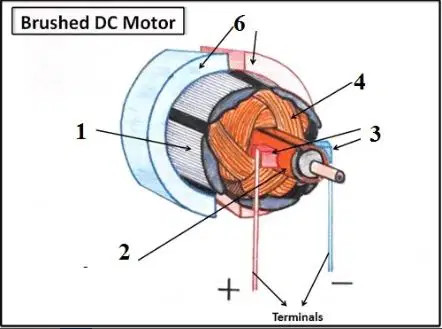
The Part no.1 indicates
Rotor magnets
winding
armature
Brushes
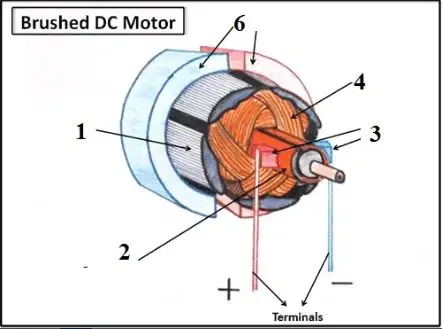
The No.2 indicates which part of the motor?
Armature
Poles
Stator
Commutator
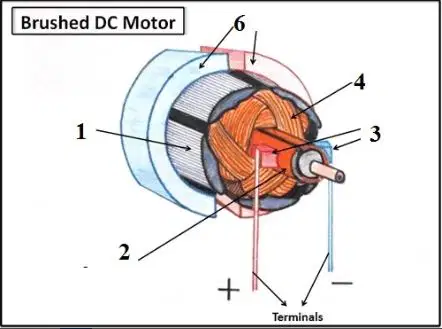
What is the name of part no.3?
Armature
Stator
Poles
Brushes
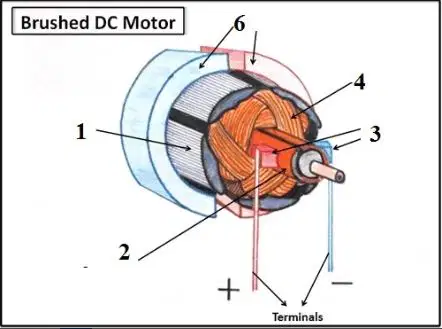
Part no. 4 indicates that
Windings
Stator
Rotor
Brushes
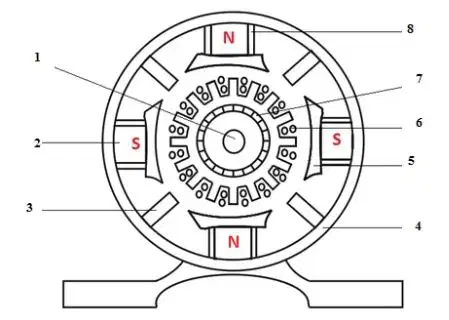
What are the part no. 2 and part no.5
shaft and frame
Commutator and armature
windings and brushes
Pole core and pole shoe
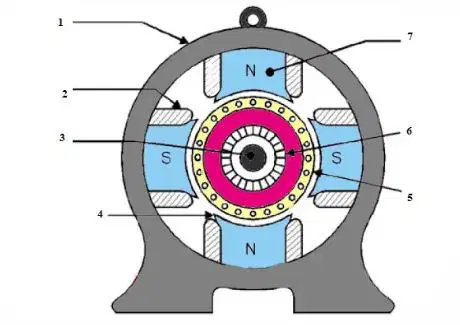
What is the name of part no. 1?
Armature
Stator
Rotor
Frame or yoke
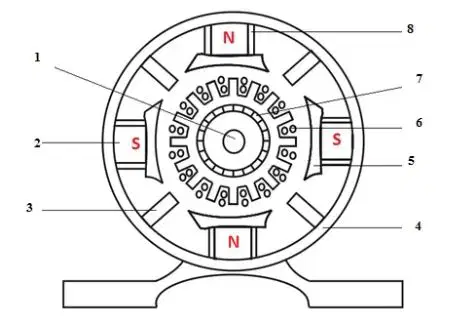
What is the part no. 3?
Interpole
Pole shoe
pole core
Brushes
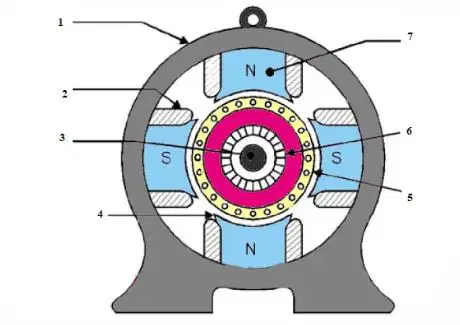
What is the name of part no. 3?
Rotor
Shaft
Stator
Commutator
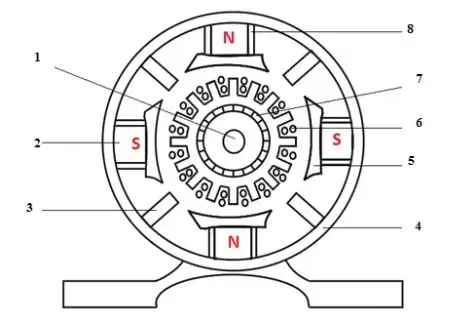
What is the part no. 7 indicates?
Stator
Commutator
Armature
Rotor
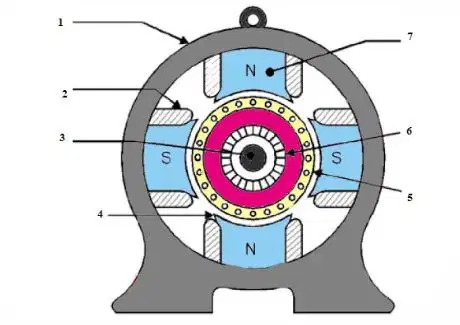
What is the name of part no. 5?
Commutator
Yoke
Shaft
Armature conductor
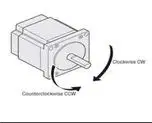
The single-phase motor can be reversed by interchanging
The supply terminals
AC to Dc supply
The terminals of main or auxiliary winding
Brushes
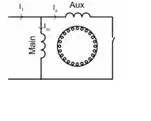
Identify the type of single-phase induction motor shown.
Capacitor start motor
Capacitor run motor
Split phase motor
Capacitor start and capacitor run motor
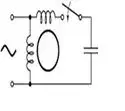
What is the type of the motor shown?
Split phase motor
Capacitor start motor
Universal motor
Shaded pole motor
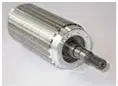
What is the name of the rotating part of a single-phase induction motor?
Field winding
Centrifugal switch
Stator
Rotor
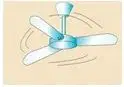
What is the type of motor that can be used in ceiling fans?
Capacitor run motor
Split phase motor
Universal motor
Shaded pole motor
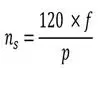
Speed of single-phase induction motor can be controlled by changing the _.
Frequency
Number of poles
Applied terminal Voltage.
All the above
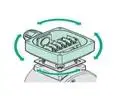
What is the name of the motor part assembly shown in the figure?
Protective (earth wire)
Terminal box
Capacitor case
Starting winding wire
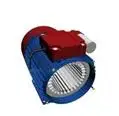
The stationary part of a single-phase induction motor is called ……………………
Rotor
Stator
Centrifugal Switch
Capacitor
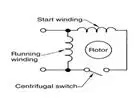
Which part of a single-phase induction motor is disconnected after motor reaches 75%of its speed?
Running winding
Starting winding
Rotor
Stator
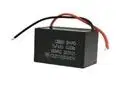
What is the name of the figure shown?
Capacitor
Main winding
Auxiliary winding
Centrifugal switch
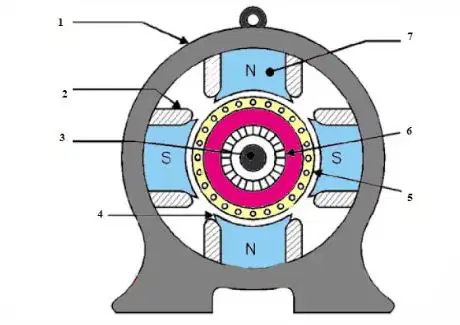
What is the name of part no. 2 and No 7
Pole shoe and pole winding
Armature
commutator
Field winding and field pole
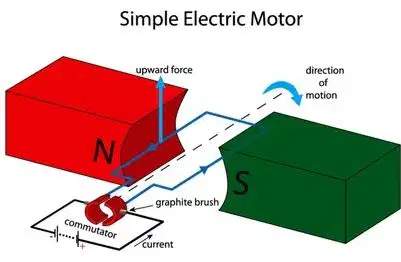
What is the input and output of a motor?
voltage and motion
voltage and voice
voltage and light
current and sound
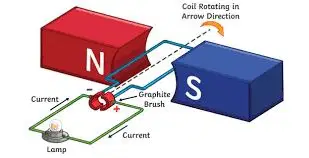
What is the input and output of a Generator?
voltage and Current
Motion and current
voltage and light
current and sound
What does this definition refer to " The minimum torque developed when accelerating from rest to the breakdown torque point"
Locked rotor torque (or also known as starting or breakaway torque)
The combination of the breakdown torque in relation to the slip speed developed at the rated load
Pull-Up torque
Rated Load Torque
What is the correct RPM with a supply frequency of 50Hz for an AC generator with 2 poles.
3000
600
1200
unlimited

