
 Worksheets
G8 Jazz Unit Theory Assessment
Total questions: 30
Worksheet time: 30mins
Choose the word to fill the gap: Jazz is unique ________ music art.
African
European
South American
American
The roots of Jazz are coming from...
China
Africa/Europe
America
South America
What is one of the most important elements of jazz?
Improvisation
Dancing
Singing
Violin performance
Name the city where Jazz was born?
New York
New Hampshire
New Orleans
New England

Name the musician - Jazz Legend (hint: coming from New Orleans Jazz period)
Scott Joplin
Duke Ellington
Louis Armstrong
Neil Armstrong
Name the first stage of jazz development. Louis Armstrong was the biggest name.
Bebop
New Orleans
Modern
New England

The "Father of Blues" ...
John Coltrane
W.C.Handy
Theolinus Monk
Duke Ellington
Ragtime is just one of many Jazz styles.
FALSE
TRUE
One of the most complex jazz styles.
Swing
Bebop
Blues
Rock
When I want to express my emotions, I will play ________ Jazz.
Bebop Jazz
Blues Jazz
Swing Jazz
Contemporary Jazz
Jazz style of late 20th Century and today. Fusion of many different music styles and jazz.
Swing Jazz
Contemporary (modern) Jazz
Blues Jazz
New York Jazz
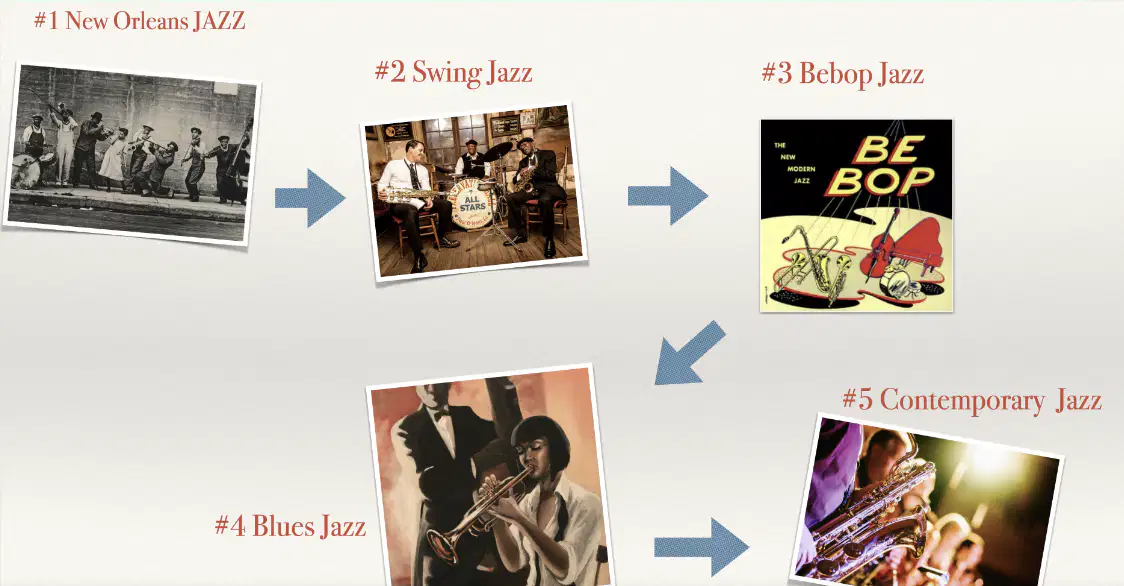
Which style of music emerged before New Orleans jazz?
Heavy Metal
Smooth Jazz
Ragtime and Blues
Coffee Shop Jazz
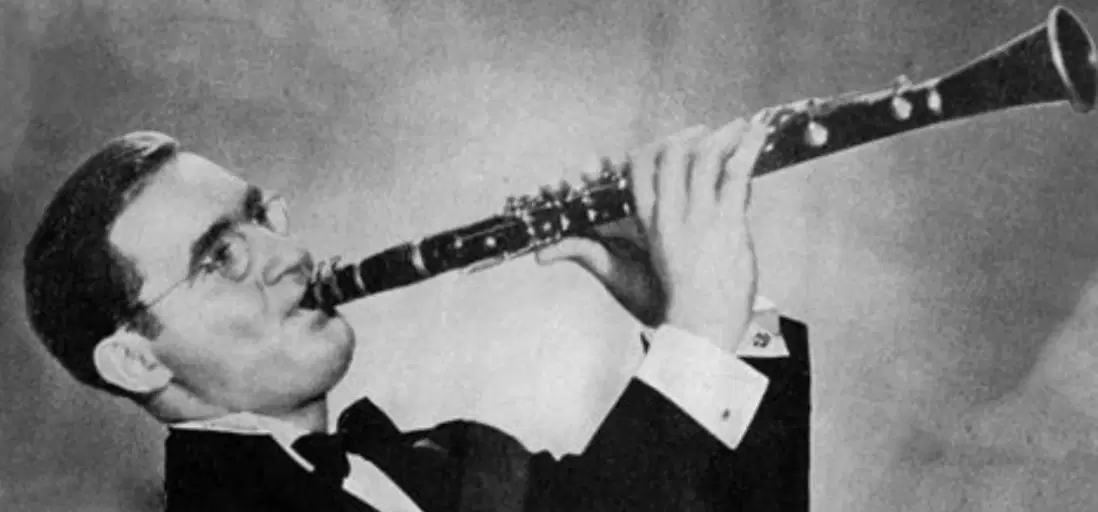
Name the musician. Also known as the King of Swing.
Duke Ellington
Louis Armstrong
Scot Joplin
Benny Goodman
Who composed 'The Entertainer' & 'Maple Leaf Rag'?
Duke Ellington
Scot Joplin
Louis Armstrong
Dizzie Gylespie
One of the biggest musicians coming from Ragtime was Scott Joplin.
TRUE
FALSE
Ragtime emerged around the ___ and ___ rivers. (fill the gap)
Amazon/Yellow
Danube/Sava
Mississippi/Missouri
Missouri/Niagara

Jazz and blues developed first in which part of America?
East coast
West coast
South
North
What is music improvisation?
Complicated harmony
Only playing piano
Composing music on the spot and freedom of expressio
Playing slow tempo
If you want to be a Jazz musician, you do not have to know the technique of improvisation.
TRUE
FALSE
Jazz scales and harmony are _______. (fill the gap)
Super Simple
Same as European Classical Music
Based only on pentatonic scale
Super Complex based on many different scales
Blues = Jazz
True
False
Both true and false, depends how you observe the relation
What was the main purpose of the early blues?
Used for parties
Used in a church
To send a specific message through narrative
Playing at home for fun
First main split in the development of Blues (select two types)
Urban & Chicago
Country & Chicago
Urban & Country
Chicago & New Orleans
In the 1950s, blues crossed the Atlantic Ocean and started developing in the UK (British blues).
FALSE
TRUE
Which instrument was mainly used in Ragtime music?
Violin
Piano
Drumset
Trumpet

Name this instrument
(a)
What kind of rhythm was specific for Ragtime music?
Fast
Slow
Regular
Syncopated
Time signatures of 6/8 and 2/16 were common in ragtime music.
FALSE
TRUE

Which device was used to record the first blues song in 1912?
Windows PC
iPhone 1
Gramophone
Tape recorder
One of the main features of ragtime music is a stable rhythmic movement in the left hand, somewhat like a drum beat. What is the special name of this ragtime feature played on the piano?
(a)

