
 Worksheets
1920's and 30's
Total questions: 59
Worksheet time: 1hrs 3mins
What industry expanded as a result of the assembly line?
Automobiles
Banking
Textiles
Agriculture
What term was used to describe the new women of the 20s?
Consumerism
Flappers
Prohibition
Bootleggers
The ________________________ was a rebirth in African American Art, intellectualism, and literature.
The Great Migration
The Harlem Renaissance
Prohibition
Consumerism
Which of the following was NOT true about the flappers of the 1920s?
They received the same pay as men for the same type of work.
They were young and independent women.
They wore more makeup than older women.
They often smoked and drank in public.
Speakeasy
A woman who rebelled against traditional views
The nickname for the growing market
An illegal bar that welcomed men and women
The Rebirth of African American culture
A mobster who ran the bootlegging empire of Chicago?
Al Capone
John D. Scopes
Mitchell Palmer
John Dillinger
Why did the economy experience a "boom" after WWI?
African Americans were moving back to the farms to grow cotton and soybeans
Consumers were preparing for a war and needed to bring extra supplies
New technologies and consumer goods were being developed and people wanted to buy them
Foreign trade grew after WWI
Which one of these events happened during the 1920's?
The Spanish-American War
The bombing of the USS Maine
Prohibition made playing cards in public illegal
Women won the right to vote
What was a immediate effect of the radio?
help with finances
mobility for the working class
improved access to information
helped women get away from traditional roles
The Harlem Renaissance was a movement of African American artists who
Worked in the South
Calling for segregation
Urged African Americans to leave the country
Exploring their heritage and encouraging African Americans to be prideful of black culture.

The Great Migration of African Americans to the North during the 1920s was mainly the result of…
Political corruption
Nativism
Racism and discrimination of African Americans in the South
Success of military desegregation
What was one effect of the Harlem Renaissance?
Prohibition ended for African Americans
African-American cultural pride flourished in the cities
The formation of multiracial corporations
Unemployment

Poet that wrote about the struggles African Americans faced in the United States. Most famous poem is "Dreams."
Langston Hughes
Jacob Lawrence
F. Scott Fitzgerald
John Steinbeck
Why was the decade of the 1920s referred to as the "Roaring 20s"?
Because there was a big wildfire that roared through California
Because the Ringling Bros. circus was started and their lions roared a lot
Because the sound of airplanes fighting in WWI roared in the skies of America
Because the economy was "roaring" after WWI and Americans were able to afford more luxuries (movies, cars, radios, etc)
The 1920's slang term for an old broken down car.
jalopy
wreck
heap
junker
The 1920's term "bee's knees" means.
shaky knees
something really neat or cool
out of style
someone's sweetheart


Which of these was a famous children's character created in the 1920s?
Mickey Mouse
Trolls
Spiderman
Teenage Mutant Ninja Turtles
An aviator ____________.
pilots hot air balloons
pilots airplanes
drives racecars
races horses
The National Origins Act of 1924 _______________.
forbid new immigrants from entering America
forbid immigration from Mexico
put quotas on immigration from certain countries
increased immigration from Europe
__________ was a famous baseball player for the New York Yankees in the 1920's.
Hank Aaron
Mickey Mantel
Babe Ruth
Joe Jackson
Famous dance in the 1920's that was performed in clubs.
The Griddy
The Floss
The Charleston
The Renegade
Who was George Gershwin?
The composer of Rhapsody in Blue
The leading actor in the movie The Jazz Singer
A famous horse jockey
A gangster in the 1920's
In what area were farmers in the dustbowl affected.
South
Northeast
Midwest
West
When did the wall street crash.
1937
1929
1936
1927

When was FDR first elected president
1928
1930
1932
1936

What was the name of FDR's wife
Elaine
Ellen
Edith
Eleanor

What are the three R's of the New Deal
Relief, Recovery, Reform
Random Reptiles Rolling
Reputation, Refutation, Reformulation
Ready the Republic for Roosevelt

Which New Deal program was in charge of regulating the stock market?
SEC
Social Security
EBRA
FDIC
During the Great Depression, ______.
many Americans lost their jobs
many Americans had little money
many farmers lost their land to drought
a, b, and c
Why was life more difficult for farmers during the Dust Bowl?
Their crops were dying because of the dust
Animals had no grass to eat
Had little access to water.
All of the above

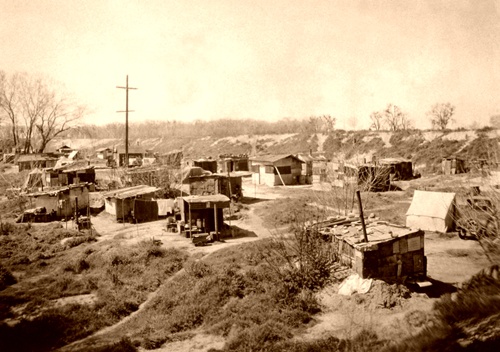
Homeless people built shacks towns out of any materials they could find. These were known as...
Hoover flags
Hoovervilles
Hover tenements
Where could people go to get free or reduced-price food?
Restaurants, right before closing
City Hall
Schools
Soup Kitchens
How many terms was he Roosevelt President?
1
2
3
4
What disease did Franklin Roosevelt have?
Sickle Cell
Polio
Covid -19
Flu
Someone who is homeless in the 1920's would have been referred to as a ____.
urchin
haughty
hobo
droll
Many homeless people in the 1930's decided to ___________.
Live in Hoovervilles
hop trains
beg for money
all of these
What are hobo hieroglyphics?
a type of food that hobos ate
Warnings on trains
secret signs for hobos
street signs in Hoovervilles
A program that provided food for low income people.
AAA
Welfare
CCC
fireside chats
During the Great Depression, many homeless people received food from ___________.
bread lines
soup kitchens
grocery stores
both bread lines and soup kitchens

