
 Worksheets
Test #6 Review 2023
Total questions: 50
Worksheet time: 2hrs 47mins
Ra, Be, Ca, Rb, H
potassium
rubidium
francium
cesium
the energy required to add an electron to a specific atom
how much energy it takes to remove an electron from an atom
the energy required to shield the outer electrons from the nucleus
a measure of the ability of an atom to attract electrons

Which of these isoelectronic species has the smallest radius?
Br-
Sr2+
Rb+
Se2-
They are all the same size because they have the same number of electrons.
Which of the following elements has the greatest attraction for electrons in a covalent bond?
Ge
As
Se
Br
Bi
Two pairs of electrons are shared in a(n)
single bond.
double bond.
triple bond.
unshared pair.
a bond between a metal and a nonmetal where electrons are exchanged.
a bond between a metal and a nonmetal where electrons are shared.
a bond between two nonmetals where electrons are exchanged.
a bond between two nonmetals where electrons are shared.

A
B
C
D
How many valence electrons can be used in the Lewis structure for NO3- ?
23
20
18
24

Option A.
Option B.
Option C.
Option D.
30 electrons
32 electrons
28 electrons
34 electrons

This could be the Lewis structure for...
Mg
Cl
C
O
What is the correct Lewis structure for NH3?


Which is the correct Lewis structure for carbon dioxide?


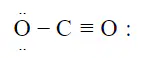

Why is this Lewis Structure incorrect? Select all that apply.
Hydrogen has too many valence electrons.
Nitrogen is breaking the octet rule.
Carbon has too many bonds around it.
Hydrogen needs more electrons.

Why is this Lewis Structure incorrect? Choose all that apply.
Silicon is breaking the octet rule.
There should only be single bonds in this Lewis structure.
The chlorine atoms are breaking the octet rule .
Silicon has too many unshared pairs.

How many grams of K2Cr2O7, are soluble in 100 g of water at 95 ºC?
83 grams
75 grams
40 grams
12 grams


When 40 grams of KNO3 is dissolved in 200 grams of water at 80 ºC, the solution can be correctly described as:
supersaturated
saturated
unsaturated
How many grams of CaCl2, are soluble in 50 g of water at approximately 17 ºC?
58 grams
70 grams
35 grams
12 grams
List the types of IMFs in order from strongest to weakest .
Hydrogen Bond, London Dispersion, Dipole-dipole
London Dispersion, Dipole-dipole,
Hydrogen Bond
Hydrogen Bond, Dipole-dipole, London Dispersion
Dipole-dipole, Hydrogen Bond, London Dispersion
A strong intermolecular force increases
boiling point.
solubility.
flammability.
malleability.

What is the strongest type of IMF that this molecule will have?
London Dispersion
Dipole-dipole
Hydrogen Bond

What is the strongest type of IMF that this molecule will have?
London Dispersion
Dipole-dipole
Hydrogen Bond

What is the strongest type of IMF that this molecule will have?
London Dispersion
Dipole-dipole
Hydrogen Bond
Which of these would evaporate the fastest?
methanol (CH3OH)
ethanol (C2H5OH)
propanol (C3H7OH)
butanol (C4H9OH)
What molecular geometry would PH3 have?
trigonal pyramidal
trigonal planar
bent
tetrahedral
What molecular shape of NH4+?
linear
trigonal planar
tetrahedral
trigonal pyramidal

Is this molecule polar or non-polar?
Polar
Non-polar

This molecule is drawn with ___ partial charges because ___ is more electronegative.
correct; fluorine
correct; hydrogen
incorrect; fluorine
incorrect; hydrogen
Which diagram shows the bond with the correct dipole arrows and partial charge
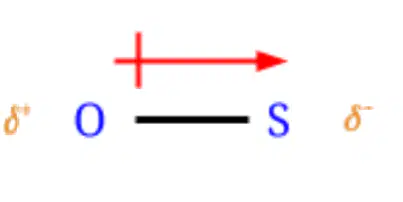


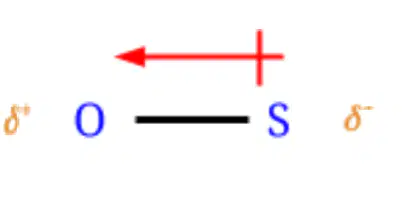
A diatomic molecule like O2 is always _____ because electrons are shared _____
nonpolar; unequally
polar; equally
nonpolar; equally
polar; unequally
Solubility is often measured as the grams of solute per 100 g or mL of ____.
concentration
dissolving
solvent
solution
If you want to dissolve more oxygen gas in liquid water, you can
increase the temperature.
decrease the temperature.
either increase or decrease the temperature.
do nothing.
How does soap dissolve both water and grease? (choose all that apply)
the nonpolar end of soap attracts to water
the polar end of soap attracts to water
the nonpolar end of soap attracts to grease
the polar end of soap attracts to grease
Which of the following substances would mix easily with oil? (Check all that apply!)
hexane (C6H14)
pentane (C5H12)
water
iodine

