
 Worksheets
TCI Lesson 2 Early Hominins Quiz
Total questions: 17
Worksheet time: 9mins
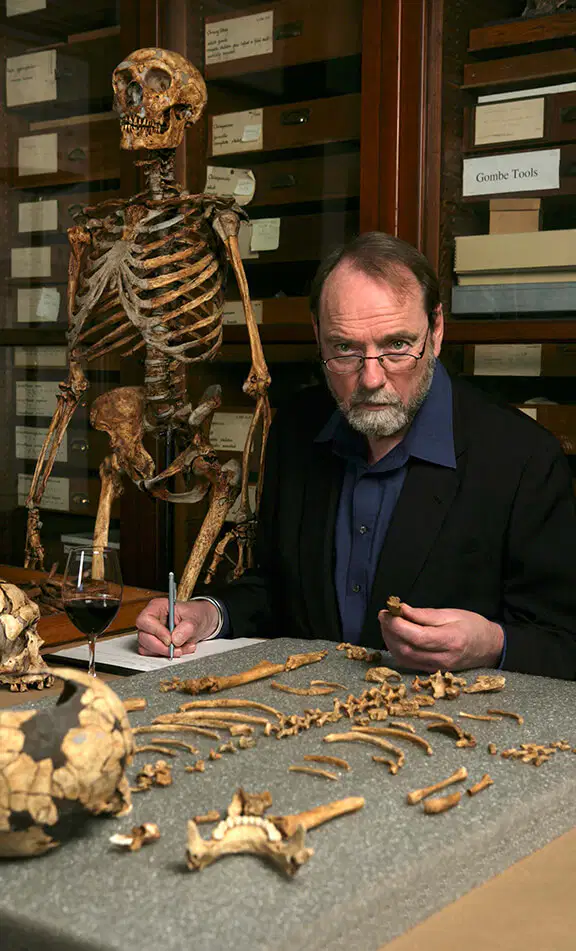
A paleoanthropologist specializes in the study of
kings and queens of the earliest modern humans.
development and culture of the earliest hominins.
communication and social systems of early apes.
trade and barter systems among modern humans.
What statement about Homo Habilis (Handy Man) describes a capability that helped their group survive?
They knew how to make tools.
They came before Neanderthals.
They lived 50,000 years ago.
They could not walk on two feet.
Which of these helped Homo habilis survive against animal attacks?
building shelters
burying their dead
using bows and arrows
living together in groups
Homo habilis (Handy Man) is known for being
the biped.
the toolmaker.
the language user.
the cave painter.
The bones of a number of hominins were found in one location. Using this evidence, scientists concluded that this type of hominin probably
made tools.
died in wars.
had language.
lived in groups.
What trait made Homo erectus well suited for traveling?
short, stocky build
ridge above the eyes
long, strong leg bones
round, smooth foreheads
Homo erectus was the first hominin to use
fire.
hands.
fish hooks.
stone tools.
Large brains helped Homo neanderthalensis survive, giving them the ability to
run much faster.
bend farther forward.
design better tools.
plant crops for food.
At Neanderthal sites, evidence from burial mounds, showing signs that people cared for the sick and injured, has led scientists to believe that Neanderthals had
creative minds.
a complex religion.
a desire to make art.
a sense of community.
What advantage over previous hominin groups did the invention of the spear thrower give to early modern humans?
to cook animals for food
to injure animals with knives
to kill animals from a distance
to hunt animals in organized groups
Who made cave paintings, carvings, and musical instruments?
Homo erectus
Homo sapiens
Homo habilis
Homo neanderthalensis
Archaeologists believe early hominins came from which continent?
ASIA
AFRICA
EUROPE
NORTH AMERICA
How many different Hominin groups have scientists found evidence(bones) for?
10
4
6
5
What was the Homo Habilis group known for?
Using small tools
well developed arrows for hunting
Migrating to Asia
What was the nick name for Homo Erectus?
Handy Man
Upright Man
Hungry Man
Neanderthals had burial sites, showing that they cared so therefore scientist believe that they had
a sense of community
love to make art
did not like each other
were creative
Early human cave art was more than likely created for which reason(s):
To depict hunting scenes
As an example of evening entertainment
For possible religious reasons
All of these are possible

