
NEW
Font size
 Worksheets
SCIENCE 9 - TEST II
Total questions: 20
Worksheet time: 10mins
What is the difference between climate and weather?
Climate averages the weather conditions in a specific place over a long period of time, while weather describes the state of the atmosphere at a specific moment in time.
Weather averages the weather conditions in a specific place over a long period of time, while Climate describes the state of the atmosphere at a specific moment in time.
Climate describes the weather conditions at night, while weather describes the conditions during the daytime.
There is not a difference between climate and weather.
What is the climate of the top of a mountain like as compared to the bottom of the mountain?
warmer
cooler
drier
wetter
What is the weather conditions in an area over a long period of time?
climate
temperature
elevation
precipitation
Which sentence best describes how latitude and temperature are related?
LOWER latitude = COLDER air temperature
HIGHER latitude = COLDER air temperature
HIGHER latitude = WARMER temperatures
What is the height of an area above sea level?
elevation
topography
latitude
longitude
What is the measure of distance in degrees north and south from the equator?
latitude
longitude
elevation
topography
Which BEST describes why latitudes closest to the equator have warmer climates?
they are at lower elevations
they receive more solar energy
they are nearer to ocean currents
they get more winds that carry energy in the form of heat
Which of the following is NOT a factor influencing climate?
Altitude
Latitude
Longitude
Ocean Current

Which of the following is TRUE about latitude?
Places located at high latitude receives less sunlight than places at low latitude.
Places located at high latitude receives greater sunlight than places at low latitude.
Places located at low latitude receives less sunlight than places at high latitude.
Places in each latitude receives equal amount of sunlight

Why large bodies of water affect climate?
Water heats up and cools more slowly than land.
Water heats up and cools faster than land.
Water and land cool at the same time
Water and land heat at the same rate

What happens to the temperature of air when altitude increases?
Decreases
Increases
Remains the same
Varies
Ocean currents flow in different direction, how does ocean current flow in northern hemisphere?
Downward
Clockwise
Counterclockwise
Upward
What does NOT directly affect the Earth's climate?
Winds
Distance from sea
Plate tectonics
Earth's revolution
The sun rays strikes the Earth's surface the strongest at...
NORTH POLE
SOUTH POLE
EQUATOR
it is the same everywhere
What are the major climate zones?
tundra, desert, mediterranean
grasslands, mountains, rainforest
polar, temperate, tropical
Fill in the blank: The higher the altitude, the ______ the temperature.
Warmer
Colder

What is the name of the line at zero degrees longitude?
Equator
International Dateline
Prime Meridian
Prime Meridine
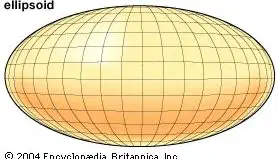
What shape is the planet Earth?
Sphere
Oblate Spheroid
Circle
Cylindrical
The condition of the atmosphere at a particular place and time is _______.
Air temperature
Precipitation
Weather
Humidity
Meteorologists study weather patterns to predict weather.
TRUE
FALSE

