
NEW
Font size
 Worksheets
Quiz: Cell Cycle
Total questions: 20
Worksheet time: 2hrs 40mins
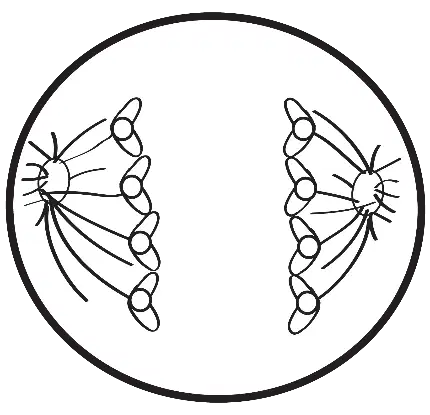
Examine the following picture of the cell. What phase is the cell in? (click to enlarge)
Prophase
Metaphase
Anaphase
Telophase
During which phase of the cell cycle does most cell growth occur?
cytokinesis
interphase
metaphase
prophase
Why must DNA replication have to occur before a cell can divide by mitosis?
a. So the two new cells have the same amount of chromosomes as the parent cell
to cause one of the cells produced to have a double the number of chromoomes as the parent cell
to allow crossing over to occur in each of the cells produced
to cause all of the cells produced to have half the number of chromosomes as the parent cell
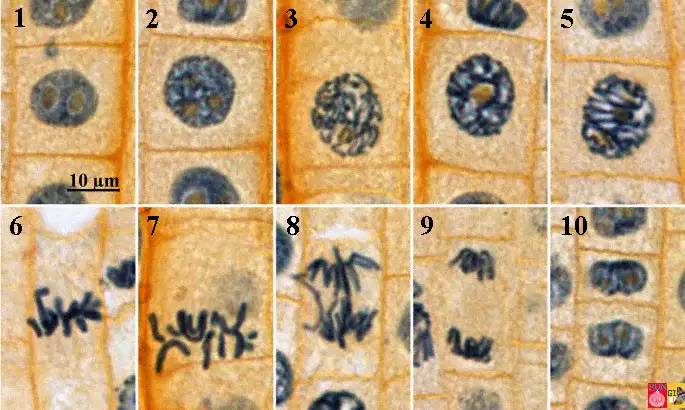
What phase of mitosis is the onion root cell number six in? (click the picture to zoom in)
Prophase
Metaphase
Anaphase
Telophase
How do some chemicals increase a person's risk of getting cancer?
Damages genes that control cell cycle regulation
by causing a vitmain D deficiency
by increasing toxins in the skin
by causing a decrease in immune response
What would MOST LIKELY be produced when a cell with 8 chromosomes undergoes mitosis?
Two cells with four chromosomes each
Two cells with eight chromosomes each
Which of these explain why cells do cell division? (Read ALL Answer choices!)
Growth
Repair
Asexual Reproduction
ALL of these are correct
While in the womb, the webbed fingers of the embryo undergo programmed cell death, also known as
cytokinesis
apoptosis
interphase
DNA replication
One difference between a cancel cell and a normal cell is that
Cancer cells divide uncontrollably
Cancer cells cannot make copies of DNA
Normal cells divide uncontrollably
Normal cells cannot make copies of DNA
If a parent cell has 8 chromosomes, how many chromosomes will EACH of its daughter cells have after cytokinesis?
4
6
8
16
Why is it important for cells of multicellular organisms to undergo mitosis?
Mitosis allows for reproduction with male and female gametes.
Mitosis increases variation within an organism
Mitosis produces cells that are different from the original dividing cell
Mitosis produces cells that are identical to the original dividing cell
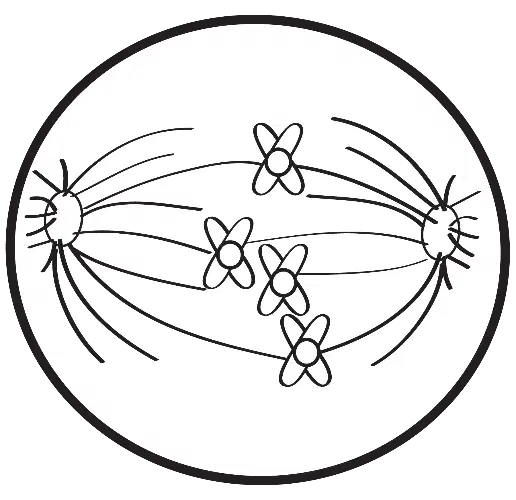
Examine the following picture ofa cell. Which of the following descriptions BEST describes what is taking place here?
The cell is undergoing DNA replication
The nuclear membrane has disintegrated and the spindle fibers are attaching to the sister chromatids
The chromosomes are linked up on the metaphase plate
The sister chromatids are being pulled by the spindle fibers towards opposite poles of the cell
Which of the following shows the correct sequence of the cell cycle?
C-> M-> G1 -> S -> G2
S-> G1 -> G2 -> M -> C
G1 -> S -> G2 -> M -> C
G1-> G2-> M-> S-> C
Substances known to produce or promote cancer are called__________.
carcinogens
kinases
cyclins
growth factors

What term best describes the two halves of the item in the illustration?
centrioles
cells
spindle fibers
sister chromatids
Which of the following statements is NOT true concerning the cell cycle?
There are checkpoints that regulate the cell processes
DNA replication takes place in the S phase of interphase
During prophase, the chromosomes are pulled to opposite poles of the cell
During cytokinesis, the cell membrane and cytoplasm begins to pinch in half
Which is NOT a phase in interphase?
G1
G2
G3
S
The accumulation of abnormal cells to form a mass of tissue is referred to as a _______
gamete
apoptosis
tumor
cell plate
A cell that has a specialized function is known as a ______ cell
differentiated
stem
In what form is DNA in during interphase, when it is loose and uncondensed?
chromatin
chromosome
spindle fiber
centrosome

