
 Worksheets
Art Movements
Total questions: 85
Worksheet time: 43mins
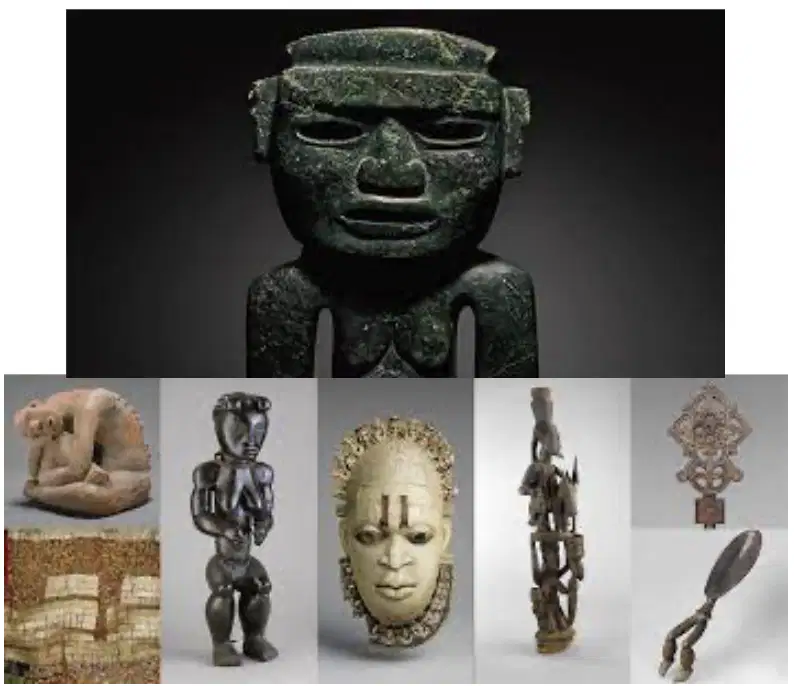
human figures
sculptures
youthful characteristics
religious purposes
masks
african
asian
middle eastern
aboriginal
landscapes/spiritual ideas vs. real subjects
mandalas
man's understanding of natural forces
subjects moral character
inspirational themes (NO war, violence, death, nudes)
full of symbolism (Dragon-emperor, pine tree- endurance)
african
asian
middle eastern
aboriginal
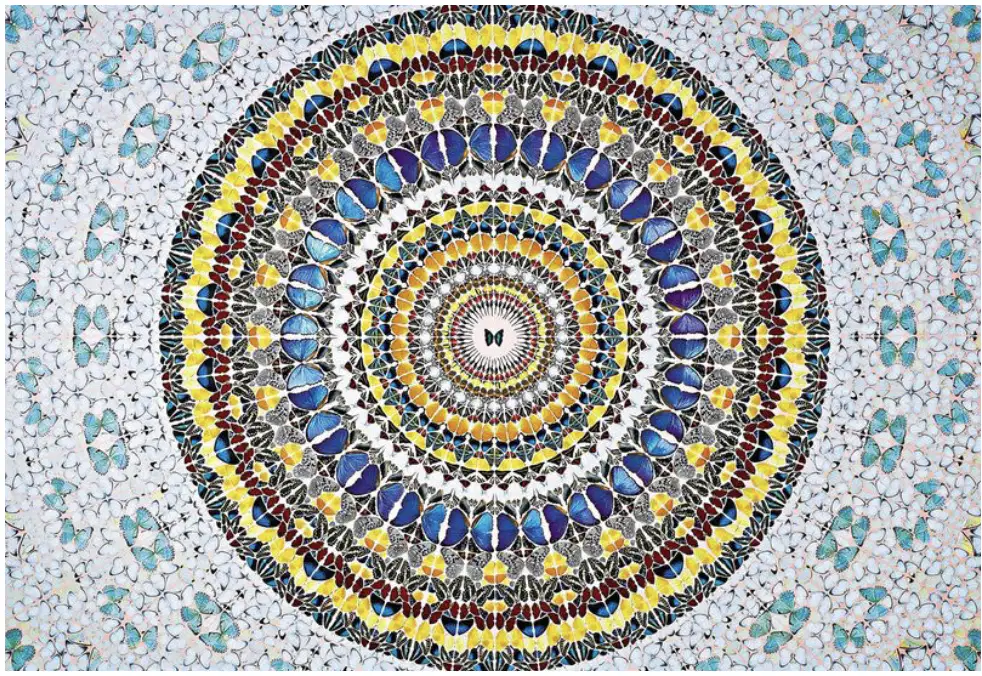
religion= most important, patterns repeated to infinity, floral patterns= highly intricate & ornate (arabesque)
african
asian
middle eastern
aboriginal
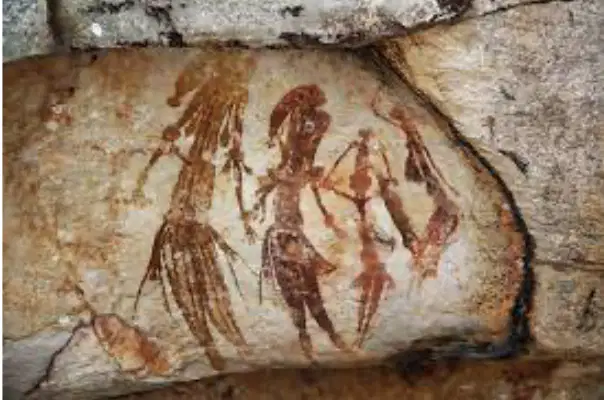
from Australia
rock paintings/carvings, decoration/ceremonial purposes,
landscapes-->plain air paintings (outside)
Themes: working & conquering the land
petroglyphs (dot painting, stone arrangements)
african
asian
middle eastern
aboriginal
indigenous people (utilitarian--> values & religions)
Blend: [1] Native American, [2] African [3] European
religious & resembled traditional European artwork
moralism, social/political messages
ideas of identity, unifying themes
latin america
european
North American
prehistoric
rock painting/carving
commissioned by patrons
historic, biblical, & religious
landscapes & still life
Industrial Revolution--> premade, portable paints
latin america
european
North American
prehistoric
Based on european traditions
Portraits/landscapes
First significant American painters:
Benjamin West
John Singleton Copley
Gilbert Stuart
American Revolution→ demand for patriotic artwork
Subjects: pioneers, soldiers, sailors
Gave rise to the abstract art scene
latin america
european
North American
prehistoric
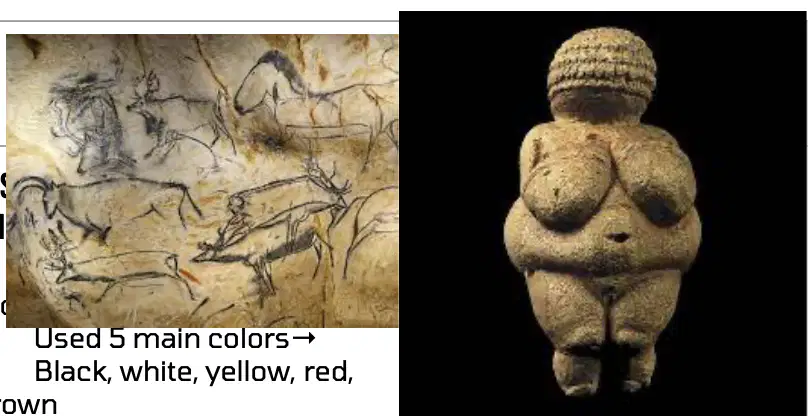
petroglyphs (prehistoric rock carvings)/cave paintings/sculptures/carvings in bone
Prehistoric art found (bronze figures)
latin america
european
North American
prehistoric
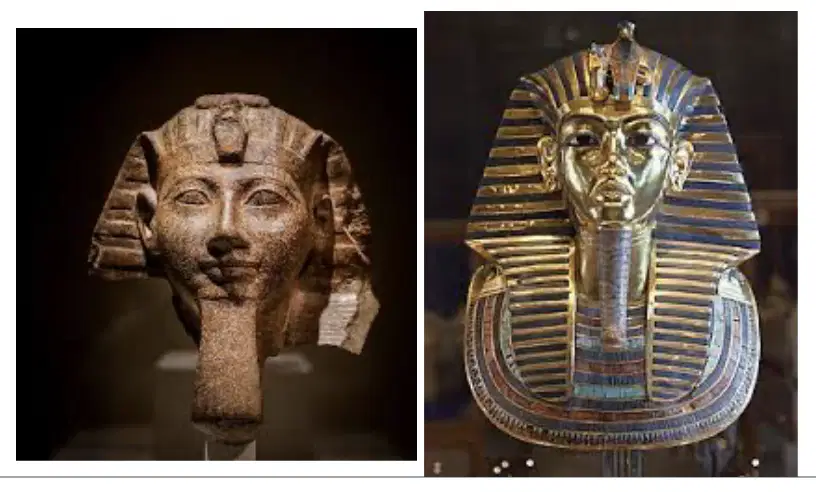
Painting, sculpture, & jewelry
Found in tombs of wealthy leaders
Statues: interact w/ gods
More impt. Figures on top/larger except in battle scenes
Sky God Horus: represented w/ a falcon head→ timeless quality
Hieroglyphs/images: symbols for sounds & words
Used soft stones (limestone, sandstone, calcite) for sculptures w/ tools such as copper chisels & stone tools
Egyptian
renaissance
baroque
greek/roman
capture the value of the individual & beauty of the natural world (+accomplishments of man)
Painting, drawing, sculpture (increased knowledge of anatomy, used marble), & architecture
Humanism on the rise: importance & worth of the individual
Linear perspective foreshortening, natural realism to face & fingers
oil paint (on wood panels) vs. tempera (rigid support) more colors (transparency allowed glazing techniques: layering transparent colors for greater depth & richness)
Christianity
Egyptian
renaissance
baroque
greek/roman
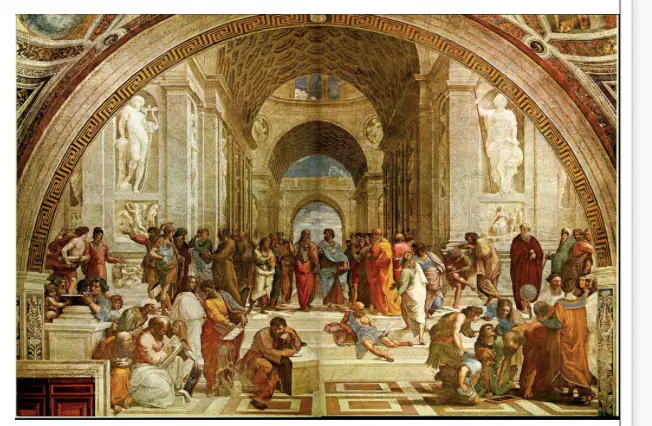
Raphael’s School of Athens depicted many ancient Greek philosophers, shows mastery of perspective, natural poses, & lighting
Created for patrons
Egyptian
renaissance
baroque
greek/roman

Michelangelo (Sistine Chapel used fresco: mural painted onto plaster walls, pigments mixed with water & applied to wet plaster) master of anatomy, accomplished art, sculpture, & architecture, inspired Raphael
Leonardo da Vinci knowledge of math, astronomy, architecture, art, inventing, literature, anatomy, etc. Used Sfumato (subtle gradations to create a smoky look)
Egyptian
renaissance
baroque
greek/roman

Exaggerated motion & attention to detail
Enhance a sense of drama & grandeur
Chiaroscuro technique: strongly contrasting tones of light & dark in high contrast scene
Tenebrism: keeping an area black & brightly illuminating the subject
Egyptian
renaissance
baroque
greek/roman
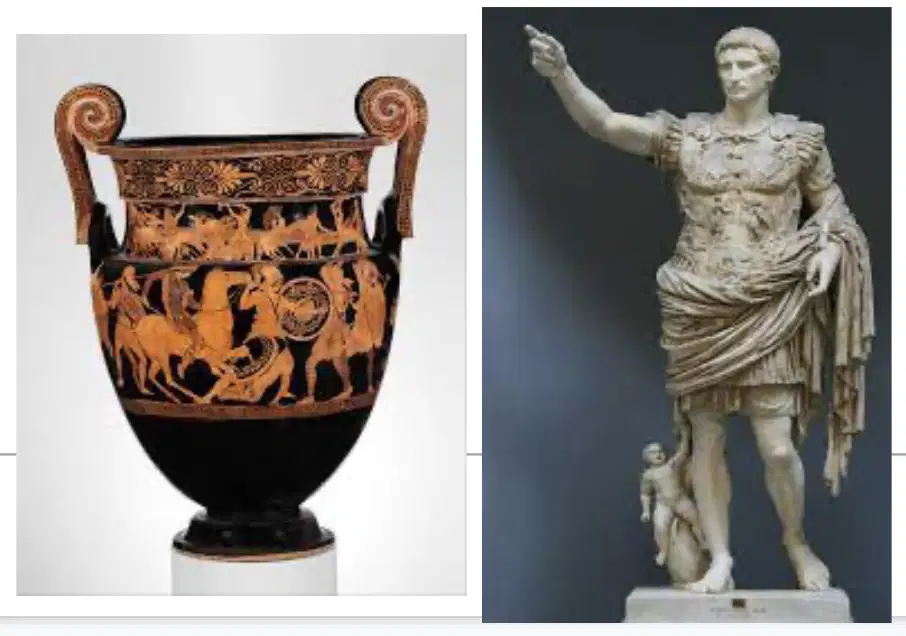
express noble ideas & emotions
Highlight great accomplishments of man & honor their gods
Sculptures→ nude athletes in realistic poses + gods & goddesses
Stone & wood statues, pottery in red & black figure styles
Painted on panels & pottery
ancient greek
Ancient Romans
baroque
greek/roman
aesthetics & decoration
Art lost its spiritual quality & used more for decor
Copied Greek statues of gods & goddesses
Created skillful & realistic portrait sculptures
Created paintings & mosaics showing scenes from daily life for homes
ancient greek
Ancient Romans
baroque
greek/roman
Encaustic (pigment mixed w/ hot wax) & tempera for painting scene on panels
Small cut pieces of glass, tile, pottery, stone, & shells called tesserae (stuck to the surface w/ mortar)
Wood sculptures (few have survived)
Figurines→ marble & limestone + cast bronze, encaustic, & wax
Most paintings have survived on pottery (high iron oxide content= red color called Red figure pottery)
ancient greek
Ancient Romans
Ancient Greek & roman
medievel
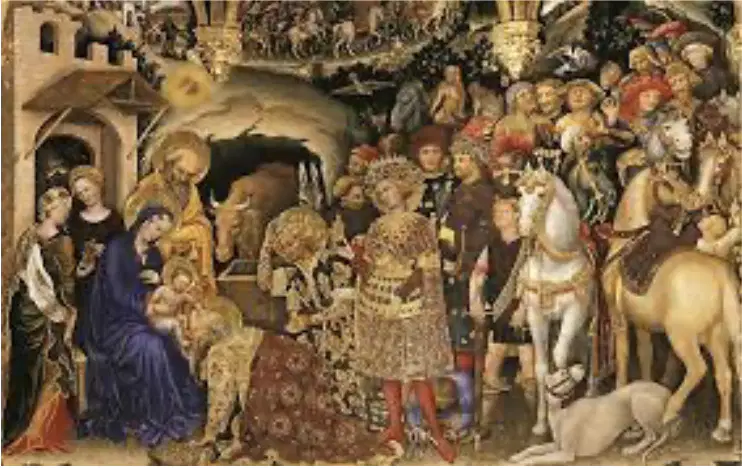
Subjects: mythology, Christian themes, biblical stories
[1] Byzantine- Eastern Europe & stylized symbolism over realism, imperial & religious subjects
[2] Romanesque- massive churches built w/ stone arches
[3] Gothic- began in Paris, cathedral & elaborate architecture, complicated decorations, animated figures, expressions, painted small in relation to their backgrounds
ancient greek
Ancient Romans
Ancient Greek & roman
medieval
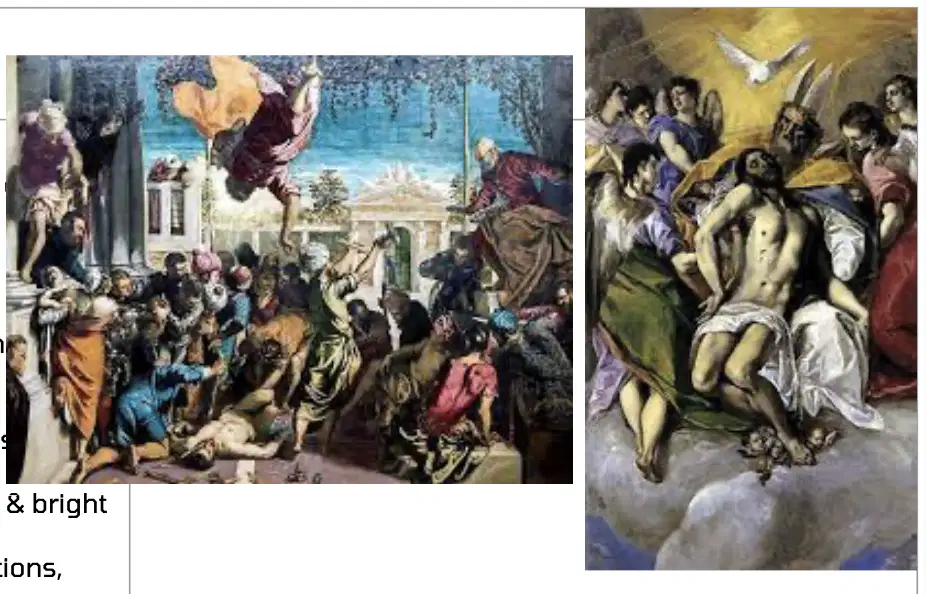
Reaction to the high Renaissance
Man was not the center of the universe
Earth revolves around the sun
Reflected this uncertainty
Changing proportions, portraying people in new & strange ways, elongated limbs, small heads, dramatic unnatural, contrived poses
Flattened composition
bright & unusual colors
mannerism
neoclassicism
romanticism
realism
El Greco (the Greek)→ elongated & strange proportions, portray strong dramatic emotions
Poses are strained, unnatural heightening the emotion
Lighting→ come from within the figure or unseen source
Tintoretto→ monumental religious works
Mystical nature of religion, elongated forms, forces poses, supernatural atmosphere, scenes not from this world
mannerism
neoclassicism
romanticism
realism
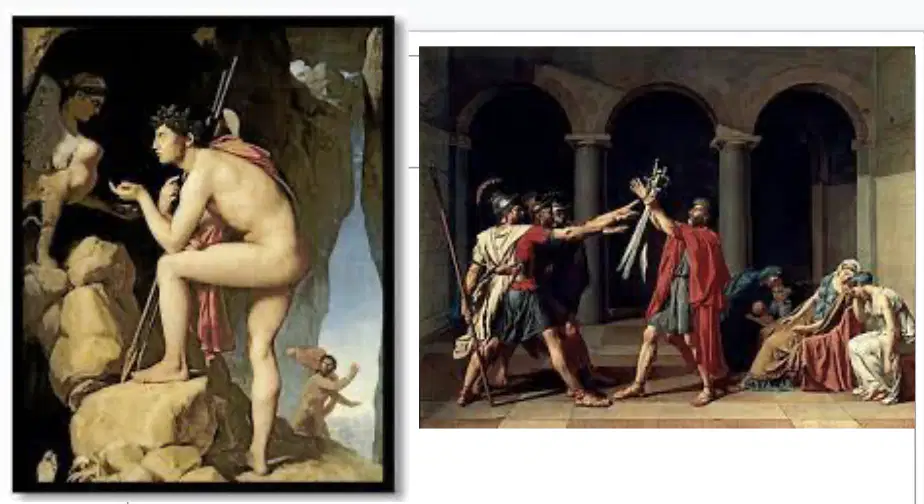
classical Greek style & depart from the highly ornate baroque style
Serious, stoic, & heroic
classical subjects
mannerism
neoclassicism
romanticism
realism
Jacques- Louis David
Painting→ Oath of the Horatii tells a story from classical times
From Roman legend which the Horatii brothers take an oath to defend Rome
Jean-Auguste-Dominque Ingres
Student of David
Sensuous subjects & became known for portraits
Oedipus & the Sphinx from the Greek myth of Oedipus
mannerism
neoclassicism
romanticism
realism
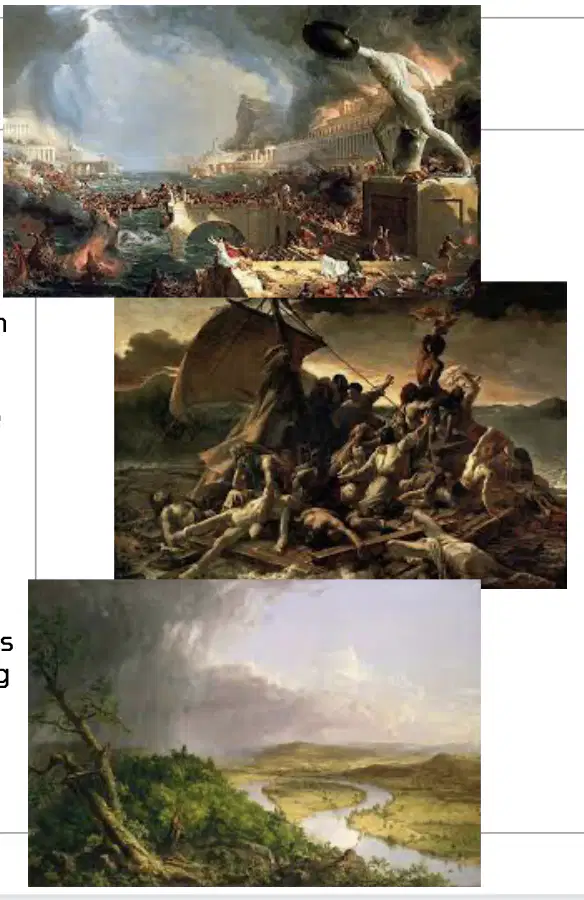
Art, literature, music, & culture
Intense emotion & individualism
Reaction against the rationalism of neoclassicism
Literary themes→ terror, awe, & apprehension
Capture the beauty & sublime feel of nature
mannerism
neoclassicism
romanticism
realism
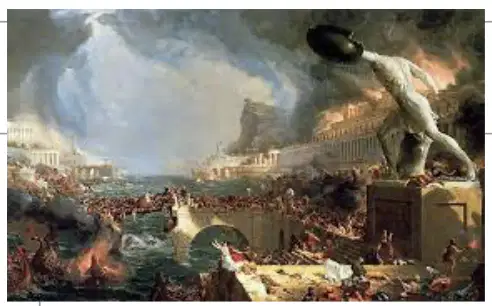
Thomas Cole: The Course of Empire Destruction (focus on nature & destruction in a romantic artwork)
First manifested landscape painting
Portray disaster, divine wrath, & natural catastrophe
Vast space, dwarf people, mystical landscapes, & nature’s triumph over man
Small villages & wilderness
mannerism
neoclassicism
romanticism
realism

Eugene Delacroix: Liberty Leading the People (female figure of liberty leading the French Revolution of 1830, violent, dramatic, catastrophic scene)
mannerism
neoclassicism
romanticism
realism
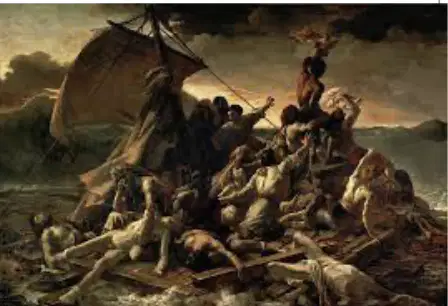
Theodore Gericault: The Raft of the Medusa (large, shows aftermath wreck of a French naval frigate, people escaping in a raft, men dying, struggling to survive in nature
mannerism
neoclassicism
romanticism
realism
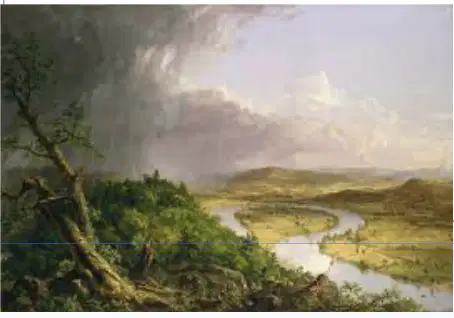
Thomas Cole: American wilderness, The Oxbow (broken trees, violent cliffs, dark rain clouds beside blue skies & a tranquil bend in the river
mannerism
neoclassicism
romanticism
realism
Reject the idea of romanticism
Ordinary scenes w/ accuracy & truth
Treat all subjects w/ equal seriousness
Advent of the camera
First modern art movement
Examined political culture & economic structure of society
Earth tones
Real-life events, workers, street life, cafes, peasants, nightclubs
mannerism
neoclassicism
romanticism
realism
France Artists:
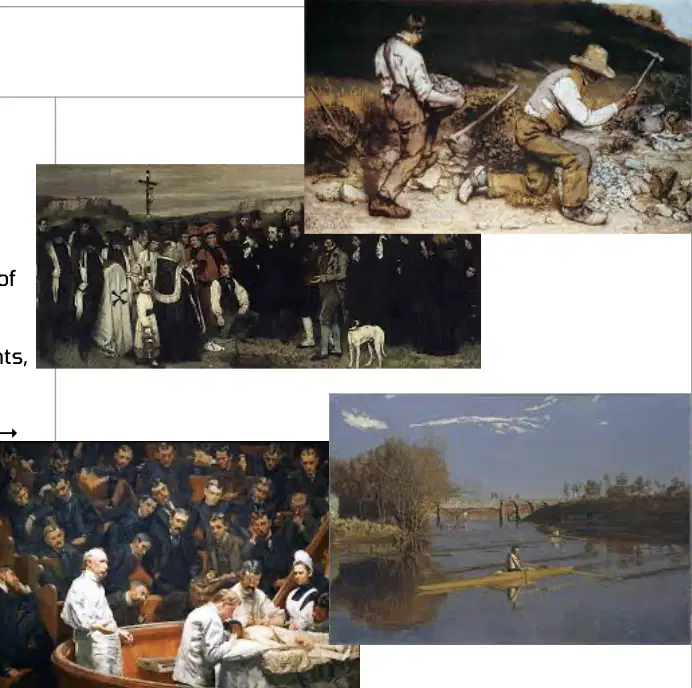
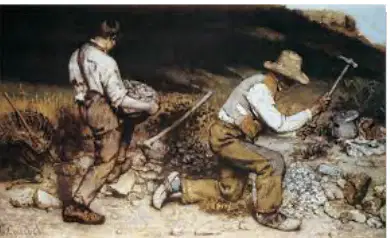
[1] Gustave Corbet: ordinary scenes on vast canvases→ The Stonebreakers (1849 ordinary workers in his native region of France), A Burial of Ornans, uses natural color & lighting
[2] Jean-Francois Millet [3] Honore Daumier
mannerism
neoclassicism
romanticism
realism
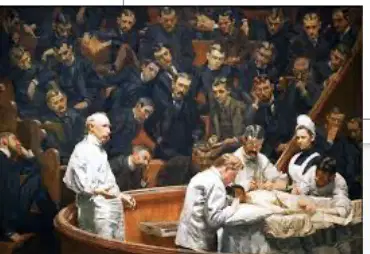
US Artists:
[1] Thomas Eakins [2] Winslow Homer: began as a commercial illustrator, inspired by Courbet, Millet, & Daumier, began to paint subjects in America, friends, outdoor sports, Max Schmitt in a Single Scull (1871) & The Gross Clinic→ Scene from a surgical operation
mannerism
neoclassicism
romanticism
realism
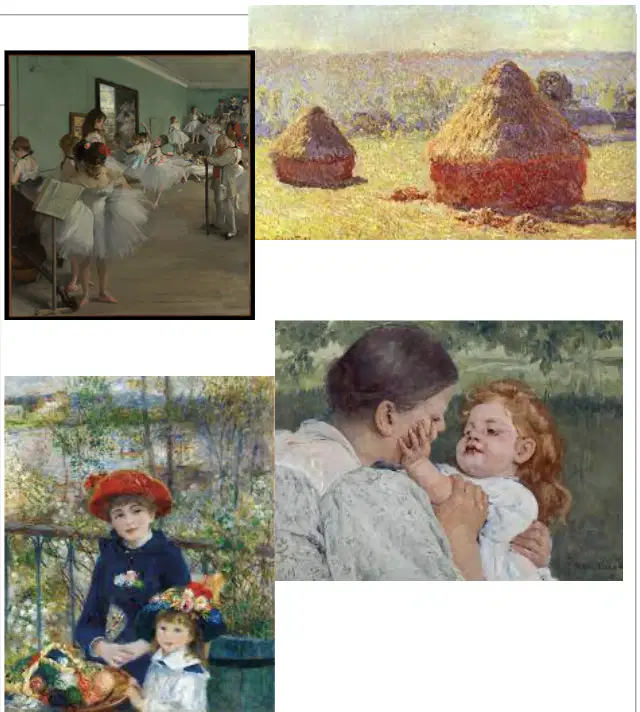
plein air (paint outside)
capture their impression of a scene
momentary effect of lighting on a scene
Small brushstrokes & pure color
Capture differences that weather/sun position create in a scene
Invention of paint in a tube helped paint outside more easily
Artist’s perception of the scene is as impt as the scene itself
impressionism
postimpressionism
fauvism
expressionism
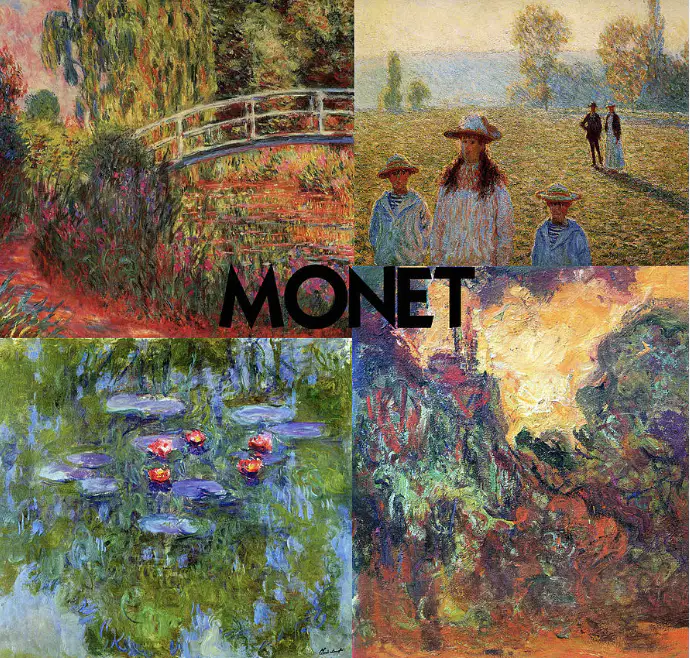
Claude Monet: Haystack. End of Summer. Morning (1891)
color & brushstroke to capture lighting of a summer morning on a haystack, cathedrals, landscapes, water lilies, garden (subjects), failing eyesight→ abstract art in later years
impressionism
postimpressionism
fauvism
expressionism
Edgar Degas:
ballerinas & dancers, showing movement w/ visible brushstrokes. The Dance Class shows a fleeting moment in time
impressionism
postimpressionism
fauvism
expressionism
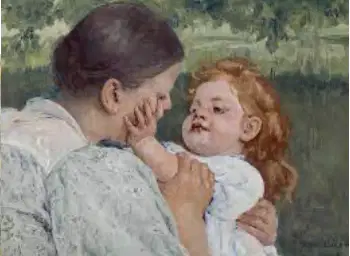
Mary Cassatt:
female, domestic scenes w/ a child & mother, exhibit w/ Degas & was influenced by their work
impressionism
postimpressionism
fauvism
expressionism

Auguste Renoir:
landscapes & portraits, visible brushstrokes, soft edges, & pure colors, master of understanding how light affects his subjects
impressionism
postimpressionism
fauvism
expressionism
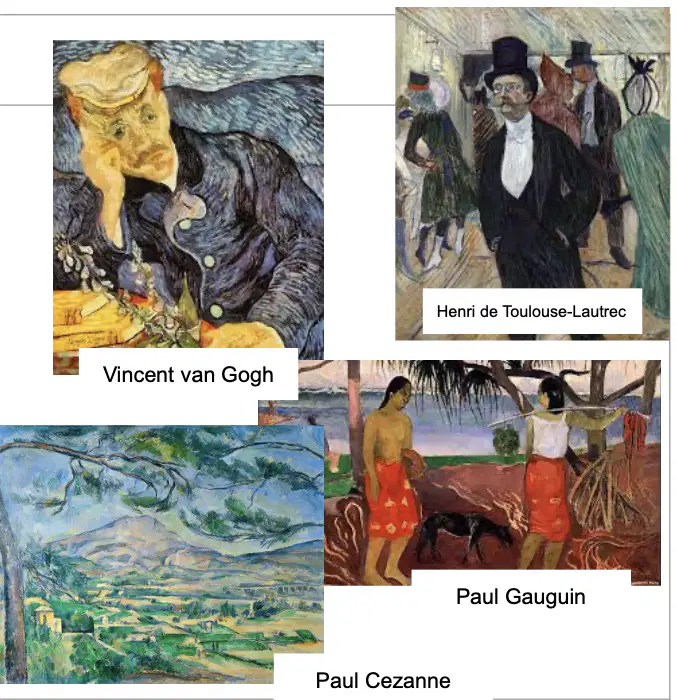
depart from the naturalism of impressionism
Bold & pure colors + real life subject matter
geometric shapes, distorted forms, exaggerate/arbitrary colors + heavy outlines
Neoimpressionist: falls under post impressionism
Optical blending of spots of color (pointillism)
impressionism
postimpressionism
fauvism
expressionism
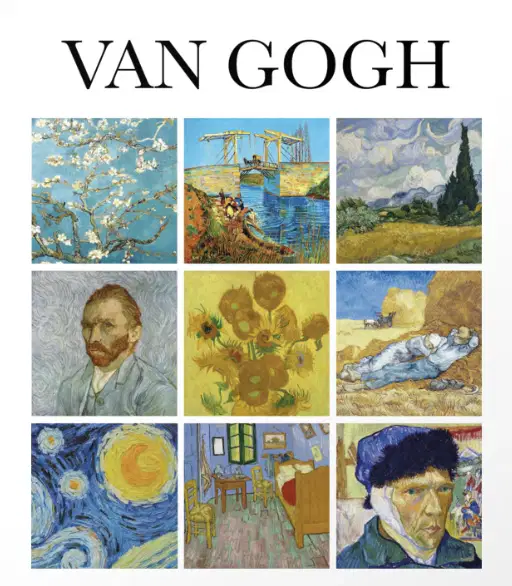
Vincent van Gogh:
Dutch, bold colors, arbitrarily/odd ways,
express emotions, Portrait of Dr. Gachet (1890) emotion through pose, facial expression, colors +brushstrokes & heavy outlines
impressionism
postimpressionism
fauvism
expressionism
Henri de Toulouse-Lautrec (1889) Monsieur Fourcade, bold, arbitrary colors + outlines
impressionism
postimpressionism
fauvism
expressionism
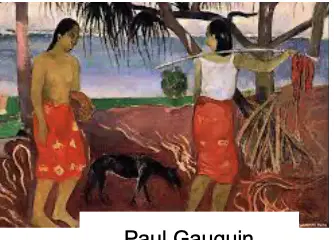
Paul Gauguin:
bold/unusual colors,
flat planes, flattened spaces,
paintings of landscapes & people of French Polynesia
impressionism
postimpressionism
fauvism
expressionism
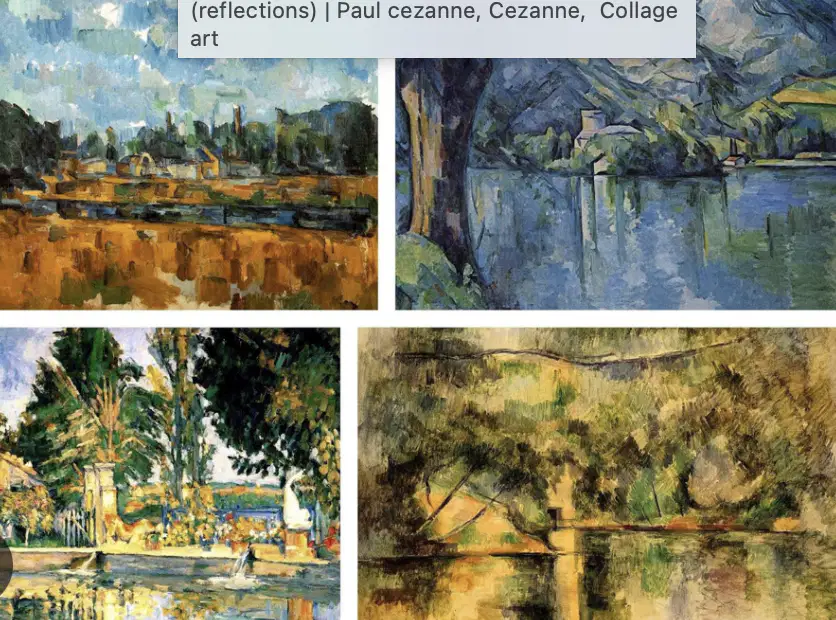
Paul Cezanne:
father of postimpressionism, geometric shapes, bold colors, prompted Picasso, reduce nature to shapes & find new ways of modeling space & volume
impressionism
postimpressionism
fauvism
expressionism
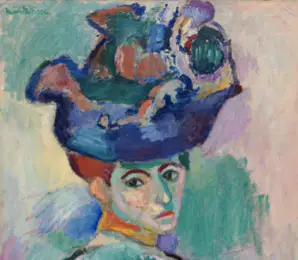
strong & unusual colors
Color to express mood w/o being representational of actual colors
Flatness of the canvas
Individual expression over naturalistic representation
impressionism
postimpressionism
fauvism
expressionism
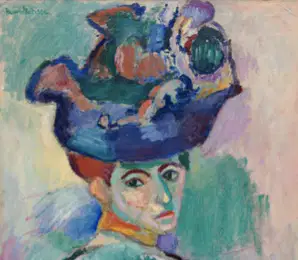
Henri Matisse: pioneered the movement, large, flat areas of bright color to convey emotion, Woman with a Hat (1905) unusual colors → green on woman’s face
Andre Derain
impressionism
postimpressionism
fauvism
expressionism
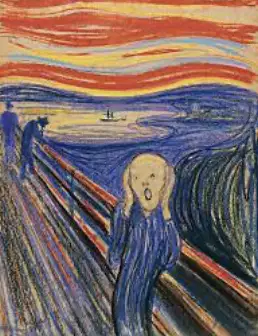
Strong colors & distorted forms to express their feelings
Artwork came from within
Swirling & exaggerated brushstrokes
Sought to evoke emotional responses
Edvard Munch’sThe Scream, unusual representational colors, distorted form, express a strong feeling of despair/agony
impressionism
postimpressionism
fauvism
expressionism
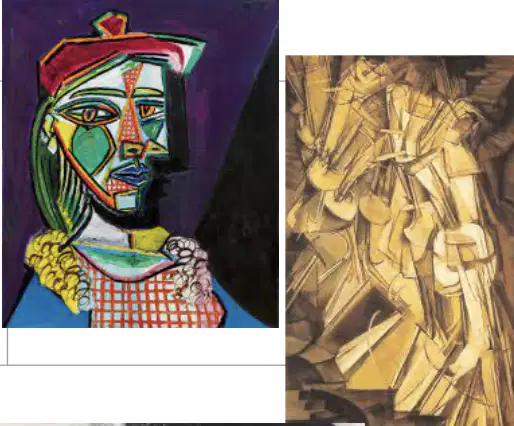
Several viewpoints are shown @ the same time
Simple geometric shapes
Pioneers: Picasso & Braque
cubism
futurism
constructivism
de stijl

Pablo Picasso: flat planes of color, distorted forms, geometric shapes, reassembled faces w/ both eyes on one side
cubism
futurism
constructivism
de stijl
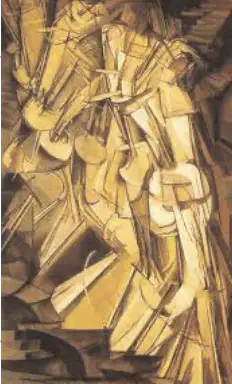
Marcel Duchamp (cubist + futurist): Nude Descending a Staircase, No. 2 (1912) repeated abstract geometric forms of a nude descending from left to right in the painting, movement + rhythm
cubism
futurism
constructivism
de stijl
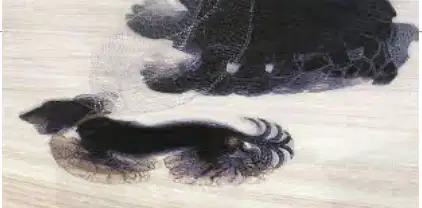
Giacomo Balla’s Dynamism of a Dog on a Leash, feet of a woman, plus a leash & a walking dog, repetition of the feet, least, tail, dynamic movement, conveying speed & direction
cubism
futurism
constructivism
de stijl
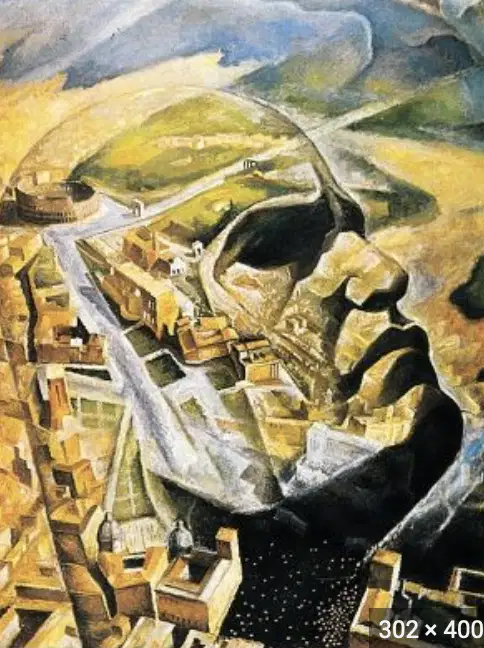
Technology, speed, & violence
Cars, airplanes, industrial elements
Admired tech over nature
Movement through space
Praised war & valued nationalism (riots + construction in the city)
cubism
futurism
constructivism
de stijl
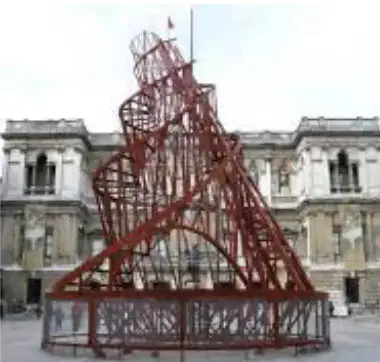
Russian abstract style of art + architecture in 1910s
Dynamic 3-D forms
Plastic, wood, glass, iron
cubism
futurism
constructivism
de stijl
Vladimir Tatlin:
influence by Picasso’s cubist, wanted to construct art w/ dynamic components, abstract still lifes out of scrap materials, soviet architect + painter, 3-D counter reliefs of wood & metal, ? the traditions of art, Third International (Tatlin’s Tower) joined tech w/ aesthetics of machines, searchlights & projection screens, criticized for being functional art
cubism
futurism
constructivism
de stijl
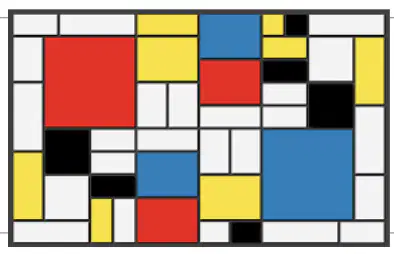
Russian abstract style of art + architecture 1910s
Reduction of artwork into geometric shapes, lines, & primary colors
Universal form of expression
cubism
futurism
constructivism
de stijl
Piet Mondrian: new, abstract form of art, modern times, black lines, geometric shapes, primary colors, pure abstractions w/ horizontal & vertical lines, basic elements, energy + forces of nature, minimal palette, color, line, form
cubism
futurism
constructivism
de stijl
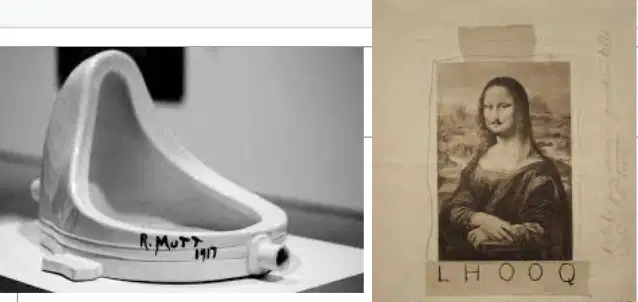
Reaction of disgust & revolt to the horrors of WWI
Depart from traditional values of art
New kinds of art (anti-art)
Readymades→ present a premade object as art
Photomontage→ scissors + glue to assemble images
dada
surrealism
abstract expressionism (New York school)
pop art
Marcel Duchamp: readymades (appropriation) Fountain (1917) urinal that he signed R. Mutt, L.H. O. O. Q. (1919) postcard of the Mona Lisa w/ a mustache
Man Ray, Max Ernst
dada
surrealism
abstract expressionism (New York school)
pop art
Strange, dreamlike, unnerving scenes w/ realistic accuracy
Unconscious thoughts resolves contradictions b/w reality + dreams
Affected literature, music, & film
Freudian theories of sexuality, fantasy, dreams, & irrationality
dada
surrealism
abstract expressionism (New York school)
pop art
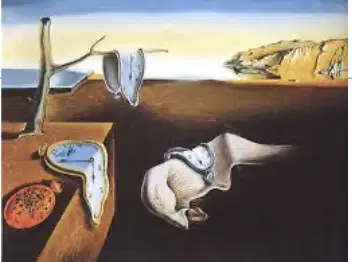
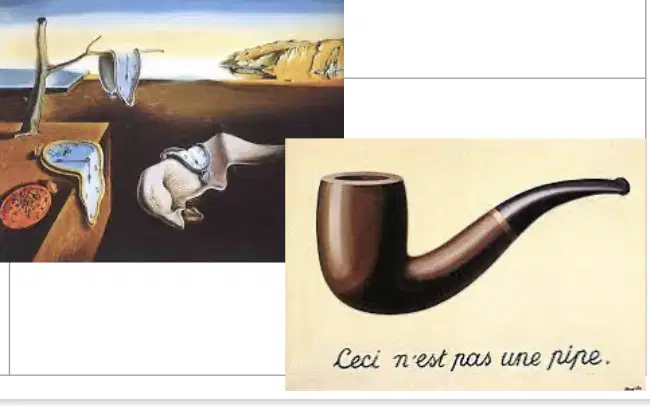
Salvador Dali: The Persistence of Memory (1931) melted pocket watches on a dreamlike landscape
dada
surrealism
abstract expressionism (New York school)
pop art
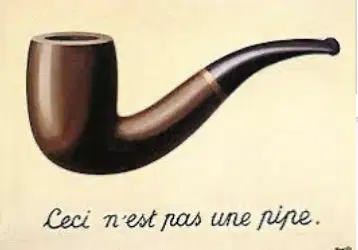
Rene Magritte: ordinary objects in an unusual way, The Treachery of Images
Grattage: technique used by Max Ernst and Joan Miro, laying a canvas over a textured object, scraping & scratching wet paint off of the canvas, which was made easier by using acrylic paints, interesting patterns & textures underneath.
After Ernst would often work further on the canvas, taking cues from the textures and responding to these marks and shapes.
dada
surrealism
abstract expressionism (New York school)
pop art
1st truly American art movement
New York
Influenced by surrealist ideas
expressing the subconsciousness in art
Color field painting + action painting
Solid areas/fields of color on a large scale
Colors suggest infinity
Dribbling, splashing, dripping paint onto a canvas
dada
surrealism
abstract expressionism (New York school)
pop art
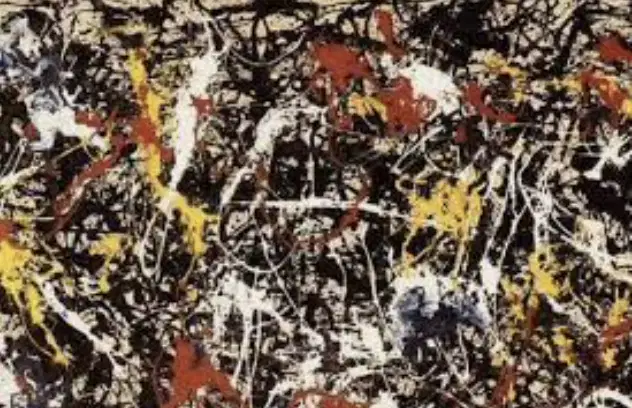
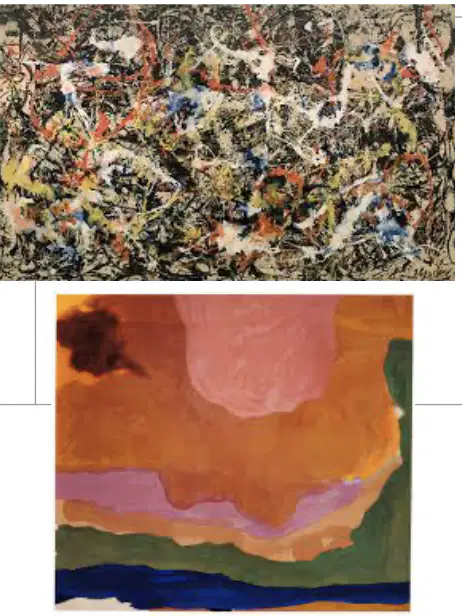
Jackson Pollock: action painting(coined this phrase)/splatter painting, balance of chaos & control
dada
surrealism
abstract expressionism (New York school)
pop art
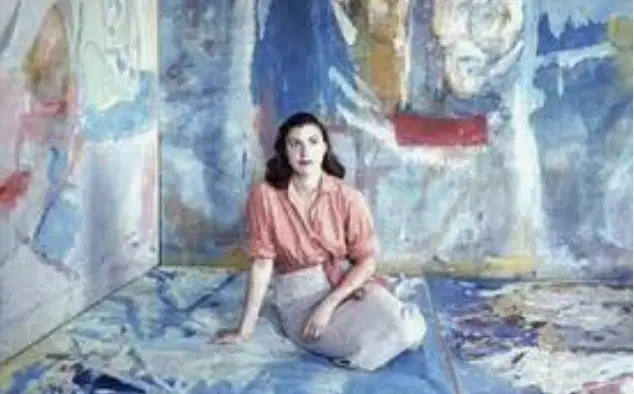
Helen Frankenthaler: “soak strain” creating large color washes by pouring thinned paint onto a canvas
dada
surrealism
abstract expressionism (New York school)
pop art
Helen Frankenthaler: “soak strain” creating large color washes by pouring thinned paint onto a canvas
dada
surrealism
abstract expressionism (New York school)
pop art
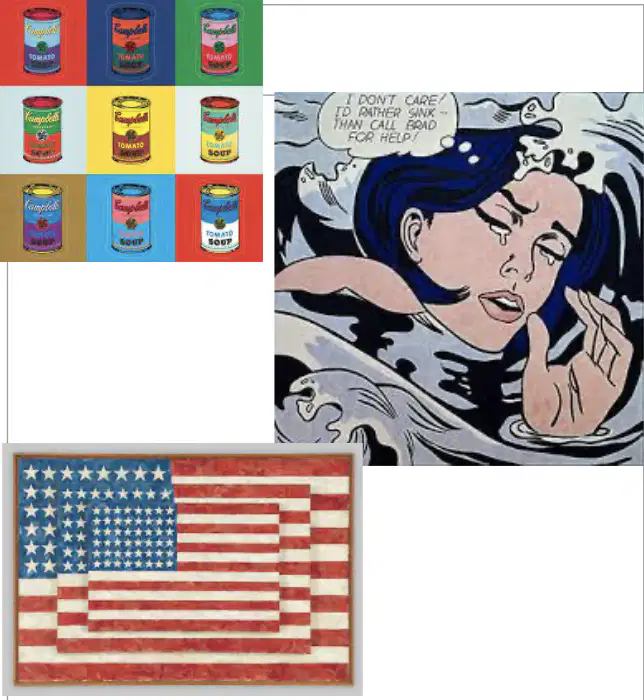
British & American 1960s
Items from pop culture + consumer items (everyday)
Partly inspired by the readymades from Dada
Bright, flat colors from advertising, imagery, hard edges
dada
surrealism
abstract expressionism (New York school)
pop art
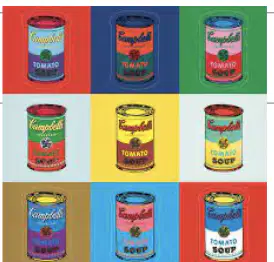
Andy Warhol: video art, installations, performance art, & paintings (1961) Campbell’s Soup Cans portraits of many celebrities in bright & vivid colors
dada
surrealism
abstract expressionism (New York school)
pop art
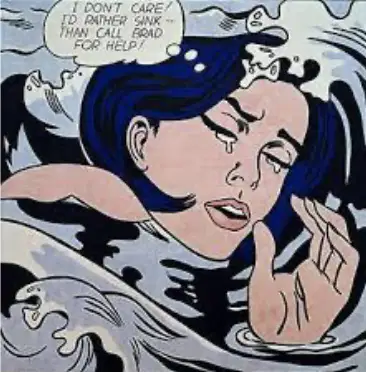
Roy Lichtenstein: comic book imagery, altered images, comic books, added dif text, painted on a large scale Drowning Girl (1963) comic image of a drowning girl & her boyfriend in a boat w/ text
dada
surrealism
abstract expressionism (New York school)
pop art
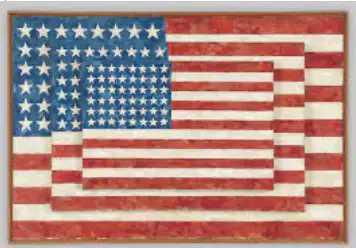
Jasper Johns: American imagery, Three Flags (1958)
dada
surrealism
abstract expressionism (New York school)
pop art
Departed from modernism
Skeptical + antiauthoritarian
Anything goes, cast aside all rules of style & included elements of confrontation
Tongue in cheek humor, ludicrousness
Questioned the ideas & subjectivity from previous art movements
postmodernism
feminist art
minimalism
street art
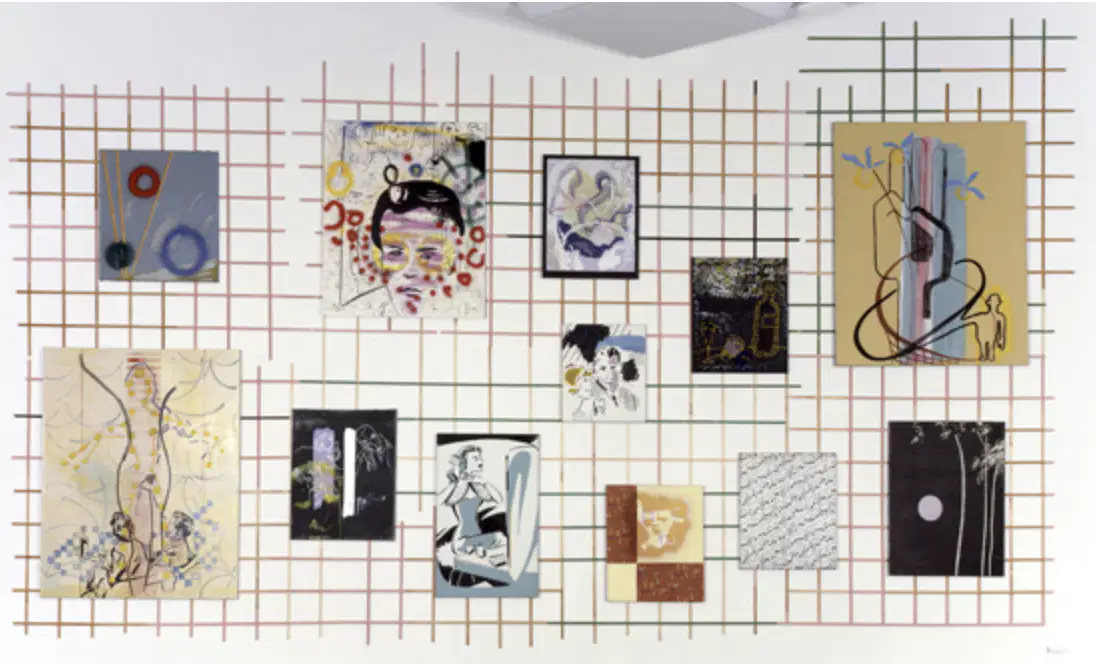
Sigmar Polke: The Fifties (1963-1969) cynicism & nostalgia while commenting on German culture, use dif styles throughout work
postmodernism
feminist art
minimalism
street art
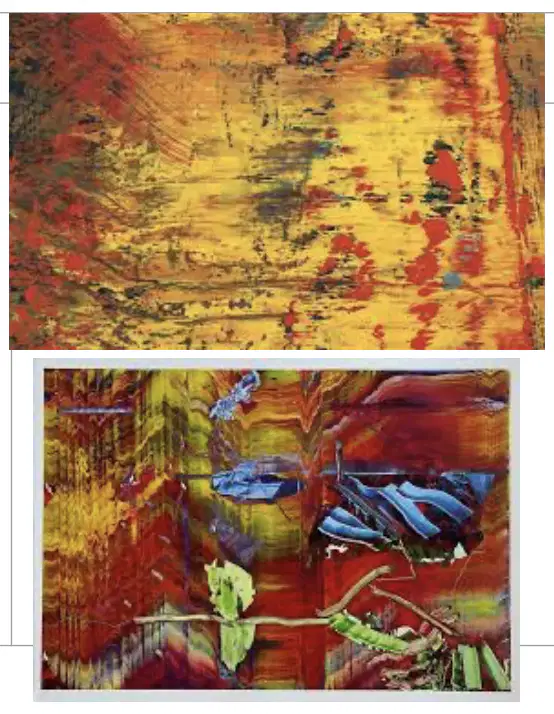
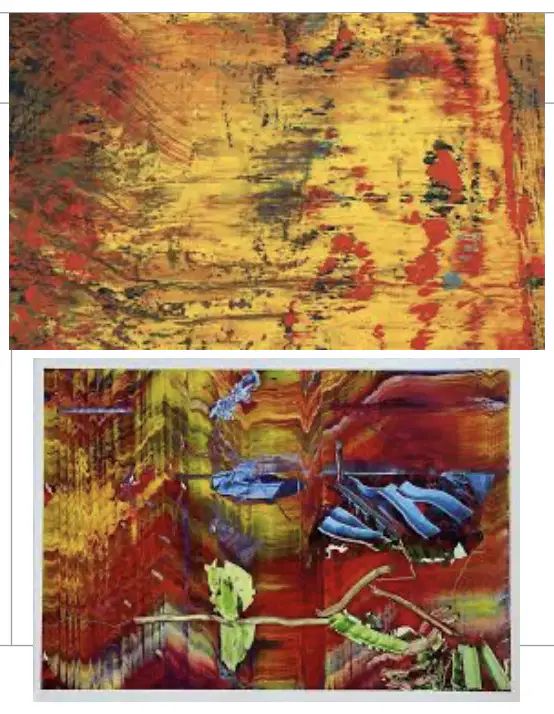
Gerhard Richter: combined photography w/ painting, high & low art in one technique
postmodernism
feminist art
minimalism
street art

Abolish stereotypes
Embrace/use materials in their works tied to their gender (textiles & embroidery)
Video, body, & performance art
Deliver more direct & personal messages to viewers
Explored objectification of women in media, ideas of domesticity, absence of recognition of female artist through history
postmodernism
feminist art
minimalism
street art
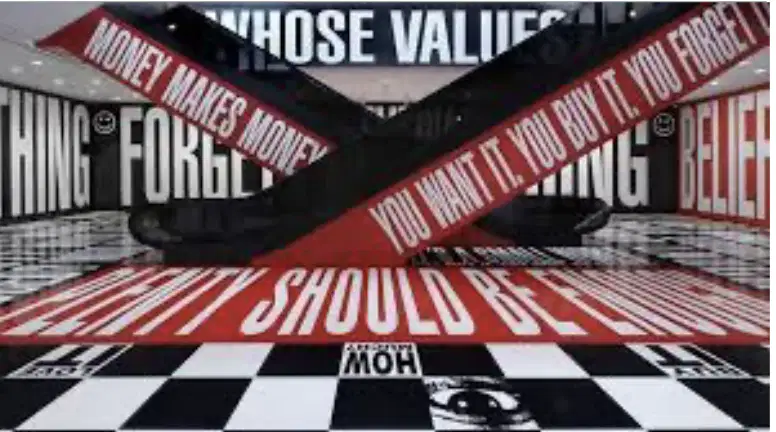
Barbara Kruger: appropriates images from magazines & adds texts, Belief + Doubt (2012)
postmodernism
feminist art
minimalism
street art
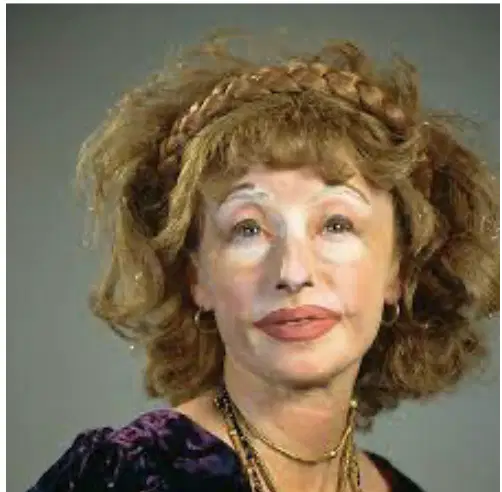
Cindy Sherman: self portraits, makeup, wigs, props, represent various female stereotypes, question ideas of authenticity & identity
postmodernism
feminist art
minimalism
street art
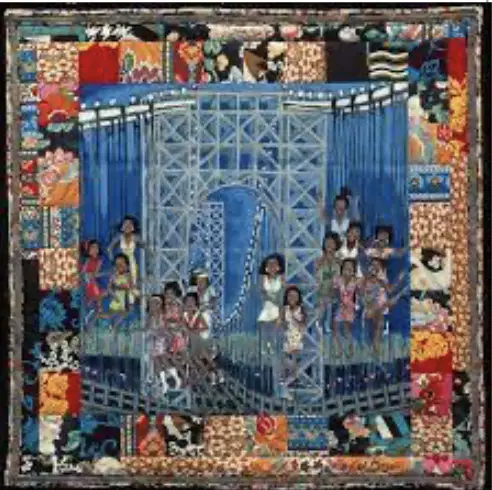
Faith Ringgold: African American, racial & gender identity & equality, stories through quilts, recognized a need for equality, 50% of artists at shows should be female
postmodernism
feminist art
minimalism
street art
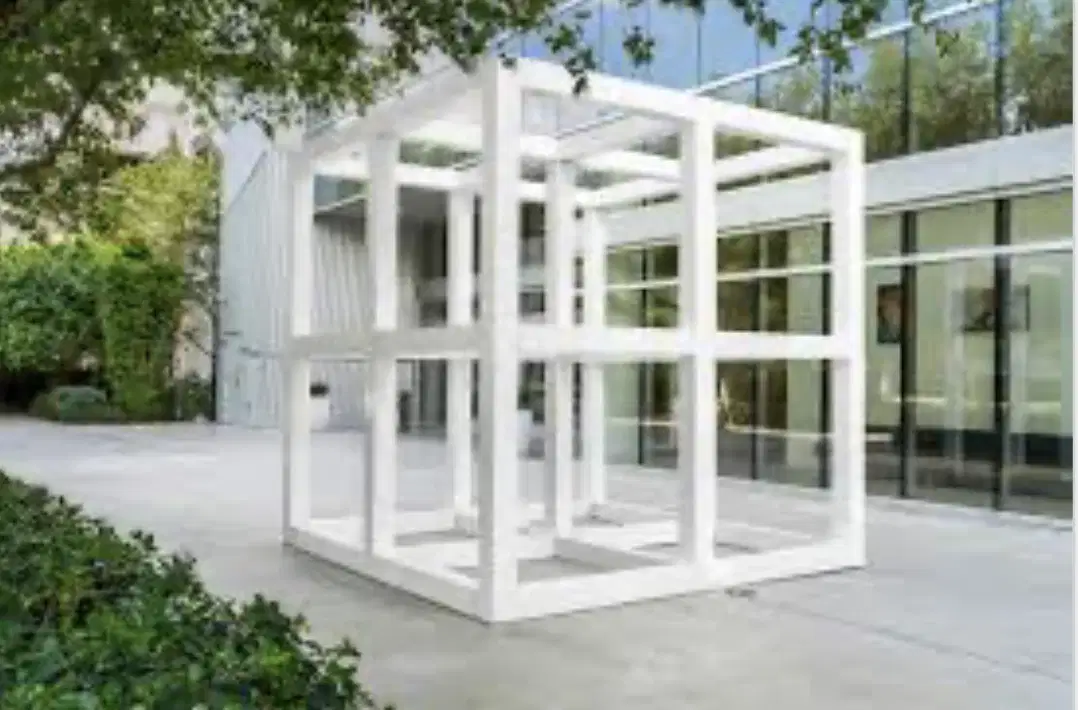
Extreme form of abstract art
Barest form
Not wishing to represent anything
Geometric shapes (2-D/3-D)
Simplicity, harmony, & purity
Solomon “Sol” LeWitt:Open Cubes white repeated geometric forms
postmodernism
feminist art
minimalism
street art

Graffita
Politically charges protest slogans & graphics illegally painted in public areas
Vandalism & street art tied to hip-hop & lower income areas
postmodernism
feminist art
minimalism
street art
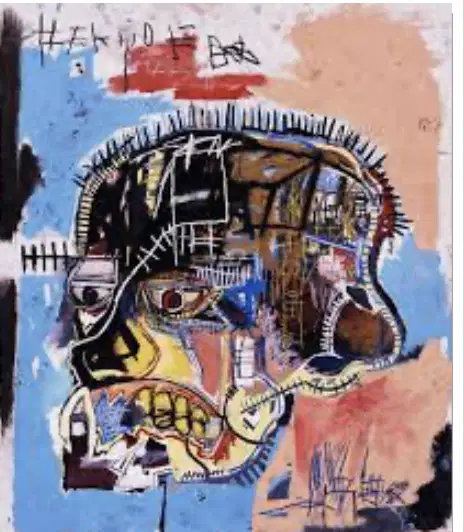
Jean-Michel Basquait: spray painting in Manhattan SAMO graffiti in 1970s
postmodernism
feminist art
minimalism
street art
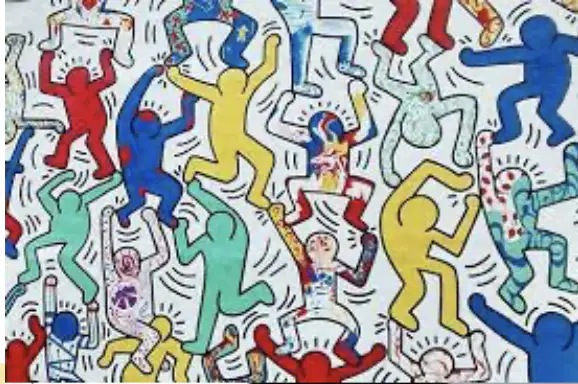
Keith Haring: subway lines in New York City
postmodernism
feminist art
minimalism
street art
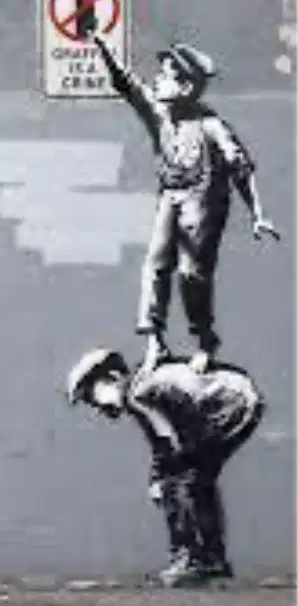
Banksy: spray paints stencil designs onto walls & building throughout major cities
postmodernism
feminist art
minimalism
street art
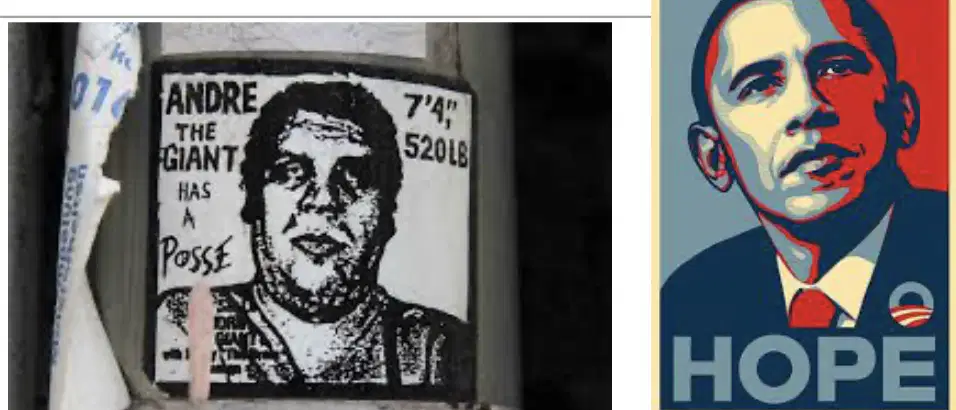
Shepard Fairey: Andre the Giant & Barack Obama in red, white, & blue
postmodernism
feminist art
minimalism
street art

Racial pride that challenged racism & stereotypes
Uplist African-Americans’ spirits
Racism, the effects of slavery, folk traditions
Experience black life/black neighborhoods
Harlem renaissance art
Hudson River school
op art
Art Deco movement
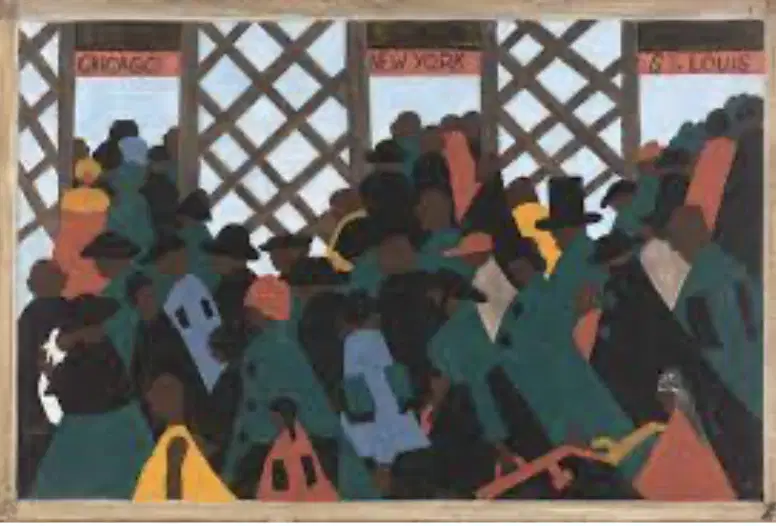
Jacob Lawrence: Migration Series, migration of blacks from rural South the urban North
Harlem renaissance art
Hudson River school
op art
Art Deco movement
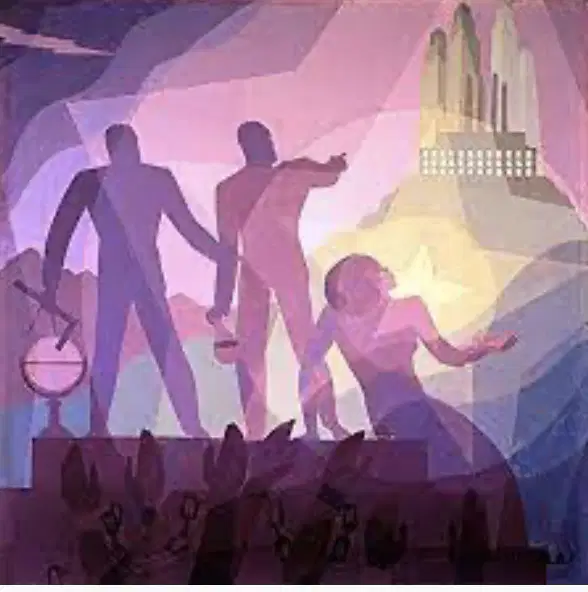
Aaron Douglas: murals on buildings, illustrations for covers of black publications, Aspiration (1936) slavery to freedom
Harlem renaissance art
Hudson River school
op art
Art Deco movement

American art movement
Landscape painters in romantic style
Hudson River Valley & areas surrounding it
Exploration, discovery, & settlement
Harmony of settlers or agriculture w/ nature
Belief in nature as a revelation of God
Native art movement in America
Thomas Cole was the founder
Albert Bierstadt:A River Landscape, Westphalia (1855)
Harlem renaissance art
Hudson River school
op art
Art Deco movement
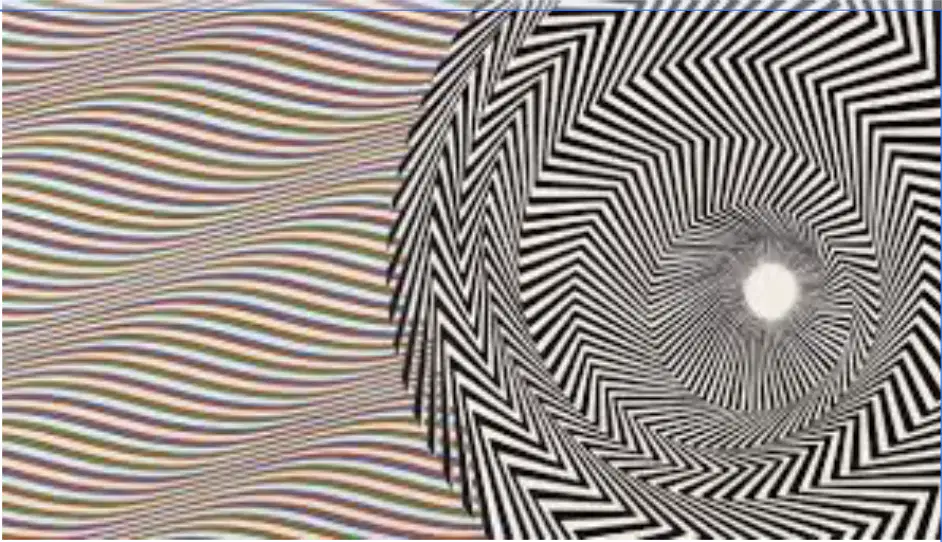
Geometric forms to create visual effects & optical illusions
Abstract & nonrepresentational
Black & white
Feeling of movement, vibration, hidden images
Bridget Riley: black & white, later color
Josef Albers: working in color, next geometric shapes of contrasting colors within each other
Harlem renaissance art
Hudson River school
op art
Art Deco movement
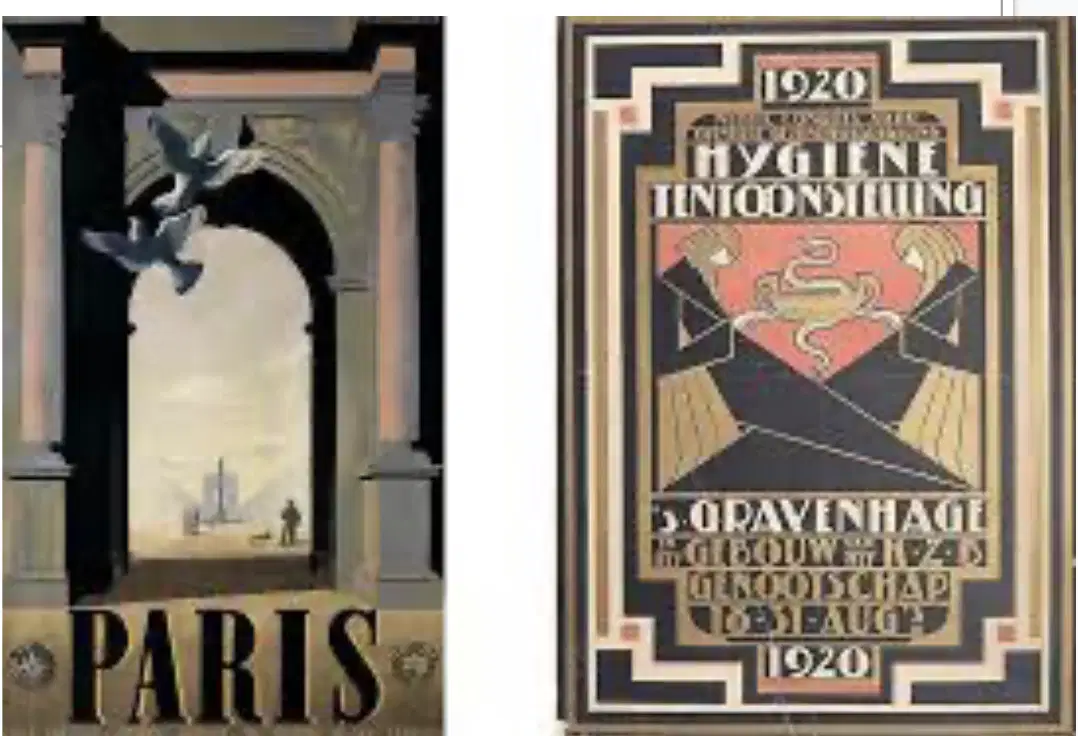
1920s began in Paris w/ architecture & decorative arts
Streamlined forms, symmetry, geometric shapes, smooth lines, & vibrant colors
Influenced by:
[1] geometric forms of cubism
[2] industrial components of futurism & constructivism
[3] bright colors of fauvism
Improve the style of mass-produced objects
Used for posters & some fine arts
Harlem renaissance art
Hudson River school
op art
Art Deco movement
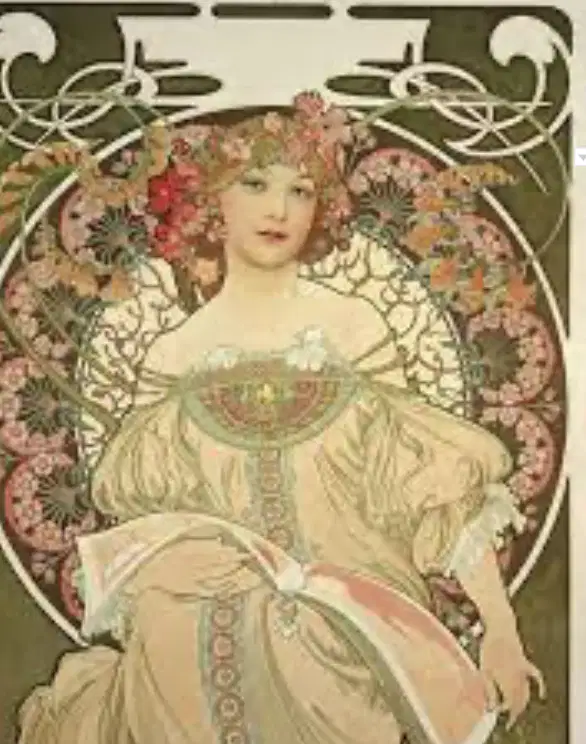
Challenge the hierarchy of fine arts over decorative arts
linear contours & outlines
muted, limited colors, blues, greens, yellows, & browns
Revive good craftsmanship, lift the status of crafts, create modern designs that did not rely on the past
Applied to art, architecture, furniture, lamps, & jewelry
art nouveau
Hudson River school
op art
Art Deco movement
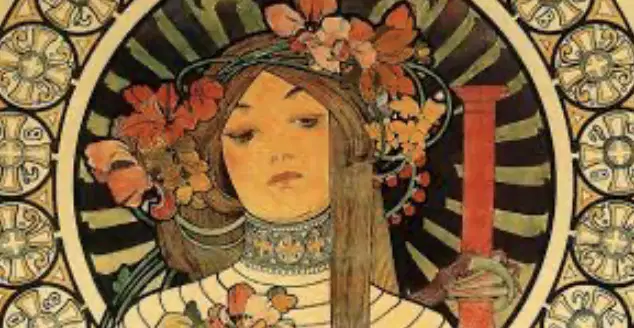
Alphonse Mucha: created many illustrations, posters, paintings, etc. signature style was considered outdated by his death, beautiful women symmetrical, flowing, floral, & ornate designs w/ muted colors
art nouveau
Hudson River school
op art
Art Deco movement

