
Font size
 Worksheets
4A:_Earth&Space_Earth Structure and Geology
Total questions: 50
Worksheet time: 38mins
Limestone is a sedimentary rock. During the rock cycle, limestone is changed into marble, a metamorphic rock. The processes that act on limestone and change it into marble are
weather and erosion
heat and pressure
compacting and cementing
melting, cooling, and hardening
pieces of weathered particles: clay, silt, sand, cobbles, and boulders.
Sediment
Processes which break down rock physically and chemically.
Weathering
How sediment gets carried to a new location, water, glaciers, wind, and gravity.
Erosion

According to the diagram, what process is shown by letter B?
compaction & cementation
weather & erosion
heat & pressure
melting
How do you distinguish a rock from a mineral?
rocks are always bigger than minerals
minerals are usually made of small rocks that bind together
rocks can always be identified by their shape; minerals can not
minerals are made of elements that form crystals and rocks are made of one or more minerals
What are the characteristics that define a mineral? (CHECK ALL that apply.)
Inorganic (Non-Living)
Definite crystal structure
Can be any phase (solid, liquid, or gas)
Solid
Organic (from living things)

As streams flow through Stone Mountain, layers of sand build up. Over time, the sand particles form a sedimentary rock called sandstone. What causes sandstone to change into metamorphic rock at Stone Mountain?
Sandstone is reshaped by erosion from a stream.
Sandstone builds up layers of sand at the mountain.
Sandstone experiences intense heat and pressure.
Sandstone has more sand particles compacted on top of it.
Which of the following statements about minerals is FALSE?
Minerals have a crystalline structure.
Humans can create minerals to suit specific needs.
Minerals are inorganic materials.
Minerals cannot be liquids or gases.
Select the nutrient that best applies to the description. This nutrient helps regulate chemical reactions within
the body. There are two types of this nutrient, macro and trace. What is the nutrient?
Minerals
Vitamins
Water
Water
Which one of these body functions is helped by calcium?
Helps our muscles to contract
Helps keep our nerves healthy
Helps build strong bones and teeth
All of the choices
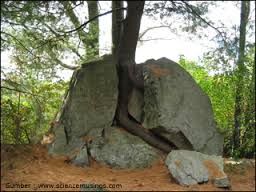
water, ice, wind or gravity
moves fragments of rock
and soil.
water, ice, wind or gravity
deposit rock sediments
and soil in a new place.
Earth’s crust into smaller
and smaller pieces.
water, ice, wind or gravity
moves fragments of rock
and soil.
water, ice, wind or gravity
deposit rock sediments
and soil in a new place.
Earth’s crust into smaller
and smaller pieces.
Which of these is chemical weathering?
A plant sprouting through and splitting a rock
A rock containing iron rusting
Ice freezing and expanding a rock
Waves crashing into a rock formation

The tallest sand dunes in North America are found in Great Sand Dunes National Park and Preserve in Colorado. These dunes were formed from the sand at the bottom of a dry lake bed. Which of the following agents is most likely responsible for the formation of the sand dunes?
Wind
Water
Ice
Gravity
Dalton noticed that recent rain had loosened up the dirt in his backyard. As a result, much of the dirt had moved around. There were holes and mounds where the dirt had been level before. This is an example of which of the following?
An earthquake
Weathering
A mudslide
Erosion
How is soil formed? Check all that apply!
Weathering forms the rocks and minerals of soil
A mixture of rock, mineral particles and organic matter.
The layers in the soil profile used to classify soil types.
Organic material in soil comes from living things such as plant and animal remains
Porosity is a measure of void space in a soil sample. Larger soil particles have larger void spaces. Smaller soil particles have smaller pore spaces, but a greater number of them, which leads to higher surface tension and higher % porosity. With this is mind, which statement is true:
Sandy soil has a higher porosity than clay soil
Sandy soil has a higher porosity than silty soil
Clay soil has a higher porosity than sandy soil
Porosity is directly proportional to soil particle size

What is the relationship between soil type/particle size and permiability (as shown by the bar graph below)?
The larger the particle size, the slower the permeability rate
The smaller the particle size, the faster the permeability rate
There is no relationship between particle size and permeability
The larger the particle size, the faster the permeability rate
As permeability increases
Infiltration decreases and runoff decreases
Infiltration increases and runoff decreases
Infiltration decreases and runoff increases
Infiltration increases and runoff increases
Put these samples in order from highest permeability to lowest permeability: clay, gravel, & sand.
sand, clay, gravel
gravel, clay, sand
gravel, sand, clay
clay, sand, gravel
Flash flooding often occurs in city areas because
Roads, pavements, and buildings reduce the infiltration of water into the ground
Ground water storage is usually very large
runoff decreases during precipitation
The heat generated by city areas decreases actual evapotranspiration
Which of the following is true regarding the composition of the lithosphere?
The lithosphere is mostly liquid, with some medium-density materials, such as silicon.
The lithosphere is more plastic and flows slowly compared to the solid crust of Earth.
The lithosphere includes the core and the lower portion of the mantle.
The lithosphere includes the crust and the uppermost portion of the mantle, which is sold and rigid.

As you travel from the crust to the core, how would temperature, pressure and density of the material change?
They would all increase
They would all decrease.
Nothing, the layers are made of the same material throughout
Temperature would decrease, but pressure and density would increase
How can we describe an oblate spheroid?
Equatorial Diameter is shorter than the Polar Diameter
Polar Diameter is shorter than the Equatorial Diameter
Polar and Equatorial Diameter are equal
The rate of soil development in tropical areas is usually greater than the rate of soil development in arctic areas because tropical areas have
less chemical weathering and a scarcity of living organisms
less chemical weathering and an abundance of living organisms
more chemical weathering and a scarcity of living organisms
more chemical weathering and an abundance of living organisms

The cross section represents zones of soil labeled A, B, and C. D represents underlying bedrock. Which letter identifies the zone having the most organic and weathered material?
A
B
C
D
What causes the Earth's magnetic field?
Flow of molten iron
Cosmic rays
Flow of molten aluminum
Volcano eruption
Where two tectonic plates move side-by-side with one another:
Transform Boundary
Divergent Boundary
Convergent Boundary
Mountain Building
This type of plate boundary creates land:
Transform Boundary
Divergent Boundary
Convergent Boundary
Which type of plate boundary destroys land?
Transform Boundary
Divergent Boundary
Convergent Boundary

Use the information to answer the question.
Which explanation best accounts for the fossil evidence?
The continents were once connected by a large land bridge.
The reptile species evolved on the two different continents at the same time.
The continents were once joined together within a larger landmass.
The reptile species floated across the Atlantic Ocean on logs.
Seafloor spreading occurs because ____.
new material is being added to the asthenosphere
earthquakes break apart the ocean floor
sediments accumulate at the area of spreading
molten material beneath Earth's crust rises to the surface
Which of the following supports the theory of seafloor spreading? (Choose ONE)
Correlation of rock layers
Continents fitting together like puzzle pieces
Magnetic Reversal recorded in the rocks on both sides of the mid-ocean ridge
Continuous Mountain Chains
Match the volcano to its descriptions?
Erupt quietly - has dark basaltic magma
Shield
Has tall steep sides
Cinder Cone
Erupt loudly - has light grinitic magma
Composite
Match the volcano to its descriptions?
Erupt quietly - has dark basaltic magma
Shield
Has tall steep sides
Cinder Cone
Erupt loudly - has light grinitic magma
Composite
Focus
The point within the earth where the earthquake originates
Epicenter
The point on the Earth's surface directly the earthquakes origination
Moment Magnitude Scale
scale used to measure amount of damage and strength of earthquake

Which type of wave arrives first
during an earthquake?
Primary
(p-wave) waves
Secondary
(s-wave) waves
How are the two types of waves different from each other?
Within the earth, P waves can travel through solids and liquids, whereas S waves can only travel through solids.
Within the earth, S waves can travel through solids and liquids, whereas P waves can only travel through solids.

What are the four eras in order from OLDEST to NEWEST?
Pre-Cambrian, Paleozoic, Mesozoic, Cenozoic
Pre-Cambrian, Mesozoic, Paleozoic, Cenozoic
Cenozoic, Mesozoic, Paleozoic, Pre-Cambrian
Mesozoic, Pre-Cambrian, Cenozoic, Paleozoic
What does absolute age tell about a rock layer or fossil?
Abundant
The exact age of a fossil determined by radiometric dating or the half life of radioactive elements.
The age of one rock layer or fossil compared to another.
Wide geographic distribution
What evidence do scientists use to determine the age of the earth?
Absolute and relative dating of rocks and fossils, and the fossil record.
4.6 billion years old
relative age
The rocks are probably the same age.
Summarize the Law of Superposition
The youngest rocks are located at the bottom of the rock layers
The oldest rocks are located at the bottom of the rock layers
The ages of the rocks are mixed between the layers of the rock
The ages of all the rocks are the same throughout all the layers

